 EN
ENGenomic researchers at Universitätsmedizin Greifswald, together with a research team primarily based at Uniklinik Köln, have developed an innovative diagnostic method that significantly enhances the detection of a complex form of hereditary kidney disease. Led by genomic scientist Dr. Florian Erger, the team created specialized software designed to decode a historically challenging region of the human genome. Published in the prestigious journal Kidney International, this advancement offers renewed clarity for patients with unexplained progressive kidney failure, establishing a dependable diagnostic pathway where standard genetic testing previously failed.
Understanding ADTKD and the Hidden Diagnostic Challenge
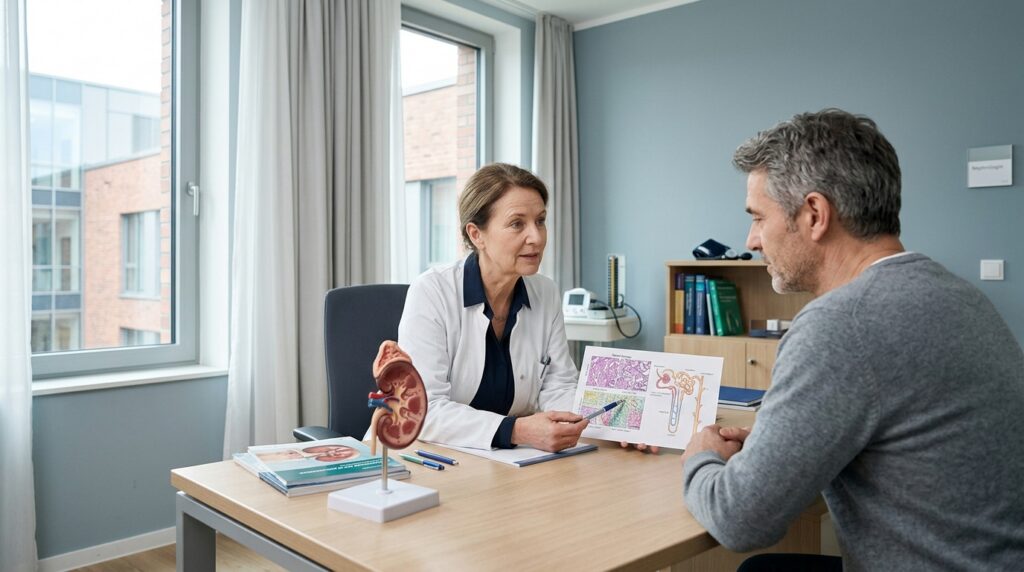
Autosomal dominant tubulointerstitial kidney disease, widely known by its abbreviation ADTKD, encompasses a group of rare inherited renal disorders characterized by progressive damage to the kidney tubules and interstitium. Patients affected by this condition usually experience a gradual decline in kidney function over several years or decades, which can ultimately lead to chronic end-stage renal disease requiring dialysis or kidney transplantation. Because early symptoms are subtle and non-specific, such as mild anemia or slightly elevated blood urea levels, many affected individuals remain undiagnosed for extended periods.
The autosomal dominant nature of ADTKD means that inheriting a single copy of the altered gene from one parent is sufficient to cause the condition, giving children of an affected individual a fifty percent chance of inheriting the mutation. However, pinpointing the precise genetic root of the disorder has long posed an extraordinary challenge for medical geneticists and nephrologists worldwide. Many individuals present with a clear family history of chronic kidney failure, yet routine diagnostic procedures fail to identify the causal mutation, leaving families without a conclusive explanation or tailored long-term management strategy.
This persistent diagnostic ambiguity primarily stems from the intricate structural properties of the genes involved, most notably the MUC1 gene. When conventional tests fail to capture the underlying genetic flaw, clinicians cannot definitively confirm whether a patient’s kidney decline is driven by an inherited factor or an acquired condition. Establishing a clear molecular diagnosis is vital for guiding appropriate medical follow-up, offering accurate genetic counseling to relatives, and avoiding unnecessary invasive procedures such as diagnostic kidney biopsies.
Innovation in Genomics: Long-Read Sequencing and VNTRtools
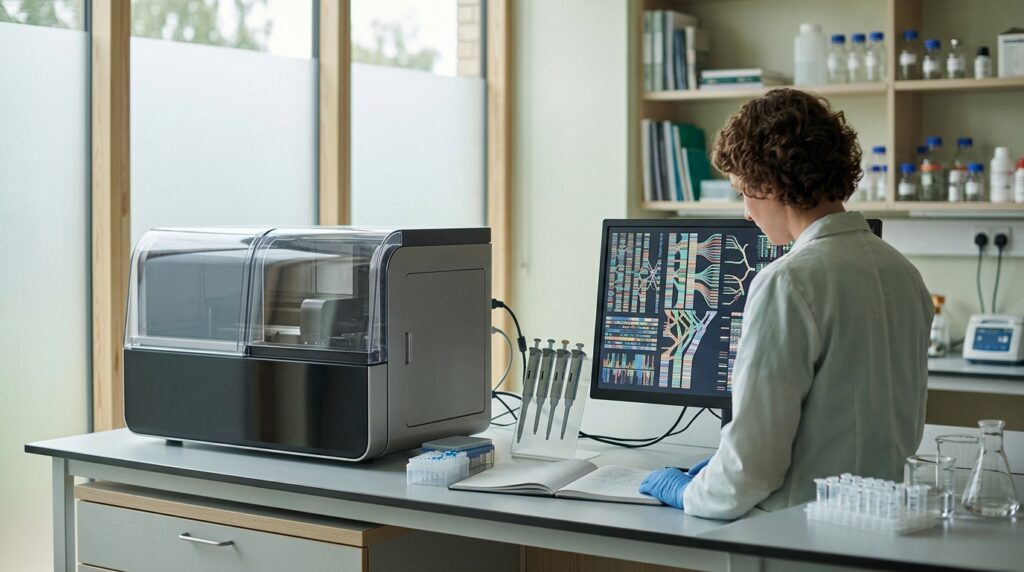
Standard genetic diagnostic workflows rely heavily on conventional Short-Read sequencing technology, which reads DNA in very small, fragmented segments. While highly efficient for most routine genetic screens, Short-Read sequencing struggles when encountering highly repetitive genomic regions. The MUC1 gene features an exceptionally complex segment known as the Variable Number Tandem Repeat region, or VNTR. This region consists of numerous nearly identical DNA sequences repeated end-to-end, making short reads equivalent to searching for a single subtle typographical error in a book where the same phrase is repeated hundreds of times.
To overcome this major technical barrier, Dr. Florian Erger from the Core Unit Genomics at the Institut für Molecular Genomics at Universitätsmedizin Greifswald, together with colleagues at Uniklinik Köln, utilized advanced Long-Read sequencing combined with a custom-developed software tool called VNTRtools. Long-Read sequencing reads substantially longer continuous strands of DNA in a single pass, fully spanning the complex VNTR section of the MUC1 gene. The newly developed VNTRtools software then reconstructs a comprehensive, individualized map of the patient’s MUC1 repeat structure, reliably detecting single-letter changes buried deep within the repetitive sequence.
In a clinical validation study evaluated across genomic data from 78 individuals, the novel Long-Read sequencing approach using VNTRtools correctly identified all previously confirmed control cases of ADTKD-MUC1. Overall, pathogenic gene alterations were established with high confidence in 24 individuals, resulting in 10 entirely new diagnoses of ADTKD-MUC1 that had been missed by standard diagnostic methods. Among these newly diagnosed patients was a 32-year-old individual whose gene alteration occurred as a de novo mutation rather than being inherited from parents. Additionally, the research team identified 18 previously unknown structural variants within the MUC1 repeat units.
Clinical Impact and Advice for International Patients in Germany

The successful implementation of Long-Read sequencing paired with VNTRtools marks a significant forward step in personalized nephrology and genomic medicine. Based on these study findings, Dr. Florian Erger and his team propose a clinical two-stage diagnostic strategy. Under this protocol, patients suspected of having an inherited kidney disease first undergo standard, cost-effective Short-Read sequencing. If results remain inconclusive while clinical suspicion of ADTKD-MUC1 persists, targeted Long-Read sequencing with VNTRtools is deployed to establish diagnostic certainty.
This diagnostic advancement holds particular value for international patients traveling to university hospitals in Germany for expert evaluation, especially those presenting with unexplained kidney failure without a documented family history of renal disease. As demonstrated by the de novo case discovered in the study, the absence of kidney disease in parents does not exclude the possibility of ADTKD-MUC1. German academic medical centers, such as Universitätsmedizin Greifswald under the scientific direction of Prof. Karlhans Endlich, are continuously expanding genomic sequencing infrastructure to integrate such advanced analytical tools directly into patient care.
International patients undergoing comprehensive diagnostic evaluation in Germany should feel empowered to discuss advanced genomic options with their attending specialists. It is reasonable to ask whether specialized sequencing of repetitive genomic regions like MUC1 is recommended, particularly if previous conventional genetic panels yielded uninformative results. While obtaining a genetic diagnosis does not immediately alter standard supportive care for kidney failure, a precise molecular answer provides invaluable certainty, allows for tailored monitoring, and supports informed family planning decisions.
Source: Greifswalder Forscher macht schwer lesbaren Genabschnitt sichtbar