EN
EN
Rehab in Germany is a separate stage of treatment in a specialised clinic, where patients go after an operation, a heart attack, a stroke or a course of chemotherapy to regain strength, mobility and independence. Acute treatment is not the finish line: the operation ends, the stroke is over, the last cycle of chemotherapy is done, and then life has to be rebuilt.
In Germany this stage has its own clinics, its own doctors and therapists, and goals that can be measured: walking the length of a corridor without support, getting dressed without help, going back to work. Below is what Reha in Germany involves: the four main programmes, a day in a clinic, the paperwork and who is likely to benefit.
What “Reha” means in Germany
The answer to “what is Reha in Germany” is short: rehabilitation in Germany is a distinct form of medical care, provided in specialised clinics with their own doctors, therapists and goals. It is not a few extra days in the same ward, and the German system treats it as part of the treatment rather than an afterthought.
A team runs the programme: a doctor, a physiotherapist, an exercise therapist and, where needed, a speech therapist, a neuropsychologist and a dietitian. They work to one plan with measurable goals: walking confidently again, managing without help, returning to work. Treatment starts early, while the patient is still weak, the load rises gradually and the plan is reviewed regularly. Inpatient Reha means living at the clinic with round-the-clock care; outpatient Reha means coming in for daytime sessions and sleeping at home or in a hotel. For patients from abroad, inpatient Reha is usually more practical.
The statutory route described in German sources, with an application approved by the pension insurance or a health insurance fund, applies to people insured in Germany. An international patient is admitted as a self-payer on the basis of their medical documents and pays the clinic’s invoice. Nor is Reha a spa cure: a Kur aims to strengthen health before an illness develops, while rehabilitation restores function after illness or injury; how a cure is arranged is explained on the page about spa treatment in Germany.
The four main programmes
A rehabilitation center in Germany is chosen by programme, not by rating, because neurological, orthopaedic, cardiac and oncological rehabilitation each have their own clinics and methods. Neurological rehabilitation follows a stroke and helps with Parkinson’s disease, multiple sclerosis and the consequences of injury, retraining movement, speech, memory and everyday skills. Medical Park Loipl in Bischofswiesen near Berchtesgaden, a neurological clinic at roughly 850 metres above sea level, takes stroke patients who no longer need constant monitoring but still need nursing care, as well as those preparing to go home: phases C and D in the German system.
Orthopaedic rehabilitation follows joint replacement, spinal surgery and sports injuries, restoring movement and easing pain without overloading tissue that is still healing. Medical Park St. Hubertus on Lake Tegernsee, a partner of the Bavarian Olympic training centre, is one example, and professional athletes also rely on its therapists.
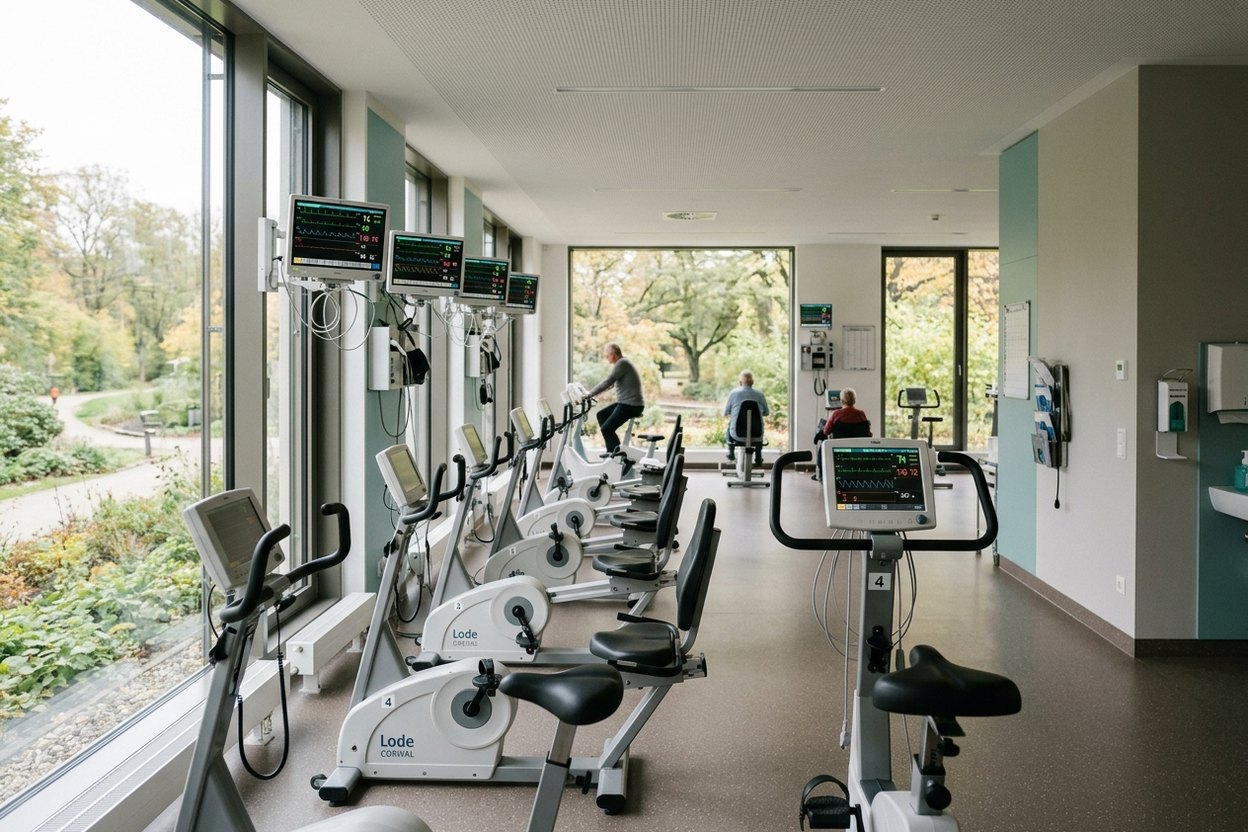
Cardiac rehabilitation after a heart attack or heart surgery combines exercise monitored by ECG, work on risk factors such as blood pressure, cholesterol and smoking, and attention to the psychological side, because fear of exertion can slow recovery as much as the illness itself.
Oncological rehabilitation deals with the fatigue, weight loss, anxiety and disturbed sleep that remain after surgery, chemotherapy or radiotherapy. Klinik Bad Trissl in Oberaudorf, which has treated only cancer patients since 1968, has about 200 beds, including a rehabilitation unit of about 60 beds, and a psycho-oncology service for anxiety and fear. The need is large: the International Agency for Research on Cancer estimates about 20 million new cancer cases worldwide in 2022.
Kliniken Schmieder, a group of neurological and rehabilitation hospitals in Baden-Württemberg founded as a family business, treat neurological conditions of every severity, including early rehabilitation for the most severely affected patients. Prof. Joachim Liepert is the medical lead for neurorehabilitation in Allensbach and Prof. Michael Jöbges the medical director in Konstanz, both on Lake Constance.
A day in a rehabilitation clinic
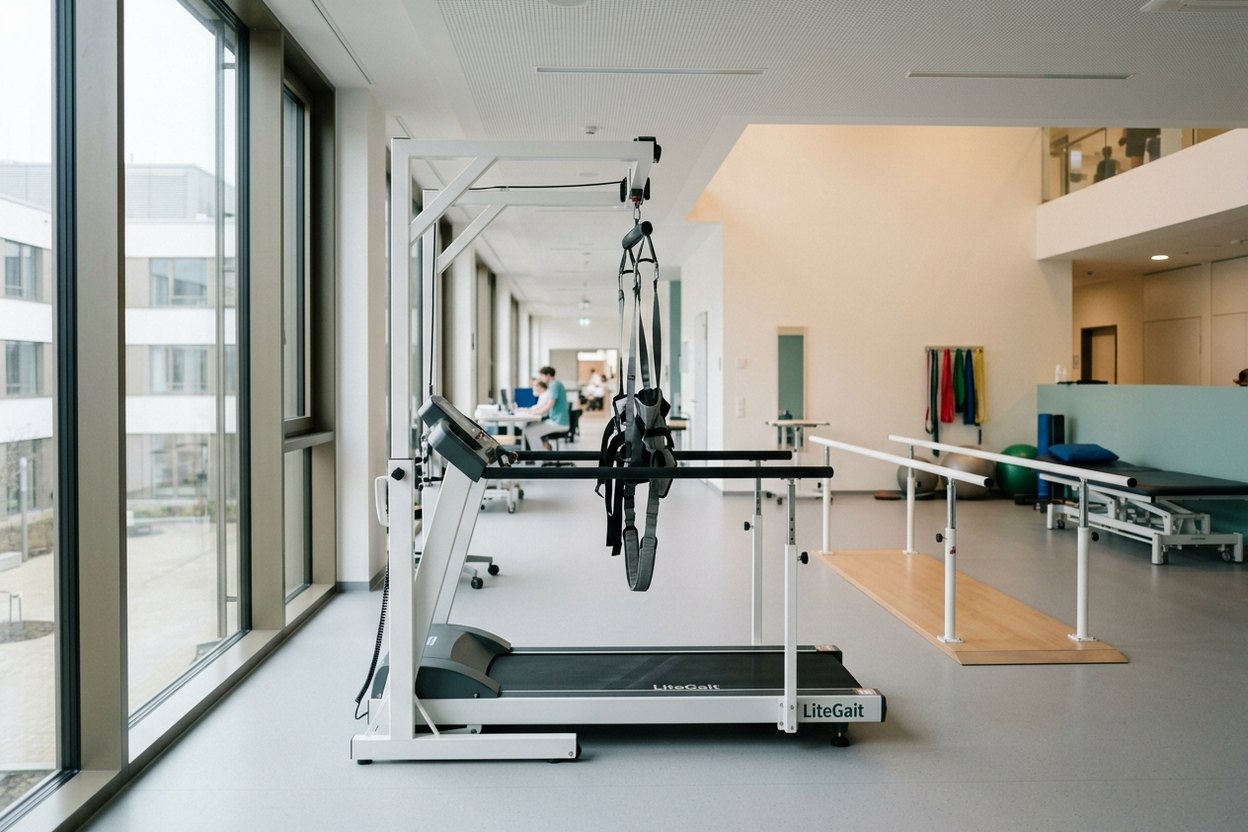
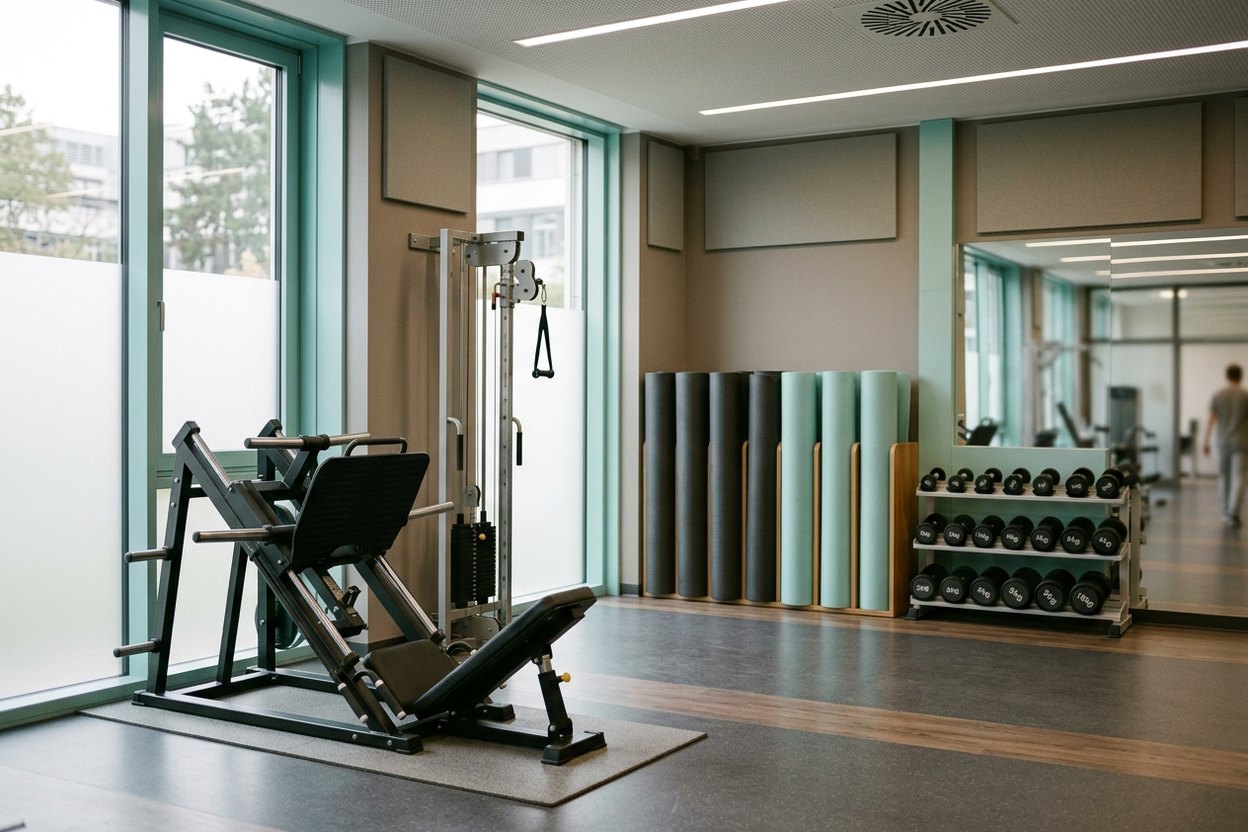
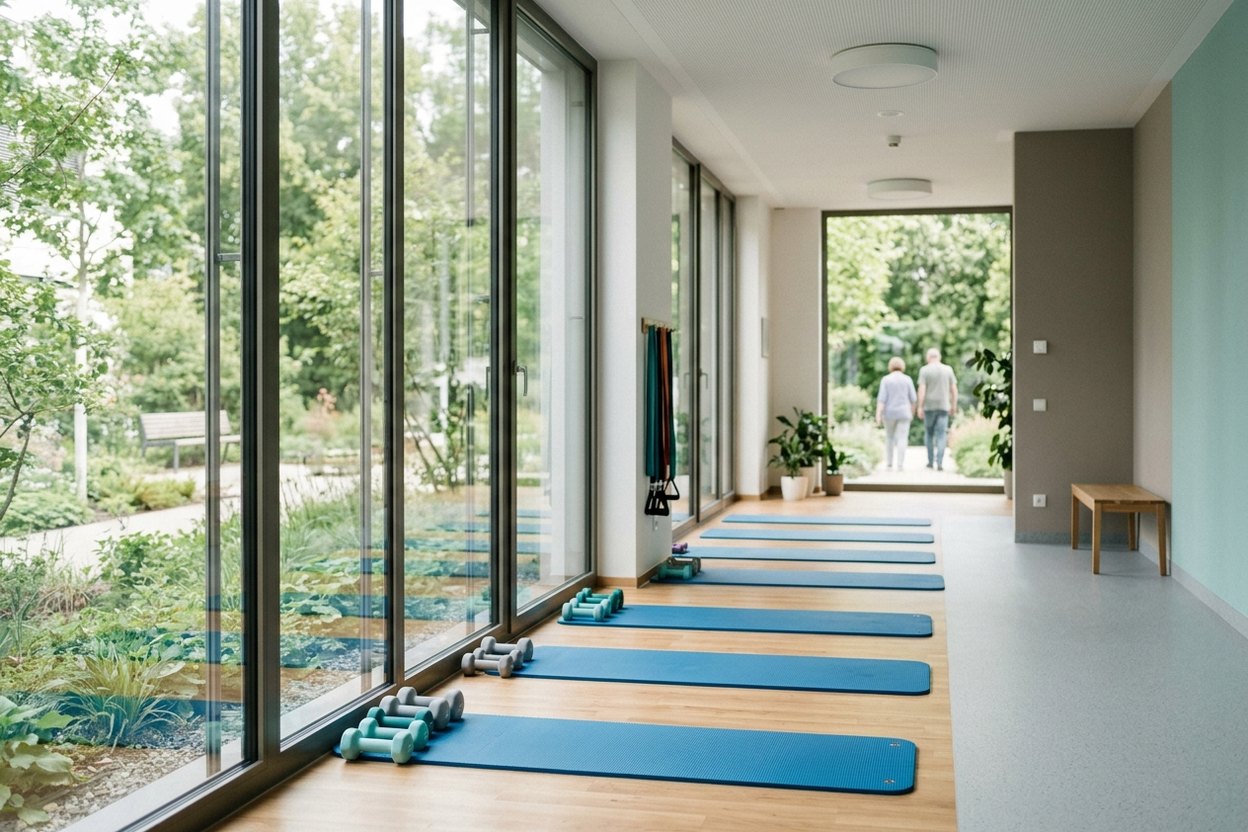
A day in a rehabilitation clinic follows a timetable: several sessions of exercise therapy, physiotherapy, water-based work and training on equipment, with speech therapy and neuropsychology where needed. Rest, meals and doctors’ rounds fill the gaps, so the patient recovers before the next session.
Progress is measured rather than guessed. On admission the doctor examines the patient and agrees the goals with them, and a final examination at discharge records what has changed. In between, the team checks practical things such as walking distance, balance or getting dressed alone. Goals come in small steps, because a big one such as “living as before” is too distant, while a small step shows quickly and keeps motivation up. Before discharge, relatives learn how to help at home, and the team advises on walking aids, changes to the home and how to keep exercising.
Admission, paperwork and cost
The length of the course depends on the programme and the patient, and the clinic states it after reviewing the documents; during the stay the doctor may extend or shorten it. The documents are best sent promptly: the World Health Organization notes that in many cases rehabilitation should start as soon as a health condition is noted and continue alongside other treatment.
For the trip the patient needs hospital discharge reports, specialists’ findings, recent test results, CT or MRI images on a disc and a list of current medication, translated into German or English. If the clinic’s doctor accepts the case, the clinic sends an invitation for the visa and an invoice, which is paid in advance.
What a month at a rehabilitation centre costs depends on the programme, its length and the specialists involved; how the bill is made up is shown under rehabilitation prices. Which centres exist and how their profiles differ is covered in the overview of rehabilitation clinics in Germany.
Who is a candidate and who is not
Rehabilitation in Germany suits patients whose condition is stable and who can manage the journey and several sessions a day; in a severe acute state, treatment comes first and recovery afterwards. An unhealed surgical wound, a persistent fever or unstable blood pressure usually means postponing the trip.
The decision rests on a clinic doctor’s assessment of the documents, not on the patient’s wish or an agency’s promise. If the doctor advises finishing treatment at home first or choosing a clinic with a higher level of care, that answer protects both the patient’s strength and the family’s money.
Frequently asked questions
Can a foreigner have rehabilitation in Germany?
Yes, a foreigner can have rehabilitation in Germany as a self-paying patient who settles the clinic’s invoice; the route through German pension or health insurance is only for people insured in Germany. The process starts with the medical documents: they are translated and sent to the clinic, and a doctor there decides whether the programme is suitable.
When should rehabilitation start?
Rehabilitation should start as early as the patient’s condition allows. The World Health Organization advises that in many cases it begins as soon as a health condition is noted and runs alongside other treatment. In Germany, severely affected neurological patients often move to early rehabilitation straight from hospital. When a patient from abroad can travel is decided by a doctor from the documents.
How long does rehabilitation last?
The clinic states the length after reviewing the documents, because it depends on the programme, the severity of the condition and the pace of recovery. There is no single duration for everyone, and the doctor may extend or shorten the course during the stay. An estimate of length and cost therefore comes with the clinic’s reply.
How AlenMed organises rehabilitation
AlenMed matches the patient with a suitable clinic on the basis of the documents and organises the trip: translating the reports, agreeing the date, arranging the invitation for the visa, providing an interpreter and supporting the patient on site. The company’s office is in Munich, and its partner clinics are spread across Germany.
This material is for reference only and is not an offer. The rehabilitation programme and its length are set by a doctor after assessing the patient’s condition.