 EN
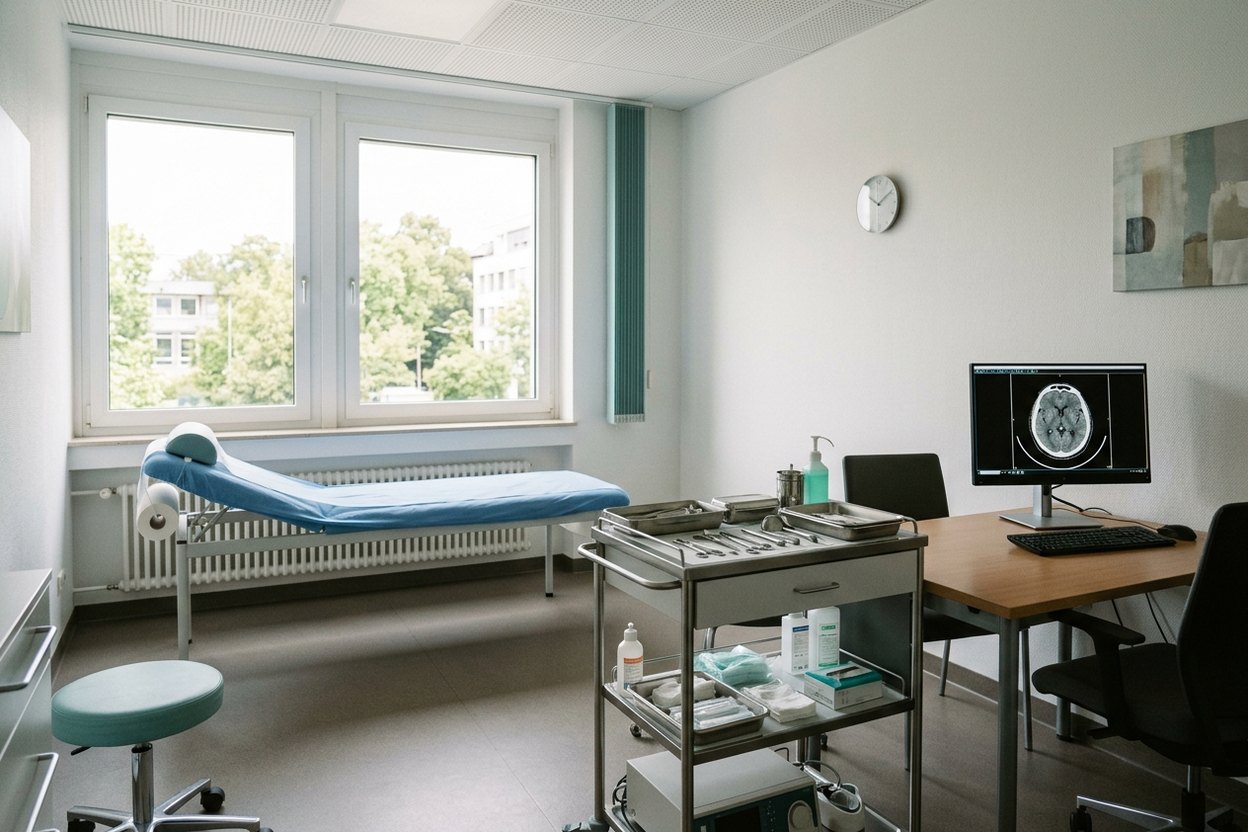
A cough in its third month, breathlessness on the stairs blamed on age, a shadow on an X-ray with the advice to “wait and see”: in Germany, complaints like these take patients to a pulmonologist, who starts with a precise diagnosis rather than a prescription. Lung diseases often develop quietly: the cough becomes familiar, breathlessness grows over the years, tiredness is put down to work. Lung treatment in Germany starts with a clear answer about what is happening in the lungs.
In Germany, pulmonology (Pneumologie) is a branch of internal medicine. The pulmonologist makes the diagnosis and leads the treatment, working when needed with a thoracic surgeon, who operates on the chest, and with a radiologist, oncologist or allergist. Below: the conditions, the tests, the treatment, the doctors and hospitals, the costs and the arrangements.
Which lung diseases bring patients to Germany
Most patients come with COPD and emphysema, severe asthma, interstitial lung disease or an unexplained nodule in the lung. In COPD, chronic obstructive pulmonary disease, the airways stay narrowed and inflamed for years and breathing out gets harder; most patients are current or former smokers. In emphysema the walls of the tiny air sacs, the alveoli, are destroyed, the lungs lose their elasticity and air gets “trapped”: a deep breath is impossible because the lungs are already overfilled. Many people have both.
Asthma is called severe when attacks and breathlessness persist even though the patient uses high-dose inhalers correctly; if an allergy lies behind it, an allergist joins the assessment. How asthma treatment in Germany works is explained on a separate page.
Interstitial lung diseases affect the lung tissue itself rather than the airways. In idiopathic pulmonary fibrosis the tissue gradually scars and stiffens for no known reason, hence “idiopathic”. In sarcoidosis, small inflammatory nodules called granulomas form in the lungs and the chest lymph nodes. Such diagnoses are rarely made by one doctor: a pulmonologist, a radiologist and a pathologist, who examines tissue under the microscope, review CT, lung function and biopsy together, so an experienced centre matters.
If a nodule is found and a tumour is suspected, the pulmonologist obtains tissue for analysis, and the tumour board, a joint meeting of surgeon, oncologist, radiation oncologist and other specialists, then leads treatment. Once the diagnosis is confirmed, the board chooses between surgery, radiotherapy and drug treatment, including targeted drugs and immunotherapy guided by molecular tests of the tumour; details are on the page on lung cancer treatment. Breathing pauses during sleep are investigated in a sleep laboratory; see sleep disorders.
Lung tests: what the diagnosis includes
The diagnosis includes lung function tests, a high-resolution CT scan and, when tissue is needed, a bronchoscopy. Spirometry shows how much air a person can breathe out and how fast, revealing narrowed airways. Body plethysmography takes place in an airtight cabin resembling a telephone booth: from pressure changes the device calculates the residual volume (the air left after breathing out completely), total lung capacity and airway resistance. The diffusing capacity for carbon monoxide shows how easily gas passes from the air sacs into the blood; it falls in fibrosis and emphysema.
High-resolution CT produces slices thinner than one millimetre and shows changes that an ordinary X-ray misses: early fibrosis, areas of emphysema, small nodules. Bring previous scans on a disc rather than as printouts, so the radiologist can compare them with the new images and see whether a nodule is changing. For the decision “watch or act”, this course over time often matters more than a single scan.
Bronchoscopy, done under sedation, means looking into the airways with a thin flexible tube carrying a camera. Through it the doctor rinses part of the airways, collects the fluid for analysis (bronchoalveolar lavage) and takes tissue samples for biopsy. In endobronchial ultrasound (EBUS) the bronchoscope carries an ultrasound probe, so the doctor sees the lymph nodes between the lungs and samples them with a fine needle. Tumour tissue is tested for the molecular markers EGFR, ALK, ROS1 and PD-L1, which guide targeted drugs or immunotherapy; that is already part of cancer treatment.
Lung treatment: from inhalers to surgery
Most lung diseases are treated with medication; some patients need endoscopic procedures, surgery or long-term breathing support. Inhalers are chosen by the lung function results, and technique matters as much: patients are trained on their own inhaler, because with poor technique the drug settles in the mouth instead of the airways. In severe asthma, doctors prescribe biologics, antibodies that block IgE or the signals of interleukins 4, 5 and 13, which drive airway inflammation. In fibrosis, antifibrotic drugs slow the decline of lung function, but existing scars remain. The step-by-step treatment of COPD is set out in the current COPD guideline of the German Respiratory Society (DGP), from inhalers to pulmonary rehabilitation and lung volume reduction.
In severe emphysema, tiny one-way valves can be placed in the airways: they let air out of the most damaged part of the lung but not back in. That part gradually deflates, giving the healthier lung and the diaphragm room to work, with the aim of easier breathing. Suitability is decided by CT and lung function tests: valves only work if no air reaches the damaged lobe through side channels from neighbouring lobes.
Lung operations are increasingly done through a few small incisions between the ribs: in video-assisted thoracoscopic surgery (VATS) the surgeon works from a camera image, in robot-assisted surgery from a console. Without a large chest incision there is usually less pain and a shorter hospital stay. The thoracic surgeon and the pulmonologist choose the approach based on CT and lung function, above all on how much lung tissue will remain.
Pulmonary rehabilitation means several weeks of supervised training: breathing exercises, endurance work and ways of coping with breathlessness. Oxygen therapy and ventilation support (Beatmungsmedizin) are needed in respiratory failure, when the lungs can no longer supply enough oxygen or remove carbon dioxide. At home this means an oxygen concentrator and a portable device for walks or, if breathing falls short at night, a ventilator with a mask during sleep; the hospital adjusts the settings and teaches patient and family to use the equipment. After lung surgery, breathing exercises and getting up early start in hospital, followed by pulmonary rehabilitation; the surgeon sets the timing of discharge and of a return to exertion.
Pulmonologists in Germany: where they work and whom patients see
Pulmonologists in Germany work in specialist lung hospitals (Lungenklinik) and in the pulmonology departments of general and university hospitals, usually with thoracic surgery alongside. In large hospitals they work closely with intensive care and a sleep laboratory, so patients with respiratory failure or breathing pauses at night are treated in one place.
Dr Wolfgang Gesierich is chief physician of pulmonology and medical director of Asklepios Lungenklinik Gauting, a specialist lung hospital in Gauting near Munich. Prof. Martin Hetzel is medical director of the Department of Pulmonology and Ventilation Medicine at Klinikum Stuttgart. Dr Radu Braga heads the Department of Pulmonology at Helios Klinikum München West; at another hospital he was previously senior physician for pulmonology and thoracic oncology and coordinator of a lung cancer centre. Prof. Rembert Koczulla is chief physician of the pulmonology centre at Schön Klinik Berchtesgadener Land. Prof. Joachim Ficker is chief physician of pulmonology at Klinikum Nürnberg, with additional qualifications in allergology and sleep medicine.
At DRK Kliniken Berlin Mitte, the department of internal medicine with pulmonology and sleep medicine and the department of thoracic surgery form a lung clinic, which also runs a centre for the endoscopic and surgical treatment of emphysema (ICLEZ). Sana Klinikum Offenbach has departments of pulmonology and thoracic surgery. At TUM Klinikum Rechts der Isar in Munich, pulmonology belongs to the Department of Internal Medicine I, which covers the heart, blood vessels and lungs and is directed by Prof. Karl-Ludwig Laugwitz.
Frequently asked questions
How much does lung treatment in Germany cost?
The total depends on the scope: a consultation with tests, a bronchoscopy or an operation with a hospital stay. As a guide, a consultation with a doctor on the results starts from €130, and a chest CT costs around €500, or around €550 with contrast. Bronchoscopy, surgery and the hospital stay are priced in the hospital’s cost estimate (Kostenvoranschlag), based on the documents you send. More on treatment prices in Germany is on a separate page.
What is recovery like after lung surgery?
Recovery begins in hospital: soon after the operation the patient starts breathing exercises, and a physiotherapist helps them get up and walk. Pulmonary rehabilitation usually follows, in a rehabilitation clinic or as an outpatient, with supervised breathing and endurance training. When the patient can be discharged, fly home and return to exertion is decided by the surgeon: it depends on the extent of the operation and on how well the lungs work.
How quickly can a lung assessment in Germany be arranged?
It depends on how quickly the hospital replies to the documents: the doctor first needs to see which tests are required and how long they will take. Complete reports, spirometry results and CT scans as files on a disc, not printouts or photos of the images, speed things up, because the radiologist can review the scans directly. Missing documents mean follow-up questions and a later reply, so it pays to send everything at once.
How AlenMed arranges lung treatment in Germany
Before the trip, AlenMed translates the reports, spirometry results and CT findings and sends them, with the images on disc, to the pulmonologist of a suitable hospital. No referral from a doctor is needed: the hospital accepts patients on the documents sent. The pulmonologist says what is needed, whether tests, a change of treatment, a bronchoscopy or a surgical opinion, and the hospital issues an official cost estimate (Kostenvoranschlag). The steps of arranging treatment in Germany are described separately.
Next comes the visa invitation, and the flight is planned around the patient’s breathing: oxygen on board is agreed with the airline in advance. In Germany the patient is met, taken to the hospital and helped with accommodation, and an interpreter attends the appointments. AlenMed’s office is in Munich and its partner hospitals are across Germany, so the place of treatment is chosen by the disease, not by the city.
After returning home, the patient has a report in their own language and a written plan for inhalers and other medication. If questions arise or their condition changes, AlenMed helps them contact the doctor who led the treatment and send on new results.
This material is for reference only and is not an offer. Treatment is decided by the doctor after an in-person examination and a review of the medical records.