 EN
For many questions a medical center in Cologne is enough, and only some cases need a hospital bed: the choice starts with the diagnosis, not with the cathedral on the postcard.
This page covers outpatient medical centres, when inpatient care is needed, the university eye centre and the neighbouring cities of Bonn and Düsseldorf. It also has a note for readers looking for the private practice called «Medical Center Cologne» and explains how AlenMed arranges treatment. The city’s German name is Köln, often typed as Koln: both spellings lead to the same city.
How Medical Care in Cologne Is Organised
Medical care in Cologne is organised on three levels. At the top is the university hospital of maximum care, the German term for hospitals that take on the most complex cases in almost every specialty. The second level is the municipal hospitals, owned by the city itself. The third is church-run and private hospitals: some cover many fields, others specialise in one area of medicine.
For a foreign patient this means: complex and rare diseases, cancer and second opinions usually go to the university hospital. Still, the choice follows the diagnosis, not a famous name.
When the Case Belongs in the University Hospital
A case belongs in the university hospital when it is complex, rare or needs several specialists at once. Uniklinik Köln is a hospital of maximum care with two tasks beyond treatment: research and the teaching of doctors. Its campus is in the Lindenthal district, and the hospital has 1,573 beds. Its units include a centre for operative paediatric medicine, a neurosurgery centre, a palliative care centre and a centre for clinical trials (ZKS).
International patients are referred here because all the main specialties are on one campus: specialists can discuss a case together without sending files to another hospital. The hospital also runs clinical trials. A clinical trial is a study that tests a new treatment, or a way to improve an existing one, according to a strict plan and under close medical supervision. Only a patient who meets the conditions of a particular trial can take part; the study team decides, and nobody can promise a place in advance.
Its departments, doctors and history are described in detail on our page about Cologne University Hospital.
Eye Centre at Cologne University Hospital
The eye centre of the university hospital (Zentrum für Augenheilkunde) treats eye diseases in adults and children and brings several specialised fields together. A centre for rare eye diseases and a centre for paediatric eye surgery belong to it. The director of the eye centre is Prof. Claus Cursiefen. Its main fields are glaucoma, which gradually damages the optic nerve; the cornea; the retina and vitreoretinal surgery, meaning operations on the retina and the gel inside the eye; oculoplastics, or surgery on the eyelids and surrounding tissue, and eye tumours; and neuro-ophthalmology, which covers vision problems linked to the nervous system.
From abroad, the eye centre is contacted by families of children with congenital eye problems, by patients with rare or complex eye diseases and by people with questions about cornea transplantation. More about the centre is on our page about the Eye Center at Cologne University Hospital. Patient information on eye diseases is collected by the German Ophthalmological Society.
Medical Center Cologne: What an MVZ Does
A medical center in Cologne provides outpatient care and diagnostics without a hospital stay. A medical centre, in German MVZ (Medizinisches Versorgungszentrum), is a group practice where several doctors of the same or different specialties work under one roof, with diagnostics close at hand. It suits check-ups, imaging, a specialist opinion on existing results and follow-up after treatment.
A hospital is needed for surgery, chemotherapy under supervision, diagnostics under anaesthesia and cases for a tumour board, where oncologists, surgeons and radiologists choose the treatment together. If you only need an outpatient visit in English, in Cologne or elsewhere, the page on English-speaking doctors in Germany explains how to find a doctor. The University Hospital Bonn is close by. Düsseldorf has its own university hospital.
For readers looking for a particular practice: in search results, the name «Medical Center Cologne» belongs to a private practice that has offered so-called immune-supportive, «non-toxic» cancer therapy. It is not an AlenMed partner and is not described here. What such offers mean next to standard cancer treatment is explained on the page about integrative oncology in Germany. New immune-based treatments are tested in clinical trials at the university hospital mentioned above, but nobody can promise inclusion in advance.
Frequently asked questions
Is a medical center in Cologne enough, or do I need a hospital?
A medical center in Cologne is often enough for check-ups, imaging, a specialist opinion on existing results and follow-up. A hospital is needed for surgery, chemotherapy under supervision, diagnostics under anaesthesia and cases that a tumour board should discuss. If it is unclear which applies to you, doctors can decide from your reports and images before you travel.
How do I choose where to be treated in Cologne?
Choose the department that is strong in your diagnosis, not the best-known name. Complex and rare diseases, cancer and second opinions usually go to the university hospital, while an outpatient medical centre is often enough for a check-up or imaging. The safest way is to send your reports and images to one or two suitable departments and compare their treatment proposals before deciding.
Can I take part in a clinical trial in Cologne?
Sometimes, but nobody can promise it in advance. The university hospital runs clinical trials of new treatments, including immune-based ones. Only a patient who meets the strict conditions of a particular trial can join, for example regarding the diagnosis, the stage of the disease, earlier treatment and general health. The study team decides after reviewing the medical documents.
How AlenMed Arranges Treatment in Cologne
AlenMed handles the contact with the hospital from the first request: reports and images are translated into German and sent to the chosen department, and the hospital replies with a treatment proposal and a cost estimate. The steps are explained on the page about arranging treatment in Germany.
We then help you obtain the visa invitation, plan your arrival at Cologne/Bonn or Düsseldorf airport, find accommodation near the hospital and provide a medical interpreter at appointments. The company office is in Munich; partner hospitals are all over Germany.
This is reference material and not an offer. The treatment plan is decided by the doctor at a face-to-face consultation.
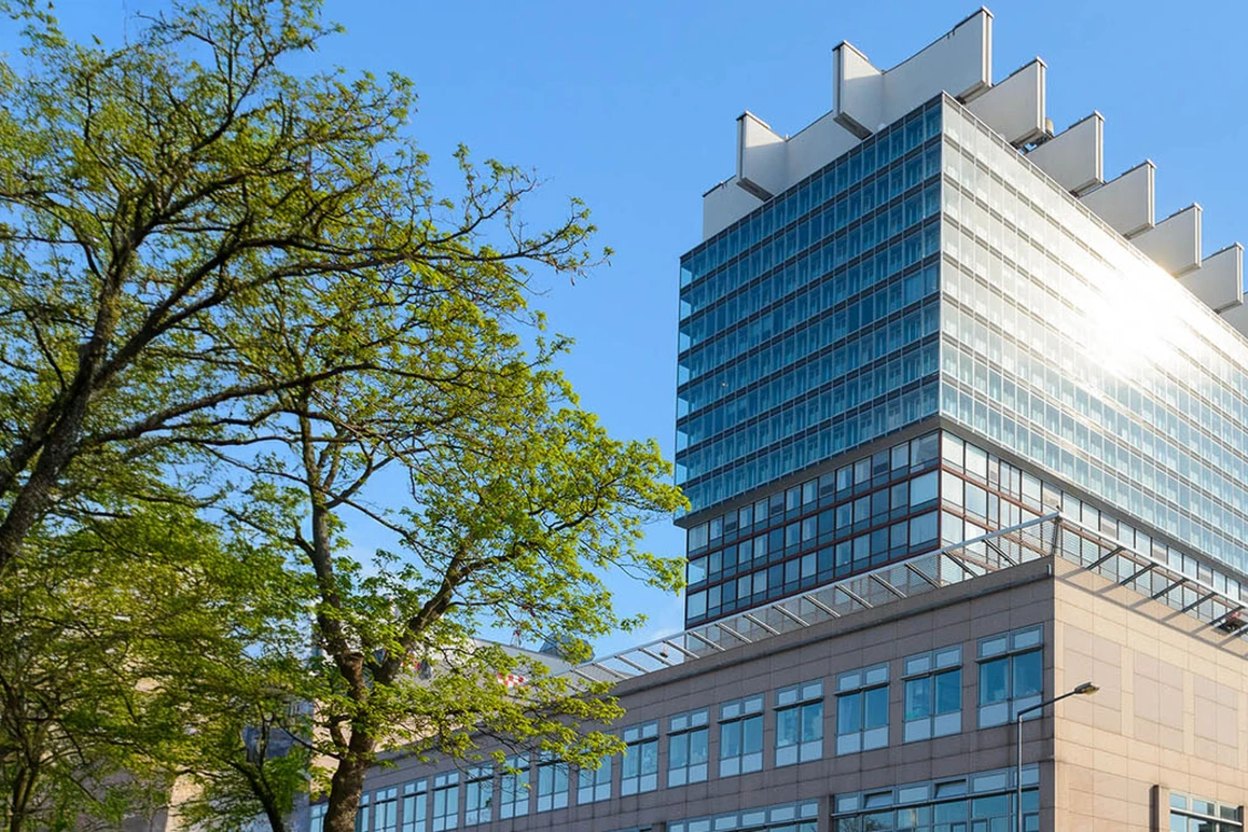
Cologne University Hospital
A tertiary-care university hospital in the Lindenthal district of Cologne, where clinical work runs alongside its own research institutes. Its centres cover neurosurgery, paediatric surgery, molecular medicine and palliative care.
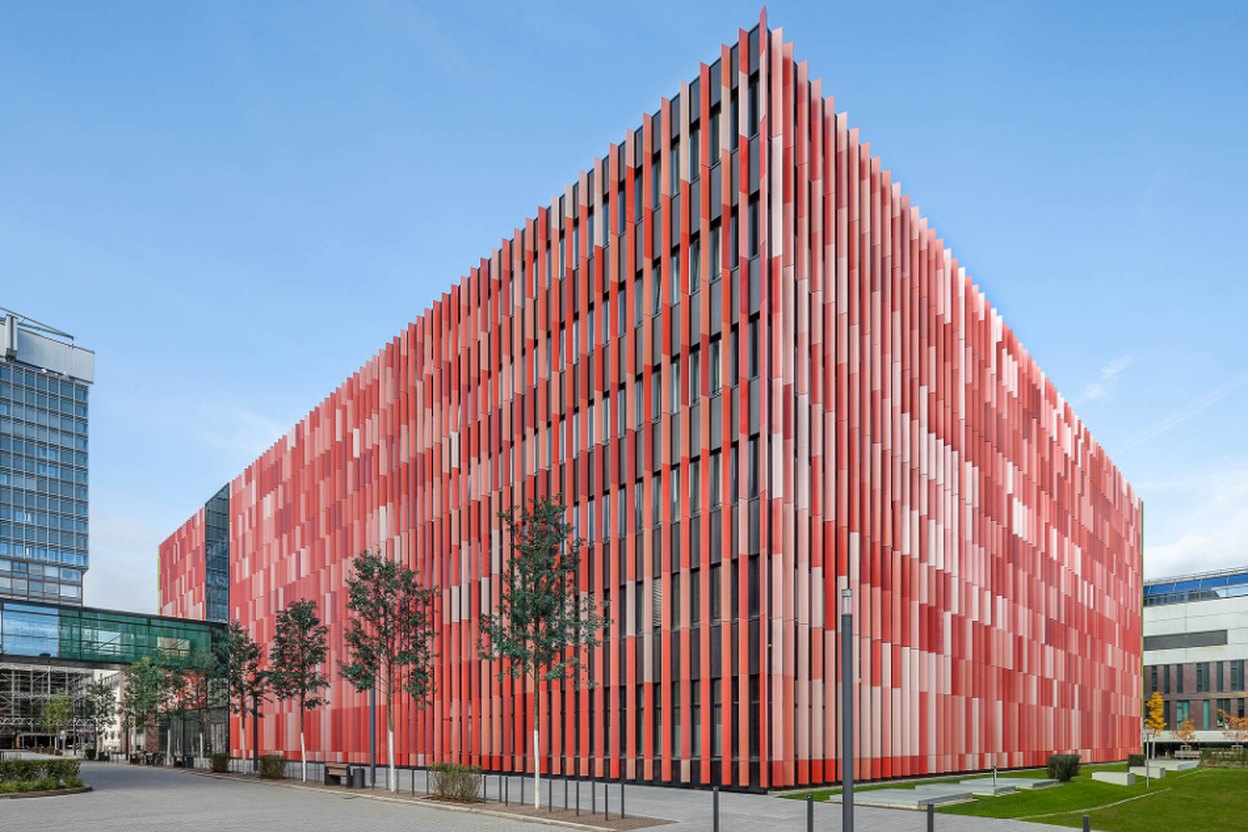
Eye Center at Cologne University Hospital
Retinal and corneal surgery and paediatric eye surgery are the main fields of this university eye centre in Cologne. A separate unit cares for rare eye diseases, including congenital and inherited dystrophies.