 EN
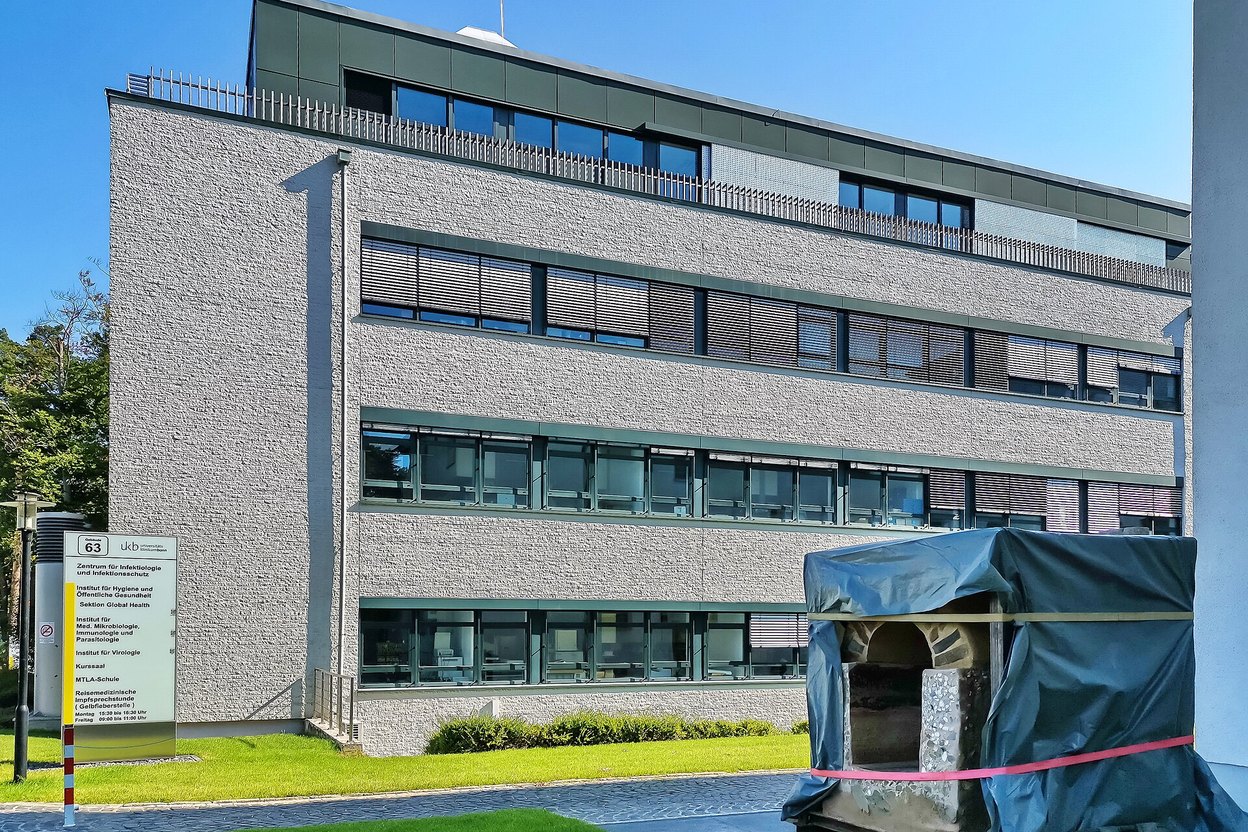
University Hospital Bonn, Germany (Universitätsklinikum Bonn, UKB), is a maximum-care hospital on the Venusberg hill, planned for 1,341 beds, with about 9,900 people working in patient care, research and teaching. Maximum care is the top tier of German hospitals, taking the most complex cases. Like other university hospitals in Germany, it works with a university’s medical faculty, in this case that of the University of Bonn.
Below: the hospital’s history, its neurology and oncology departments and their heads, how to get there, and how AlenMed arranges treatment.
History: from the Electoral Palace to the Venusberg
University medicine in Bonn dates back to 1818, when King Frederick William III of Prussia founded what is today the Rheinische Friedrich-Wilhelms-Universität. It was given the former Electoral Palace, which housed the anatomical theatre and the «clinicum», the teaching hospital. Medicine stayed in the palace for more than half a century; only under the German Empire did the clinics get their own buildings, at what was then the northern edge of town, near the Rhine.
On 18 October 1944, the anniversary of the university’s founding, the first devastating air raid on Bonn badly damaged the main university building in the former palace and the clinic quarter by the Rhine. After the war, the military government made former anti-aircraft barracks (Flak-Kaserne) on the Venusberg available, and the new hospital campus grew there.
Departments of the University of Bonn Medical Center: neurology and oncology
At the University of Bonn Medical Center, neurology and oncology are covered by several independent clinics. The Department of Epileptology also sees patients whose seizures do not respond to medicines (drug-resistant epilepsy) and assesses whether surgery on the brain area where they start is possible and safe; the hospital’s neurosurgeons operate. How epilepsy treatment works in Germany is explained separately. Vascular neurology treats stroke and other disorders of blood flow to the brain and has a stroke unit. Neuroradiologists image brain vessels and tissue and treat some conditions through the vessels. The German names are useful in correspondence:
- Epileptology (Klinik und Poliklinik für Epileptologie)
- Vascular Neurology (Klinik für Vaskuläre Neurologie)
- Neuroradiology (Klinik für Diagnostische und Interventionelle Neuroradiologie und Kinderneuroradiologie)
- Gynaecology and Gynaecological Oncology (Klinik für Gynäkologie und Gynäkologische Onkologie)
- Senology with a certified breast centre (Klinik für Senologie mit zertifiziertem Brustzentrum)
- Radiotherapy and Radiation Oncology (Klinik für Strahlentherapie und Radioonkologie)
- Integrated Oncology (Abteilung für Integrierte Onkologie)
Gynaecological oncology treats malignant tumours of the ovaries, uterus, fallopian tubes and external genitals and, with neighbouring departments, has set up a gynaecological cancer centre certified by the German Cancer Society (Deutsche Krebsgesellschaft). Breast diseases are treated in the senology clinic; see also breast cancer treatment. The radiotherapy clinic treats tumours of many organs; the US National Cancer Institute explains how radiation therapy works. Integrated oncology is linked to CIO Bonn, the cancer centre where doctors of different specialties discuss each case. The Lamarr Institute for Machine Learning and Artificial Intelligence (Lamarr-Institut für Maschinelles Lernen und Künstliche Intelligenz) is a research partner of the hospital in AI-based cancer research, not a treatment department.
Doctors at University Hospital Bonn
Each department at University Hospital Bonn has its own director. The Chairman of the Board and Medical Director is Prof. Uwe Reuter. Prof. Rainer Surges heads epileptology and Prof. Gabor Petzold vascular neurology. Prof. Alexander Mustea directs gynaecology and gynaecological oncology, Prof. Andree Faridi the senology clinic, and Prof. Eleni Gkika radiotherapy and radiation oncology. Prof. Ingo Schmidt-Wolf heads integrated oncology; he is a member of the German Society of Haematology and Oncology (DGHO) and sits on the board of the Bonn Tumour Centre (Tumorzentrum Bonn).
A personal consultation with a director cannot be promised in advance: the relevant department decides on admission and on the doctor in charge. A clear description of the diagnosis therefore matters more in a request than a professor’s name.
Location and how to get there
The hospital stands on the Venusberg, a wooded hill above Bonn outside the city centre, surrounded by the Kottenforst nature reserve. Buses 600 and 601 run to the campus from Bonn’s main station. The nearest airport is Cologne/Bonn, with bus SB60 to Bonn’s main station. The exact building and route come with the invitation. After neurological treatment, rehabilitation can continue in Bonn at the Godeshöhe neurological rehabilitation centre.
Frequently asked questions
Does University Hospital Bonn accept patients from abroad?
Yes. Its International Medical Service plans the admission of patients from other countries. Doctors of the relevant department decide on acceptance after reviewing the reports, scans and test results. Patients without German health insurance pay for treatment themselves, based on the hospital’s cost estimate.
How much does treatment at University Hospital Bonn cost?
There is no single price: it depends on the diagnosis, the tests needed and whether surgery and an inpatient stay are required. The guide is the hospital’s cost estimate (Kostenvoranschlag), prepared after reviewing the medical records. A single or double room costs extra and requires an advance payment before admission.
Does University Hospital Bonn perform epilepsy surgery?
Yes, if the evaluation shows that surgery is possible. First, the epileptology department runs a pre-surgical evaluation: high-resolution MRI, video-EEG monitoring of several seizures, usually with medicines reduced or stopped, and neuropsychological testing. This shows whether all seizures start in one brain area and whether that area can be removed safely. Neurosurgeons operate; epileptologists provide the follow-up care.
Can a relative stay with the patient?
Yes. An accompanying person can be admitted with the patient as a paid service, with an advance payment due before admission. Visits have no general time limit, although each ward may set its own visiting hours; intensive care and monitoring units have open, flexible visiting hours.
How AlenMed arranges treatment at University Hospital Bonn
AlenMed handles the paperwork, correspondence with the hospital and travel. The patient sends reports, CT or MRI scans and lab results; we translate them into German and send them to the right department, and the hospital replies with a treatment proposal and a cost estimate (Kostenvoranschlag). The steps of arranging treatment in Germany are described separately.
Payment goes directly to the hospital; after the deposit, the hospital issues the invitation needed for a visa. A medical interpreter accompanies the patient at appointments, and AlenMed arranges airport pickup and accommodation. AlenMed’s office is in Munich, with partner clinics across Germany: if the neighbouring Cologne University Hospital suits the diagnosis better, the records can go there.
This material is for reference only and is not an offer. The treatment plan is decided by the doctor at an in-person consultation.