EN
EN
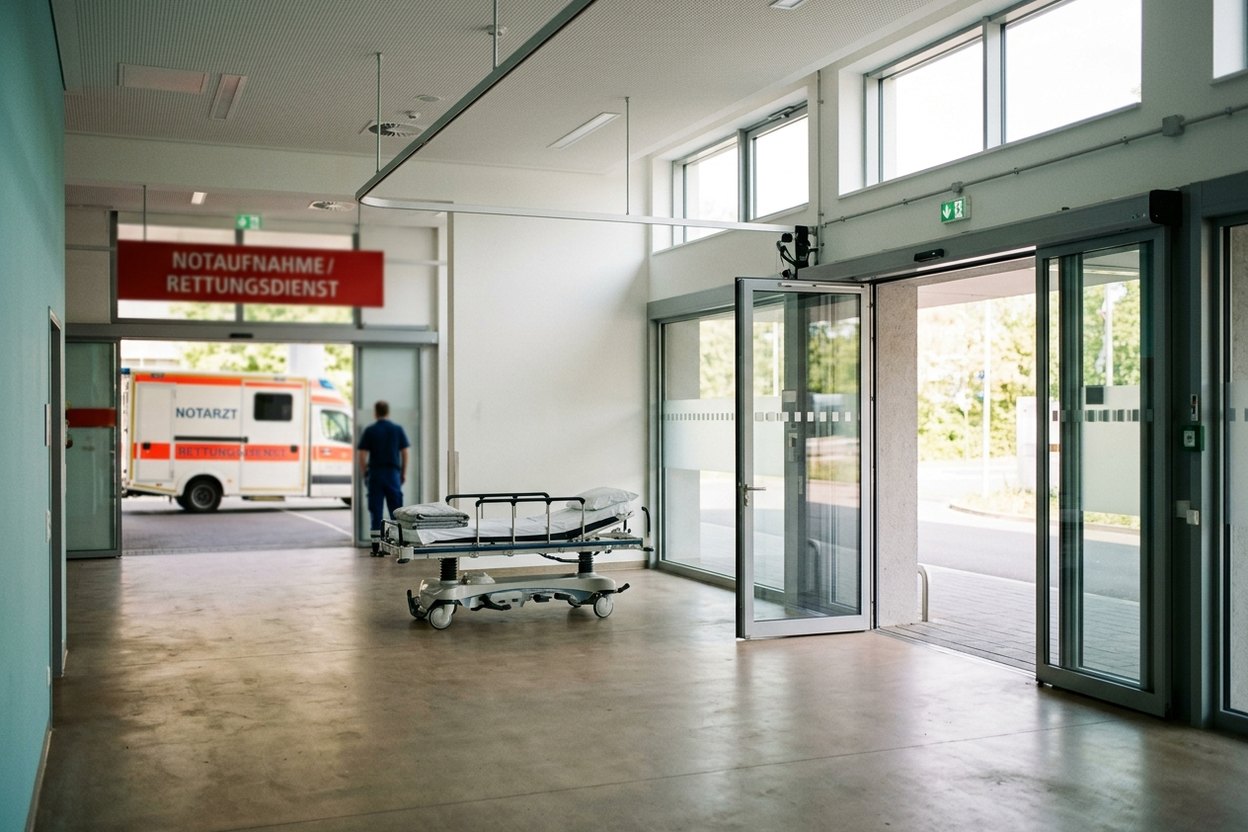
When time is counted in days, long explanations are no use — what is needed is a clear order of steps. Below, briefly and to the point: how urgent admission to a German hospital, the visa and medical transport work, and what happens at each stage. If the situation cannot wait, start by contacting us — the details can be settled alongside.
Urgent admission
The first step is to send the hospital current medical documents: the discharge letter, recent images and test results. From these the relevant doctor assesses the condition and confirms that they are ready to take the patient, and the hospital gives approximate dates. In urgent cases university and general hospitals treat the request as a priority, so the fuller and faster the data are sent, the shorter the way to a firm date.
Practical matters are settled in parallel — accommodation, an interpreter if needed, accompaniment. The aim is that by the time you arrive everything is already agreed and the patient goes straight to the right specialist instead of losing time on the spot.
An urgent visa
Treatment in Germany usually requires a national visa (type D) for the purpose of medical treatment, issued by the German embassy or consulate in your country of residence. A Schengen visa (type C) allows only a short stay of up to 90 days and does not suit every case, so the type of visa is worth clarifying in advance.
In urgent situations accelerated processing exists: for it you need the hospital’s confirmation that it will take the patient and a preliminary cost estimate. We help assemble that package and submit the documents correctly, so that no time is lost on formalities. The exact requirements depend on the country and the individual case, and we check them separately for your situation.
Air ambulance and transport
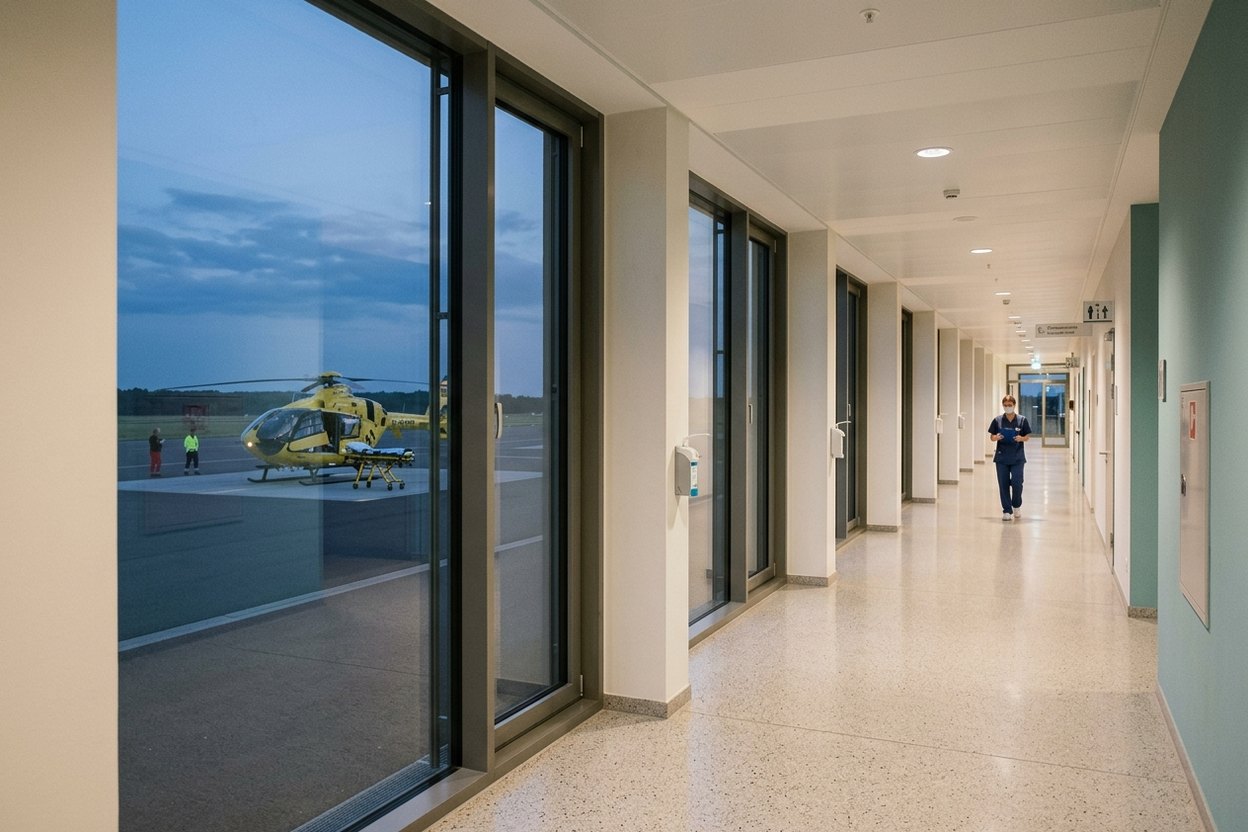
If the patient’s condition does not allow a scheduled flight, medical transport is arranged. An air ambulance is equipped as an intensive care unit in flight and the patient is accompanied by a medical crew; both adults and children can be transported, including newborns with the appropriate equipment. Where an ordinary aircraft is acceptable, medical escort on a scheduled flight is an option — simpler and cheaper.
The ground leg is arranged separately — from the airport to the hospital and, if needed, between hospitals, in specialised vehicles for patients in a serious condition or connected to equipment. The route and the type of transport are chosen to suit the patient’s condition, not the other way round.
Where to start right now
The order is simple: you contact us and describe the situation briefly, send the documents you have, receive the hospital’s confirmation and a preliminary estimate, after which the visa and the transport are set in motion in parallel. Support in urgent cases is available around the clock. You do not need a complete set of documents to begin — what matters is not delaying the first contact.
This material is for information only and does not replace a consultation with a doctor. Whether and when admission is possible, the type of visa and the means of transport are determined individually, depending on the patient’s condition and on the requirements of the particular hospital and consulate.