 EN
EN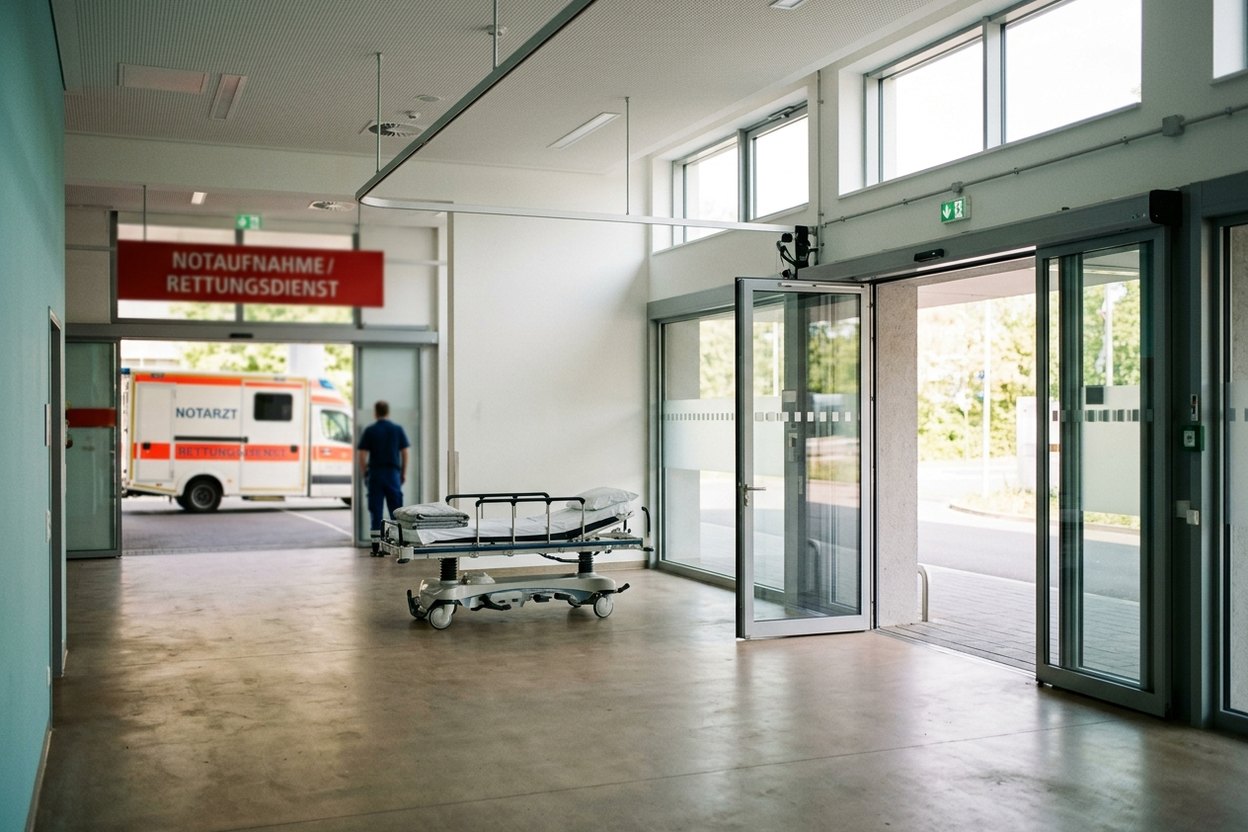
When time is counted in hours, what matters is not to panic and to take the steps in order. Below is how emergency care in Germany works and what happens when a seriously ill patient has to be brought quickly to a hospital and handed over to the doctors. Without extra words, point by point.
Whom to call first
Germany has two key numbers. 112 is the single number for life-threatening situations: it summons the rescue service (Rettungsdienst) and the fire brigade, works throughout the country and across Europe, free of charge and from any mobile. If someone is unconscious, cannot breathe, has severe chest pain, a stroke or a serious injury — dial 112.
If the situation is urgent but nothing threatens life right now, and the surgeries are already closed (evening, weekend, public holiday), the number 116117 reaches the medical on-call service (ärztlicher Bereitschaftsdienst). It too is free and covers the whole of Germany. It relieves the ambulance service and helps people get care without tying up a resuscitation crew where none is needed.
How a seriously ill patient is transported
The ambulance service in Germany is not one kind of vehicle but a whole fleet for different tasks. A stable patient who needs observation is carried in an ordinary ambulance. For conditions requiring vital functions to be monitored, an emergency ambulance turns out with a doctor and equipment — from a ventilator to a cardiac monitor. Separately there are vehicles for newborns with a transport incubator and specialists who accompany the child on the way.
The point of that gradation is simple: the patient is carried in the mode that matches their condition, not “whatever is available”. An intensive care crew continues treatment on the way — which means no time is lost between the referring hospital and the receiving one.
If the patient is coming from another country
When a patient is being transferred from abroad to a German hospital, the task breaks into several links, and it is important to join them up in advance. Admission to a particular department has to be agreed, a means of transport chosen — road or air ambulance — and the meeting at the airport and the handover of the patient to the medical staff arranged. Where an agency does this, its role is to remove the gaps between stages, not to replace the doctors.
In practice the order is usually this. First the medical documents are collected — discharge letters, examination results, images — so that the receiving hospital knows in advance whom to expect and with what. Then the hospital confirms it is ready to admit the patient. In parallel, transport and, if needed, the visa and accompaniment are settled. The sooner the documents are together, the less time each following step takes.
What is worth preparing in advance
If the situation is planned but urgent, it helps to keep a short package to hand: recent medical reports, a list of current medications, contact details for the treating doctor and information on the current condition. These are the first things any hospital and any transport service will ask for. Having that package is often the difference between “tomorrow” and “in a week”.
This material is for information only and does not replace calling the emergency services. If life is at risk in Germany, dial 112. Whether, how and to what extent transport and treatment are possible is decided by doctors on the basis of the patient’s condition.