 EN
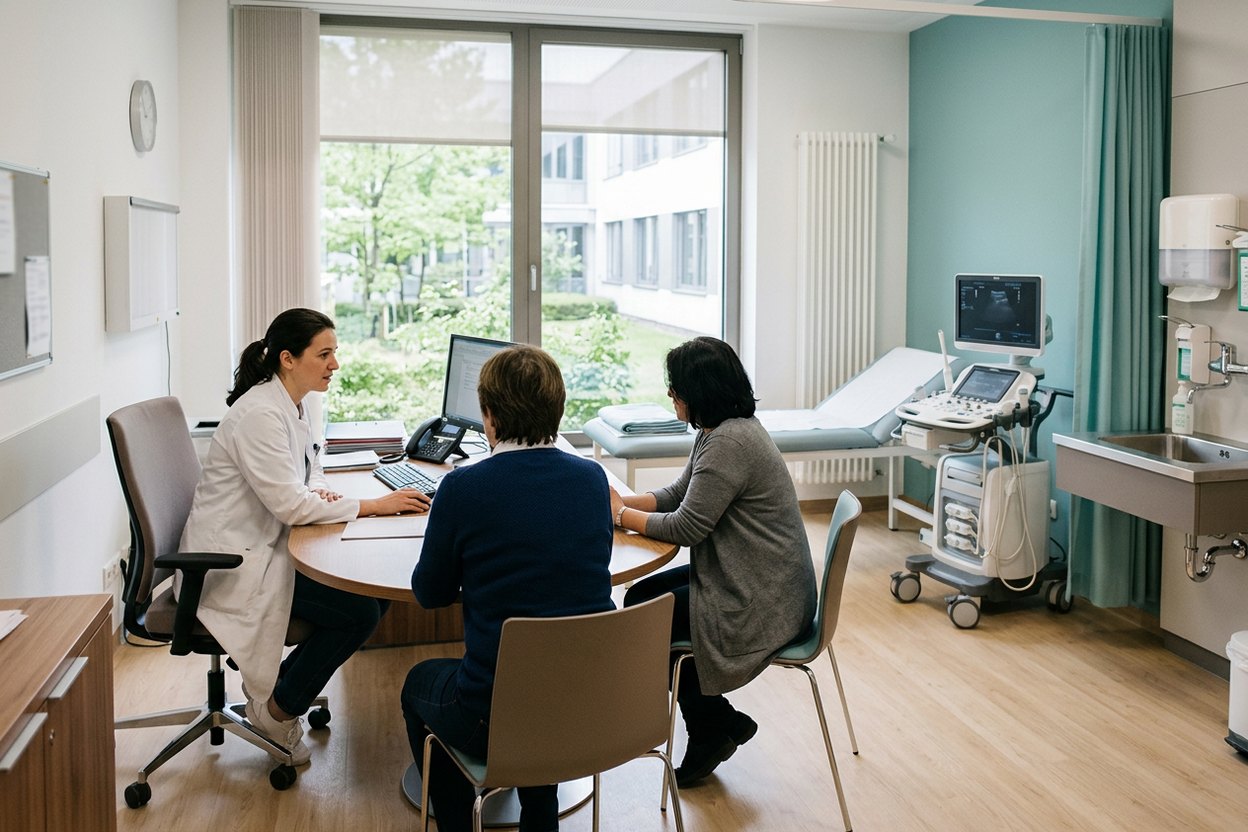
A gastroenterologist in Munich is the doctor patients see for heartburn, abdominal pain, blood in the stool, abnormal liver tests, a suspected tumour or a diagnosis that could not be clarified at home.
Below: which complaints call for a gastroenterologist, the gastroenterology departments of our Munich partner hospitals and who heads them, how the main tests work, and how a patient who does not speak German gets a consultation with an interpreter.
When to See a Gastroenterologist
You see a gastroenterologist for diseases of the digestive organs, from heartburn to early tumours. This is an internal medicine specialist for the oesophagus, stomach, bowel, liver, bile ducts and pancreas who treats reflux (stomach acid flowing back into the oesophagus), gastritis, ulcers, chronic inflammatory bowel disease, liver disease, gallstones, pancreatitis and early tumours. Crohn’s disease and ulcerative colitis, the two main chronic bowel inflammations, last for years with flare-ups and calmer periods.
Some symptoms should not wait: blood in the stool or black stool, vomiting blood, unexplained weight loss, difficulty swallowing and jaundice. Sudden severe abdominal pain is an emergency, not a reason to book a planned appointment. The conditions and their treatment are covered on the page on digestive disease treatment in Germany.
Gastroenterology at Munich Hospitals
Gastroenterology at our Munich partner hospitals is led by doctors with different profiles: research, endoscopic procedures or functional bowel disorders. At Rechts der Isar Hospital of the Technical University of Munich, Prof. Roland Schmid is Director of Internal Medicine II, a department for stomach, bowel, liver and pancreatic disease; his own research deals with pancreatic cancer. At Barmherzige Brüder Hospital, head physician Prof. Christian Rust is a gastroenterologist and one of the heads of the liver cancer centre.
At Munich Hospital Bogenhausen, head physician Dr Martin Fuchs specialises in endoscopy and endoscopic ultrasound: he removes early tumours of the oesophagus, stomach and bowel through the endoscope and treats achalasia with POEM. In achalasia, food does not pass easily into the stomach because the muscle at the lower end of the oesophagus fails to relax. At Munich Hospital Harlaching, head physician Dr Markus Dollhopf leads gastroenterology; for many years he has taught on Munich training courses in gastroscopy, colonoscopy, endoscopic ultrasound and ERCP.
At ISAR Klinikum, PD Dr Holger Seidl is Director of Gastroenterology. His fields are functional bowel disorders, where the bowel works erratically without visible damage, including irritable bowel syndrome, as well as reflux and proctology, the care of the rectum and anus. The German Society of Gastroenterology (DGVS) appointed him to its guideline panels on reflux disease and irritable bowel syndrome. The right doctor is chosen by diagnosis and records, not by the fame of a name.
A Gastroenterologist in Munich Who Speaks Your Language
In practice, language is handled by a medical interpreter rather than by choosing a doctor for his language: the hospitals do not list consultation languages for the gastroenterologists named above. Giving up the right department for the sake of the doctor’s language would be a poor trade.
This is how it works: one of our medical interpreters sits with you at the consultation and when the results are discussed, endoscopy and pathology reports are translated, and the preparation for each test is explained in your language in advance.
Gastroscopy, Colonoscopy and Other Tests
The main tests are gastroscopy and colonoscopy, a look inside the stomach or large bowel with a flexible tube and camera. During the examination the doctor can take biopsies, tiny tissue samples examined under the microscope to confirm or rule out inflammation or a tumour. Both tests are usually done under light sedation. Before a colonoscopy the bowel is emptied with a special laxative solution; the hospital tells you in advance when and how much to drink.
When a closer look is needed, doctors use endoscopic ultrasound and ERCP. Endoscopic ultrasound is ultrasound from the inside: a probe on the tip of the endoscope is brought right up to the organ, showing its wall and the tissue around it. ERCP is the examination and treatment of the bile ducts and the pancreatic duct via an endoscope.
Bring discharge letters, previous endoscopy and pathology results and a list of all your medicines to the first appointment. Blood thinners matter most: only the doctor decides whether to pause them before a test. How thoroughly the bowel must be prepared is set out in the German Society of Gastroenterology (DGVS) guideline on quality in endoscopy: at the time of the examination there should be no stool left in the bowel, or only minimal traces.
Frequently asked questions
How much does a gastroenterologist appointment in Munich cost?
The hospital names the price in a cost estimate once it has reviewed your records. There is no price list here, because without an examination any figure would be unverified. The total depends on what you need: a consultation only, or also gastroscopy, colonoscopy, biopsies with pathology, sedation or a hospital stay. AlenMed agrees the estimate with the hospital before you travel.
Can I see a gastroenterologist in Munich who speaks my language?
The hospitals do not list consultation languages for the gastroenterologists named above, so a medical interpreter takes care of language: at the consultation, when the results are discussed, and through translated endoscopy and pathology reports. Choosing a doctor by language rather than by diagnosis is not worth it: what matters is that the department deals with your condition every day.
How do I book a gastroenterologist in Munich from abroad?
You start with your records: discharge letters, endoscopy, pathology and lab results are translated into German and sent to a hospital that fits your diagnosis. The doctor reviews them and decides which tests are needed, and then the appointment date and the cost estimate are agreed. AlenMed handles the translation, the correspondence with the hospital and the booking.
How AlenMed Arranges a Gastroenterologist Appointment in Munich
AlenMed guides you from your first records to the appointment. Before you arrive, we translate your records, choose the hospital and doctor by diagnosis, and agree the date of the tests and the cost estimate with the hospital.
The company office is in Munich: from here we book your appointment and arrange an interpreter and transfers. If surgery or tumour treatment is needed, care continues in the same hospital or at a specialised centre elsewhere in Germany.
This material is for information only and is not an offer. The course of treatment is decided by the doctor after an in-person examination.