 EN
Modern medical technology has fundamentally changed the daily lives of people living with type 1 diabetes, yet physiological hormonal fluctuations remain an important clinical consideration. At a preliminary press conference held by the Deutsche Diabetes Gesellschaft (DDG) ahead of the 20th Diabetes Herbsttagung in Dresden, experts discussed new observational data concerning automated insulin delivery systems. The study, published in the September 2026 issue of the peer-reviewed journal Diabetes Care, demonstrates that while these automated devices significantly support glucose management, cycle-dependent variations in insulin requirements and blood sugar levels persist. For international patients seeking advanced care and technology consultations in German medical centers, these findings underline the necessity of tailored therapy adjustments alongside expert clinical guidance.
Understanding Type 1 Diabetes, Hormonal Fluctuations, and Modern AID Systems

Type 1 diabetes is an autoimmune condition in which the pancreas ceases to produce insulin, the essential hormone responsible for converting glucose from food into energy for cellular function. Without adequate insulin, blood sugar levels rise to harmful levels, increasing the long-term risk of cardiovascular, renal, and neurological complications. Managing the condition requires constant vigilance, including carb counting, activity monitoring, and accurate insulin administration. In specialized diabetes clinics in Germany, treatment strategies focus on maximizing the time blood glucose remains within a safe target range to prevent both immediate and late complications.
In women of reproductive age, the natural menstrual cycle introduces predictable shifts in circulating hormones, notably estrogen and progesterone. During the luteal phase, which occurs after ovulation and before the onset of menstruation, many women experience reduced insulin sensitivity. This physiological state of relative insulin resistance means that higher amounts of insulin are necessary to clear glucose from the bloodstream. Consequently, blood sugar levels during the second half of the cycle often rise higher or prove more volatile, even when dietary habits and physical activity levels remain entirely consistent.
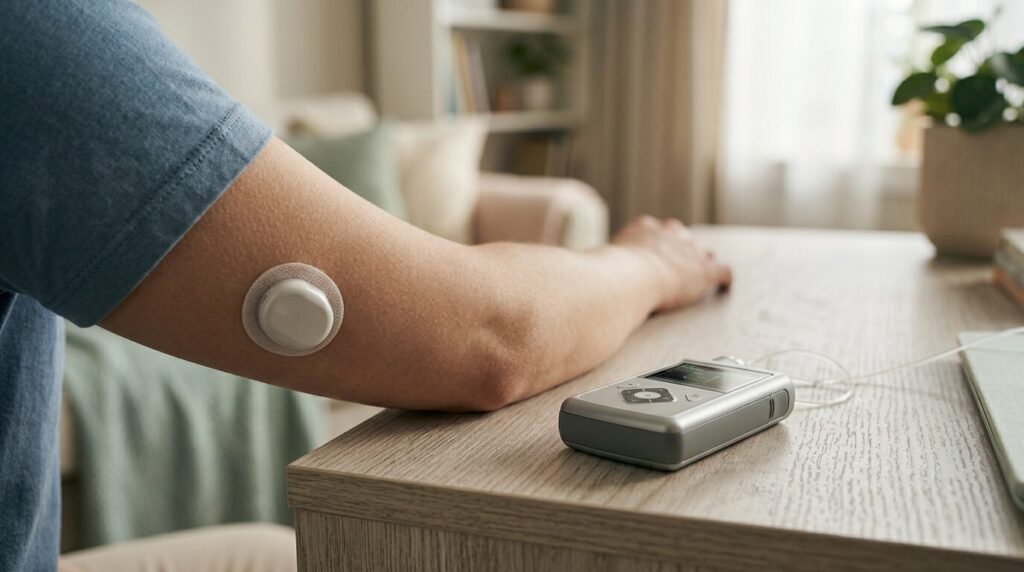
To ease the daily burden of management, modern clinics in Germany frequently prescribe automated insulin delivery systems, commonly known as AID systems. These medical devices combine a continuous glucose monitor sensor with an insulin pump and an advanced control algorithm. The software evaluates sensor readings every few minutes and automatically adjusts basal insulin delivery up or down. While AID systems offer remarkable benefits for overall glycemic stability and night-time safety, their underlying control algorithms generally respond to measured blood sugar trends rather than anticipating physiological hormonal shifts.
The Study Findings on Automated Insulin Delivery During the Menstrual Cycle
The observational study featured in the September 2026 issue of Diabetes Care evaluated data from 77 women across 380 complete menstrual cycles under real-world conditions. Dr. Martina Rothenbühler, Scientific Program Manager at the Diabetes Center Berne in Bern, Switzerland, detailed the outcomes during the DDG press briefing. The research demonstrated that during the second half of the menstrual cycle, both total daily insulin delivery and average blood glucose values were significantly higher compared to the initial phase, despite the active operation of automated insulin delivery systems.
Statistical modeling applied to the everyday clinical data revealed a distinct pattern in approximately 85 percent of participants, characterized by lower insulin sensitivity after ovulation and elevated sensitivity at the start of menstruation. Although the AID systems responded to rising glucose levels by automatically increasing insulin infusion, participants spent less time within their target glucose range during this second phase. The magnitude of these fluctuations varied considerably among individual participants, proving that generic rule-of-thumb adjustments are inadequate for individual clinical management.
The researchers emphasized that real-world diabetes management is influenced by multiple interacting factors, such as dietary composition, sleep quality, psychological stress, and physical exercise. Dr. Martina Rothenbühler pointed out that currently no regulatory-approved AID system explicitly integrates menstrual cycle tracking directly into its automated control algorithm. Because these devices act reactively to glucose changes rather than proactively predicting hormonal phases, technical automation alone cannot eliminate cycle-induced variations.
Practical Clinical Implications and Patient Consultations in German Medical Centers

The transition from the luteal phase to the start of menstruation brings a rapid recovery in insulin sensitivity, which introduces a distinct clinical challenge. If automated or manual insulin delivery settings remain set high from the pre-menstrual period, the risk of hypoglycemia—dangerously low blood sugar—increases significantly. Although AID systems can suspend or reduce insulin delivery when blood sugar drops, working closely with a diabetology team is essential to establish personalized basal profiles and correction factors that account for these transitions safely.
For patients visiting specialized medical centers in Germany for diabetes optimization, these scientific insights provide clear practical directions. German diabetologists emphasize comprehensive diagnostic reviews, combining digital sensor reports with personal health logs. By mapping glucose trends alongside cycle dates, specialists can help patients configure secondary target profiles within their pump systems. This structured, personalized approach ensures that device settings align precisely with the physiological realities of each individual.
As highlighted by the Deutsche Diabetes Gesellschaft in preparation for the 20th Diabetes Herbsttagung taking place on November 13 and 14, 2026, in Dresden, modern diabetes care must balance advanced technical automation with individualized patient education. Medical devices should be measured not only by automated algorithm performance but also by how effectively they reduce the burden of daily clinical decision-making. Through structured consultation and tailored device programming, patients can achieve safer, more consistent glycemic control across every phase of life.
Source: Deutsche Diabetes Gesellschaft