 EN
A research team led by Charité – Universitätsmedizin Berlin, in collaboration with the Max Delbrück Center, has deciphered the precise cellular and molecular mechanism by which chronic Helicobacter pylori infection reprograms the gastric mucosa and prepares the tissue for tumor development. Published in the scientific journal Nature Communications, the findings explain how the widespread stomach bacterium initiates a multi-step signal chain involving underlying connective tissue. This groundbreaking discovery provides a concrete scientific foundation for intercepting disease development long before a malignant tumor actually forms, offering critical new options for patients with elevated familial risk.
Understanding Gastric Cancer Risks and Chronic Infection
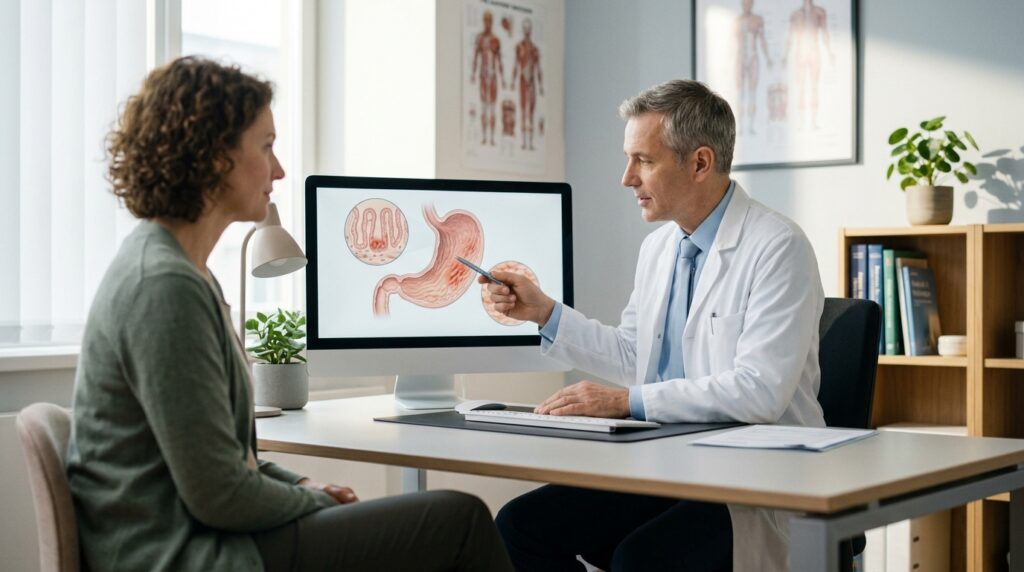
Gastric cancer remains one of the most lethal malignancies worldwide, often diagnosed only after significant disease progression. Unlike many other forms of cancer, however, a major primary cause is well established: a chronic infection with the bacterium Helicobacter pylori. This pathogen is frequently transmitted within families from one generation to the next, silently persisting in the stomach lining and causing low-grade chronic inflammation over several decades.
Malignant transformation of the stomach lining never occurs overnight. Instead, the tissue undergoes a gradual, step-by-step structural alterating over many years. Individuals whose parents or grandparents suffered from stomach cancer linked to a Helicobacter infection carry a substantially higher risk of developing the disease themselves. Over time, persistent inflammatory signals disrupt normal tissue homeostasis, progressively conditioning the cellular environment for pathological growth.
A major clinical challenge in gastroenterology today is that early structural changes in the stomach mucosa cause few, if any, noticeable symptoms. By the time a patient experiences persistent pain or digestive distress that prompts a medical workup, cellular alterations may already be advanced. Consequently, modern medical research focuses heavily on identifying early molecular checkpoints that allow intervention before irreversible tissue remodeling occurs.
Unraveling the Cellular Domino Effect in Nature Communications
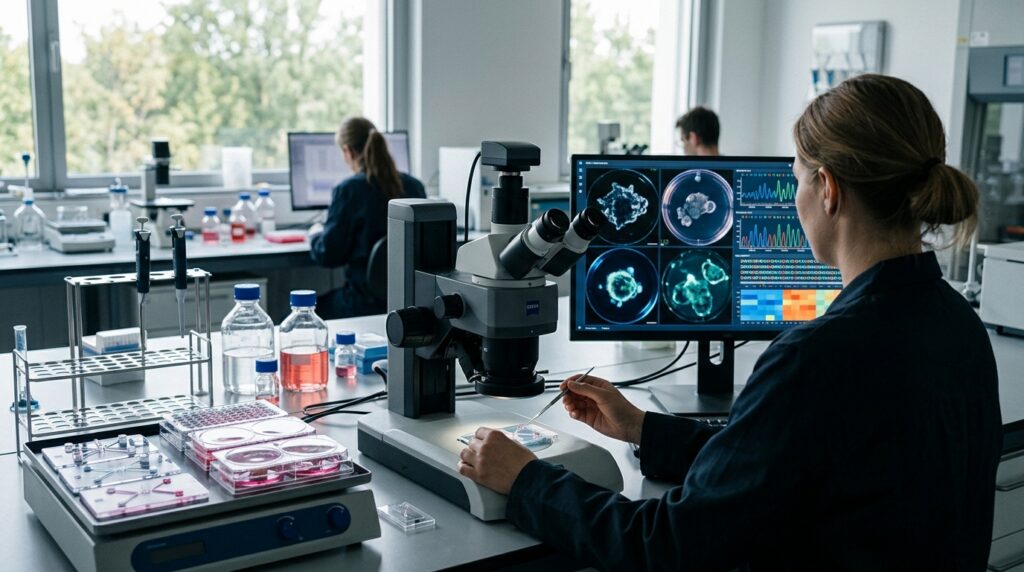
To understand the exact sequence of cellular events, researchers led by Prof. Michael Sigal and Dr. Manqiang Lin at the Department of Hepatology and Gastroenterology at Charité, together with the ImmunoPreCept Cluster of Excellence, analyzed tens of thousands of individual cells from diseased gastric mucosa using single-cell sequencing. The primary author of the study, published in Nature Communications, is junior researcher Giulia Beccaceci.
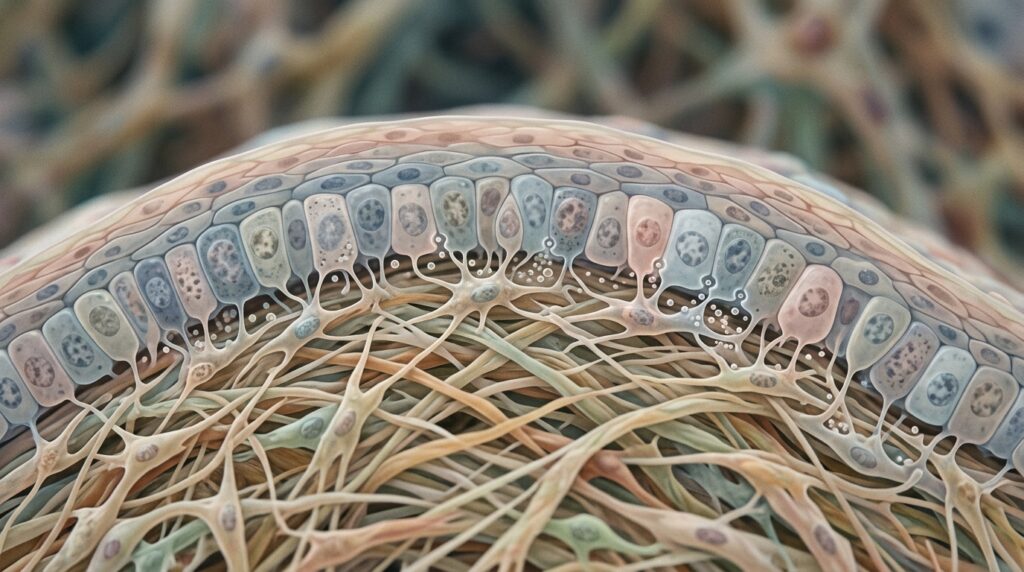
Using sophisticated animal models and laboratory-grown 3D tissue architectures—specifically mini-stomach organoids and assembloids that combine epithelial and connective tissue cells—the team mapped the intercellular communication in real time. They discovered that Helicobacter pylori first disables a natural mucosal defense mechanism that normally regulates surface cell renewal and bacterial tolerance. In response, infiltrating immune cells release the inflammatory signaling molecule Interleukin-1β. Remarkably, Interleukin-1β does not act directly on the mucosal epithelium, but rather targets the underlying connective tissue.
As Giulia Beccaceci highlights, the underlying connective tissue acts as the decisive master switch in this process. Upon receiving the Interleukin-1β signal, connective tissue cells release a potent tissue hormone that forces the gastric mucosa into a hyperactive repair mode typical of embryonic development and acute wound healing. Mucosal cells begin to proliferate rapidly without the expansion of classical stem cells. This tightly orchestrated cascade operates like a strategic game of chess, where each cellular step inevitably prepares the next stage of tissue transformation.
Targeted Interception: Beyond Standard Antibiotic Therapy
In current clinical practice across Germany, the primary preventive measures against stomach cancer focus on early detection and antibiotic eradication of Helicobacter pylori. When an active infection is diagnosed, standard antibiotic regimens are prescribed to eliminate the bacterial burden. This treatment successfully removes the constant inflammatory stimulus, significantly reducing the long-term risk of neoplastic transformation for many patients.
However, clinical experience shows that antibiotic treatment does not always return the gastric mucosa to a completely normal state. In certain individuals, the underlying tissue has already undergone permanent molecular reprogramming, meaning that a residual risk of cancer development persists even after the bacteria have been completely eradicated. To reliably identify these high-risk individuals, Prof. Michael Sigal and his team are developing novel molecular biomarkers for tissue biopsy samples.
Uncovering this exact signaling chain reveals precise molecular targets for future drug therapies. For instance, pharmaceutical interventions could potentially interrupt the triangular signal communication by making connective tissue cells unresponsive to Interleukin-1β, thereby halting pathological tissue remodeling. This concept aligns with previous epidemiological studies showing that regular use of anti-inflammatory drugs inhibiting the COX-2 enzyme reduces gastrointestinal tumor risk, a mechanism that can now be refined with greater specificity and fewer side effects.
The Cancer Prevention Clinic and What Patients Should Know

To translate these scientific insights into direct patient care, Charité is establishing a specialized Cancer Prevention Clinic. Working alongside interdisciplinary partners from the ImmunoPreCept Cluster of Excellence, the Berlin Institute for Medical Systems Biology (BIMSB) at the Max Delbrück Center, Otto-von-Guericke-Universität Magdeburg, the Max Planck Institute for Infection Biology, and the Berlin Institute of Health (BIH), the team aims to establish comprehensive preventive concepts that intercept disease processes long before clinical symptoms emerge.
For international patients considering gastroenterological evaluation or preventive care in Germany, these findings represent a major advance in personalized medicine. Individuals with a known family history of gastric cancer or persistent Helicobacter infection can benefit from advanced diagnostic evaluation that goes beyond standard endoscopy to assess tissue-level molecular risk.
When consulting gastroenterology specialists in Germany, patients are encouraged to discuss Helicobacter screening, tissue biomarker analysis, and individual risk stratification strategies. These pioneering efforts, supported by the ERC Starting Grant REVERT, DFG, BMBF, and the Einstein Center 3R, underscore a broader paradigm shift toward molecular prevention, ensuring that high-risk tissue can be identified, monitored, and protected effectively.