 EN
ENThe European medical community has reached a significant milestone in robotic cardiac surgery with the official CE approval of the da Vinci 5 system for specific heart interventions in adults. Announced by the Deutsche Gesellschaft für Thorax-, Herz- und Gefäßchirurgie e.V. (DGTHG), this regulatory clearance expands the system’s approved application to thoracoscopically supported heart operations and minimally invasive coronary artery bypass grafting. For international patients seeking modern cardiovascular care in Germany, this development marks a progressive step toward even less invasive, highly precise surgical techniques. German cardiac centers are now positioned to integrate this latest generation of robotic technology into routine clinical practice, offering patients enhanced precision and structured quality assurance during complex cardiac procedures.
Understanding Heart Conditions and the Move Toward Minimally Invasive Surgery
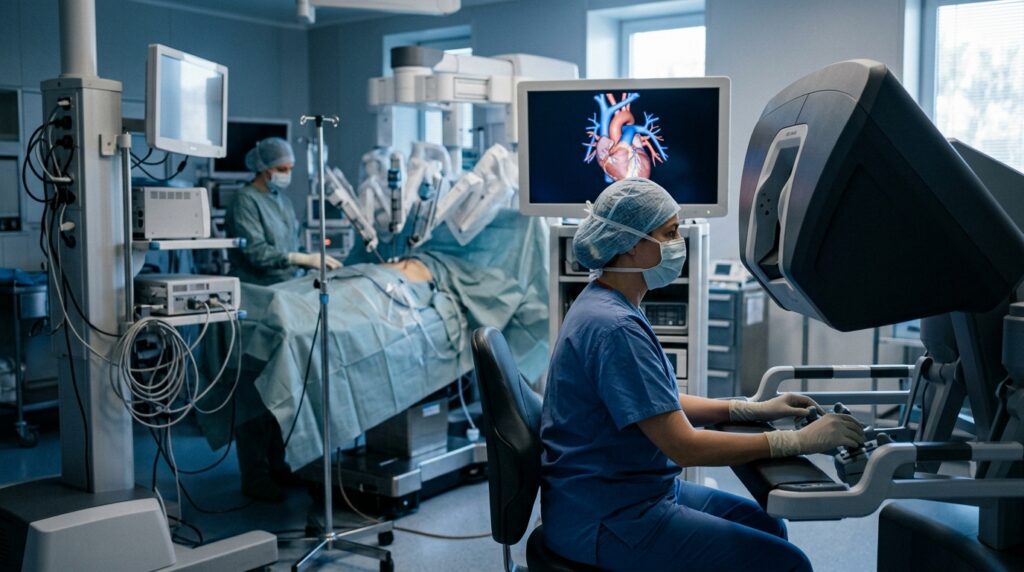
Coronary artery disease and structural heart conditions remain among the most common cardiovascular challenges requiring surgical intervention worldwide. When blood vessels supplying the heart muscle become narrowed or blocked, or when internal cardiac structures like valves fail to function correctly, patients face severe health risks including myocardial infarction or progressive heart failure. Traditionally, accessing the heart required a median sternotomy, a procedure where the breastbone is divided to allow surgeons direct manual access to the thoracic cavity. While sternotomy remains a safe and highly established surgical approach, it involves significant physical trauma, extended healing periods, and substantial postoperative restrictions on physical activity.
In recent decades, cardiac surgeons have increasingly sought ways to achieve the same durable therapeutic outcomes while minimizing surgical trauma to the patient’s body. Minimally invasive cardiac surgery relies on small incisions between the ribs rather than opening the chest completely, drastically reducing soft tissue injury and preserving structural integrity. For patients, avoiding a full sternotomy generally translates to less postoperative pain, lower risk of wound infection, reduced blood loss, and a significantly faster return to daily activities. However, performing complex vascular or intracardiac repairs through tiny intercostal spaces presents technical challenges, requiring surgical tools that can maneuver in extremely confined spaces without compromising vision or control.
Robotic assistance emerged as an innovative solution to these ergonomic and technical limitations, bridging the gap between minimal invasiveness and surgical precision. By translating the surgeon’s hand movements into micro-movements of articulated instruments inside the patient’s chest, robotic platforms allow delicate manipulations that exceed natural human dexterity. Over recent years, leading German heart centers have successfully established robotic programs for select procedures. The arrival of next-generation robotic systems further refines these capabilities, bringing sophisticated digital architecture and enhanced maneuverability to cardiac operating rooms.
Advanced Engineering of the da Vinci 5 System in Heart Surgery
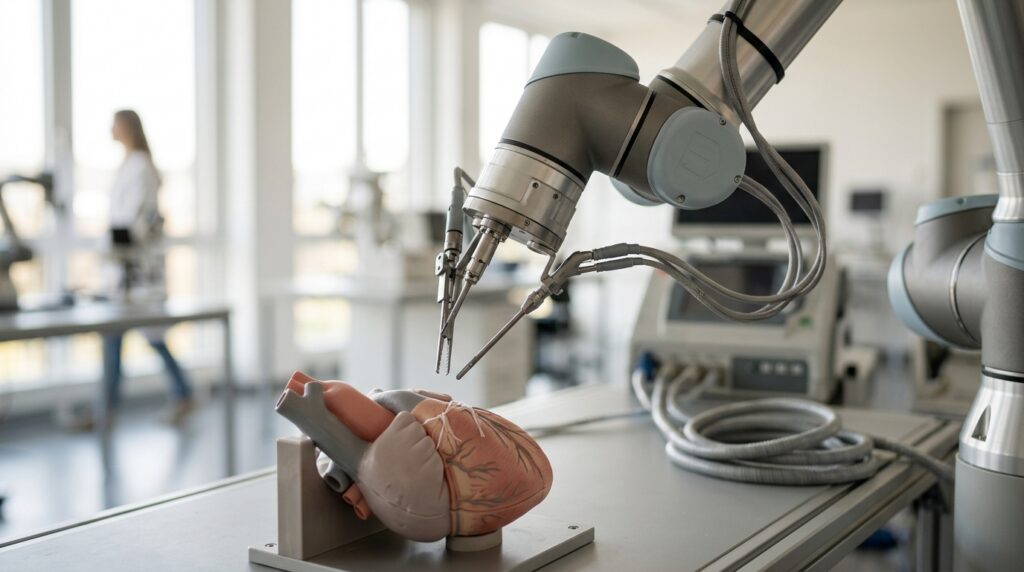
The newly granted CE mark for the da Vinci 5 system officially authorizes its use across Europe for specific adult heart operations, notably thoracoscopically assisted cardiac procedures and minimally invasive coronary artery bypass grafting. The Deutsche Gesellschaft für Thorax-, Herz- und Gefäßchirurgie e.V. (DGTHG) welcomed this approval as a vital catalyst for the broader establishment of robotic heart surgery in Germany. Compared to earlier system generations, the da Vinci 5 incorporates substantial technological refinements designed to optimize surgical workflows. Among these innovations are significantly more compact robotic arms, which enhance movement trajectories within the narrow confines of the adult chest cavity and minimize collision risk between instruments.
Core advantages of robotic surgery, such as high-definition three-dimensional visualization and wrist-like instrument mobility, are further enhanced in this fifth-generation platform. The system’s robotic instruments offer seven degrees of freedom, enabling exceptional agility when navigating around complex anatomical structures. Integrated tremor-reduction algorithms filter out involuntary hand tremors, while motion scaling translates large movements at the surgeon’s console into minute, hyper-precise movements at the surgical site. Furthermore, the da Vinci 5 features an expanded instrument portfolio, substantially increased data processing capacity, and an integrated training simulator to support surgeon education and skill retention.
Beyond physical hardware improvements, the platform’s digital architecture offers unprecedented opportunities for data tracking and quality evaluation. Prof. Dr. Jochen Börgermann, 1st Vice President of the DGTHG and Chief of the Clinic for Cardiac Surgery and Pediatric Cardiac Surgery at Herzzentrum Duisburg, emphasized the importance of this digital foundation for scientific progress. He noted that the system’s ability to record and analyze surgical workflows in a structured manner will facilitate systematic, evidence-based evaluations of clinical benefits. Prof. Dr. Jochen Börgermann expressed strong optimism for the future, stating: "Ich bin überzeugt davon, dass die Robotik in der Herzchirurgie einen festen Platz einnehmen wird – für eine noch bessere Versorgung unserer Patient:innen."
Implications and Practical Steps for International Patients in Germany

For international patients considering heart surgery in Germany, the CE approval of the da Vinci 5 system represents a measured and reassuring evolution in cardiovascular care. Medical experts from the DGTHG emphasize that while this approval expands technological possibilities, it signals a structured, step-by-step advancement rather than an immediate overhaul of established surgical practices. German heart centers are recognized for their cautious, evidence-oriented implementation of new medical devices. This ensures that novel technologies like the da Vinci 5 are integrated safely, backed by rigorous clinical protocols, comprehensive surgeon training, and ongoing scientific evaluation.
Patients travelling to Germany for cardiac evaluation can benefit from the high concentration of specialized heart centers that are equipped with advanced robotic systems and experienced surgical teams. Interventions such as robotically assisted coronary artery bypass grafting or thoracoscopic cardiac repairs offer clear advantages in terms of smaller incisions, minimal scarring, decreased postoperative discomfort, and shorter hospital stays. However, robotic surgery is not suitable for every clinical presentation. The decision to utilize robotic assistance depends on individual patient anatomy, the specific nature of the cardiac pathology, and overall systemic health.
During preliminary consultations with German cardiac specialists, international patients should ask detailed questions regarding surgical options and suitability for robotic procedures. Useful topics to discuss include whether a minimally invasive or robotic approach is recommended for their specific diagnosis, the operative experience of the surgical team with platforms like the da Vinci 5, and expected recovery timelines compared to conventional surgery. By seeking care in German hospitals, patients gain access to state-of-the-art robotic innovations embedded within a highly regulated, safety-focused medical environment.
Source: Deutsche Gesellschaft für Thorax-, Herz- und Gefäßchirurgie e.V.