 EN
Surgeons at the Deutsches Herzzentrum der Charité (DHZC) have successfully implanted a HeartMate 3 left ventricular assist system into their 750th patient. This milestone highlights the extensive experience of the Berlin-based hospital, which has now implanted more than 3,200 long-term mechanical circulatory support systems of various types. For individuals suffering from end-stage heart failure, these advanced heart pumps serve either as a crucial bridge while waiting for a donor organ or as a long-term alternative to heart transplantation. This achievement underscores how specialized medical care in Germany continues to extend and improve the lives of patients with severe cardiovascular conditions.
Record Milestones at DHZC and Updated International Guidelines
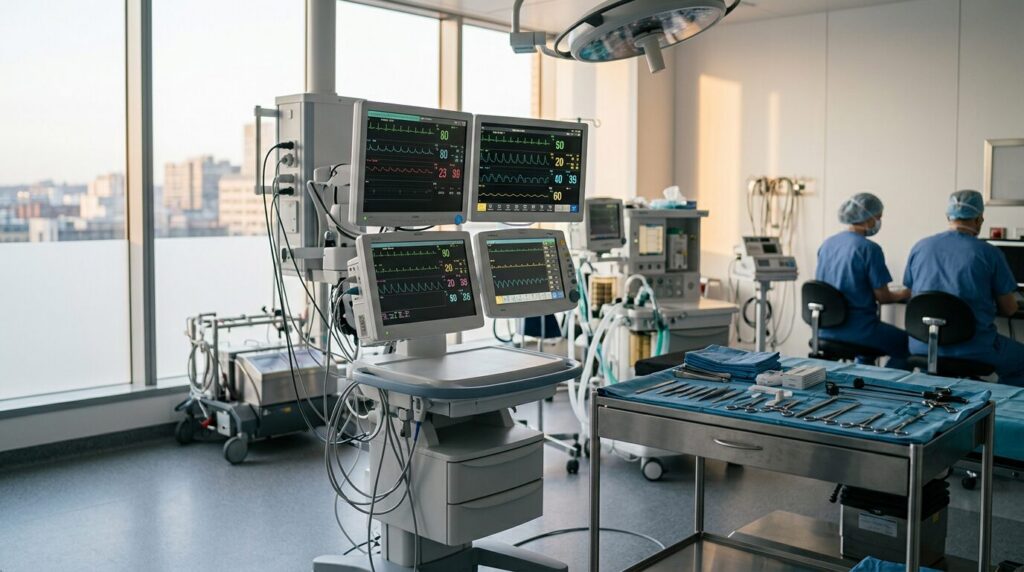
The DHZC operates Europe’s largest artificial heart program by case volume and ranks second worldwide in the total number of HeartMate 3 system implantations. This high concentration of complex clinical cases allows the center’s multidisciplinary teams to continually refine surgical protocols and long-term care routines. The clinical relevance of mechanical circulatory support was further reinforced during the European Society of Cardiology (ESC) annual congress in Munich on August 28, 2026. The newly presented ESC heart failure guidelines awarded long-term left ventricular assist device (LVAD) therapy a Class I recommendation with level of evidence C for carefully selected patients with advanced heart failure.
This top-tier recommendation aims to reduce mortality and alleviate severe symptoms in patients whose medical therapy options have been fully exhausted. The ESC guideline applies both to patients waiting for a heart transplant and to those receiving mechanical support as a destination therapy. Clinical experts emphasize that long-term mechanical support has successfully evolved over recent decades from an emergency bridge into a reliable, permanent treatment perspective. Surgical precision, dedicated nursing, and ongoing technical refinements work together to provide optimal stability for vulnerable patient groups.
Prof. Dr. Volkmar Falk, Medical Director of the DHZC, noted that the evolution of mechanical circulatory support is deeply intertwined with the hospital’s history. Decades of dedicated teamwork have helped turn a short-term emergency intervention into a long-term perspective for many individuals. Prof. Dr. Evgenij Potapov, head of the artificial heart program at DHZC, stressed that while keeping patients stable on heart pumps for many years represents tremendous progress, clinicians must continue striving to reduce complications such as bleeding and infections to maximize patient independence.
Engineering Principles Behind the HeartMate 3 System
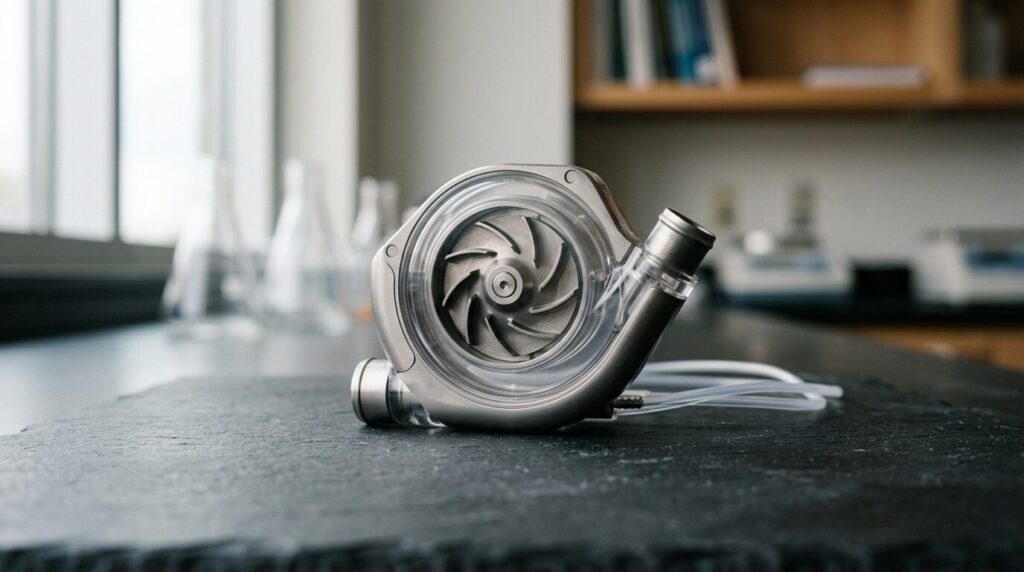
The HeartMate 3, developed in the USA, is currently the world’s most widely used left ventricular assist device. The pump is implanted directly below the patient’s heart, taking oxygenated blood from the left ventricle and propelling it through a vascular graft into the main aorta to relieve the overworked heart muscle. Inside the pump, a fully magnetically levitated rotor floats within a magnetic field without mechanical bearings. Wide blood flow margins and periodic speed adjustments generate an artificial pulse designed to minimize shear stress on blood cells and prevent clot formation.
Unlike a Total Artificial Heart (TAH), which completely replaces the patient’s natural heart chambers and is reserved for rare cases with severe biventricular failure, an LVAD preserves the natural heart organ. A specialized cable called a driveline passes through the abdominal skin to connect the internal pump with an external system controller and portable rechargeable batteries. Patients can move around freely for up to 16 hours on a single pair of batteries. Other global developments, such as the Chinese CH-VAD and the BrioVAD being evaluated in US clinical trials, continue to be studied for safety and long-term efficacy.
Mechanical heart support becomes necessary when standard guideline-directed medical therapies and interventional procedures no longer manage advanced symptoms. Depending on the clinical profile, an LVAD can bridge the waiting time until transplantation, allow the heart muscle a chance to recover, or provide a permanent destination therapy. Comprehensive pre-operative diagnostics evaluate kidney function, liver status, and vascular health to ensure that each patient is suitable for long-term mechanical support.
Patient Journeys and the Pioneering Legacy of Berlin Cardiology

Individual patient experiences highlight the remarkable timeframes made possible by modern circulatory support systems. In August 2014, Pamela J. became the first patient at the former Deutsches Herzzentrum Berlin (DHZB) to receive a HeartMate 3 system shortly after the birth of her son. Today, at 44 years old, she has lived well with the system for more than twelve years while watching her son grow up. In another compelling case, 66-year-old Thomas F. suffered a life-threatening heart attack in July 2026, was initially stabilized on an ECMO system, and subsequently received the 750th HeartMate 3 system at DHZC on August 19, 2026.
The foundation for these accomplishments was built over decades of pioneering research in Berlin. In the 1980s, heart surgeon Emil Bücherl led a research group at the Charlottenburg Medical Center of the Freie Universität Berlin dedicated to artificial heart development. Building on this research, surgeon Roland Hetzer implanted an artificial heart developed by Bücherl’s team at the DHZB on July 20, 1987. These efforts led to the creation of Mediport Kardiotechnik in 1996, which later became Berlin Heart, as well as clinical trials for the implantable INCOR system in 2002.
Berlin researchers also made landmark contributions regarding myocardial recovery. In 1995, the DHZB and the Max Delbrück Center reported on a patient whose severely failing heart recovered so significantly after 160 days of mechanical unloading that the pump could be removed without requiring a heart transplant. This historical depth of research directly informs current medical strategies, ensuring that patient care relies on decades of refined expertise.
Daily Life with a Heart Pump and Medical Care in Germany

Living with an implanted LVAD requires structured daily routines and careful attention to hygiene. The driveline exit site on the abdomen must be kept clean and covered with sterile dressings to prevent serious infections. Patients must adapt their daily routines, as swimming and bathing are not permitted with an external driveline, and showering requires specific protective covers and instruction. While light physical exercise is encouraged to rebuild stamina, high-impact or contact sports such as karate must be avoided.
Patients traveling to Germany for advanced cardiac care benefit from specialized outpatient infrastructure. The DHZC maintains a dedicated VAD outpatient clinic (VAD-Ambulanz) and a 24-hour emergency hotline staffed by VAD specialists. In addition to training patients and family members on system management, the center’s staff act as international proctors to guide surgical teams worldwide and conduct training sessions for law enforcement agencies, such as the Bundespolizei, to ensure smooth security screening for individuals carrying portable heart pump equipment.
When evaluating mechanical heart support options in Germany, international patients should discuss several key clinical topics with their attending medical team. It is essential to ask about personalized risks concerning bleeding or stroke, the potential for native heart recovery, and the structure of long-term outpatient follow-up. Certified supra-regional heart failure centers provide the multidisciplinary expertise necessary to ensure safe treatment, accurate device management, and optimized quality of life.
Source: Kleine Pumpe, neue Lebenszeit: 750. Patient erhält HeartMate 3-System am DHZC