 EN
A study from Universitätsklinikum Hamburg-Eppendorf published in Neurological Research and Practice demonstrates that continuing mechanical thrombectomy after initial failed attempts can significantly benefit patients with severe ischemic stroke. Researchers analyzed registry data from 9,495 patients in the German Stroke Registry — Endovascular Treatment treated between 2015 and 2023. The findings reveal that making up to six attempts to reopen an obstructed brain artery yields higher chances of functional independence than stopping early. This evidence encourages neurointerventional teams in Germany to evaluate each treatment step individually rather than adhering to rigid attempt limits. For international patients seeking advanced neurological care, these insights highlight the sophisticated decision-making standards available at top German centers.
Acute Ischemic Stroke and Mechanical Thrombectomy Standard
An acute ischemic stroke occurs when a blood clot blocks a major artery supplying blood to the brain. This sudden interruption deprives brain tissue of vital oxygen and nutrients, leading to rapid neuronal damage. When large blood vessels are involved, severe neurological deficits such as paralysis, speech impairment, or loss of consciousness can occur immediately. Time is critical because millions of nerve cells die every minute that circulation remains blocked. Restoring blood flow as quickly as possible is the central objective of emergency neurological intervention.
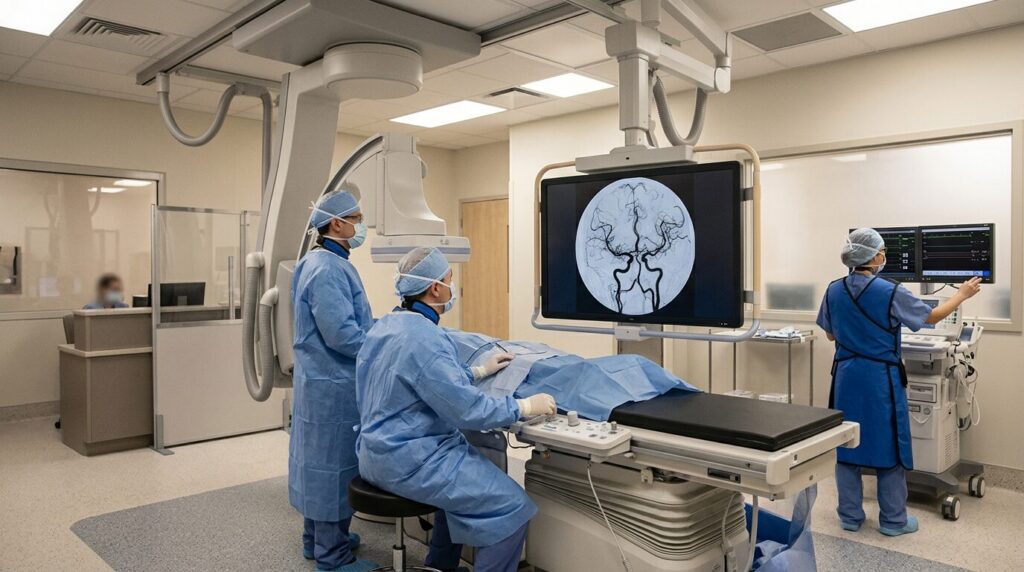
Mechanical thrombectomy has revolutionized the treatment of severe ischemic strokes caused by large vessel occlusions. During this minimally invasive procedure, a specialized specialist inserts a thin catheter through a blood vessel in the groin or wrist and navigates it up to the obstructed brain artery. Using microscopic stent retrievers or aspiration devices, the specialist physically captures and removes the blood clot to restore normal perfusion. While this technique often succeeds quickly, difficult clot structures or tortuous blood vessels can prevent immediate success on the first attempt.
Specialized medical centers in Germany are recognized globally for their comprehensive stroke infrastructure and advanced endovascular capabilities. Certified stroke units and dedicated neurointerventional teams provide round-the-clock emergency care using state-of-the-art imaging and catheter technologies. Treatment protocols follow strict evidence-based guidelines developed by leading medical societies such as the Deutsche Gesellschaft für Neurologie. However, clinical situations where an initial retrieval attempt fails have historically presented complex tactical choices for operating physicians.
The German Stroke Registry Study and Key Findings

To clarify the optimal approach after unsuccessful vessel opening attempts, researchers from Universitätsklinikum Hamburg-Eppendorf conducted a comprehensive registry analysis. Their study, published in the peer-reviewed journal Neurological Research and Practice, evaluated data from 9,495 patients enrolled in the German Stroke Registry — Endovascular Treatment between 2015 and 2023. The overall patient cohort demonstrated an impressive 89 percent successful reperfusion rate across the entire treatment course. Furthermore, 36 percent of all patients achieved a good functional outcome after 90 days, meaning they were largely independent in daily life.
Unlike previous research that merely recorded the total number of attempts, the Hamburg research team examined each sequential decision step individually. Lead author Luca Meucci and his colleagues compared patient outcomes when doctors chose to continue therapy versus stopping after an unsuccessful vessel reopening. The statistical analysis demonstrated a clear benefit: after each of the first six failed attempts, continuing mechanical thrombectomy was associated with a significantly higher probability of a good functional outcome compared to terminating the intervention. Only after the seventh attempt did this statistical advantage fade.
The study detailed specific recovery probabilities alongside the associated clinical risks of repeated maneuvers. When successful vessel reopening was achieved on the fifth attempt, 28.1 percent of patients reached functional independence at 90 days, while 22.8 percent achieved a good outcome when success occurred on the sixth attempt. However, the researchers noted that procedural complication rates increased alongside the number of attempts. Complication rates rose from 8.0 percent for a single attempt to 24.6 percent when seven or more attempts were performed.
Clinical Implications and Individualized Stroke Care

The study findings advocate strongly against establishing rigid maximum limits on the number of thrombectomy attempts during stroke interventions. Co-author Prof. Dr. Götz Thomalla, who serves as congress president of the Deutsche Gesellschaft für Neurologie, emphasized that therapeutic decisions must remain tailored to the individual patient. Rather than stopping prematurely based on arbitrary numerical rules, neurointerventionalists should re-evaluate the specific risk-benefit profile after every single retrieval attempt. This individualized framework represents a major advancement in evidence-based acute neurovascular care.
German university hospitals and specialized stroke centers are already integrating these insights into their clinical practice. Operating teams carefully weigh factors such as collateral blood flow, clot location, patient age, and arterial anatomy alongside the cumulative procedural risks. By maintaining a flexible, evidence-driven approach, specialists can maximize the chances of achieving effective brain reperfusion while minimizing unnecessary harm. This refined decision-making process offers renewed hope for patients facing complex acute stroke scenarios.
For international patients and their families seeking medical treatment in Germany, these study results underscore the high level of clinical sophistication in German stroke care. When evaluating treatment options or seeking consultations with German specialists, patients can inquire about center-specific experience with complex endovascular procedures. Questions regarding neurointerventional expertise, registry participation, and multidisciplinary post-stroke rehabilitation can help families understand the full scope of modern stroke management. Discussing these aspects with attending physicians ensures well-informed decisions tailored to every unique medical situation.