 EN
The Institute for Radiology, Nuclear Medicine and Molecular Imaging at the Herz- und Diabeteszentrum NRW (HDZ NRW) in Bad Oeynhausen has reached a major milestone in modernizing its radiopharmaceutical facility. To secure the continuous production of short-lived radioactive isotopes required for advanced molecular imaging, a 400-ton crane precisely lowered a new 18-ton particle accelerator into the institute basement bunker. Manufactured by IBA RadioPharma Solutions, this state-of-the-art cyclotron replaces an older device and expands the center diagnostic capabilities. For international patients seeking medical evaluation and targeted therapy in Germany, this investment ensures highly reliable, ultra-precise diagnostic procedures for cardiovascular, oncological, and neurological conditions.
The vital role of PET imaging and molecular diagnostics in clinical care
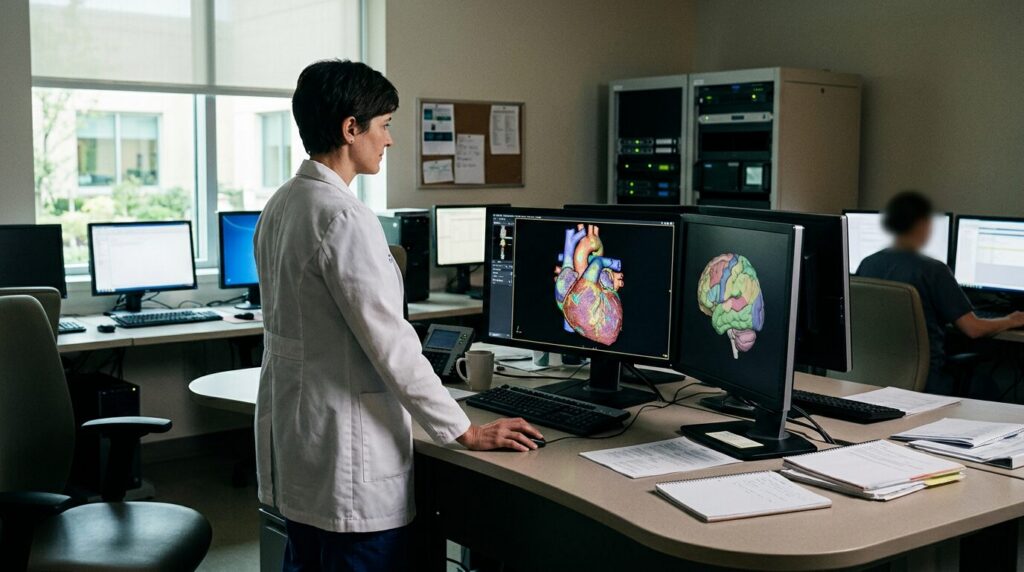
Positron Emission Tomography, commonly known as PET, represents one of the most advanced non-invasive diagnostic tools available in modern medicine. Unlike conventional imaging techniques such as standard computed tomography or ultrasound, which primarily display the structural anatomy of organs, PET imaging visualizes biological processes at the cellular and metabolic levels. This capability is particularly crucial when evaluating complex cardiovascular diseases, identifying malignant tumors, or detecting early signs of neurodegenerative disorders before physical structural changes become visible on routine scans.
To perform a PET scan, physicians administer a specialized radiopharmaceutical—a biological molecule tagged with a minute quantity of a short-lived radioactive isotope. As this compound travels through the body, it accumulates in tissues exhibiting altered metabolic activity, such as ischemic regions of the heart muscle or rapidly growing cancer cells. The PET scanner detects the positrons emitted by the decaying radionuclide and translates these signals into high-resolution, three-dimensional images of cellular function. This detailed information allows cardiologists and oncologists to assess tissue viability and plan highly personalized treatment strategies.
Because these diagnostic radioisotopes decay rapidly, they cannot be manufactured far in advance or stored for extended periods. Having an on-site radiopharmacy equipped with particle accelerators is essential for major medical centers. It allows specialists to synthesize custom radiopharmaceuticals on demand, ensuring that diagnostic appointments proceed without delay and that patients receive fresh, highly potent tracer formulations tailored to their specific clinical requirements.
Accurate molecular imaging directly shapes therapeutic decision-making. By providing clear insights into organ metabolism, PET scans help clinical teams determine whether a patient will benefit more from surgical intervention, specialized medication, or targeted chemotherapy. Continuous investment in nuclear medicine infrastructure therefore plays a direct role in enhancing diagnostic accuracy and patient outcomes.
Technical innovation and facility modernization in Bad Oeynhausen
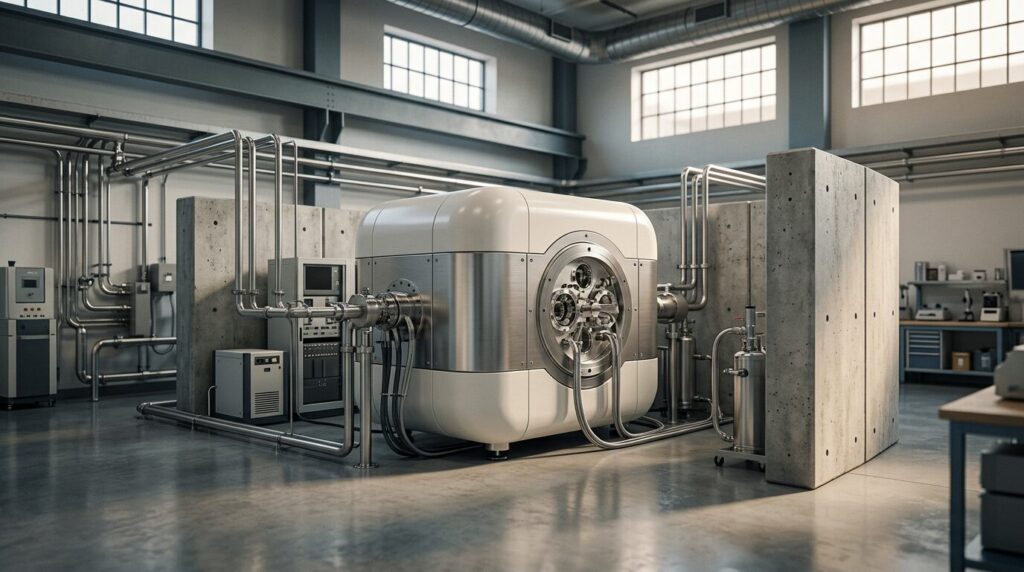
The arrival of the new cyclotron at HDZ NRW follows an extensive five-month renovation project overseen by Institute Director Prof. Dr. Thorsten Derlin. The structural modifications included upgrading the primary ventilation systems, modernizing the medical gas delivery architecture, renovating safety-critical operational components, and adapting air conditioning technology to meet the stringent regulatory requirements governing nuclear pharmaceutical manufacturing. The previous 24-ton accelerator was dismantled earlier in the summer to make room for these extensive facility enhancements.
The newly installed 18-ton cyclotron, produced by IBA RadioPharma Solutions, is significantly lighter and more energy-efficient than its predecessor. Lifted into the subterranean bunker by a massive 400-ton mobile crane, the unit was safely secured behind reinforced concrete shielding panels. With this installation completed, the radiopharmacy at HDZ NRW once again operates two high-capacity cyclotrons. Both machines accelerate hydrogen ions to bombard specific target materials, generating short-lived radionuclides that decay via positron emission.
The dual-cyclotron configuration enables the production of several essential radioisotopes, including Fluor-18, Gallium-68, Kohlenstoff-11, and Stickstoff-13. For example, Fluor-18 is used to synthesize radiolabeled glucose, known as [18F]FDG, which is widely utilized for high-resolution tumor detection and inflammatory disease mapping. Meanwhile, isotopes such as Gallium-68, Kohlenstoff-11, and Stickstoff-13 allow the synthesis of a broad range of specialized PET tracers for evaluating myocardial blood flow, metabolic activity, and brain function.
Since 1995, the radiopharmacy at HDZ NRW has provided a dependable supply of short-lived diagnostic agents to its own clinical departments as well as to hospitals and medical practices throughout the Ostwestfalen region. The new equipment significantly expands total production capacity while lowering overall energy consumption, establishing a flexible and robust framework for regional nuclear medicine care.
What the investment means for patients undergoing treatment in Germany
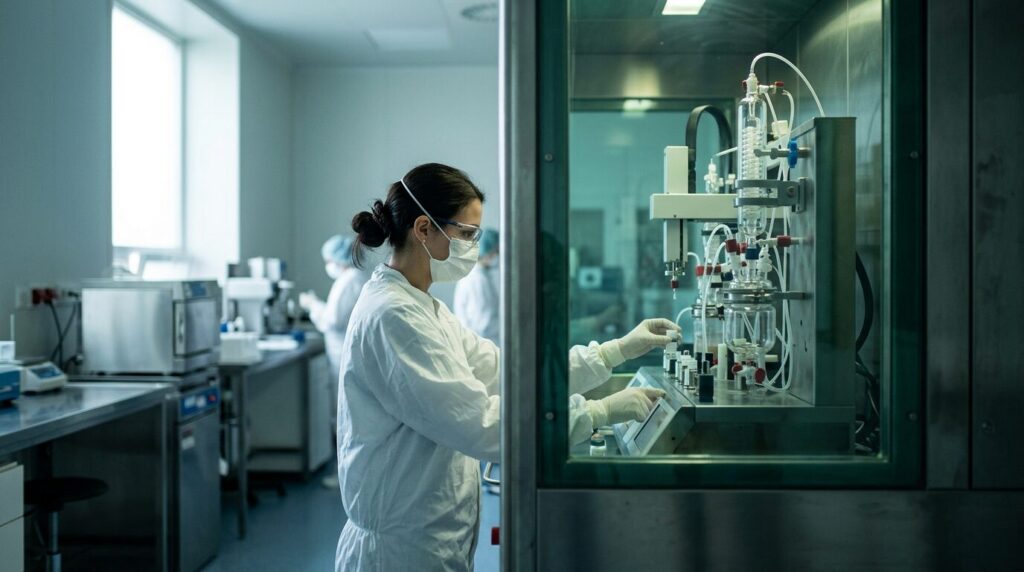
For patients traveling to Germany for specialized diagnostic evaluations or medical treatments, the upcoming commissioning of the new cyclotron in the coming weeks guarantees enhanced operational reliability. Because the half-life of many PET radiopharmaceuticals is exceptionally short—often under two hours—the production timeline is extremely tight. Hydrogen ions are accelerated to produce radionuclides, which are immediately incorporated into targeted biomolecules via automated radiosynthesis, sterile-filtered, quality-checked, and delivered to the scanner suite within tight timeframes.
All manufacturing steps within the institute adhere strictly to the rigorous quality control standards set by the German Medicines Act (Arzneimittelgesetz). Every batch undergoes automated testing to verify chemical purity and sterility before clinical administration. Operating two active cyclotrons eliminates single points of failure, ensuring that scheduled diagnostic procedures are not disrupted by routine maintenance or unexpected technical service. As Prof. Dr. Thorsten Derlin emphasizes, this redundancy prevents supply bottlenecks and guarantees continuous patient care.
Patients preparing for diagnostic procedures at German medical centers should feel comfortable discussing the details of their scheduled PET scans with their attending physicians. Depending on the clinical question—whether assessing heart muscle viability, identifying suspected inflammatory foci, or staging a malignant disease—the medical team will select the appropriate radiopharmaceutical based on Fluor-18, Gallium-68, or another specific isotope. Doctors will provide clear guidance on pre-scan preparations, such as fasting guidelines prior to receiving [18F]FDG.
By continuously updating its nuclear medicine technology, German tertiary care institutions maintain their position at the forefront of non-invasive molecular diagnostics. The new cyclotron installation at HDZ NRW reflects a commitment to delivering world-class diagnostic precision, patient safety, and seamless care delivery for both domestic and international patients.
Source: Das Herz- und Diabeteszentrum NRW investiert in die Radiopharmazie – Zyklotron wiegt 18 Tonnen