 EN
An international research team led by Dr. Lukas Mager from University Hospital Tübingen and Prof. Kathy McCoy from the University of Calgary has developed an innovative strategy to identify and selectively target bacterial species that drive chronic intestinal inflammation. In a study published in the scientific journal Gut, the researchers identified two specific gut bacteria that promote inflammation and discovered that the compound oxolinic acid can selectively inhibit their growth. This breakthrough paves the way for highly personalized treatments for inflammatory bowel diseases such as Crohn’s disease and ulcerative colitis, offering new hope for international patients seeking advanced care at specialized university hospitals in Germany.
Chronic Intestinal Inflammation and the Bacterial Ecosystem
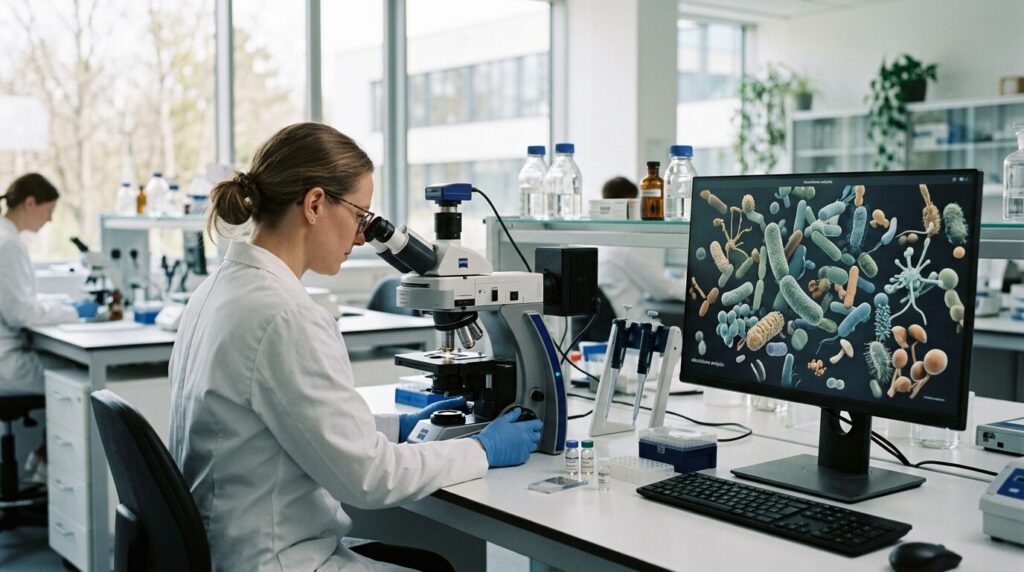
Inflammatory bowel diseases represent a complex spectrum of chronic gastrointestinal disorders, with Crohn’s disease and ulcerative colitis being the two primary clinical conditions. These diseases are characterized by persistent, debilitating inflammation of the digestive tract lining, leading to severe abdominal pain, impaired nutrient absorption, and chronic fatigue. Medical science has long recognized that the gut microbiome, which consists of trillions of microorganisms, plays a pivotal role in the initiation and progression of intestinal inflammation. However, because the bacterial composition varies immensely between individuals, identifying which specific bacteria directly cause inflammation has remained an extraordinary clinical challenge.
In German medical centers, the diagnosis of inflammatory bowel conditions relies on comprehensive diagnostic workflows including high-definition endoscopy, histopathological evaluation of tissue biopsies, and advanced biomarker profiling. Standard pharmacological management emphasizes suppressing an overactive immune response through steroids, immunosuppressive medications, and targeted biologic agents. Although these standard therapies provide substantial relief for many individuals, they primarily target host immune pathways rather than addressing the underlying microbial triggers that stimulate the disease process.
Broad-spectrum antibiotics are rarely a suitable long-term solution for inflammatory bowel disease because they indiscriminately wipe out beneficial bacteria necessary for metabolic health and mucosal protection. Wiping out the normal gut flora can lead to dysbiosis, secondary infections, and other systemic complications. Consequently, gastroenterologists have long sought targeted therapeutic strategies that can selectively suppress harmful microorganisms while preserving the beneficial bacterial ecosystem that maintains intestinal homeostasis.
Research Breakthrough in Tübingen and Calgary

To address this challenge, the collaborative team led by Dr. Lukas Mager at University Hospital Tübingen and Prof. Kathy McCoy at the University of Calgary developed a novel functional screening method to isolate disease-promoting bacteria in individual patients. The researchers collected stool samples from patients before and after treatments such as fecal microbiota transplantation or antibiotic therapy. These microbial communities were transferred into germ-free mouse models to observe their direct impact on intestinal inflammation, after which antibodies produced by the host immune system were used to isolate the specific bacteria triggering the inflammatory process.
The findings, published in the prestigious journal Gut, identified two bacterial species capable of causing or worsening gut inflammation in susceptible hosts: Sarcina perfringens and Hathewaya massiliensis. Both bacterial species were shown to activate cells of the innate immune system, thereby triggering damaging inflammatory cascades. Further analysis of international patient datasets revealed that Sarcina perfringens was present at elevated levels in approximately 25 to 30 percent of patients with inflammatory bowel disease, whereas Hathewaya massiliensis was found at elevated levels in about five percent. Experiments on human intestinal organoids confirmed that these bacteria compromise epithelial cell barrier function.
The study involved key contributions from Mahana Sabachvili, the M3 Research Center, the Department of Internal Medicine I, and the Clusters of Excellence CMFI and iFIT in Tübingen, as well as Spencer Abbott and Carolyn Thomson in Calgary. Funding was provided in part by the European Research Council (ERC) through Dr. Lukas Mager’s Starting Grant SOAR. These results demonstrate that inflammatory triggers vary among patients and can be identified individually.
Targeted Treatment and the Future of Personalized Care

After identifying the pathogenic bacteria, the researchers screened 1,518 previously approved pharmaceutical compounds to discover substances capable of selectively inhibiting these organisms. The team identified five compounds that suppressed Sarcina perfringens and Hathewaya massiliensis without harming other beneficial gut bacteria. Among these, the antibacterial compound oxolinic acid demonstrated exceptional promise. In animal models, oxolinic acid reduced intestinal inflammation driven by Sarcina perfringens with an efficacy comparable to the broad-spectrum antibiotic metronidazole, but without causing widespread disruption to the surrounding gut microbiome.
For international patients considering travel to Germany for gastroenterological evaluation, these scientific developments represent an exciting shift toward precision medicine. Although these findings are currently at the pre-clinical stage and require further clinical trials in human populations to establish safety and clinical efficacy, they establish a clear framework for future diagnostic and therapeutic approaches. In the coming years, personalized medicine in German clinics may involve routine profiling of a patient’s microbiome followed by targeted antimicrobial therapy.
When consulting with German specialists today, patients are encouraged to discuss standard evidence-based treatments alongside current diagnostic options for microbiome assessment. Leading university hospitals in Germany remain at the forefront of translating such scientific discoveries into clinical practice. Following advances in personalized gastroenterology provides patients and their families with valuable perspective on evolving treatment options.
Source: Universitätsklinikum Tübingen