 EN
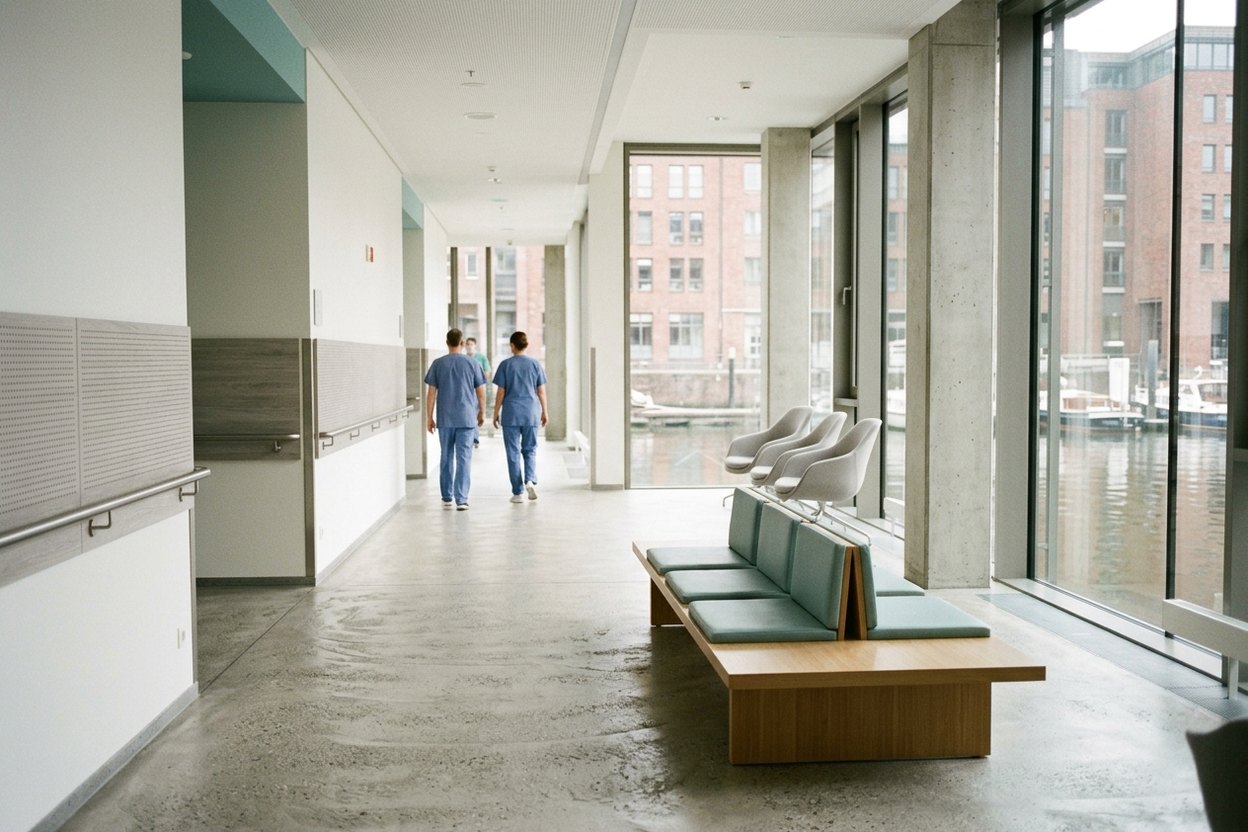
Hamburg is Germany’s second-largest city, and its hospitals range from UKE, a large university medical centre, to specialist hospitals that treat only joints or only children. In between are the hospitals of the private Asklepios network and non-profit hospitals run by church organisations and foundations.
Below: how hospital care in the city is organised, AlenMed’s eight partner hospitals, which hospital fits which problem, how Hamburg compares with other cities and how treatment is arranged. Each hospital has its own page with doctors and a request form; the cards below lead there.
Hamburg, Germany Hospitals: How Care in the City Is Organised
Hospitals in Hamburg fall into three groups: the university hospital, a private network and independent non-profit hospitals. UKE Hamburg is a public university hospital in the Eppendorf district: its 13 centres bring together more than 80 clinics, polyclinics and institutes, covering every specialty alongside research. Each year about 98,000 patients are treated there as inpatients and about 497,000 as outpatients. The Asklepios network has held 74.9 per cent of LBK, the former municipal hospital company, since 2007, while 25.1 per cent stayed with the city. The third group is made up of hospitals run by church organisations and foundations, several of them narrowly specialised.
For a patient from abroad this suggests a simple rule. A rare or complex disease that needs doctors from several specialties at once is best taken first to the university hospital or a large academic hospital. The university hospital also helps when the diagnosis is still unclear: examinations by different specialists take place under one roof, and difficult cases are discussed jointly. A clearly defined problem, such as a worn-out joint, a bowel tumour or an operation on a child, is often better handled by a specialised hospital that deals with such cases every day.
List of Hospitals in Hamburg, Germany, Working With AlenMed
AlenMed works with eight hospitals in Hamburg: seven individual hospitals and the Asklepios network, to which St. Georg also belongs. The table is a quick overview; details, doctors and a request form are on each hospital’s page, which the cards below lead to.
| Hospital | Type | Main fields |
|---|---|---|
| UKE Hamburg | public university hospital | all specialties, research, organ transplantation |
| Asklepios Clinic St. Georg | maximum-care teaching hospital, 651 beds | cardiac surgery, neurosurgery, haematology, dermatology |
| Albertinen Hospital | Hamburg’s largest non-profit hospital, 770 beds | cardiac surgery, oncology, obstetrics |
| Altona Children’s Hospital | children’s hospital since 1859, part of UKE | paediatric surgery and burns, spine, neurosurgery |
| Helios ENDO-Clinic Hamburg | specialist clinic of the Helios group | hip and knee replacement, revision surgery, infected prostheses |
| Israelite Hospital Hamburg | foundation hospital, founded in 1839 | digestive diseases, including tumours |
| Marienkrankenhaus Hamburg | Catholic general hospital, about 600 beds | surgery, cardiology, oncology, gynaecology and obstetrics, geriatrics |
| Asklepios Hospitals | a network, not a single hospital | varies by hospital |
Which Hamburg Hospital for Which Problem
In Hamburg the choice of hospital follows the diagnosis, because each partner hospital has its own strong departments. For a worn-out hip or knee, a revision of an artificial joint or an infected prosthesis, the specialist address is Helios ENDO-Clinic Hamburg, a clinic dedicated to joint replacement, sports orthopaedics and spine surgery; here an infected prosthesis can be exchanged in a single operation. Chronic inflammatory bowel disease and tumours of the digestive organs are the field of the Israelite Hospital, whose visceral oncology centre includes centres for bowel, stomach, oesophageal and pancreatic cancer.
If the heart needs surgery, the choice is between Albertinen Hospital and Asklepios Clinic St. Georg, as both have cardiac surgery. Albertinen is a teaching hospital of the University of Hamburg that treats about 68,000 inpatients and outpatients a year. Organ transplants are performed at UKE, while neurosurgery and haematology with stem cell transplantation are available both at St. Georg and at UKE.
A child who needs surgery is best seen at Altona Children’s Hospital, which has paediatric surgery with a burns unit, a paediatric spine centre and paediatric neurosurgery. For gynaecology and childbirth, and for older patients, including those with rheumatic diseases, Marienkrankenhaus Hamburg is a good fit: a general hospital with sixteen departments and a perinatal centre of the highest level for high-risk pregnancies. This is orientation only: the final choice comes after the hospital has reviewed the reports. Cancer patients can use OncoMap of the German Cancer Society to see the certified cancer centres in Hamburg.
Hospitals in Germany: Hamburg or Another City?
Hamburg is the right choice when the specialised hospital you need is located here. The clearest example is the ENDO-Clinic, which treats only joints and the spine. There are practical reasons too: the family has relatives in northern Germany, or a Hamburg hospital offers an earlier admission date. Plan rehabilitation as well: after a joint replacement or spine surgery it usually takes place in a separate facility, and it is best arranged before the trip.
Comparing Hamburg with other cities makes sense when many university hospitals treat the disease. University medicine with the same range of specialties exists elsewhere too, for example Charité in Berlin and LMU Klinikum in Munich. A request can go to hospitals in two cities at once, and their treatment plans, dates and cost estimates can then be compared. For the capital, see the overview of hospitals in Berlin.
Frequently asked questions
Which hospital in Hamburg is the best?
There is no single best hospital in Hamburg: it depends on the diagnosis. Magazine rankings take a large share of their score from surveys of doctors about reputation and merge criteria that have little to do with each other into one number. So choose the department for your specific condition, as in the diagnosis guide above. How such lists are built is explained on the page about hospital rankings in Germany.
What is a stay in a Hamburg hospital like?
A stay in a Hamburg hospital works as in other German hospitals. The standard room is shared with other patients; in most partner hospitals a single room is offered as an extra paid service (Wahlleistung). Each hospital sets its own visiting hours. On discharge, the patient receives a doctor’s letter in German with the diagnosis and recommendations, and AlenMed arranges its translation.
Which hospitals in Hamburg does AlenMed work with?
AlenMed works with eight hospitals in Hamburg: UKE Hamburg, Asklepios Clinic St. Georg, Albertinen Hospital, Altona Children’s Hospital, Helios ENDO-Clinic Hamburg, Israelite Hospital Hamburg, Marienkrankenhaus Hamburg and the Asklepios Hospitals network. The table above shows each one’s focus, and the cards below open their pages.
How AlenMed Arranges Treatment at a Hamburg Hospital
AlenMed prepares the documents, handles the correspondence with the hospital and supports the patient in Hamburg. Medical reports and images are translated into German and sent to the chosen department; the hospital replies with a treatment proposal and a cost estimate, and only then does the patient decide whether to travel.
Once the decision is made, AlenMed prepares the visa invitation, helps with the arrival at Hamburg Airport and with accommodation near the hospital for the patient and a companion, and a medical interpreter attends the appointments. The company office is in Munich, while 86 partner hospitals in 38 cities work all over Germany, so an option outside Hamburg can be found if needed.
This material is for reference only and is not an offer. The treatment plan is decided by the doctor at a face-to-face consultation, and the final cost by the hospital’s estimate.
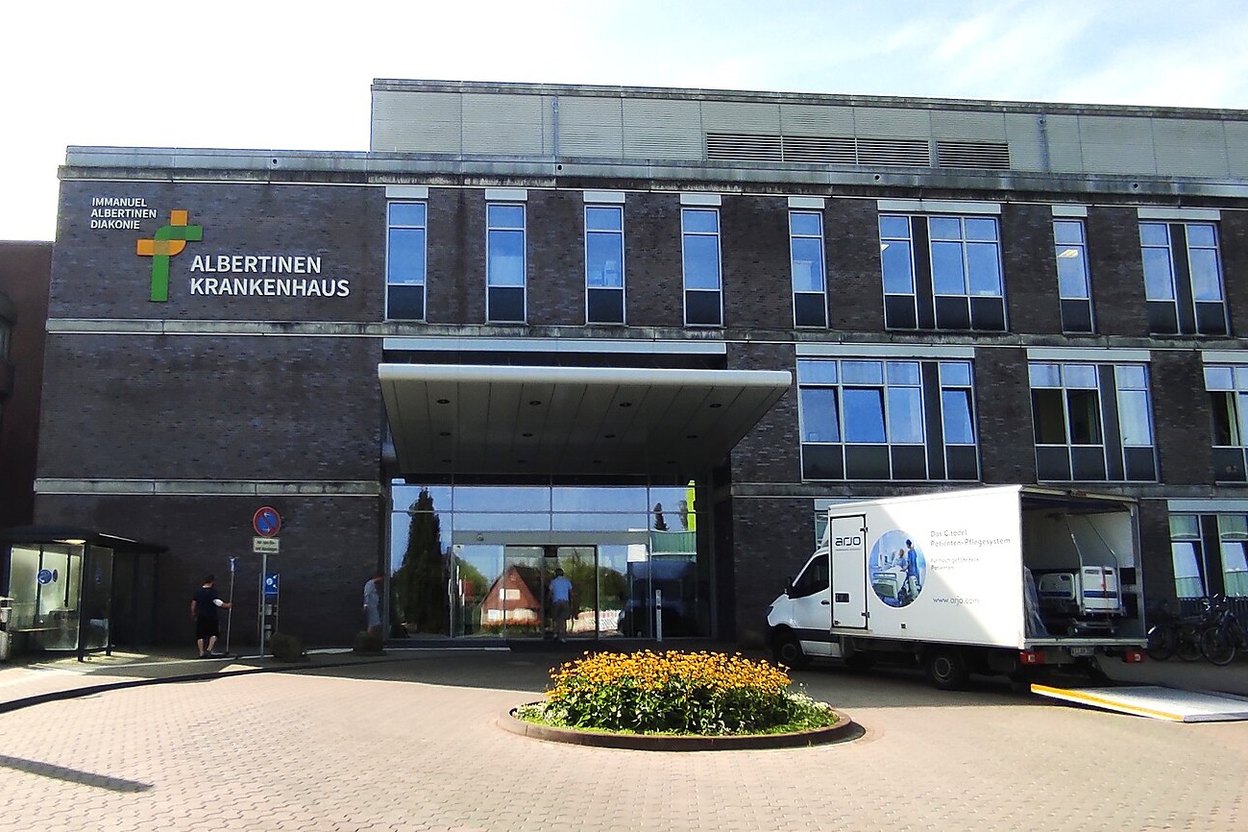
Albertinen Hospital
One of Hamburg's largest non-profit hospitals and a teaching hospital of the University Medical Center Hamburg-Eppendorf, with about 68,000 patients a year. Its main fields are cardiac surgery, oncology, endocrine surgery and obstetrics.
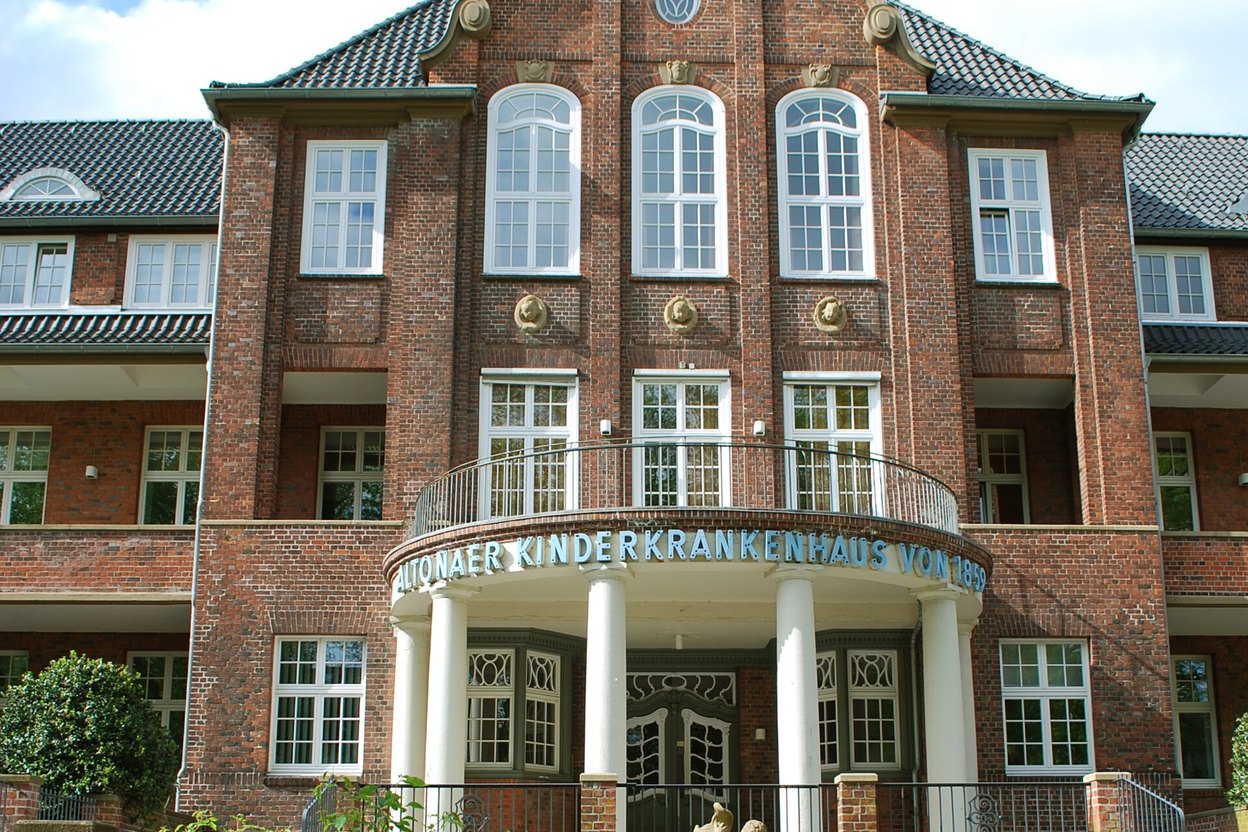
Altona Children's Hospital
A children's hospital in Hamburg's Ottensen district, working since 1859 and part of the Hamburg-Eppendorf university hospital (UKE) since 2006. Its strengths are paediatric surgery with a burns unit, spinal orthopaedics and paediatric neurosurgery.
Asklepios Hospital Hamburg
How the Asklepios hospitals in Hamburg are organised, which departments foreign patients come to, how admission works and what a stay looks like in practice.
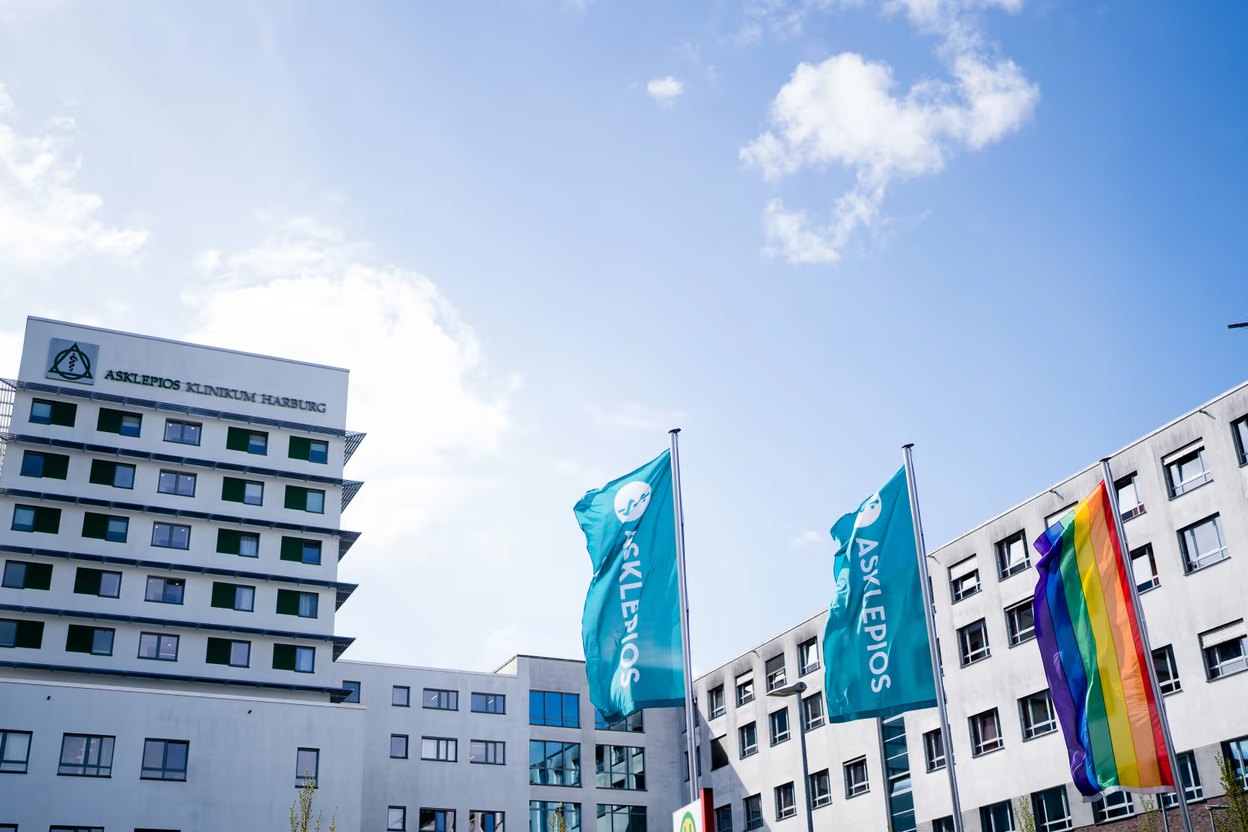
Asklepios Hospitals
A network of hospitals, diagnostic units and outpatient centres in Hamburg and northern Germany rather than a single house. Its care spans haematology and oncology, cardiology and cardiac surgery, general and visceral surgery, neurology and orthopaedics.

Helios ENDO-Clinic Hamburg
A narrowly specialised orthopaedic hospital in the Altona district of Hamburg, part of the Helios group. It performs primary and revision hip and knee replacement and treats periprosthetic joint infection.

Israelite Hospital Hamburg
An academically independent hospital in the Alsterdorf district of Hamburg and the second oldest still working in the city. Its focus is gastroenterology and visceral surgery, from chronic bowel disease to benign growths and abdominal tumours.
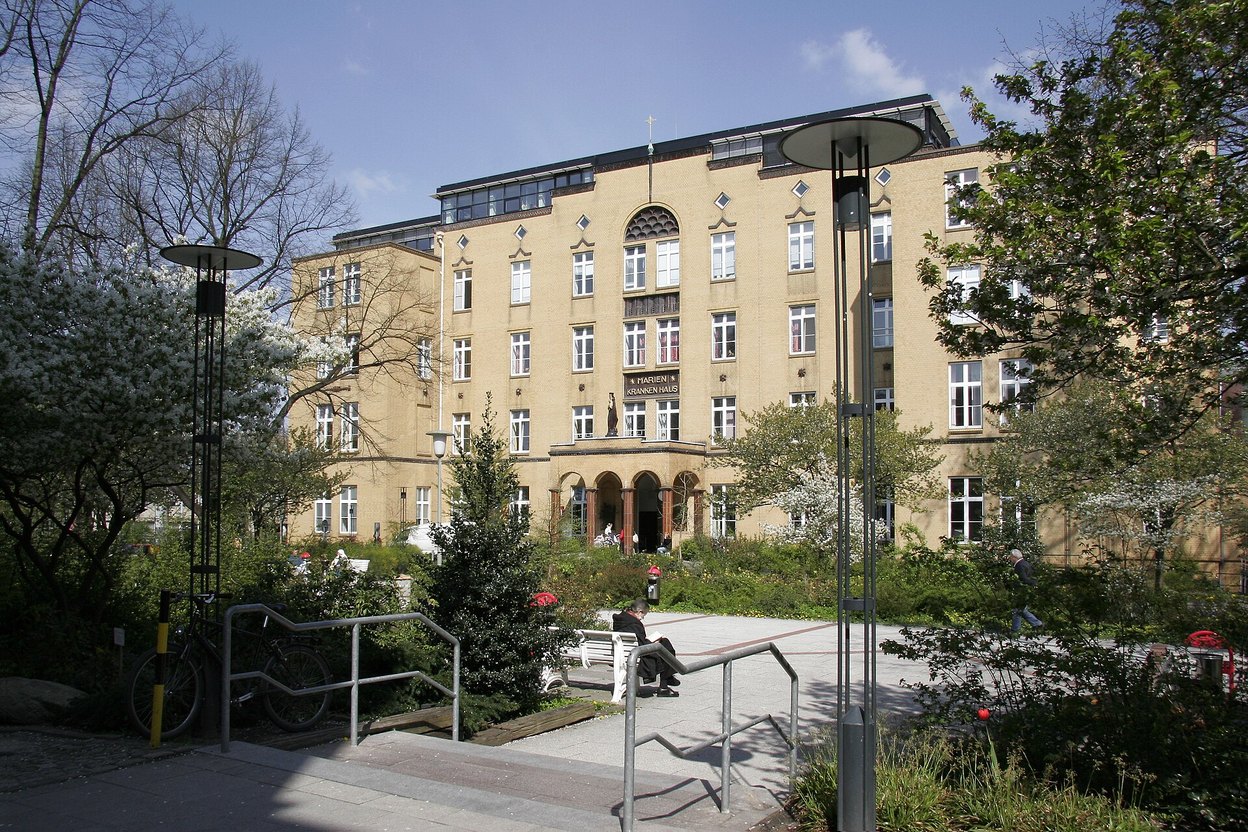
Marienkrankenhaus Hamburg
A Catholic general hospital in Hamburg covering internal medicine, surgery, trauma and orthopaedics, obstetrics and gynaecology, and geriatrics with rheumatology. It belongs to the Ansgar-Gruppe network together with the Wilhelmstift children's hospital.
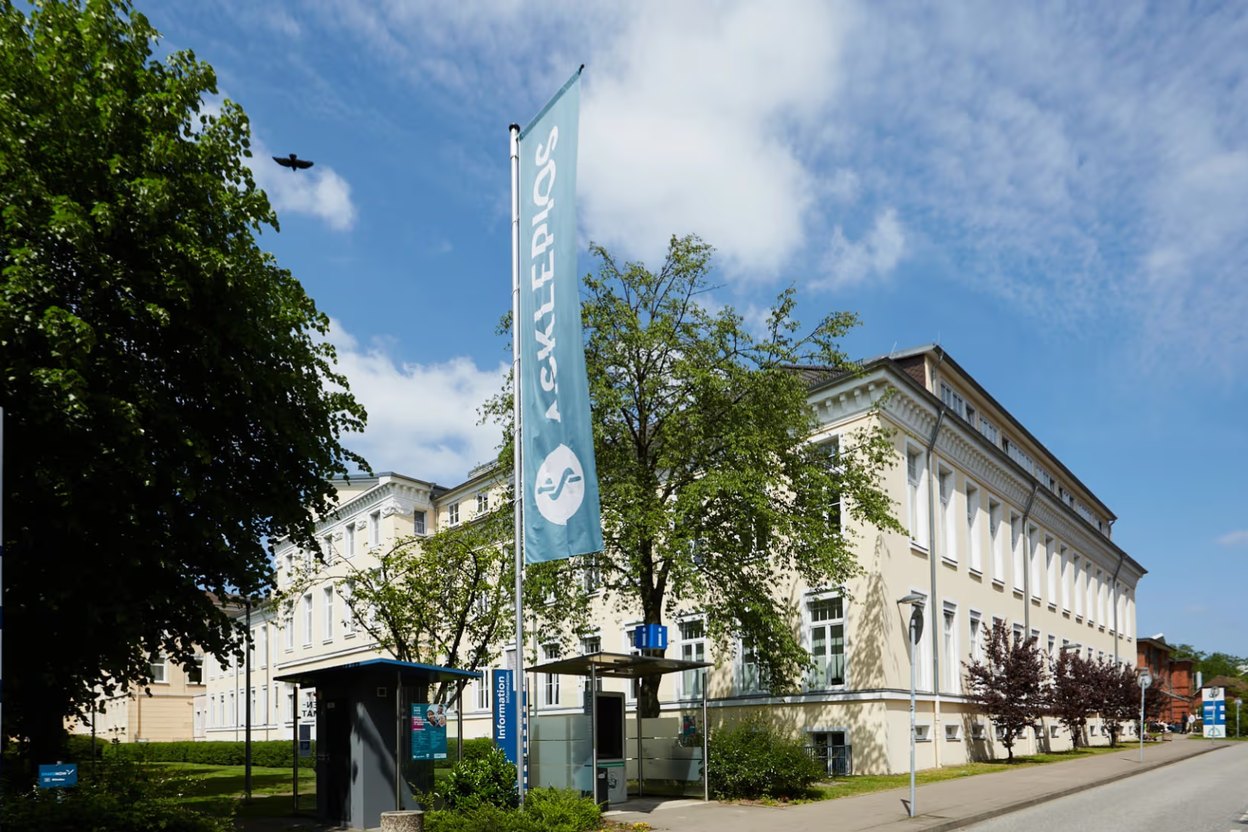
Asklepios Clinic St. Georg
A large academic tertiary-care hospital in Hamburg with 651 inpatient beds and around 70,000 patients a year. Its main fields are cardiac surgery, neurosurgery, organ transplantation, haematology and dermatology.
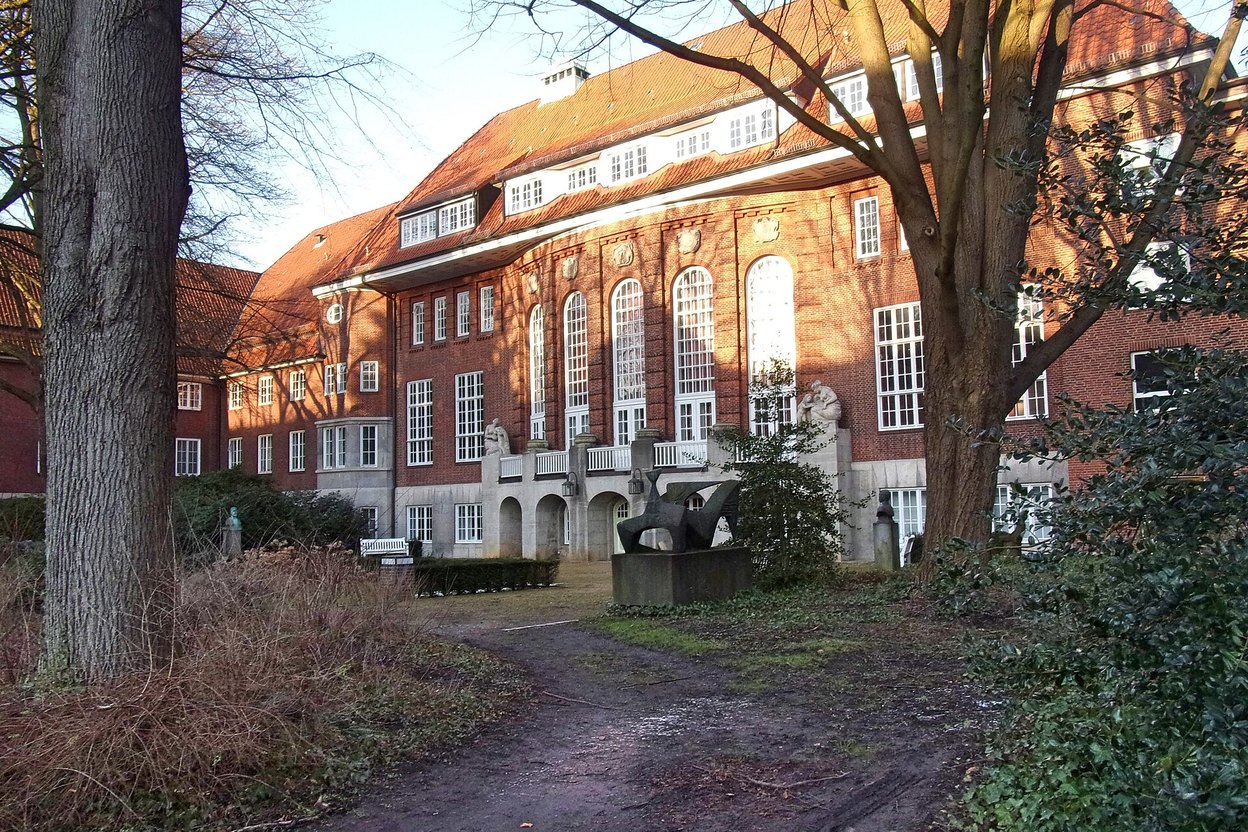
UKE Hamburg Hospital
A public university medical complex in the Eppendorf district, made up of 13 centres with more than 80 clinics and institutes and over 1,800 beds. It admits about 97,000 inpatients and sees some 475,000 outpatients a year.