 EN
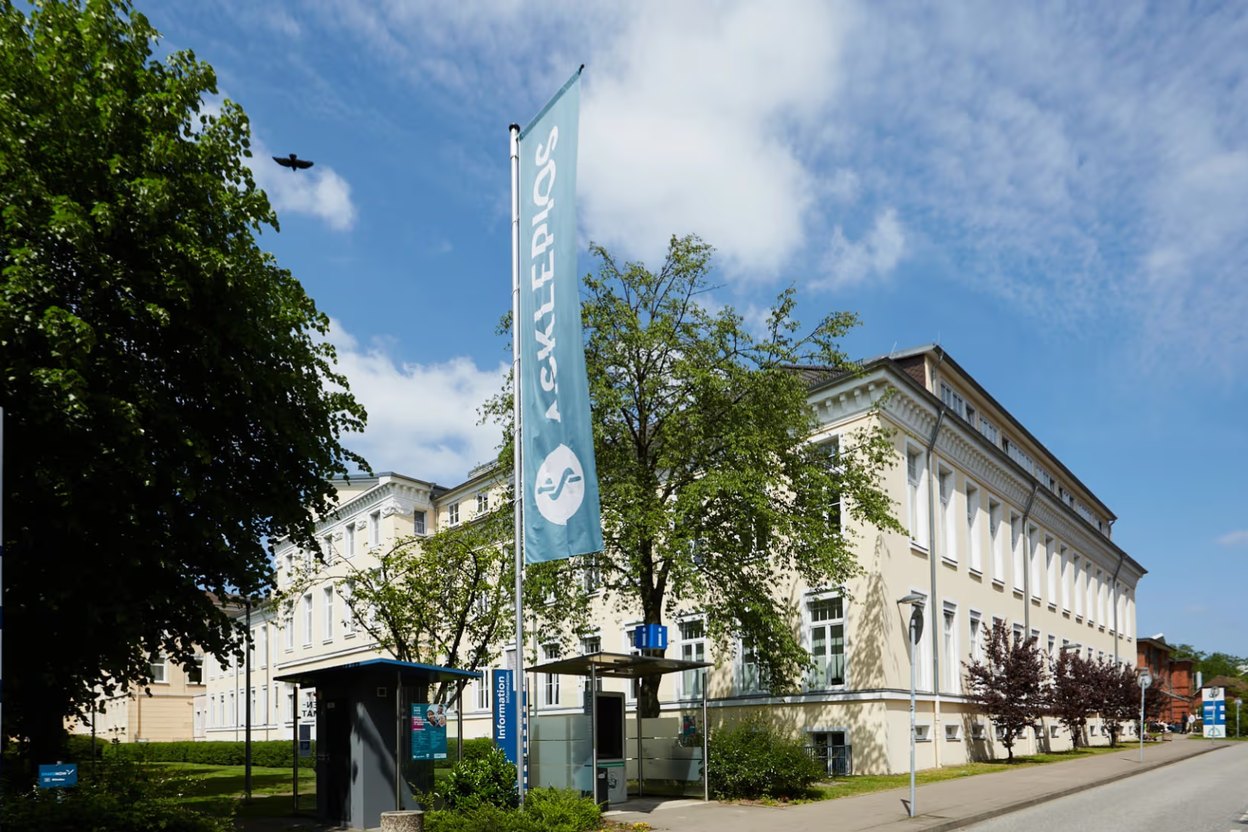
The St. Georg hospital in Hamburg, Germany, is Asklepios Klinik St. Georg: a multi-specialty hospital in the St. Georg district close to the city centre and a teaching hospital of the University of Hamburg and Semmelweis University. It has stood on this site since 1823 and is now part of the Asklepios group.
The hospital reports 24 departments, 651 beds and 67 day-clinic places and treats around 87,000 inpatients and outpatients a year. It is one of the hospitals in Hamburg that AlenMed works with. In English the name is often spelled St. George, but there is more than one St. George hospital in Germany: this one is in Hamburg. If you searched for “st george hospital bad aibling germany”: Bad Aibling is a spa town in Bavaria, at the other end of the country, where AlenMed works with Schön Clinic Bad Aibling Harthausen, a different hospital.
History: Hamburg’s First Municipal Hospital
St. Georg was Hamburg’s first municipal hospital. Its first buildings went up in 1821–1823 to designs by Carl Ludwig Wimmel, replacing the infirmary on the Hamburger Berg that had burned down in 1814, and between 1898 and 1915 the complex was largely rebuilt to plans by Friedrich Ruppel. In 1866 the young Robert Koch, later one of the founders of microbiology, did a medical clerkship here, according to his timeline on the Robert Koch Institute website. The historic buildings are now listed monuments.
Until its privatisation the hospital belonged entirely to the city and was called General Hospital St. Georg (Allgemeines Krankenhaus St. Georg). In 2004 Hamburg sold a first, minority stake to the group behind the Asklepios hospitals; on 1 January 2005 the group took over the management. Since 2007 the city has kept a blocking minority of 25.1%. The Asklepios Campus Hamburg, founded on the grounds in 2008 with Semmelweis University, teaches the clinical part of its German-language medical degree.
Departments and Areas of Care
- Cardiac surgery (Herzchirurgie)
- Cardiology and medical intensive care (Kardiologie und Internistische Intensivmedizin)
- Dermatology and allergology (Eduard-Arning-Klinik für Dermatologie und Allergologie)
- Haematology, oncology and stem cell transplantation (Hämatologie, Onkologie und Stammzelltransplantation)
- Radiotherapy (Hermann-Holthusen-Institut für Strahlentherapie)
- Diagnostic radiology (Albers-Schönberg-Institut für Strahlendiagnostik)
- Neurosurgery (Neurochirurgie)
- Early rehabilitation (Frührehabilitation)
Cardiologists and cardiac surgeons work in the same hospital and decide difficult cases together in a joint heart team (Herzteam). The surgeons perform bypass, valve and aortic operations, some through small incisions, and can replace the aortic valve through a catheter without opening the chest (TAVI). The cardiology department also runs the medical intensive care unit on site. The approach is chosen after the examination.
The dermatology department treats allergies, skin cancer and severe or chronic skin disease such as psoriasis, atopic eczema and blistering conditions; it has a ward, a day clinic and a certified skin cancer centre (Hautkrebszentrum). Haematologists treat leukaemia, lymphoma and multiple myeloma and carry out blood stem cell transplants, with radiotherapy from the hospital’s own institute. Early rehabilitation starts in hospital after a severe stroke, brain injury, cardiac arrest or long intensive care, as soon as the patient is off the ventilator and stable.
Location: Getting to the Hospital
The hospital lies in the St. Georg district of central Hamburg, a short trip from Hamburg central station (Hauptbahnhof): the U1 underground line towards Ohlstedt/Großhansdorf stops right outside at Lohmühlenstraße, and city buses serve the main entrance. Relatives can stay at one of the hotels around the city centre. Exact directions to the right building and department come with the invitation.
Rooms and Stay
Standard rooms take no more than two patients, each with its own bathroom, and TV and radio are free. For an extra fee, patients can book an elective comfort room (Wahlleistung, Komfortzimmer), single (Einbettzimmer) or double, with a private bathroom, free WLAN, a telephone and a minibar; in standard rooms, WLAN costs extra and is not on every ward. Self-paying patients can book these services too. Relatives can visit daily during visiting hours; intensive care visits are by prior arrangement.
Frequently asked questions
Is St. Georg Hamburg’s university hospital?
No, it is a teaching hospital. Medical students of the University of Hamburg train here, and the Asklepios Campus Hamburg on the grounds is a registered branch of the medical faculty of Semmelweis University in Budapest. Hamburg’s university hospital is the UKE in Eppendorf. What matters more for a patient is whether St. Georg has the right department and will take the case, which its doctors decide from the records.
How much does treatment at St. Georg cost?
Only the hospital’s estimate (Kostenvoranschlag) gives an exact figure, because the price depends on the diagnosis, the tests and treatment needed and the length of stay. The estimate follows a review of the reports and scans. German insurance is not required: a patient from abroad pays the hospital directly, usually as a deposit before travelling. A comfort room and other elective services cost extra.
Can I choose my doctor at St. Georg?
Yes. With the elective medical service (ärztliche Wahlleistung), the hospital’s specialists look after the patient personally throughout the stay. It is paid for separately, through private or supplementary insurance or by the patient, so patients from abroad can choose it too. Which doctor takes on the case is agreed with the department once it has reviewed the records.
How AlenMed Arranges Treatment at Asklepios Klinik St. Georg
AlenMed translates the medical reports and scans into German and sends them to the relevant department at St. Georg; its doctors decide whether they can take the case, and if so, the hospital issues an estimate for the tests or treatment. No trip is planned before the estimate, which shows what will be done and at what cost. The whole route is described on our page on arranging treatment in Germany.
Payment goes directly to the hospital, and once the deposit has arrived, it issues the invitation for the visa. Our interpreter attends the consultations, and the patient is met at the airport. If you would rather talk to the doctor in English, see our page on English-speaking doctors in Germany. AlenMed’s office is in Munich and its partner hospitals are spread across Germany, so if another hospital in Hamburg, such as the University Medical Center Hamburg-Eppendorf, suits a case better, we will say so.
This page is for general information and is not an offer. The treatment plan is decided by the doctor at a face-to-face consultation, and the final cost by the hospital’s estimate.