 EN
Many families looking for treatment in Germany start with a Dusseldorf hospital: the city has a large international airport and is easy to reach. The real question, though, is which hospital fits the diagnosis.
This page covers how hospital care in the city is organised, what its university hospital offers, when an outpatient medical centre is enough, which neighbouring hospital cities of the Rhine-Ruhr region are worth a look and how AlenMed arranges treatment. In German the city is written Düsseldorf, in English often Dusseldorf or Duesseldorf, so patients also search for «hospital Duesseldorf»; this page mostly keeps the German spelling.
Dusseldorf Hospitals in Germany’s Rhine-Ruhr Region
Düsseldorf is the capital of North Rhine-Westphalia, Germany’s most populous state, where hospitals form a dense network. The city has a university hospital of maximum care, one that takes on the most complex cases in almost every specialty, plus Catholic and Protestant hospitals and those of a private group, both general and specialised.
In practice the choice follows the diagnosis: a complex case goes to a university hospital or a centre certified for that disease, not simply to the nearest hospital. The state’s hospital plan works the same way: not every hospital may offer every treatment; each type of care goes to hospitals that meet requirements for case numbers, staff and equipment. Cologne, Essen and Bonn are close by, so the search need not stop at the city limits. For families asking which hospital in Germany is the most prestigious, it helps to know what published hospital rankings in Germany actually measure; for a treatment decision, the department’s experience with the specific diagnosis matters more than a place in a list.
University Hospital Düsseldorf (UKD)
UKD is the largest hospital in Düsseldorf; its medical campus lies in the south of the city, in the Bilk district. It comprises 60 specialist clinics and institutes and 1,180 beds, and together with its subsidiaries it employs around 9,300 people. Each year more than 45,000 patients are treated as inpatients and about 270,000 as outpatients.
Its departments include cardiology and cardiac surgery, haematology and oncology, paediatric oncology, endocrinology and diabetology, gastroenterology, vascular surgery, an eye clinic and an ENT clinic. They work closely together, so a patient who needs several specialists is treated in one place.
Details on the departments, the hospital stay and how treatment is organised are on the page University Hospital Düsseldorf.
Medical Center Dusseldorf: When Outpatient Care Is Enough
Outpatient care is enough for a check-up, imaging, a specialist’s opinion on existing findings or follow-up after treatment, and a medical centre, in German an MVZ (Medizinisches Versorgungszentrum), handles all of this without admission to hospital. In an MVZ several doctors, often from different specialties, work under one roof: they treat patients together, as in a group practice, and share rooms, staff and diagnostic equipment.
A hospital is needed for surgery, chemotherapy that requires monitoring, complex diagnostics under anaesthesia or a case for a tumour board, a joint review by oncologists, surgeons and radiologists. For a patient from abroad, this is decided before the flight, based on reports and images sent in advance. Those who only need an outpatient visit may find the page on English-speaking doctors in Germany useful.
Hospitals in Düsseldorf and Neighbouring Cities
Look beyond the city if the department you need is stronger elsewhere, if you want a second opinion or if another hospital offers earlier dates. Cologne has its own university hospital of maximum care and many other hospitals, reviewed on the page about hospitals in Cologne. University Hospital Essen is home to the West German Cancer Center and the West German Center for Organ Transplantation. The university hospital in Bonn, on the Venusberg hill, also provides maximum care.
A request can go to two or three hospitals at once, and the family then compares the proposed treatment plans, dates and cost estimates rather than advertising.
Frequently asked questions
Do Düsseldorf hospitals accept patients from abroad?
Yes: the university hospital, for example, has a coordinating office for international patients who come for planned treatment. Based on the documents sent, its doctors draw up a treatment proposal, and the office prepares a cost estimate and, if needed, a visa invitation. The office team speaks German, English, Russian and Arabic.
What documents does a Düsseldorf hospital need?
Mainly medical records from the doctors and hospitals that have already treated the patient: discharge letters, reports, test results and images. The university hospital accepts them in German or English and also asks for a passport copy, a personal data form, a release from medical confidentiality and a power of attorney. AlenMed translates everything into German.
How much does treatment at a Düsseldorf hospital cost?
The price is set by the hospital’s cost estimate, based on the documents and the proposed treatment plan, so there is no single figure for the city. At the university hospital, self-paying patients pay the full amount in advance, and only then is a date booked. After discharge, the advance payment is offset against the final invoice and any balance refunded.
Can I have only tests in Düsseldorf, without a hospital stay?
Yes, tests, imaging and a specialist consultation can be done as an outpatient, at a medical centre or a doctor’s practice. Note that the university hospital’s office for international patients handles planned treatment and does not offer follow-up examinations, second opinions or rehabilitation. If surgery turns out to be needed, the documents go to a hospital department.
How AlenMed Arranges Treatment at a Düsseldorf Hospital
AlenMed prepares the documents, handles the correspondence with the hospital and organises the trip. Reports and images are translated into German and sent to the chosen department, which replies with a treatment proposal and a cost estimate; the full process is described on the page on arranging treatment in Germany. Complete documents lower the risk of error: the WHO lists diagnostic errors and medication errors among the common causes of avoidable patient harm, so add recent test results and a list of all current medicines.
Once a decision is made, AlenMed prepares the visa invitation, helps with the flight to Düsseldorf airport and accommodation near the hospital, and provides a medical interpreter for appointments. The company office is in Munich; its 86 partner hospitals in 38 cities are spread across Germany.
This material is for reference only and is not an offer. The treatment plan is decided by the doctor at a face-to-face consultation, and the final cost by the hospital’s estimate.
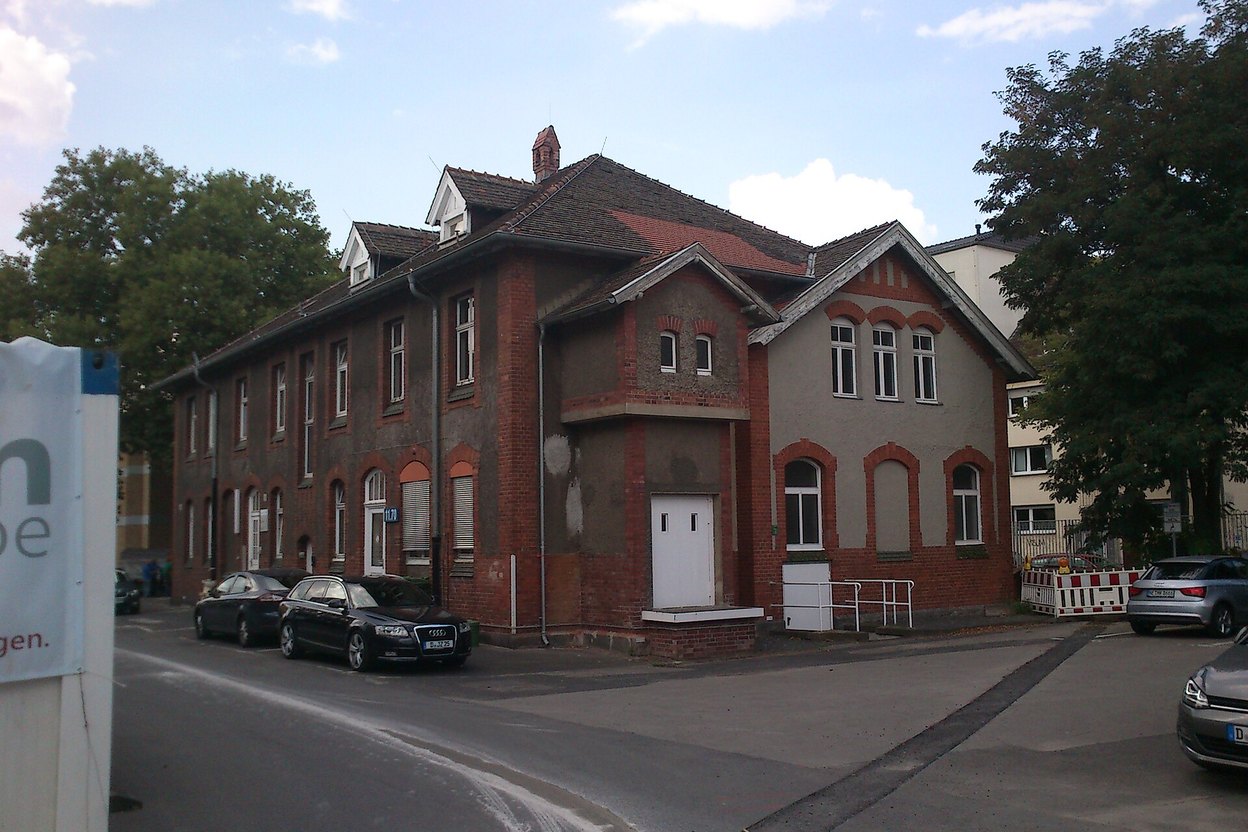
Duesseldorf University Hospital
An academic medical centre in the south of Düsseldorf with 29 specialist clinics, 30 research institutes and more than 1,200 beds. It opened in 1907, and in 1952 the first open-heart operation with a heart-lung machine was performed here.