EN
EN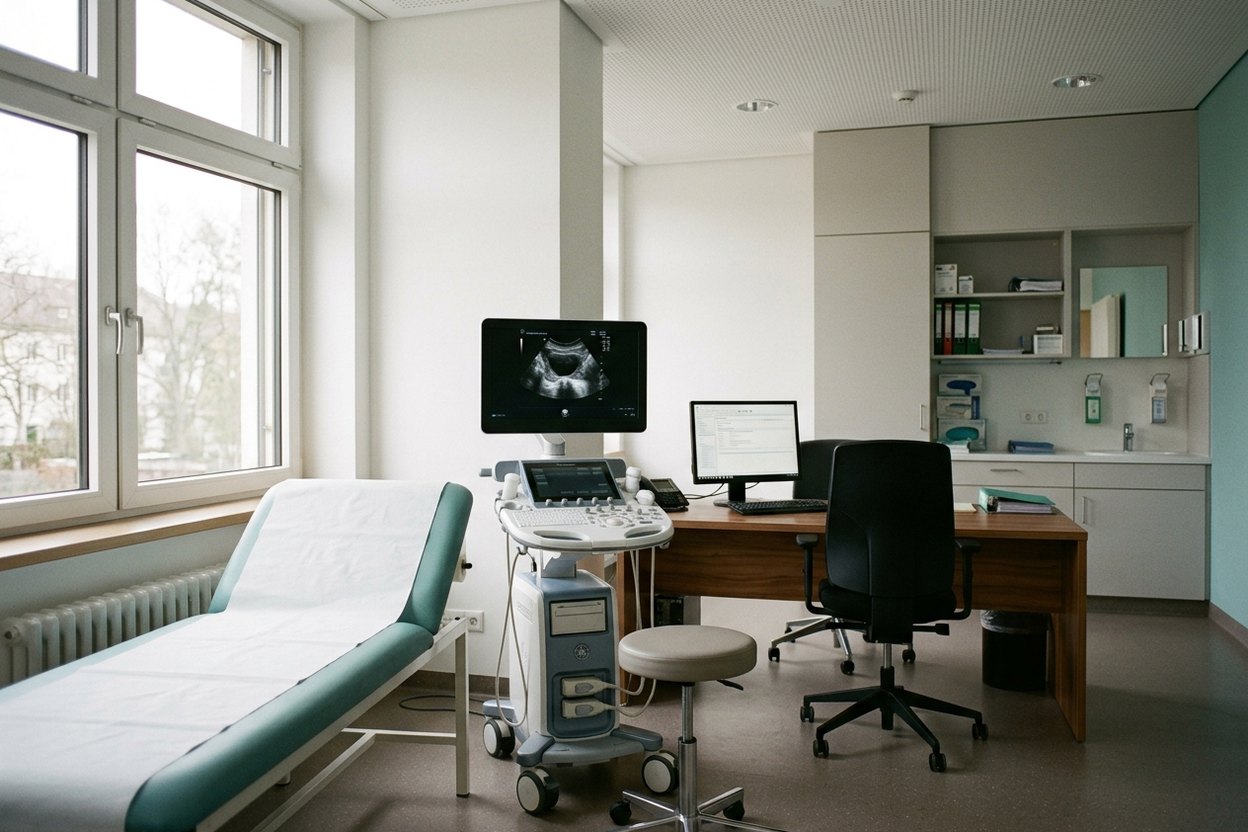
Prostatitis wears people down less by its severity than by its uncertainty. Pain low in the abdomen, frequent urging, discomfort — the symptoms come and go, one treatment follows another, and relief does not arrive. Often the reason is that the word “prostatitis” covers entirely different conditions, and until it is clear which of them a particular man has, treatment misses its mark. The German approach begins with exactly that distinction.
Why it matters to sort this out first
“Prostatitis” is not one diagnosis but several different conditions. There is acute bacterial inflammation, which comes on sharply and needs prompt antibiotic treatment. There is chronic bacterial prostatitis, with flare-ups. And most common of all is chronic pelvic pain syndrome, in which there are no bacteria at all and treating it with antibiotics is pointless. An asymptomatic form, found by chance, stands apart. Until it is clear which group a case belongs to, any treatment is guesswork.
First, accurate diagnosis
The assessment is arranged so as to tell these conditions apart. It begins with an examination and a digital rectal examination, in which the doctor assesses the prostate itself. The key step is testing the urine and prostatic secretion from samples taken at different stages of passing urine: this shows whether there is an infection and where exactly it is. Transrectal ultrasound is added, which shows the gland, along with uroflowmetry — a simple test measuring the flow rate of urine to establish whether there is an obstruction.
PSA is checked separately — a protein whose level can rise with inflammation. It is important to understand: by itself it is not a sign of cancer, and a German doctor interprets it in context rather than frightening you with a figure. If something gives pause, the assessment is extended to exclude other causes. The point of the whole stage is one: not to start treating blind.
How it is treated in Germany
Treatment is chosen to fit the established form. In bacterial prostatitis antibiotics are the basis, and what matters is not only the choice but a sufficient length of course: shorter in acute inflammation, considerably longer in chronic, and it must not be broken off even when things have eased. If there is difficulty passing urine, drugs that relax the neck of the bladder may be added, and where the prostate is enlarged, medicines that reduce its size.
The hardest is chronic pelvic pain syndrome, where there is no infection. Here no single tablet works but a combination of approaches: medication to relieve pain and spasm, physiotherapy, work on the pelvic floor muscles, changes to the way of life and, where needed, help in breaking the vicious circle of pain, tension and more pain. German hospitals take this form seriously and do not dismiss it as “nerves”. Surgery is rarely needed in prostatitis — mainly for complications such as urinary retention or an abscess.
When to seek a second opinion
If prostatitis has been treated for a long time and keeps coming back, the problem is most often not “the wrong antibiotic” but that the form of the disease was never established. That is exactly the situation in which a full re-assessment makes sense. A German urologist reviews the results and the treatment history and says whether the therapy has been going in the right direction and what should change. Often it is the first conversation in a long time after which there is a clear plan.
This material is for information only and does not replace a consultation with a doctor. Whether treatment is possible, what it will involve and what it will achieve can be determined only after an examination at the clinic in person.
News on this topic
New Genetic Diagnostic Method Improves Detection of Inherited Kidney Disease
German researchers have developed an advanced genomic workflow to reliably diagnose a historically hard-to-detect genetic cause of chronic renal disease.