 EN
Researchers at Universitätsklinikum Freiburg have uncovered a promising approach to alleviate severe side effects of cancer immunotherapy using a targeted cell therapy with modified white blood cells. A clinical Phase Ib/II trial involving 30 patients demonstrated that 96 percent of evaluable participants experienced partial or complete resolution of severe inflammatory symptoms within twelve weeks. The findings were published on October 23, 2026, in the journal Nature Communications. Less than two years after the initial discovery of the underlying mechanism, the European approval for the utilized medical device was expanded by the notified body BSI to include the treatment of immunotherapy-induced side effects.
Severe Inflammatory Reactions from Modern Cancer Immunotherapy
Modern cancer immunotherapy using checkpoint inhibitors helps the human immune system recognize and eliminate malignant tumor cells. However, this heightened immune system activation can inadvertently cause defensive cells to target healthy organs and tissues. Consequently, patients may develop severe, autoimmune-like inflammatory conditions in organs such as the gastrointestinal tract, liver, or skin. These immune-related adverse events can become so severe that oncologists are forced to temporarily suspend or permanently discontinue effective anti-cancer treatment.
Standard medical care for managing these inflammatory complications typically relies on high doses of systemic corticosteroids such as cortisone. Nevertheless, approximately 40 percent of affected individuals do not achieve sufficient relief from steroid therapy or develop resistance over time. Prolonged reliance on high-dose immunosuppressive medications also carries significant health risks, including severe infections and metabolic complications. Furthermore, broad immune suppression can potentially weaken the therapeutic immune response directed against the underlying tumor.
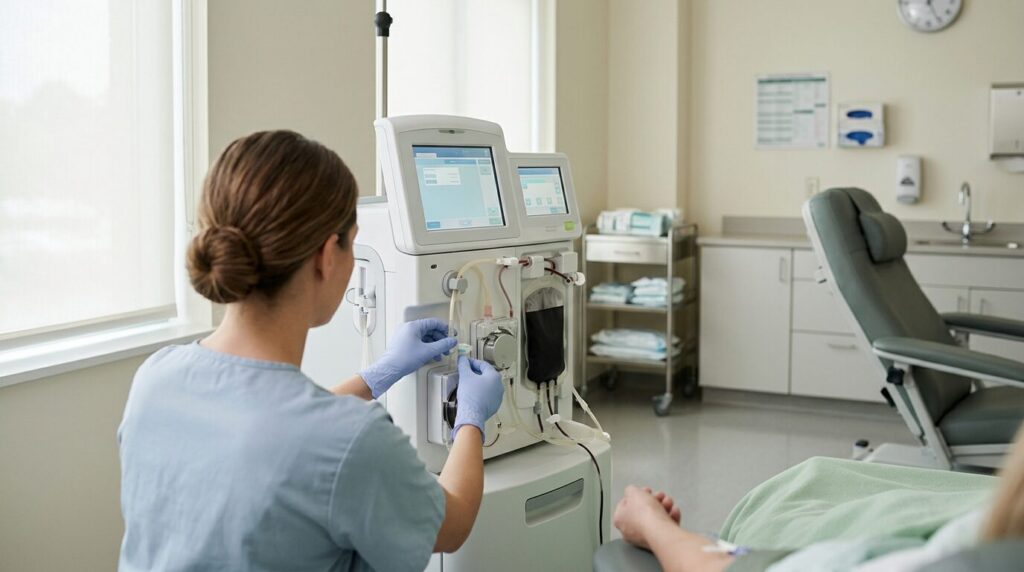
Extracorporeal photopheresis, abbreviated as ECP, offers a targeted cell-based alternative designed to modulate excessive immune activity without causing systemic immunosuppression. During ECP treatment, a portion of the patient’s white blood cells is harvested, treated with a light-sensitizing agent and ultraviolet A light, and subsequently reinfused into the patient’s bloodstream. This procedure aims to soothe the overactive immune reaction and restore immunological balance. While ECP has long been established for treating other specific conditions, its application against cancer immunotherapy toxicity has only recently been scientifically validated.
Clinical Study in Freiburg Demonstrates High Success in Patient Care

The research team at Universitätsklinikum Freiburg, led by Prof. Dr. Robert Zeiser, Deputy Medical Director of the Klinik für Innere Medizin I specializing in Hematology, Oncology, and Stem Cell Transplantation, played a key role in advancing this treatment approach. In February 2025, the team published a fundamental study in the journal Cancer Cell, establishing that the endogenous molecule adiponectin plays a central role in the anti-inflammatory mechanism of photopheresis. The study involved essential contributions from the Klinik für Dermatologie und Venerologie and the Klinik für Innere Medizin II at Universitätsklinikum Freiburg.
Building upon this mechanistic discovery, a multi-center clinical Phase Ib/II trial was conducted across Universitätsklinikum Freiburg, Universitätsklinikum Essen, and Universitätsklinikum Regensburg. The trial included 30 adult patients suffering from severe steroid-refractory immune-related adverse events following checkpoint inhibitor therapy. These patients had failed to achieve control over their inflammatory complications using standard corticosteroid regimens, leaving them in urgent need of effective alternative treatments.
The study results, published in Nature Communications under DOI 10.1038/s41467-026-78897-9, revealed that 26 out of 27 evaluable patients (96 percent) achieved partial or complete symptom resolution within twelve weeks of ECP treatment. Most responding participants were able to discontinue cortisone therapy entirely. Comprehensive biomarker evaluations confirmed a clear reduction in pro-inflammatory immune cell populations and inflammatory markers during the treatment period.
Safety assessments revealed no severe adverse events directly attributable to the photopheresis procedure. The treatment was well tolerated by patients, maintaining systemic stability while relieving local tissue inflammation. Importantly, the photopheresis procedure did not impair the desired anti-tumor activity of the ongoing cancer therapy, confirming its viability as a safe supportive treatment in complex oncological cases.
Regulatory Approval and Considerations for International Patients

These positive clinical trial results rapidly translated into expanded regulatory approval for clinical practice. In October 2026, the European notified body BSI officially extended the CE medical device approval of the photopheresis system to include the treatment of immune-mediated adverse events caused by cancer immunotherapy in adult patients. This regulatory decision allows university medical centers in Germany to routinely offer this certified cellular therapy to eligible individuals facing severe treatment complications.
While these clinical outcomes are highly encouraging, medical experts point out that further scientific evaluation remains necessary. The Phase Ib/II study was conducted with a relatively small cohort of 30 patients and did not include a direct randomized control group comparing photopheresis to other second-line immunosuppressive drugs. Consequently, larger randomized clinical trials are required to confirm long-term comparative efficacy. Nevertheless, the regulatory extension provides an immediate additional therapeutic option for patients in need.
International patients traveling to Germany for specialized cancer treatment can benefit from access to this advanced supportive care method. Patients experiencing severe side effects from checkpoint inhibitor therapy should discuss the suitability of extracorporeal photopheresis with their medical team in Germany. Relevant points for discussion include individual organ involvement, expected treatment frequency, and the integration of photopheresis into the overall oncological treatment plan.
Source: Universitätsklinikum Freiburg