 EN
Researchers from Ludwig-Maximilians-Universität München, Charité – Universitätsmedizin Berlin, and BIFOLD at TU Berlin have developed a single-cell atlas for lung cancer named LuCaS+, combining high-resolution genetic data with long-term clinical patient histories. Using artificial intelligence, the scientists analyzed over 2.5 million individual cells from archived tumor samples, revealing specific cancer cell types and microenvironment interactions that drive metastasis. The landmark study, published in Nature Cancer, provides a novel tool for understanding tumor heterogeneity and identifying patients at high risk of relapse even in early disease stages. This breakthrough offers international patients seeking advanced oncology care in Germany a clearer glimpse into how next-generation molecular diagnostics will soon refine risk assessment and personalized treatment planning.
Tumor Heterogeneity and Current Oncology Standards
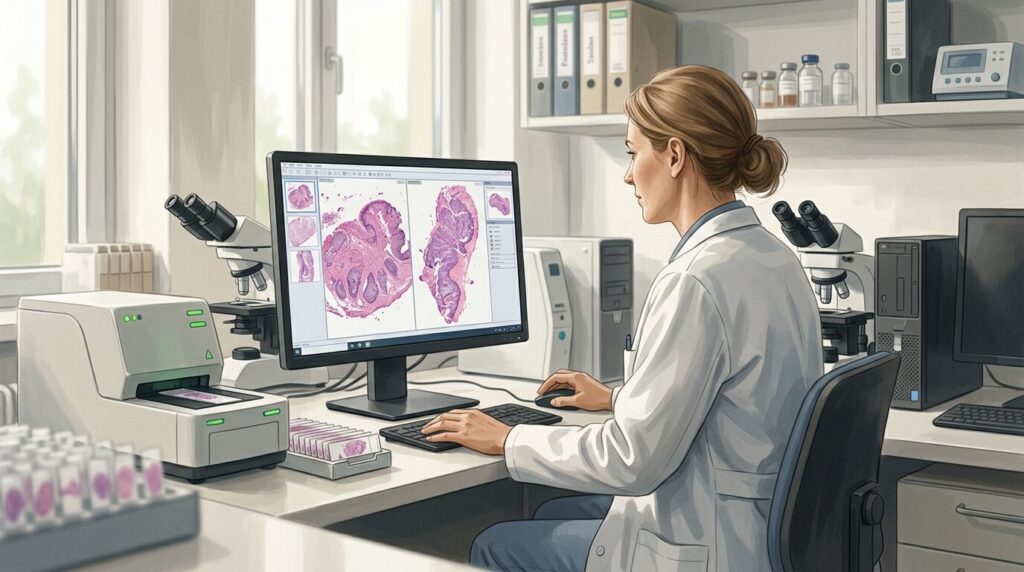
Lung cancer remains one of the most complex and frequently diagnosed malignant diseases worldwide, affecting hundreds of thousands of individuals and their families each year. For decades, oncologists classified lung tumors primarily by their anatomical size, microscopic tissue type, and whether malignant cells had spread to regional lymph nodes or distant organs. However, modern cancer biology has demonstrated that a tumor is far from a uniform mass of identical cells. Instead, it constitutes a highly diverse ecosystem comprising multiple distinct cancer cell subpopulations, immune cells, connective tissue, and blood vessels.
In standard clinical practice across major cancer centers, traditional staging systems guide initial treatment decisions such as surgical resection, chemotherapy, or radiotherapy. Patients diagnosed at early stages usually undergo complete surgical removal of the primary tumor, after which standard protocols often omit additional systemic treatment because the overall risk of recurrence is considered low. Nevertheless, a significant proportion of early-stage patients unexpectedly suffer distant metastasis and disease relapse within a few years. This clinical reality highlights the clear limitations of conventional diagnostic categories, which cannot capture the underlying biological aggressiveness hidden within an individual tumor.
Germany has long been recognized as an international center of excellence for comprehensive lung cancer care, offering state-of-the-art diagnostic imaging, advanced molecular pathology, and multimodal therapies. In modern German certified lung cancer centers, interdisciplinary tumor boards evaluate tissue biopsies using standardized immunohistochemistry and targeted gene panels to identify treatable genetic alterations. While these routine methods successfully detect well-known driver mutations, they evaluate bulk tissue samples and average out cellular differences. Consequently, subtle cellular subpopulations that possess strong metastatic potential frequently remain undetected during routine diagnostic evaluations.
The LuCaS+ Atlas: AI-Powered Insights into Single-Cell Biology
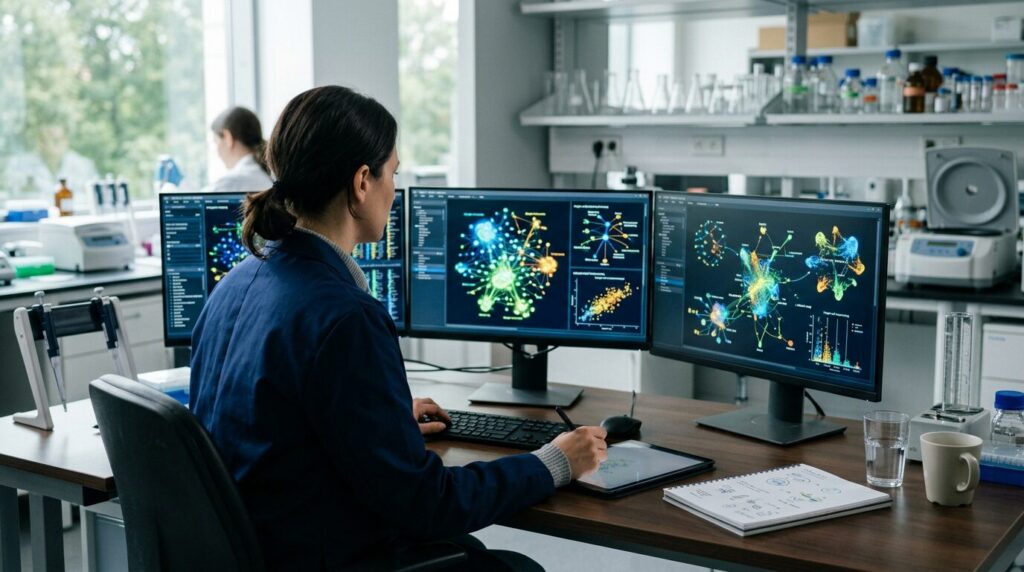
To overcome these diagnostic blind spots, a collaborative research team led by Ludwig-Maximilians-Universität München, Charité – Universitätsmedizin Berlin, and BIFOLD at TU Berlin created the single-cell lung cancer atlas LuCaS+. The researchers analyzed archived tissue samples from 454 lung cancer patients with extensive, long-term clinical follow-up records. By employing single-cell RNA sequencing on cell nuclei, the scientists measured the activity of over 2,000 genes per nucleus, ultimately mapping gene expression across more than 2.5 million individual cells. As Professor Frederick Klauschen from Ludwig-Maximilians-Universität München explained: "For the LuCaS+ atlas, our team analyzed tumor tissue from 454 lung cancer patients. We used a method that has rarely been deployed on this scale before: with single-cell RNA sequencing, we could read out the activity of over 2,000 genes per cell nucleus from archived tissue samples, allowing us to access patient histories with long follow-up periods."
Analyzing such massive biological datasets required advanced computational techniques that extend far beyond traditional statistical methods. Scientists at BIFOLD applied machine learning algorithms capable of detecting subtle gene expression patterns across millions of individual cells. Professor Klaus-Robert Müller, BIFOLD Director and professor at TU Berlin, emphasized that classic evaluation methods reach their limits when processing millions of cells, whereas machine learning procedures detect even the smallest differences between distinct cell types. Through this artificial intelligence framework, the research team successfully linked specific cellular profiles directly to real-world patient outcomes and metastatic recurrence risks.
The study, published in the scientific journal Nature Cancer, evaluated both the intrinsic aggressiveness of tumor cells and their complex interactions with the surrounding microenvironment. The model demonstrated that the interplay between cancer cells and nearby immune, stromal, and vascular cells plays a pivotal role in shaping disease progression. Furthermore, the findings were validated in an independent patient cohort, confirming that the AI model accurately identifies high-risk individuals even among those diagnosed in early tumor stages. This double-layered analysis provides an unprecedentedly detailed map of how tumors interact with host tissues to facilitate metastatic spread.
Clinical Implications and Future Perspectives for International Patients

For international patients considering oncology evaluation or treatment in Germany, the development of LuCaS+ marks an important step toward hyper-personalized cancer management. Although the atlas is currently a scientific research tool rather than an immediately orderable clinical laboratory test, its insights are already shaping academic oncology discussions. The entire LuCaS+ dataset has been made freely available to the global scientific community to accelerate research into novel therapeutic targets. According to PD Dr. med. Simon Schallenberg from Charité, the primary goal is to derive starting points for new treatment approaches that will now be systematically tested in cell cultures and animal models.
Patients traveling to specialized German university hospitals benefit directly from seeking care at institutions where such cutting-edge research takes place. When discussing treatment options with attending oncologists, patients can ask how emerging molecular profiling and risk stratification models might influence current and future clinical strategies. Understanding that a tumor possesses unique cellular microenvironments helps explain why standard therapies may succeed or fail in individual cases. Furthermore, as clinical trials testing novel targeted agents and combination immunotherapies expand, research hubs like Berlin and Munich remain at the forefront of translating structural findings into clinical protocols.
While single-cell diagnostics undergo further validation and refinement before entering routine clinical care, patients today can already access comprehensive molecular profiling in leading German hospitals. German lung cancer experts emphasize thorough diagnostic workups, including comprehensive next-generation sequencing and multidisciplinary review in tumor boards. As tools like LuCaS+ mature from research models into diagnostic applications, the precision of recurrence predictions will continue to improve. This scientific progression reflects Germany’s commitment to advancing cancer medicine, providing international patients with access to world-class expertise and evidence-based therapeutic concepts.