 EN
Researchers at Universitätsklinikum Tübingen led by Prof. Dr. Jan Böttcher have uncovered a fundamental mechanism by which dying cancer cells actively suppress the human immune system during a specific form of cell death known as ferroptosis. This process, which involves lipid damage in the outer membrane of cancer cells, was previously considered a highly promising strategy to destroy aggressive tumors that no longer respond to conventional treatments. However, the team discovered that as cancer cells undergo ferroptosis, they release a signaling molecule called Prostaglandin E2 (PGE2), which effectively paralyses nearby immune cells and prevents them from mounting a full anti-tumor attack. The findings, published by researchers from the Medizinische Fakultät und Universitätsklinikum Tübingen alongside partners at TU München, clarify why ferroptosis-inducing therapies have sometimes shown limited long-term success on their own and provide a novel blueprint for future combination cancer treatments.
Targeted cell death in modern oncology and the challenge of therapeutic resistance
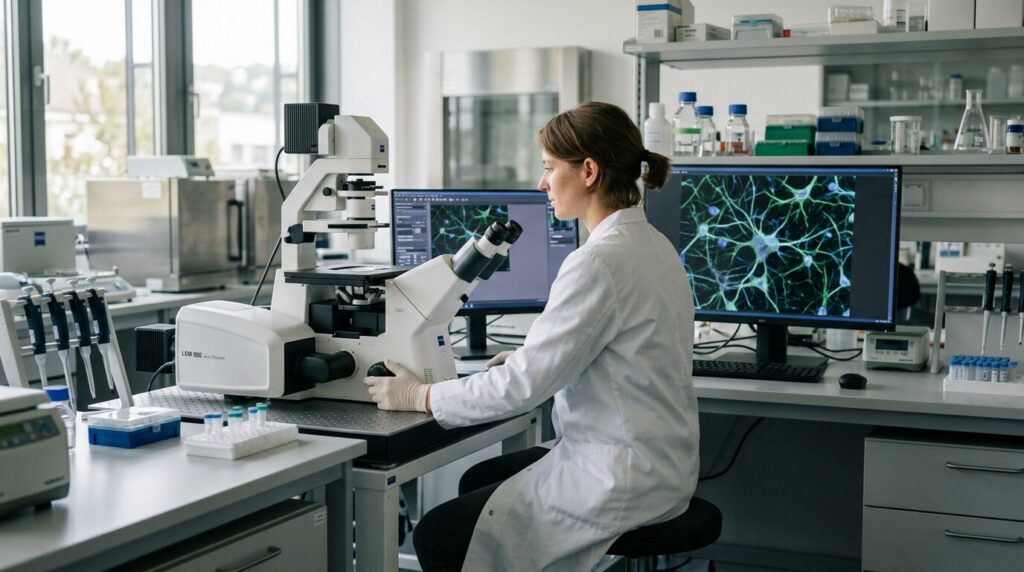
Oncology treatments have historically relied on triggering apoptosis, a natural form of programmed cell death, through chemotherapy, radiation, or targeted molecular agents. However, many advanced malignancies develop complex survival mechanisms that render them resistant to standard apoptotic signals, leading to disease recurrence and treatment failure. To overcome this hurdle, medical research in Germany and worldwide has increasingly focused on alternative pathways of cell elimination, among which ferroptosis has emerged as one of the most promising targets. Ferroptosis is a distinct form of regulated cell death driven by iron-dependent lipid peroxidation within the cellular membrane, causing structural disintegration of the cancer cell wall without relying on classical apoptotic machinery.
German university hospitals have been at the forefront of translating such molecular discoveries into innovative therapeutic concepts for complex oncology cases. Patients traveling to specialized German medical centers often seek access to advanced diagnostic profiling and novel therapeutic protocols designed to target treatment-resistant tumors. Understanding how cell death pathways interact with the surrounding microenvironment is critical for refining these approaches. When tumor cells die, they release various molecules that can either stimulate an immune response or create an immunosuppressive microenvironment that shields remaining malignant cells from destruction.
The delicate balance between effective tumor cell killing and immune system activation remains one of the central challenges in contemporary cancer research. While inducing cell death is essential for reducing tumor burden, the ultimate elimination of microscopic disease relies on a functional host immune system capable of recognizing and destroying lingering cancer cells. If the process of cell death sends inhibitory signals to surrounding immune defenders, the therapeutic benefit of even the most potent cell-killing agent may be severely compromised. Addressing this dual requirement of cell destruction and immune preservation is key to developing next-generation oncology protocols.
The Tübingen discovery: How dying tumor cells block the immune response through PGE2
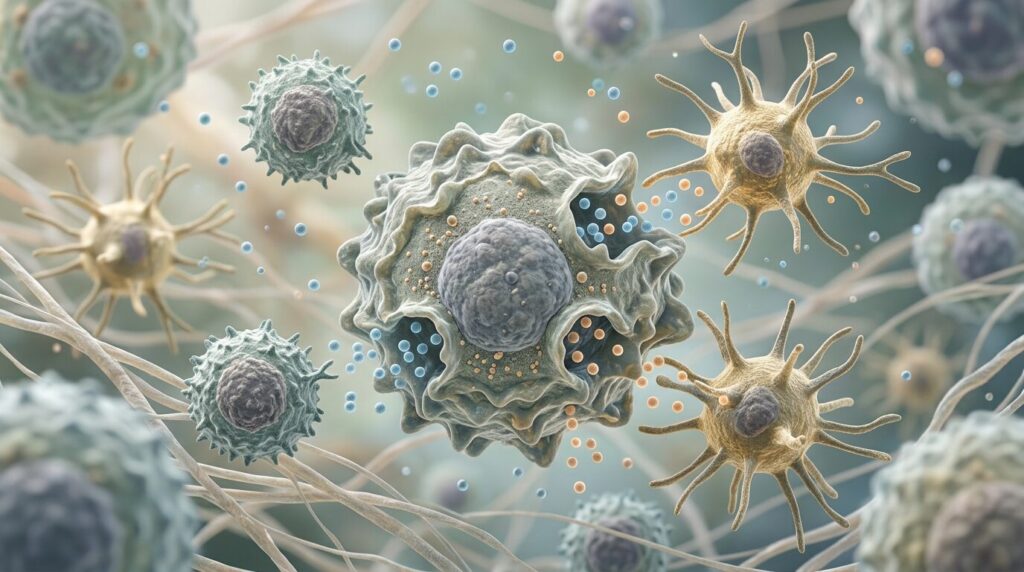
The scientific team led by Prof. Dr. Jan Böttcher and first author Lukas Ramsauer investigated the detailed molecular cascade occurring during ferroptosis in laboratory models, including human tumor cells and primary cells derived from patients with pancreatic cancer. Their experimental observations revealed that as ferroptosis progresses, the cell membrane becomes increasingly permeable, allowing an influx of extracellular calcium into the dying tumor cell. This sharp increase in intracellular calcium triggers an enzymatic signaling cascade that significantly boosts the cellular synthesis and secretion of Prostaglandin E2 (PGE2), a potent lipid mediator.
Once secreted into the tumor microenvironment, PGE2 directly impairs key immune sentinels known as type 1 conventional dendritic cells, or cDC1. Under normal physiological conditions, cDC1 cells are responsible for capturing tumor antigens and activating cytotoxic T cells, which are the primary effector cells capable of seeking out and destroying cancer cells throughout the body. By suppressing cDC1 function, the released PGE2 effectively prevents the activation of anti-tumor T cells, allowing surviving malignant cells to evade immune surveillance despite the localized destruction caused by ferroptosis.
To validate their laboratory findings, the researchers conducted extensive experiments in preclinical mouse models. When they blocked the inhibitory action of PGE2 on cDC1 cells, the immune system regained its full capability to mount an aggressive response and completely eliminated the targeted tumors. Furthermore, combining a ferroptosis-inducing compound with a medication that inhibits PGE2 synthesis led to significantly improved control over tumor growth without interfering with the ferroptosis process itself. This landmark work involved key collaborations within the DFG-Schwerpunktprogramm 2306 "Ferroptosis", the Sonderforschungsbereich 1479 "OncoEscape", the Cluster of Excellence iFIT, the Institut für Molekulare Immunologie at TU München, and received European Research Council support through the Consolidator Grant "EICO-CODE".
Implications for international cancer patients and the future of combination immunotherapies

For international patients seeking treatment in Germany, these findings represent an encouraging advance in the development of targeted combination immunotherapies, particularly for hard-to-treat malignancies such as pancreatic cancer. While the strategy of combining ferroptosis-inducing drugs with PGE2 inhibitors is currently in the preclinical stage and requires rigorous evaluation in upcoming clinical trials to confirm safety and efficacy in humans, it provides a clear mechanistic roadmap for future protocol design. Specialized German cancer centers are already known for incorporating cutting-edge research findings into clinical trial options for patients who have exhausted standard treatment lines.
Patients preparing for oncology consultation in Germany can benefit from discussing whether novel combination strategies or clinical trials targeting tumor microenvironment mechanisms might be relevant to their specific condition. Oncologists in leading German university hospitals evaluate each case individually, considering molecular tumor profiling, immune cell infiltration status, and previous treatment history. Understanding that cancer defense involves both direct cell killing and overcoming local immunosuppression allows medical teams to tailor multi-modal therapeutic strategies that maximize the likelihood of a sustained response.
As research at institutions like Universitätsklinikum Tübingen continues to translate basic biological discoveries into potential therapeutic applications, international patients gain access to an evolving landscape of precision oncology. While immediate standard care continues to follow established international guidelines, the rapid integration of molecular immunology insights ensures that German medical care remains at the forefront of cancer innovation. Patients and their families are encouraged to maintain open communication with their treating physicians regarding emerging clinical studies and state-of-the-art diagnostic evaluations available at university medical centers.
Source: Universitätsklinikum Tübingen