 EN
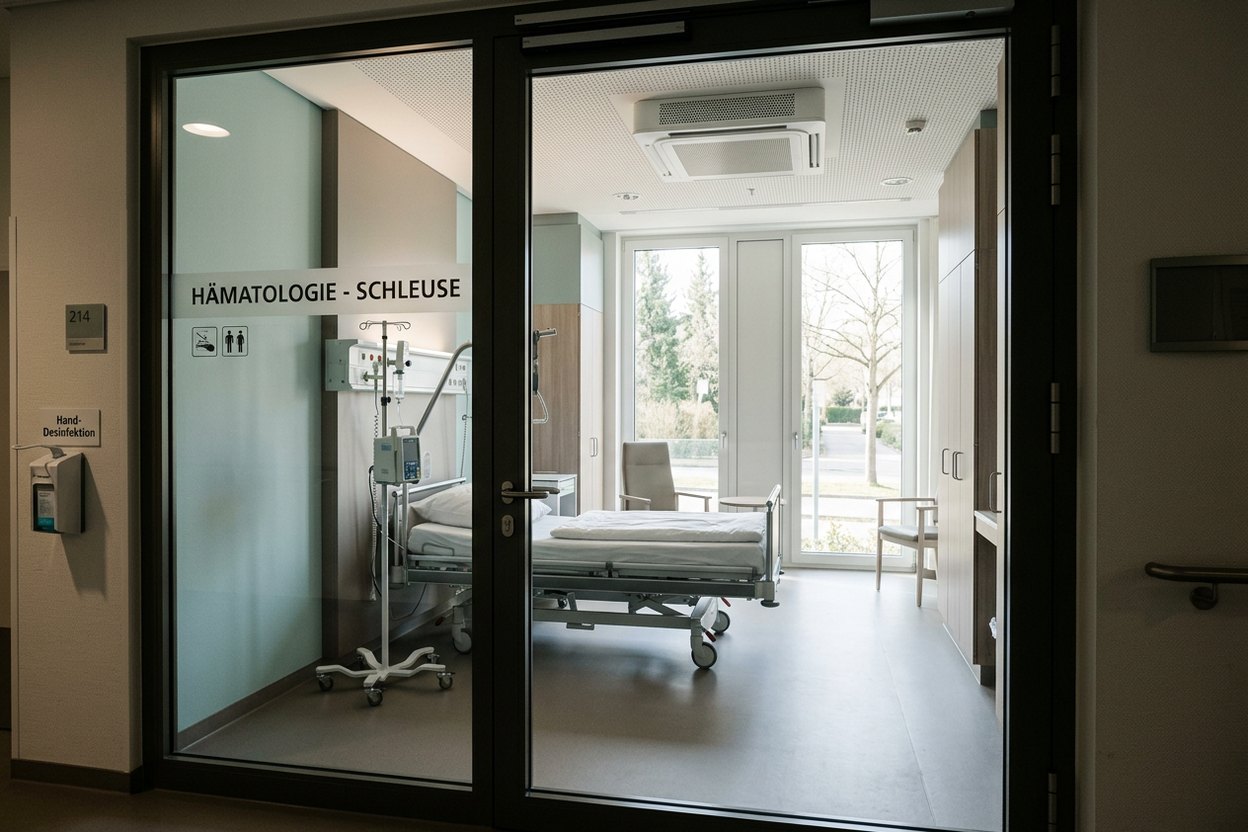
The search for stem cell therapy in Frankfurt, Germany has an obvious reason behind it: Frankfurt airport makes the country reachable from almost anywhere, so the city feels like a natural starting point. But an airport is logistics, not a medical argument.
This page sets out what cell therapy actually exists in Frankfurt, how it differs from what is sold under the same name, and what is worth doing before buying a ticket. For the city as a whole, see hospitals in Frankfurt.
Why patients look for Frankfurt in particular
There are three real reasons: Germany’s largest air hub, university medicine in the city, and the habit of looking for treatment where the plane lands. A fourth reason is not real: private practices advertise under the city’s name deliberately, because people search for it.
For planning, this means choosing the indication and a clinic that works on it, not a city. Frankfurt may or may not turn out to be the right address, and deciding that before the diagnosis is settled makes no sense.
What cell therapy exists in a German hospital at all
A German hospital has two categories of cell therapy. The first is haematopoietic stem cell transplantation, the reason cell therapy exists as medicine at all: it treats leukaemia, lymphoma and a number of inherited and immune diseases. It is a demanding treatment on a specialised ward, with isolation until blood formation recovers and a long recovery of the immune system, not a one-day infusion; see bone marrow transplant in Germany.
The second is licensed cell medicines, each with a name, a marketing authorisation and sharply defined indications, such as CAR-T: the patient’s own immune cells, modified in a laboratory and licensed for certain blood cancers. In the EU they are authorised centrally after assessment by the European Medicines Agency (EMA), and they are given in haematology and oncology departments, not in an aesthetic medicine practice.
Everything else that is offered as “stem cell therapy” for arthrosis, multiple sclerosis, diabetes, autism or ageing belongs to neither category; see “Stem cell treatment: what is proven and what is not”.
The Frankfurt clinics AlenMed works with
For cell therapy, AlenMed’s key partner in the city is University Hospital Frankfurt. It was founded in 1914 together with the university, has more than 1,350 beds and operates under the name University Medicine Frankfurt (Universitätsmedizin Frankfurt), tying clinic, research and teaching together. A university hospital is exactly where cell therapy exists as part of haematology and as clinical research.
Krankenhaus Nordwest is the city’s oncological address, with a Centre for Gastrointestinal Tumours and a Centre for Palliative Medicine. For a patient with a cancer diagnosis, the stage and the treatment plan are settled here first, and cell-based methods are discussed afterwards.
Bürgerhospital Frankfurt, which opened in 1779 and has 320 beds, and the Agaplesion Frankfurter Diakonie Kliniken are AlenMed partners in other fields. They are named here to show that the company has a real network in the city, and that none of these hospitals sells “rejuvenating stem cell injections”.
How to tell a medicine or a trial from a procedure that is sold
Three questions clear away most of the fog: what the product is called in the paperwork, on what legal basis it is used, and which indication the permit names. What German rules allow is covered in “Is stem cell therapy legal in Germany”.
A clinical trial has recognisable marks: a registry number, a protocol, inclusion criteria, and no payment from the participant. If money is asked for “taking part in a study”, it is not a study.
A commercial offer has its own marks: a price named before a diagnosis, a list of more than ten indications, a promised result, and a contract for a “programme” instead of a medical report. EMA and national agencies warn that such products usually have little or no evidence of benefit and may cause severe side effects. The sensible response is not to argue but to ask for a written description of the procedure.
What can actually be planned for the trip
For evidence-based indications, the trip starts not with a procedure but with settling the diagnosis: a review of the histology and the scans, repeated tests, a board discussion; only then is the method discussed.
Allow spare days for repeated examinations, and bring discharge letters, imaging discs and translations of the key documents. Accommodation near the clinic is worth looking for once the dates are named, not before.
Frequently asked questions
Is stem cell transplantation done in Frankfurt?
Yes, at University Hospital Frankfurt: for adults in haematology and for children in a separate centre of the children’s hospital. Both the patient’s own cells and cells from a brother, sister or unrelated donor are transplanted. Doctors decide on a transplant from the diagnosis and medical reports, so the first step is sending documents, not booking a flight.
Can I join a cell therapy trial in Frankfurt?
Only if the illness and previous treatment meet the inclusion criteria of a specific trial. At the university hospital, trials run for leukaemia, lymphoma and myeloma, among others, including stem cell transplantation. The trial team decides after reviewing the documents. The participant does not pay for taking part, and the trial number can be checked in a public registry.
Do I need a diagnosis before travelling to Frankfurt for stem cell therapy?
Yes, without a diagnosis the trip makes no sense. Cell therapy treats a specific disease, so the doctors first need medical reports, histology, scans and test results. From these, the department says what must be repeated on site and whether a transplant, a licensed medicine or a trial is indicated at all.
How AlenMed arranges a trip to Frankfurt
AlenMed starts with the documents: they go to the relevant department of a partner hospital, and the doctor answers what has to be repeated and what plan is possible. Then come a written estimate, a visa invitation and an interpreter at appointments and when the report is discussed. The company’s office is in Munich; clinics are chosen by indication, not by proximity to the office.
AlenMed does not arrange procedures that have neither a licence nor a trial protocol, even when the clinic is in Frankfurt and looks impressive. Instead, it offers a review of the documents and a straight answer about what could actually help.
This material is for information only and is not an offer. Treatment is decided by a doctor at an in-person consultation.