 EN
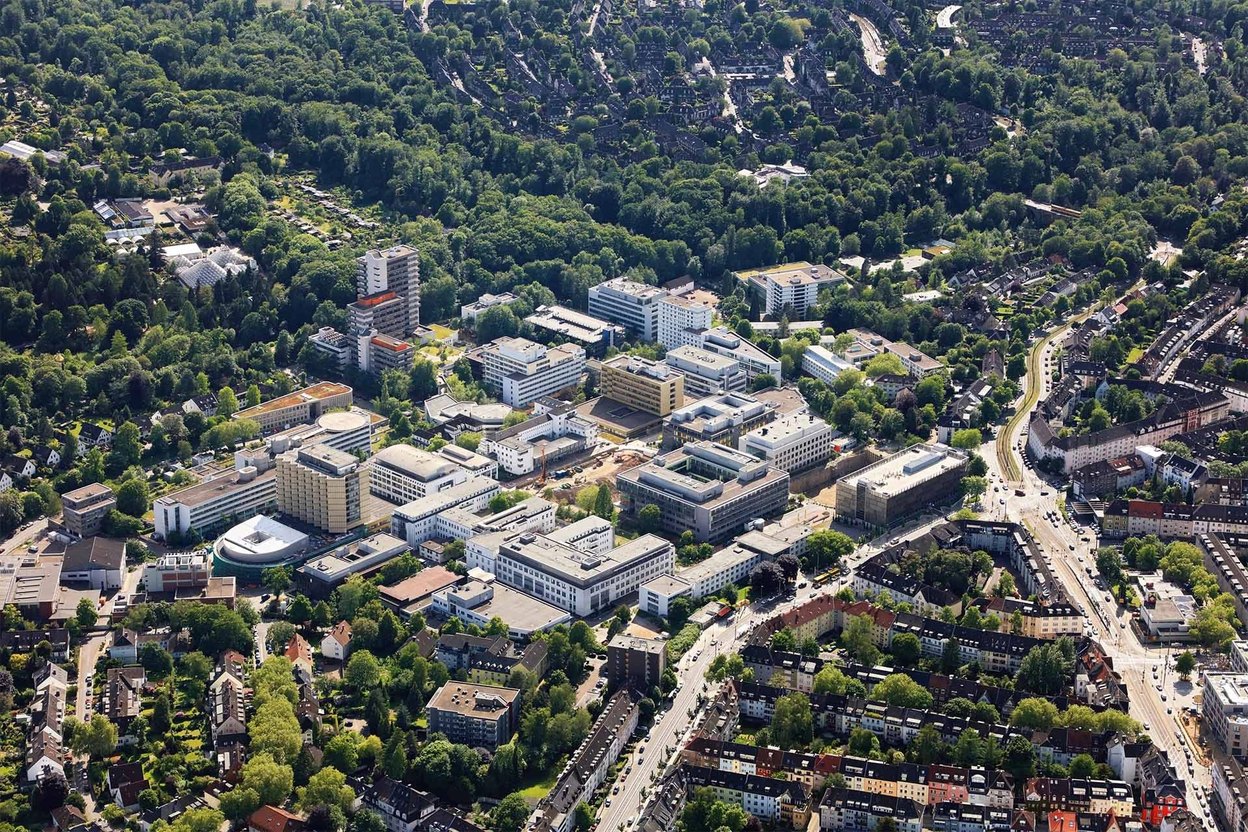
Essen’s hospitals are a university hospital with about 1,300 beds plus church-run and other hospitals in the middle of the Ruhr, a region where hospital density is above the German average. So a patient looking for a hospital here is really choosing a department, not a city.
Below: what Essen’s hospitals treat, what is known about the university hospital, how arrival and accommodation work, and when Düsseldorf or Cologne, about an hour away, is the better answer. For the whole country, see the directory of hospitals in Germany.
Essen as a medical address
Essen works well as a medical address: it lies in the middle of the Ruhr, Düsseldorf airport is within an hour, and dense rail links put neighbouring cities a short train ride away. For anyone looking for a hospital in Essen, Germany, treatment in one city and accommodation, follow-up or a second opinion in another are entirely normal.
Besides the university hospital, there are church-run and other hospitals with specialist departments. The city’s name says little about the level of care; what matters is which department takes on your diagnosis and how many such cases it handles a year. How departments are actually compared is set out in the hospital ranking for Germany.
University Hospital Essen
Universitätsklinikum Essen, the hospital of the medical faculty of the University of Duisburg-Essen, has about 1,300 beds. Its history goes back to 1909, when the city’s municipal hospitals (Städtische Krankenanstalten) opened; they later gained university status. It teaches medical students and covers a broad range of specialties, from anaesthesia and intensive care to paediatrics and paediatric surgery.
Examples of its departments: visceral and transplant surgery, cardiology and angiology, gastroenterology, hepatology and transplant medicine, haematology and stem cell transplantation, neurosurgery and neurology, as well as ophthalmology, dermatology, ENT, gynaecology and obstetrics, and endocrinology.
Its department heads, as named on the hospital’s website: Prof. Boris Hadaschik heads urology and the uro-oncology centre, Prof. Tienush Rassaf cardiology and angiology, Prof. Ulf P. Neumann the Department of General, Visceral and Transplant Surgery (Klinik für Allgemein-, Viszeral- und Transplantationschirurgie), Prof. Martin Schuler medical oncology, Prof. Ulrich Sure neurosurgery and spinal surgery, Prof. Christoph Kleinschnitz neurology, and Prof. Hartmut Schmidt gastroenterology, hepatology and transplant medicine. Details are on the page University Hospital Essen.
What Essen is asked for most
The first answer is oncology, one of the hospital’s own main fields: it runs the West German Tumour Centre (Westdeutsches Tumorzentrum, WTZ), whose network German Cancer Aid (Deutsche Krebshilfe) funds as a top-level cancer centre. Still, a cancer patient chooses a centre certified for their own tumour, not a city: certification by the German Cancer Society shows that a clinic meets set quality requirements and is checked regularly. How to choose is covered on the page cancer hospitals in Germany.
Transplant medicine, cardiology and neurosurgery are the other fields these departments stand for; transplantation is also one of the hospital’s stated priorities. But no hospital is strong in everything, and a good referral is aimed at a department, not at a hospital in general.
Getting there and the practical side
The simplest route is a flight to Düsseldorf airport, then a taxi or train to Essen main station, where the U17 runs to Holsterhauser Platz and tram 106 to the Klinikum stop at the hospital’s main entrance. Before admission, the patient needs an appointment date, a written estimate and a visa invitation, and should ask whether the ward provides an interpreter.
Relatives should book a hotel or flat near the hospital early. Visiting hours are set by each ward, with stricter rules in intensive care. A single room is an optional extra (Wahlleistung) billed separately. Meals are included in the stay and follow any prescribed diet; clothes, slippers, toiletries, a list of medicines and medical records come from home.
Essen or a neighbouring city?
Look wider when Essen has no early date or the department you need treats few such cases: Düsseldorf and Cologne are about an hour away by train, so a date three weeks earlier or a department with more cases a year can outweigh the address. The options next door are on the page hospitals in Düsseldorf.
German university hospitals differ less in status than in their departments’ profiles, case numbers and waiting times; more on this under university hospitals in Germany. So replace the question “which city” with three others: which department, how many cases, how soon.
Frequently asked questions
Which hospitals are there in Essen?
Essen has a university hospital, Universitätsklinikum Essen, with about 1,300 beds and departments from cardiology and neurosurgery to paediatrics, plus church-run and other hospitals with their own specialist departments. Choose between them not by reputation but by which department treats your diagnosis, how many such cases it handles a year and how soon it can admit you.
Can I be treated in Essen without speaking German?
Yes, if an interpreter is arranged in advance. The consent talk before surgery, ward rounds and discharge are usually in German, and a patient signs consent only after understanding the explanation. So ask before admission whether the ward provides an interpreter, and have reports translated into German or English. With AlenMed, an interpreter attends the talks and rounds.
How soon can I get an admission date in Essen?
Only the department can name a date, after reviewing the records; it depends on the diagnosis, the urgency and how busy the ward is. Planned admissions are set once the hospital has sent its estimate; emergencies are taken sooner. If Essen’s date is too late, the same request can go to Düsseldorf or Cologne to see who admits you earlier.
How AlenMed arranges treatment in Essen
AlenMed starts with a remote review of discharge papers and scans and sends a request to the department matching the diagnosis. Before the trip the family receives the hospital’s written estimate, the visa invitation and the admission date; on arrival the patient is met, and an interpreter attends the consent talk and ward rounds.
After discharge, AlenMed translates the discharge letter, keeps a line open to the treating doctor in Essen and arranges follow-up checks. How German hospital bills are built up is explained in the prices section of the site.
This material is for information only and is not an offer. The choice of hospital and the treatment plan are decided by a doctor after examining the patient in person.
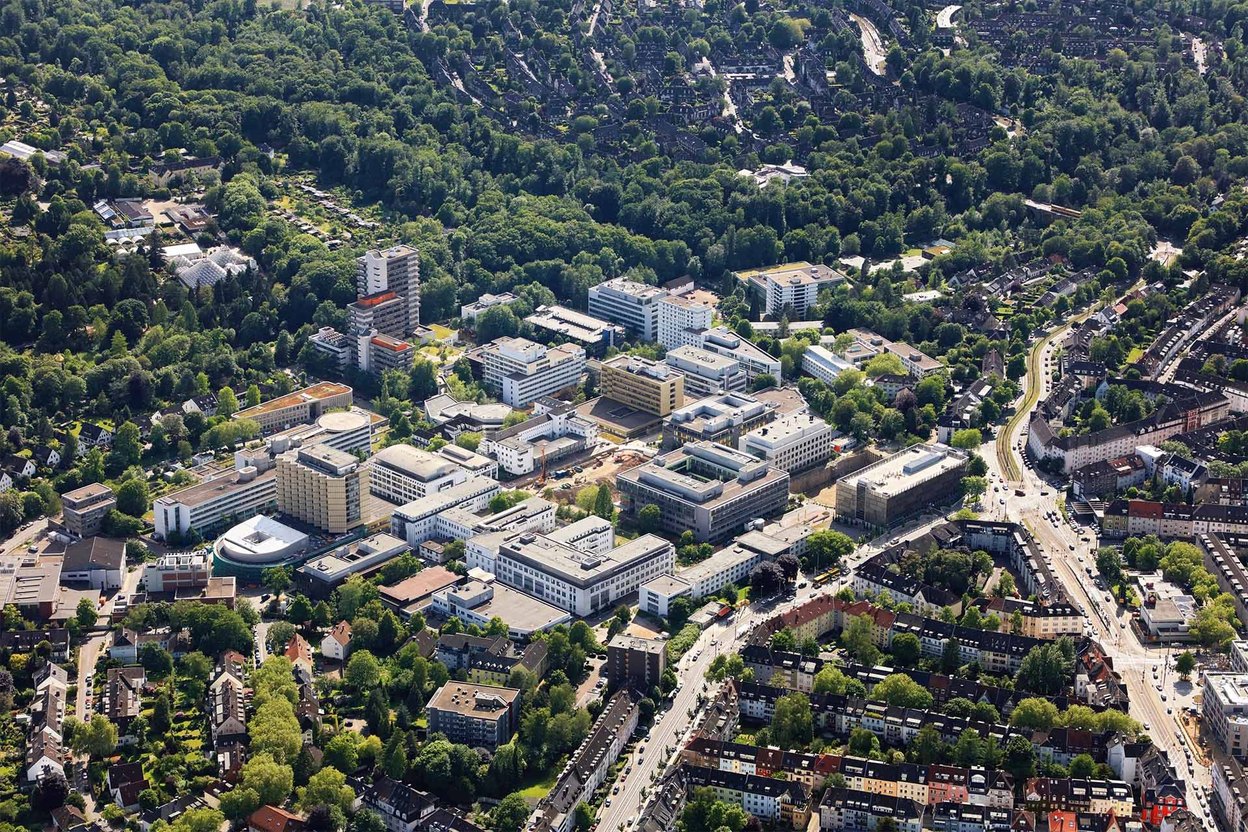
Essen University Hospital
The university hospital of the University of Duisburg-Essen, with 1,291 beds, twenty-seven clinical departments and twenty-four research institutes. Its strengths are transplant surgery, haematology with stem cell transplantation, and hepatology.