 EN
ENThe best cancer treatment centers in Germany are not a fixed list of famous names but the certified centers that treat your exact diagnosis routinely. Someone facing cancer needs a place where their type of tumor is everyday work and a board of specialists reviews the case.
This page covers how oncology care in Germany is organized, what to compare instead of a ranking, how to choose a center and how admission works, with links to pages on specific cancers and cities. The AlenMed partner hospitals for cancer care are listed under the text.
The three levels of oncology care in Germany
Oncology care in Germany has three certified levels built on a broad base: most larger hospitals and university hospitals treat cancer, and centers can have their specialization certified. The first level is the organ cancer center, focused on one tumor type, such as a breast, bowel or prostate cancer center. The second is the oncology center, certified for several cancers, including rarer ones. The highest is the comprehensive cancer center (CCC), where surgeons, radiation oncologists, medical oncologists, pathologists and other specialists share one outpatient clinic and clinical trials are a main task. The model comes from Germany’s National Cancer Plan.
If you want to know which are the best oncology hospitals in Germany for your diagnosis, certification by the German Cancer Society (Deutsche Krebsgesellschaft, DKG) says more than any ranking, because its requirements are checked every year: experience with this particular cancer, a tumor board where specialists review each patient’s records together, and documentation of every case. Audit results are published in annual reports. Certification is voluntary and good care exists outside it, but certified centers are all checked against the same rules; a place in a ranking is not.
Different levels do different jobs. Much is done well in an ordinary hospital, while rare tumors and complicated cases more often go to the large oncology centers in Germany that combine surgery, radiotherapy and molecular diagnostics with research: the comprehensive cancer centers at university hospitals, where care and research go together and access to clinical trials is easier. One example is the Comprehensive Cancer Center München LMU: its director is Prof. Volker Heinemann, and its precision oncology unit, where a molecular tumor board recommends treatment, is led by Dr Benedikt Westphalen. Heidelberg University Hospital and the Charité in Berlin also have comprehensive cancer centers.
What “best” can honestly mean
Honestly, “best” in cancer care can only mean best for your diagnosis: there is no official ranking of cancer hospitals in Germany. People searching for “best cancer hospitals in Germany” hope for one, but the German Cancer Society states plainly that no single “best” hospital exists for all cancers. Magazine lists are the publishers’ own rankings, mixing hospital figures with reputation among doctors and patients; they rate a department as a whole and know nothing about your stage, tissue findings or previous treatment.
To work out which are the best oncology clinics in Germany for you, check five signals instead: how many cases of your exact diagnosis the center treats in a year; whether its organ cancer center for that tumor is certified; whether a tumor board meets and will review your case; whether molecular testing of the tumor is done in house, since the choice of drug increasingly depends on it; and whether the hospital takes part in clinical trials that can give earlier access to new treatment.
A center that is strong in one tumor is not automatically right for another: certificates go to a specific center, not to the whole hospital, and a team that operates on bowel cancer all the time may rarely see pancreatic tumors. A famous name tells you nothing about the department you will actually need.
Private clinics offering “alternative”, “biological” or “integrative” cancer therapy often appear in search results next to university centers. Three questions sort them out: is the method part of the German clinical guidelines (a separate guideline on complementary medicine in cancer assesses such methods and advises against some); does the clinic have a certified organ cancer center and a tumor board; is the method added to standard treatment or offered instead of it? Not every facility calling itself a clinic is licensed as a hospital. Support runs alongside proven treatment, replacement gives it up; where that line lies is explained on the page on integrative oncology.
Choosing a centre for your diagnosis
Choose the center after the diagnosis, not before: a firm diagnosis and a complete set of documents come first, then a center is matched to them. Tumor type, stage and earlier treatment decide whether you need an organ cancer center, an oncology center or a CCC, and a review of your records sometimes points elsewhere than you expected.
German hospitals often ask for the actual slides, tissue blocks and images, not just the reports, because a second look sometimes changes the diagnosis. A pathologist may reclassify the tumor or its receptors — in breast cancer these decide which drugs can be used — and a radiologist may judge the spread differently. When the diagnosis changes, so does the choice of center, and sometimes the treatment.
From here, the pages on specific cancers and cities take over: breast cancer hospitals, pancreatic cancer hospitals and cancer hospitals in Munich. How surgery, radiotherapy and drug therapy are used for different tumors is covered in the section on cancer treatment in Germany.
Doctors: reading a German CV
In a German doctor’s CV, the job title and the department matter most, because they show what the doctor is responsible for. An ordinary hospital department is headed by a Chefarzt; at a university hospital the same role is usually called Direktor and held by a professor. The head of a certified center coordinates its departments, while day-to-day care is often in the hands of a senior physician (Oberarzt). “Professor” and “PD” (Privatdozent) are academic titles, not hospital positions.
The name matters less than the team and the tumor board, because in a certified center the plan is not made in one office: surgeon, radiation oncologist, medical oncologist, pathologist and radiologist review the case together, and even a well-known professor works from the board’s joint decision. Ask who is on the team for your diagnosis and how regularly the board meets.
How to be admitted
Admission starts with documents: German cancer hospitals ask for a complete set before you travel. That means doctors’ reports, CT, MRI or PET scans on disc, the pathology report with the slides and tissue blocks, details of any treatment so far, and a translation into German or English.
Then the steps follow in order: your enquiry goes to the hospital, a doctor in the department reviews the documents and replies whether you need to come and what they propose; the hospital issues an invoice, you pay the advance it asks for, and the hospital provides the invitation for your visa. The bill for cancer treatment covers diagnostics, the treatment itself and the hospital stay, and changes if the plan does; reference figures are on the page on cancer treatment prices in Germany.
Waiting times depend on the diagnosis and on how busy the department is, so nobody can honestly promise dates in advance. Meanwhile you can check whether the hospital has a certified center for your diagnosis: the Krebsinformationsdienst of the German Cancer Research Center explains certified cancer centers (in German) and how to find them.
Frequently asked questions
Which hospital in Germany is considered the best for cancer treatment?
No hospital in Germany is officially named the best for cancer treatment. The closest thing is comprehensive cancer center (CCC) status, which the Deutsche Krebshilfe foundation awards to university centers after review by an international panel. Even a CCC is not best for everyone: common cancers are also treated well in certified organ cancer centers of ordinary hospitals, and with a rare tumor what counts is a team that sees it regularly.
What is the best oncology clinic in Germany?
There is no single best oncology clinic in Germany: the best one for a patient is where their type of tumor is treated routinely. Look for a German Cancer Society certificate for the relevant organ cancer center, CCC status, a tumor board that will review your case and a team specialized in your cancer. These signs do not produce one winner for all diagnoses; they show who is strong in yours.
How can I check whether a hospital has a certified cancer center?
Use OncoMap, the German Cancer Society’s search site, where every certified center can be found by type of cancer and postcode. Check what exactly the certificate covers: a breast, bowel or other organ cancer center, not the hospital as a whole. For an oncology center that treats several cancers, the list of diagnoses is in the annex to the certificate, which can also be opened on OncoMap.
How AlenMed matches a clinic
AlenMed matches a clinic to the diagnosis, not to the most famous name: working from the patient’s documents, we look among 86 partner clinics in 38 German cities and 345 doctors for the center where this type of tumor is treated routinely.
We translate the records, send the enquiry, book appointments, help obtain the invitation for the visa, provide an interpreter at consultations and support the patient on site; the company’s office is in Munich.
This material is for reference only and is not an offer. The treatment plan is decided by a doctor at an in-person consultation.
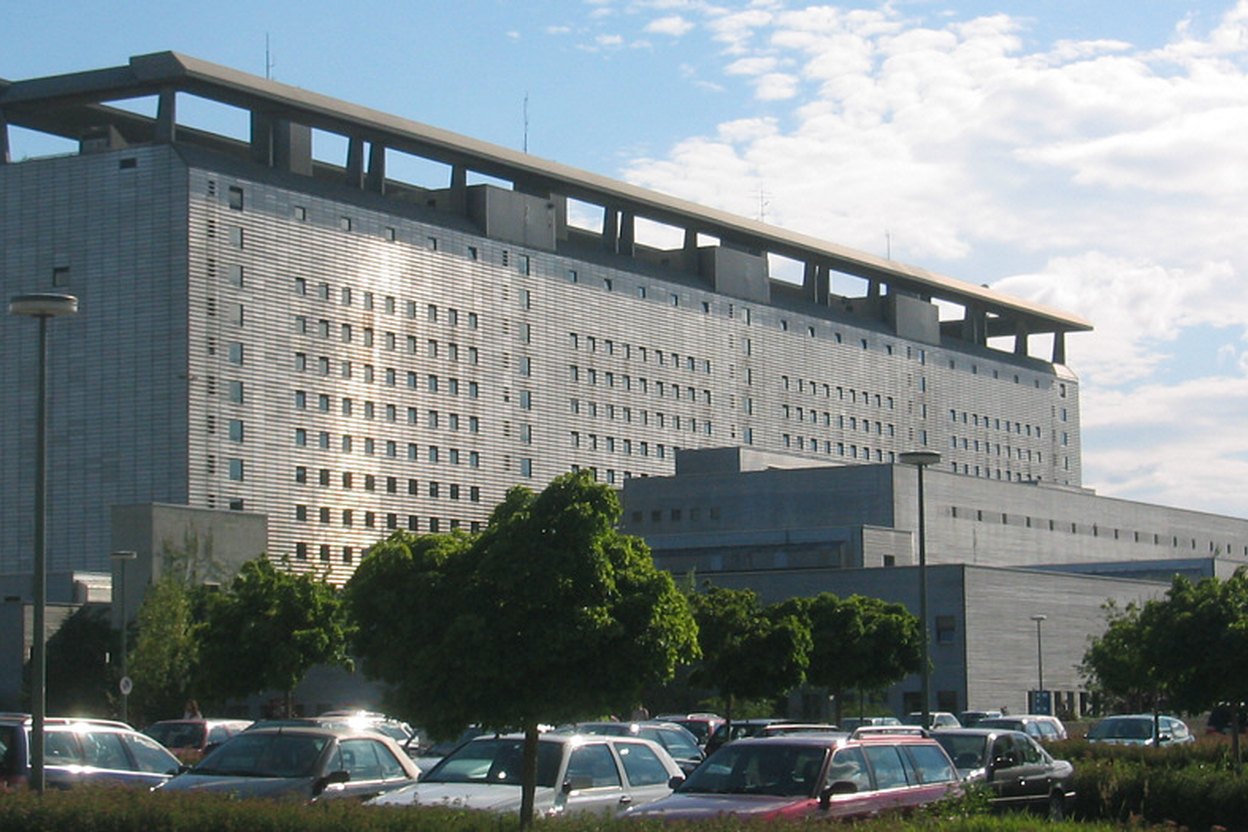
Comprehensive Cancer Center Munich LMU
A cancer centre within the LMU University Hospital in Munich, where every case is reviewed by an interdisciplinary tumour board. Molecular tumour analysis, surgery, drug therapy and radiotherapy are planned together in one academic structure.

Münchner Onkologie — oncology practice
Not a hospital but a specialist oncology practice with a day unit in central Munich, where chemotherapy, antibody and targeted therapy are given as outpatient care. It is led by an ESMO-certified oncologist who follows the patient throughout.

Radiotherapy Centre, Munich-Pasing
An outpatient radiotherapy practice in Munich-Pasing, where patients arrive with a diagnosis and a plan already made to receive the radiation part of their treatment. It works with IMRT, image-guided and stereotactic techniques on Varian accelerators.