 EN
EN
The best neurology hospital in Germany is the one built for the current stage of the illness, not the most famous one. A stroke yesterday, a month in bed after brain surgery, multiple sclerosis diagnosed a year ago: these are three different addresses, and confusing them costs weeks.
Below: how German neurological care is split by profile, what B, C and D mean in German paperwork, and which checks show that a centre fits.
Acute care and rehabilitation take place in separate hospitals
In Germany, acute neurological care and rehabilitation take place in separate hospitals. Acute stroke patients go to a certified stroke unit with neuro-intensive care, where minutes matter: drugs dissolve the clot or a catheter removes it, and blood pressure and breathing are controlled. Departments with a stroke unit include, unranked, neurology with early rehabilitation at BG Klinikum Unfallkrankenhaus Berlin (Dr Ingo Schmehl), vascular neurology at University Hospital Bonn (Prof. Gabor Petzold) and neurology at University Hospital Essen (Prof. Christoph Kleinschnitz).
Afterwards the patient moves to a rehabilitation centre, usually in another building or town. This is deliberate: an acute hospital saves and stabilises, while recovery needs another team — physiotherapists, occupational and speech therapists, neuropsychologists — and daily therapy. The transfer is a planned next step, not a hospital passing on a difficult case.
The third type, centres for chronic diseases such as multiple sclerosis, Parkinson’s and myasthenia, offers long-term follow-up and careful adjustment of medication rather than intensive care. See our pages on neurology treatment in Germany and multiple sclerosis treatment.
What phases B, C and D mean
Phases B, C and D are stages of German neurological rehabilitation, and the letter decides which clinic will accept the patient. Phase B is early rehabilitation after severe brain and spinal cord damage: weaning from the ventilator, neurostimulation and round-the-clock monitoring.
In phase C the patient is stable and relearns how to sit, stand, eat and wash. Phase D is the final adaptation to everyday and working loads, when the patient largely manages alone.
Schön Klinik Bad Aibling Harthausen and the Godeshöhe Neurological Rehabilitation Centre in Bonn take early-phase patients; Godeshöhe has a spinal cord injury unit and a ventilator weaning unit. Kliniken Schmieder in Allensbach on Lake Constance run multi-step programmes, with Prof. Joachim Liepert leading neurorehabilitation and Prof. Anastasios Chatzikonstantinou acute neurology and early rehabilitation. Asklepios Neurological Clinic Falkenstein in Königstein im Taunus near Frankfurt covers phases B and C. More on neurological rehabilitation in Germany.
What makes a neurology hospital in Germany strong
The best neurology hospitals in Germany are recognised by checkable facts, not adjectives. For acute care: a certified stroke unit, round-the-clock neuroradiology that can remove a clot by catheter, and neurosurgery in the same building. For any neurology clinic in Germany: yearly case numbers for your diagnosis (hospitals publish them in a mandatory quality report) and university hospital or rare-disease centre status.
Fame and fit differ: the best neurology hospital in Germany for one patient can be wrong for another. The Centre for Rare Neuromuscular Diseases at University Hospital Würzburg (Prof. Claudia Sommer, Prof. Nurcan Üçeyler) is strong in rare diagnoses such as neuropathies, myopathies and myasthenia rather than rehabilitation; rehabilitation centres are the reverse. See our overview of university hospitals in Germany.
Then the checks nobody writes about: does the clinic admit a patient with a tracheostomy, can a relative stay nearby, how far is the airport, does anyone speak the patient’s language? Tube-fed patients need swallowing specialists, such as the swallowing disorders centre at m&i Specialty Clinic Bad Heilbrunn in Upper Bavaria. Finding a neurologist in Germany is covered separately.
Where are the best neurologists in the world, and does the question help?
Nobody can say where the best neurologists in the world are: no league table exists, only published case volumes, guideline authorship, rare-disease reference networks and teaching posts. Such groups work in Germany, the United States, Switzerland and Japan, and the team and equipment around a doctor usually matter more than the name. The real divide is access: the WHO Global status report on neurology found that low-income countries have up to 82 times fewer neurologists per 100,000 people than high-income nations.
So instead of asking what country has the best neurologists, ask which centre in Germany sees your diagnosis most often and what it can show for it. Acute stroke care is judged by door-to-needle time, how fast clot-dissolving treatment starts after arrival, and round-the-clock thrombectomy, not reputation.
What to prepare before contacting a clinic
Prepare what a German hospital needs to answer: dated discharge letters, MRI or CT images on disc (not printouts), the operation report, current medication, details of ventilation and tube feeding, and any findings of antibiotic-resistant bacteria, which the clinic must know in advance.
In return the clinic sends a phase recommendation, the length of stay it offers and an official cost estimate; see our page on the cost of neurological rehabilitation.
Frequently asked questions
How do I know which phase a patient needs?
The treating doctor determines the phase, and the German clinic confirms it. A patient on a ventilator, unconscious or needing constant monitoring belongs to phase B; a stable patient who can join in therapy but needs help with daily life, to phase C; one who largely manages alone, to phase D.
Do German clinics accept patients who are still on a ventilator?
Yes. Such patients belong to phase B and go to early rehabilitation centres with a ventilator weaning unit, such as Godeshöhe in Bonn. The clinic decides after reviewing the documents: the cause of the damage, ventilation settings, any tracheostomy and infections matter. Transport is agreed in advance.
Can a patient travel to Germany straight after a stroke?
Not in the first hours: emergency treatment happens wherever the stroke occurs, and minutes count. A German clinic can admit the patient later for rehabilitation, once the treating doctor considers transport safe. Meanwhile the family can send the documents, so the clinic’s answer is ready by discharge.
How AlenMed selects the clinic and arranges the trip
AlenMed selects the clinic by phase and diagnosis, not by fame. Our team reads the discharge letters, sends enquiries to doctors, requests the clinic’s official cost estimate, prepares visa documents and provides a medical interpreter for the whole stay. Our office is in Munich; partner clinics are across Germany.
This material is for information only and is not an offer or a substitute for a consultation: a doctor decides on treatment in person, and the clinic sets the final cost and programme after reviewing the documents.
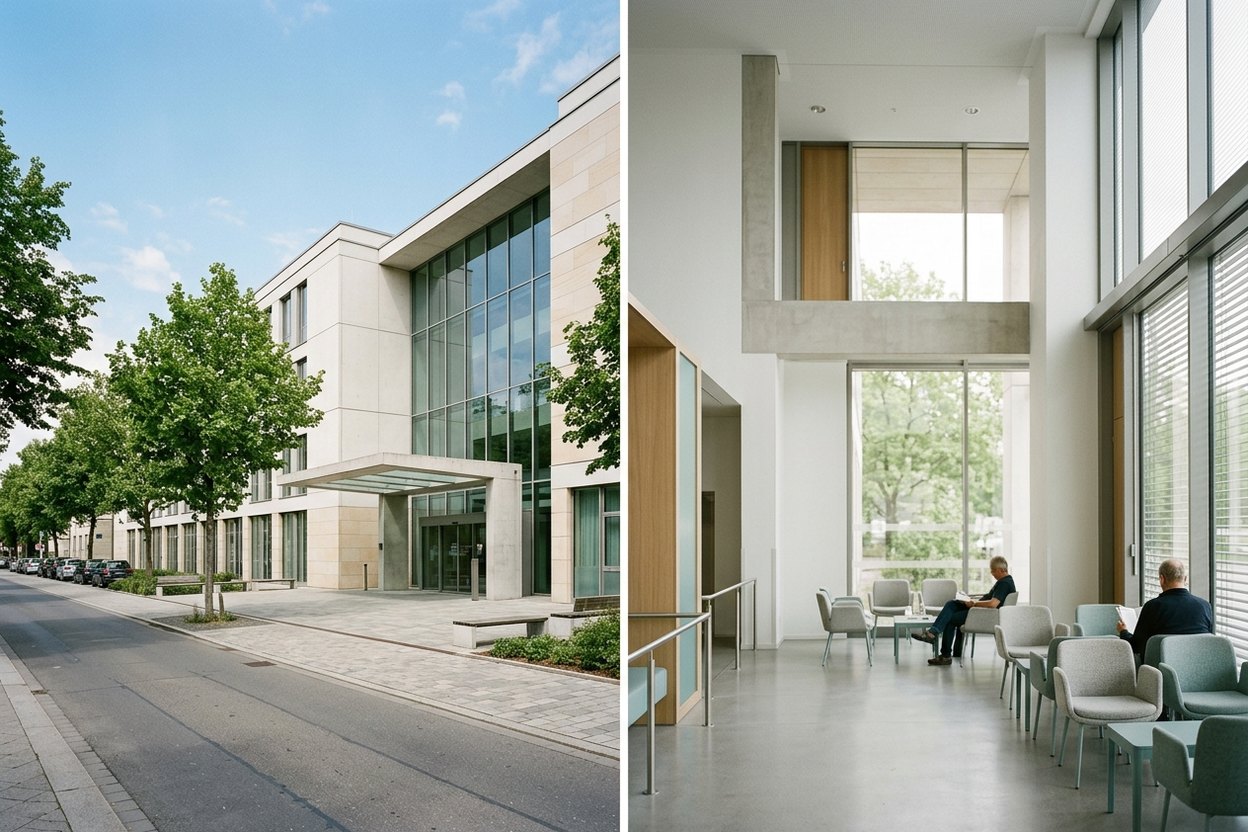
Asklepios Neurological Clinic Falkenstein
A specialised neurological hospital in Königstein im Taunus near Frankfurt, part of the Asklepios group. Its work is early rehabilitation in phases B and C after stroke, severe head injury and brain or spinal surgery.
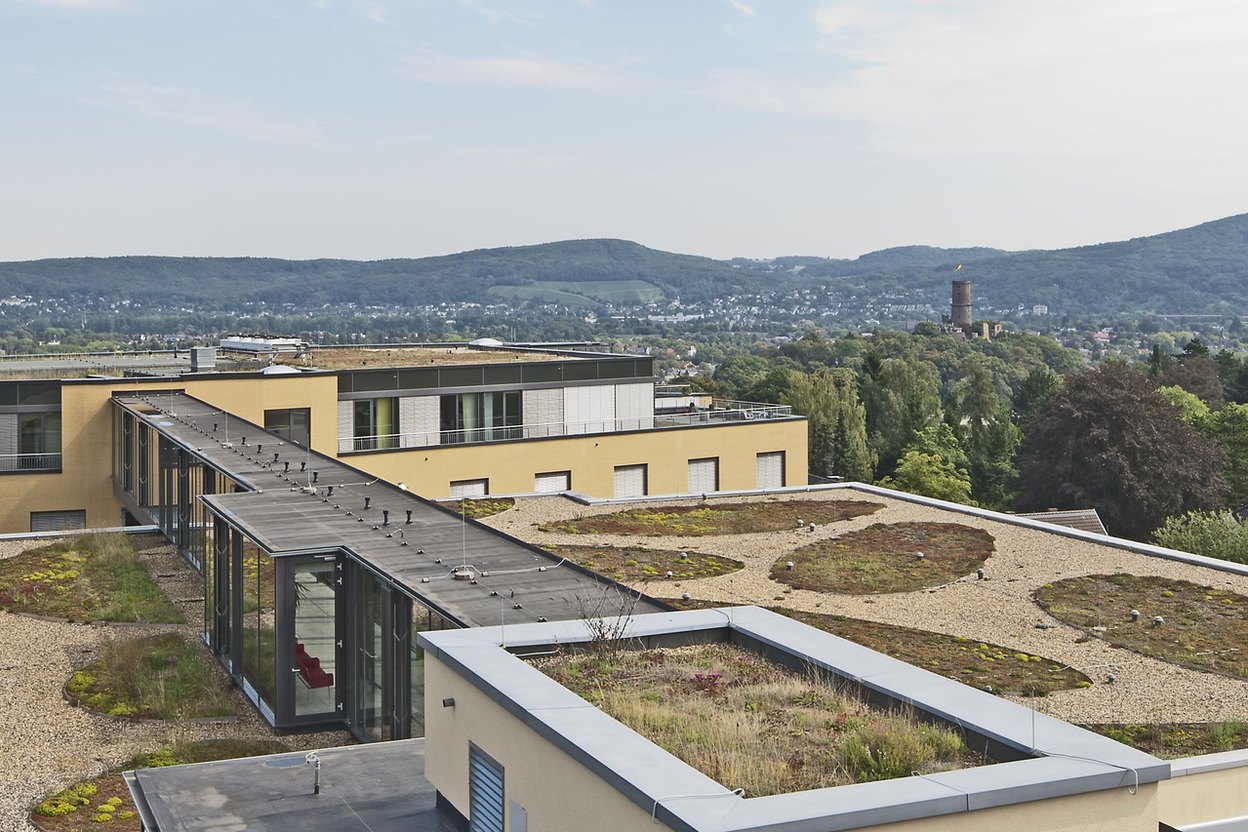
Godeshöhe Neurological Rehabilitation Center
A neurological rehabilitation centre in the Bad Godesberg district of Bonn, run under the Johanniter organisation. It covers recovery after stroke, brain injury and neurosurgery, with a spinal cord injury unit and a ward for weaning off ventilation.
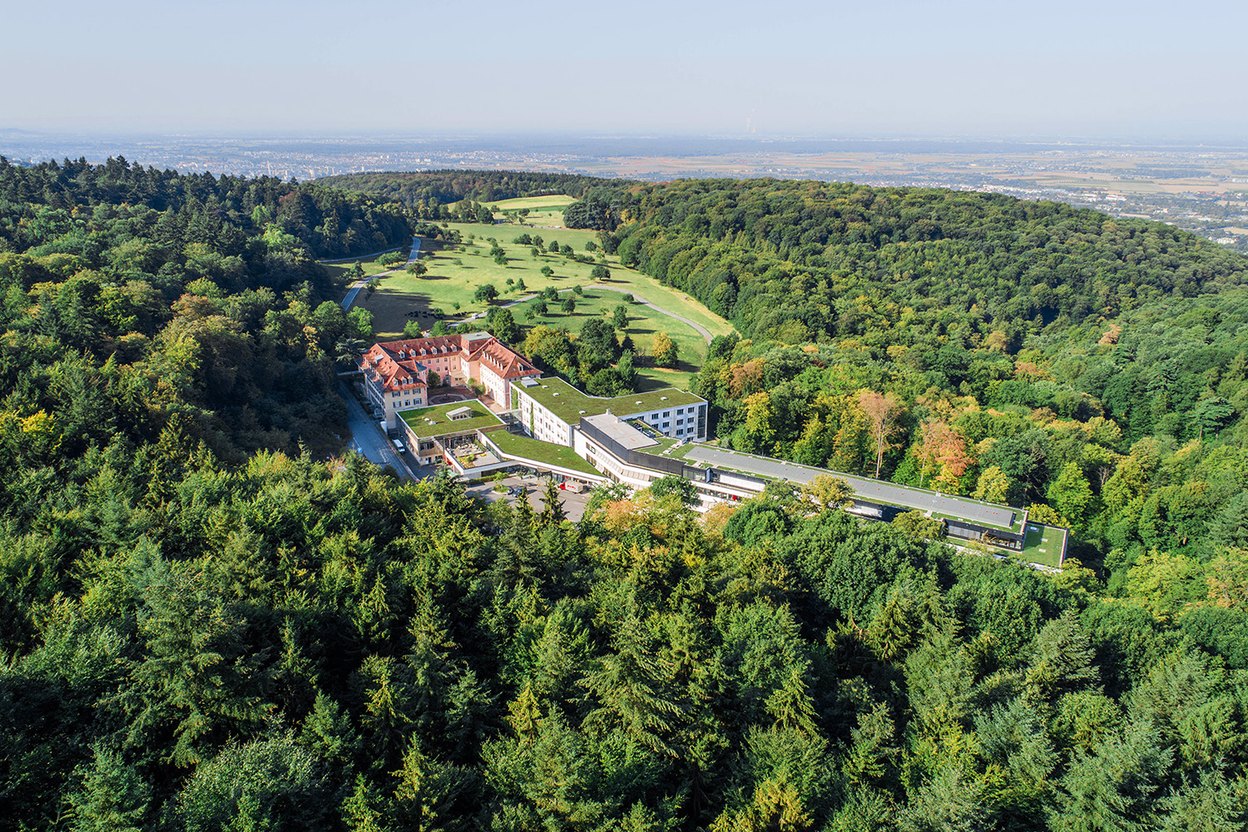
Kliniken Schmieder
A network of neurological rehabilitation clinics headquartered in Allensbach on Lake Constance, founded in 1950 by Dr Friedrich Schmieder. Recovery after stroke, brain and spinal injury and neurosurgery, and care in multiple sclerosis and Parkinson's disease.
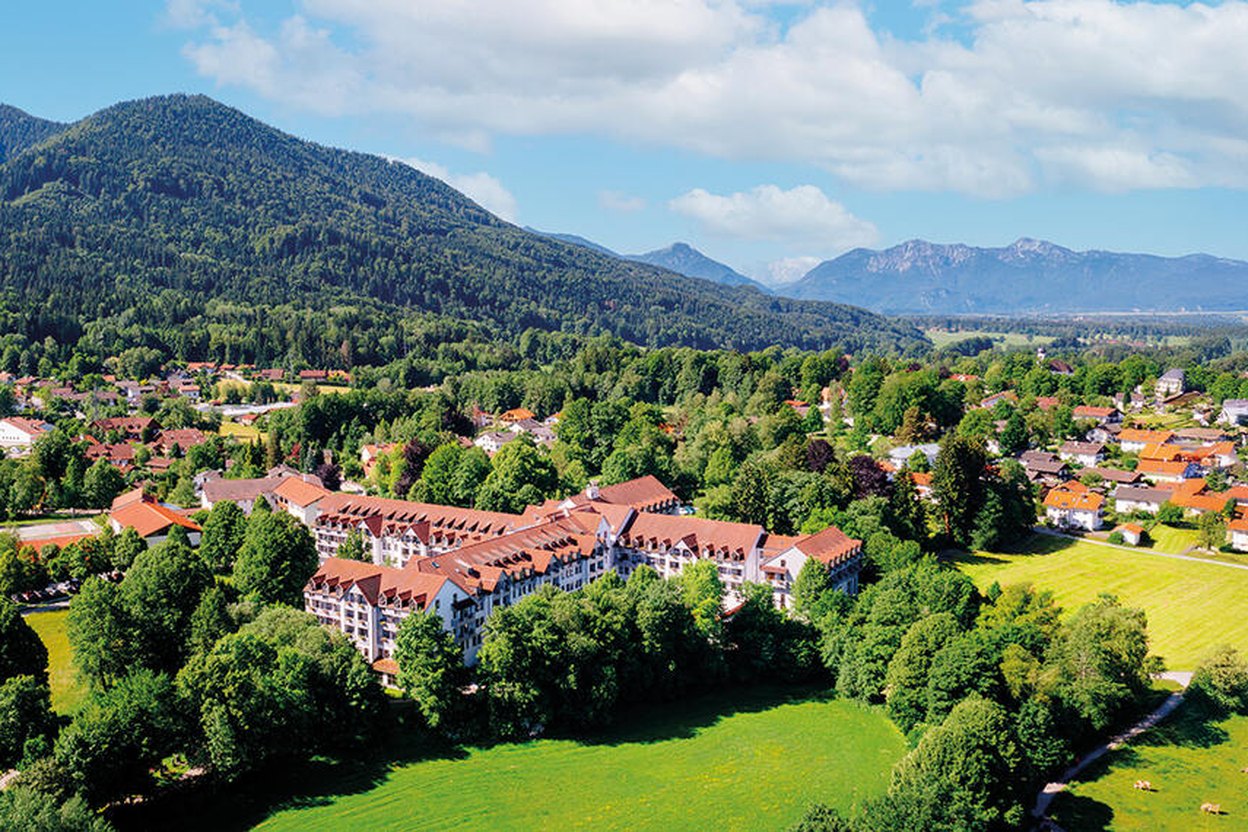
m&i Specialty Clinic Bad Heilbrunn
A combined acute hospital and rehabilitation clinic in the spa town of Bad Heilbrunn in Upper Bavaria. Its fields are orthopaedics, neurology and oncology, with centres for chronic pain, diabetes and swallowing disorders.
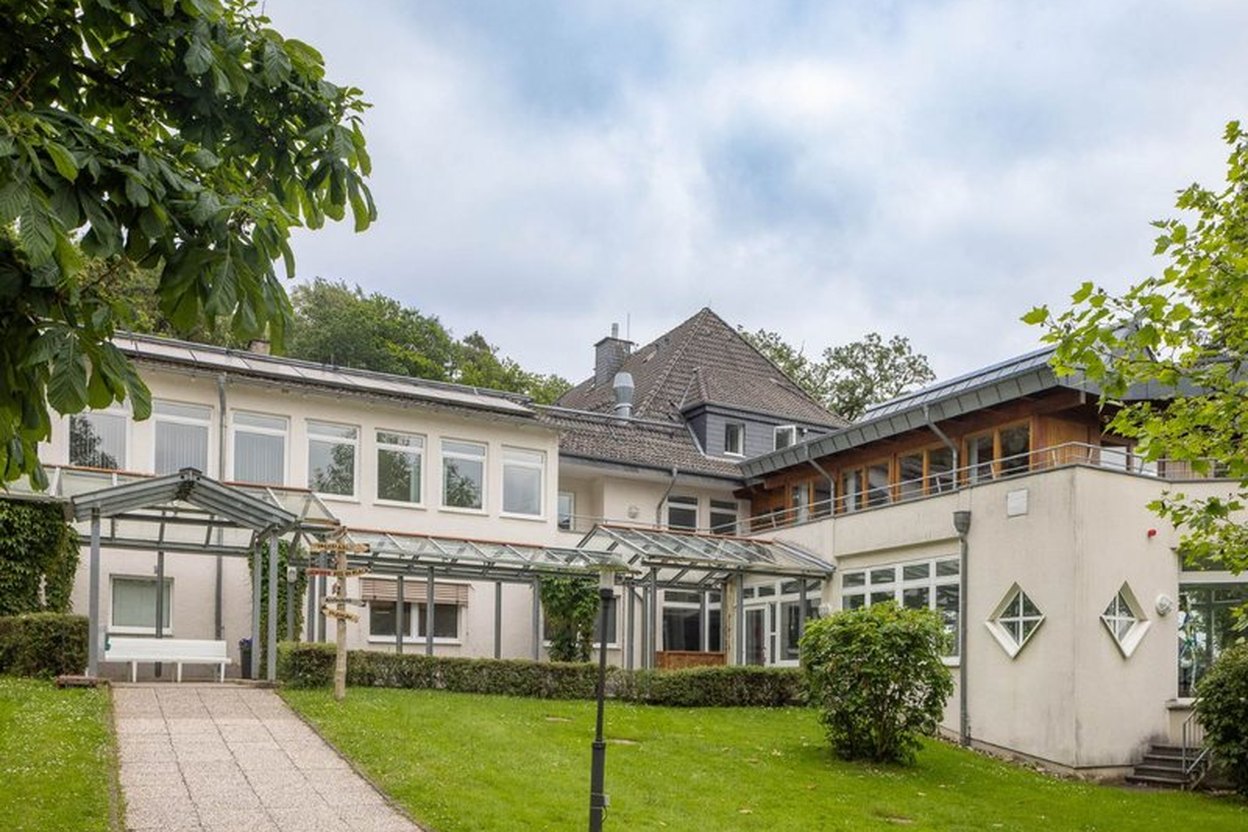
Median Rehabilitation Clinics
A network of rehabilitation hospitals headquartered in Berlin, with more than 120 clinics and centres across Germany. Its work covers recovery after stroke and surgery, orthopaedic and cardiac rehabilitation and psychosomatic medicine.

Medical Park St. Hubertus, Bad Wiessee: Heart and Joint Rehabilitation
A rehabilitation clinic on Lake Tegernsee in Bavaria, taking patients straight after a heart attack, bypass or joint surgery. Orthopaedics and sports medicine sit beside cardiology, and it serves as an official clinic of the German Ski Association.
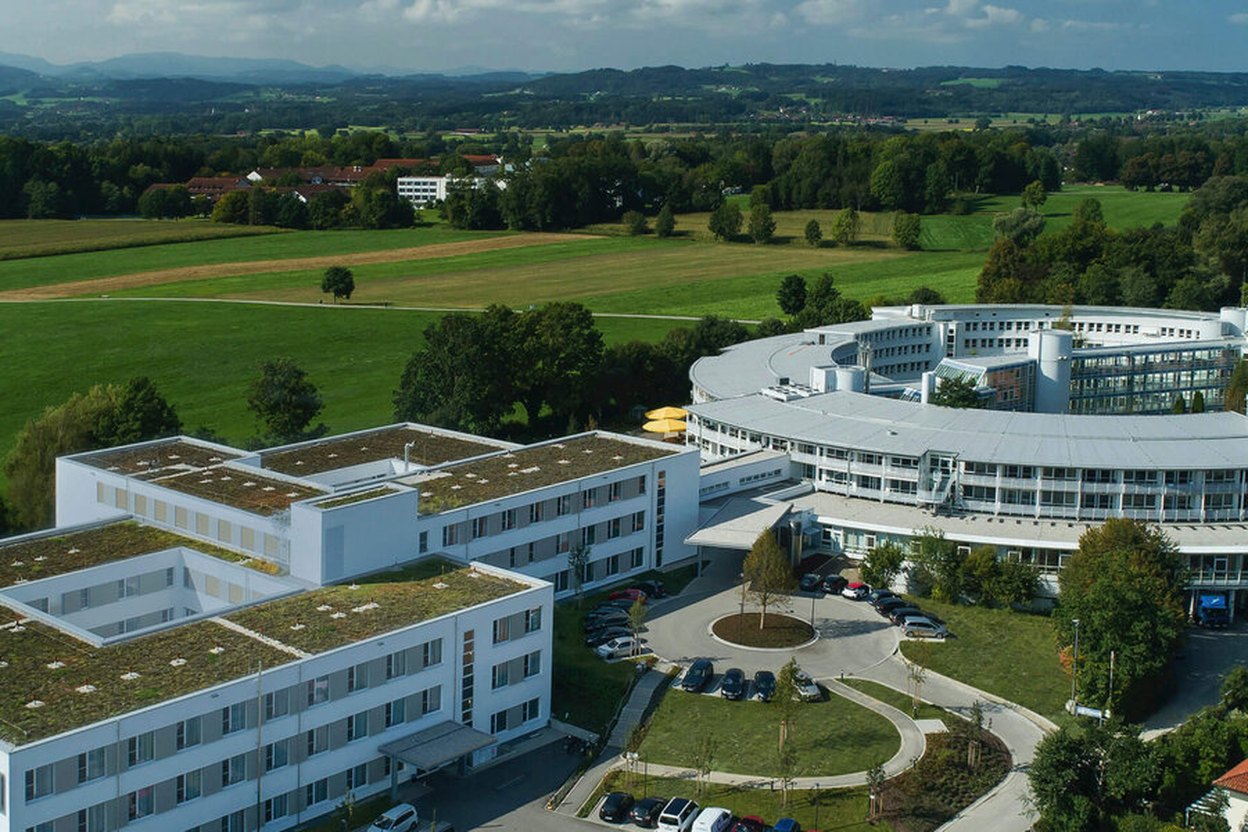
Schön Clinic Bad Aibling Harthausen
A neurological rehabilitation hospital in the Bavarian spa town of Bad Aibling, part of the Schön Klinik group. It covers acute stroke care, early rehabilitation after severe brain injury, neurogeriatrics and spinal surgery.
Schön Clinic Vogtareuth
A specialist centre in the Chiemgau region of Bavaria, part of the Schön Klinik group, focused on neurosurgery, spine surgery, orthopaedics and epilepsy in children and adults. Surgery and neurological rehabilitation run as one continuous pathway.