 EN
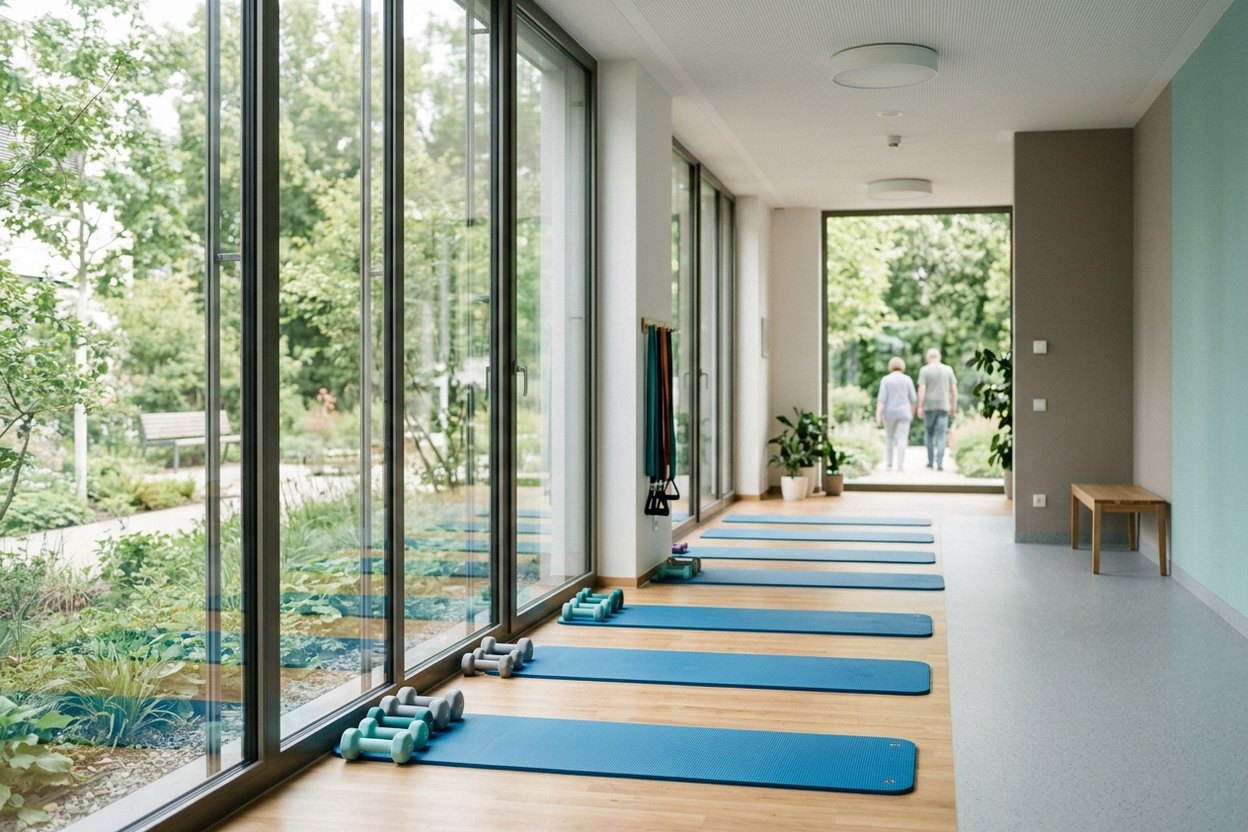
Rehabilitation after chemotherapy in Germany is a planned recovery stay in a specialist clinic for people whom surgery, chemotherapy or radiotherapy has left drained, with weakness, pain, swelling or anxiety. When active treatment ends, many patients are left alone with these after-effects: treatment is over, but ordinary life has not returned.
Rehabilitation does not treat the tumour or “finish it off”; it restores strength, sleep, appetite, mobility and independence. Unlike the general page on rehabilitation in Germany, this one covers recovery after cancer: why it matters, where it starts, what it includes, when to begin, where it takes place and how AlenMed arranges it.
Why Rehabilitation after Chemotherapy Matters
Rehabilitation matters because the after-effects of chemotherapy often outlast the treatment itself. The most common are exhaustion that rest and sleep do not relieve (cancer-related fatigue); numbness and tingling in the fingers and toes caused by nerve damage (polyneuropathy); loss of appetite and weight, and nausea; and problems with memory and concentration. If lymph nodes were removed, an arm or leg may swell as lymph, the tissue fluid normally drained by the lymphatic vessels, builds up: this is lymphoedema.
In Germany, rehabilitation is part of cancer care, not a rest after hospital. The Krebsinformationsdienst of the German Cancer Research Center calls it an important building block of cancer therapy (page in German). It is run with the oncologists: the rehabilitation team gets reports on how cancer treatment in Germany or at home went and adjusts the plan as recovery progresses.
Cancer Rehabilitation in Germany: Where It Starts
It starts with an assessment: the doctor checks how the patient came through treatment, what troubles them now and which functions have suffered, using blood tests, ultrasound and, if needed, CT or MRI. Programmes differ: after breast surgery, one woman mainly needs to reduce arm swelling and regain shoulder movement; another patient, to rebuild breathing and stamina; a third, help with nutrition and nausea.
A second opinion in Germany can be useful at this stage: a German specialist reviews the records and says whether the treatment has taken everything into account and what matters for recovery. It is a separate consultation and does not commit the patient to further treatment in Germany.
What the Programme Consists Of
The programme has three parts, and the first is physical: exercise therapy with measured effort, water gymnastics, breathing exercises and, for swelling after lymph node removal, manual lymphatic drainage, a gentle massage that helps lymph flow away. The load increases step by step, since movement rather than bed rest rebuilds strength and eases fatigue, while long rest weakens the muscles.
The second part is everyday life. Occupational therapists help patients relearn daily activities, from housework to returning to their job. Nutrition gets attention of its own: after chemotherapy or surgery on the digestive organs, a dietitian helps with nausea, poor appetite and weight loss.
The third part is psychological. Anxiety, low mood and fear of recurrence (the cancer returning) are handled by psycho-oncologists: psychologists who work specifically with cancer patients and their families. Art therapy (drawing, music or other creative work that helps express what is hard to say) and support groups complete this part.
When to Start and How Long It Lasts
Rehabilitation can start once the patient’s condition allows, and the clinic sets its length after an examination. What counts is the body, not the calendar: the main treatment (surgery, chemotherapy, radiotherapy) should be largely complete, wounds healed, blood counts recovered and the patient strong enough for the sessions. Maintenance treatment such as hormone therapy after breast cancer does not usually rule out rehabilitation; it continues during the stay, with details agreed with the clinic in advance.
After the examination, the clinic sets the length of the stay and the number of daily sessions according to the patient’s condition and recovery goals, and it adjusts the load as strength returns.
Where Cancer Patients Do Their Rehabilitation
Cancer patients in Germany do their rehabilitation in specialist clinics that deal daily with the after-effects of cancer and its treatment. One example is Klinik Bad Trissl in Oberaudorf in Upper Bavaria, which has worked exclusively in oncology since it was founded in 1968. It combines acute treatment, rehabilitation, palliative care (symptom relief when the disease can no longer be cured) and psycho-oncology under one roof, and works with university hospitals, so related problems are handled on site.
Where severe lymphoedema is the main problem, there are specialist lymphology clinics such as the Földiklinik in Hinterzarten in the Black Forest, which treats lymphatic disorders and also provides oncological rehabilitation. Other needs are met in oncological rehabilitation clinics, chosen on the basis of the medical records and the patient’s condition, not a famous name.
Frequently asked questions
Does rehabilitation treat the cancer itself?
No. Rehabilitation does not treat the tumour or replace follow-up care with an oncologist. It reduces the after-effects of the disease and its treatment, restoring strength, mobility, appetite, sleep and the ability to work. Maintenance medication usually continues during the stay, and follow-up examinations go ahead as planned by the oncologist.
Does everyone need rehabilitation after chemotherapy?
No. A stay makes sense when the after-effects of illness and treatment get in the way at home or at work and the patient is strong enough for the sessions. Someone recovering well and not held back by fatigue, pain or swelling may not need a programme. The decision is made with the treating doctor, and taking part is voluntary.
Can rehabilitation help with cancer-related fatigue?
Yes. Many high-quality studies show that regular physical activity helps against cancer-related fatigue, both during and after treatment. The programme therefore includes walking, endurance and strength exercises and water sessions, with the load matched to how the patient feels. A psychologist also helps patients learn to pace their energy through the day.
How AlenMed Arranges Rehabilitation after Cancer Treatment
AlenMed arranges rehabilitation after chemotherapy in Germany from start to finish. We translate the treatment reports, send an enquiry to a clinic with the right specialism and, before travel, pass on the rehabilitation plan and the clinic’s estimate; the page on the cost of rehabilitation in Germany explains what makes up the bill. We also arrange the visa, an interpreter, transfers and accommodation for a companion. The company’s office is in Munich; clinics are chosen across Germany by specialism.
This material is for information only and is not an offer. The programme, its extent and its length are determined by a doctor after an in-person examination and in the light of the treatment received.