EN
A polyp is an outgrowth of the stomach or bowel lining that usually causes no trouble and is found during an examination done for another reason. It is still removed: some polyps change over the years, and taking out a small outgrowth is easier than treating what it might become.
This page explains how the removal of gastrointestinal polyps in Germany works, how the methods differ, why everything removed goes to a pathologist and what sets the date of the next examination. See also bowel treatment in Germany.
Which polyps are removed and which are only watched
Adenomas and serrated lesions are removed, while small hyperplastic outgrowths in the rectum are usually just described: structure matters, not size. Hyperplastic polyps are considered harmless; adenomas and serrated lesions are the ones that can change over time. The page tubular adenoma of the colon explains this in detail.
Polyps also occur in the stomach and the duodenum, where the approach is different. Some gastric polyps are linked to inflammation and to long-term use of acid-lowering drugs, so the decision depends on their type and number.
Removal is sometimes postponed because of blood thinners, an acute infection or an unprepared bowel. This is a postponement, not a refusal: the doctor explains what to do before the next attempt, such as pausing a medicine for a few days as agreed or repeating the cleansing.
How they are removed: from a snare to dissection
Most polyps are taken with a snare, a thin wire loop passed through the endoscope, placed around the base of the polyp and tightened. Small polyps up to ten millimetres are removed with a cold snare: no current, one movement, quick and with the least risk.
Larger and flat polyps are removed by EMR, endoscopic mucosal resection: fluid injected under the base lifts the outgrowth off the wall, and the snare cuts it away. Large flat lesions that must come out in one piece, so that the pathologist can assess the margins, are treated with ESD, endoscopic submucosal dissection: a special knife separates the layer of lining from the wall.
In practice, German endoscopy differs in three ways: inspection with magnification and in a special light spectrum to read the surface pattern before removal; clips or other means to close the wall defect at once when needed; and photographs of every lesion found. The endoscopist chooses the method from the look of the lesion, not the patient in advance.
What the day of the procedure looks like
Preparation comes first: bowel cleansing before a colonoscopy, no food before a gastroscopy and an agreed plan for regular medication. In Germany a polyp is usually removed in the same procedure in which it is found; only large or difficult lesions need a separate visit. On the investigations themselves: colonoscopy in Germany and gastroscopy in Germany.
Sedation, a short medication-induced sleep, is usually offered during the procedure, followed by a few hours under observation. Mild bloating or discomfort may follow and usually passes. Blood, severe pain or fever mean that the hospital must be contacted immediately, even days later.
Pathology: why the report is worth waiting for
Everything removed goes to a pathologist, and only the report shows what it was: the type of lesion, the degree of change in the cells and, for a large lesion, whether the margins were affected. That report, not the size of the polyp, decides whether the procedure was enough or more is needed.
Most often only follow-up is needed. Less often the report shows that the lesion reached deeper into the wall, and an operation is discussed separately with a surgeon. How such findings are handled is set out in the German S3 clinical guideline on colorectal cancer (in German).
When to come back
There is no single interval. The next examination is timed by the number, size and type of the polyps removed and by whether the whole bowel was seen, so «every so many years» cannot be a general rule: the interval stands in the report and is set by the doctor.
From the German hospital, take home the report with photographs, the pathology report, the recommended interval and a translation, so that your doctor at home continues the follow-up rather than starting again. Normal food returns soon unless the doctor advises otherwise, restrictions last a day or two, and heavy physical effort should wait a while after a large removal.
Frequently asked questions
Does polyp removal hurt?
No: the cut is not felt, because the lining of the stomach and bowel, unlike skin, does not sense cutting. The examination itself is less pleasant, so sedation is usually offered. Mild bloating afterwards is possible; severe pain is not normal and means calling the hospital straight away.
Is a hospital stay needed for polyp removal?
Usually not for an ordinary polyp: it is removed during the colonoscopy or gastroscopy, and you go home after a few hours of observation. Large or difficult lesions are removed at a separate, planned visit, sometimes with longer observation. Patients from abroad are told this in advance.
Should blood thinners be stopped before polyp removal?
That is the doctor’s decision; never stop them on your own. Polyp removal carries a bleeding risk, so some of these drugs are paused for a few days on a schedule agreed with the prescribing doctor; with a high risk of thrombosis, a temporary substitute is sometimes used. Send your medication list early.
When will the pathology report be ready?
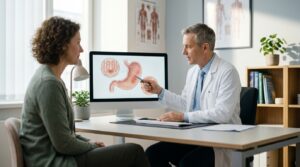
Usually after a few days. On the day itself the doctor explains what was seen and removed; the final answer comes from the pathologist examining the tissue under a microscope. Ask the hospital in advance how long it takes and whether you will get the report on site or at home.
Where it is done and how AlenMed arranges the procedure
Polyps are removed in departments of gastroenterology and endoscopy. Among AlenMed’s partners is the Israelitisches Krankenhaus in Hamburg, where endoscopy is headed by Dr Ulrich Rosien, who also leads the visceral oncology centre, for tumours of the digestive organs, on the gastroenterology side.
Beforehand, the hospital needs earlier examination reports with photographs, pathology reports from previous removals, a list of medicines, especially blood thinners, and letters about other conditions. It then says whether one visit is enough and names a date; AlenMed handles the estimate, the visa invitation, the appointments and the interpreter.
This material is for information only and is not an offer. The extent and method of removal are decided by the doctor during the examination.
News on this topic
Preventing Stomach Cancer Before It Starts: Breakthrough at Charité
Researchers at Charité have discovered how Helicobacter pylori reprograms stomach tissue, creating new possibilities for early molecular cancer prevention.
Approved Drug Shows Potential in Preventing Severe Pancreatitis
Researchers at Universitätsmedizin Greifswald showed that Anakinra can reduce tissue damage and scarring in acute and chronic pancreatitis.