EN
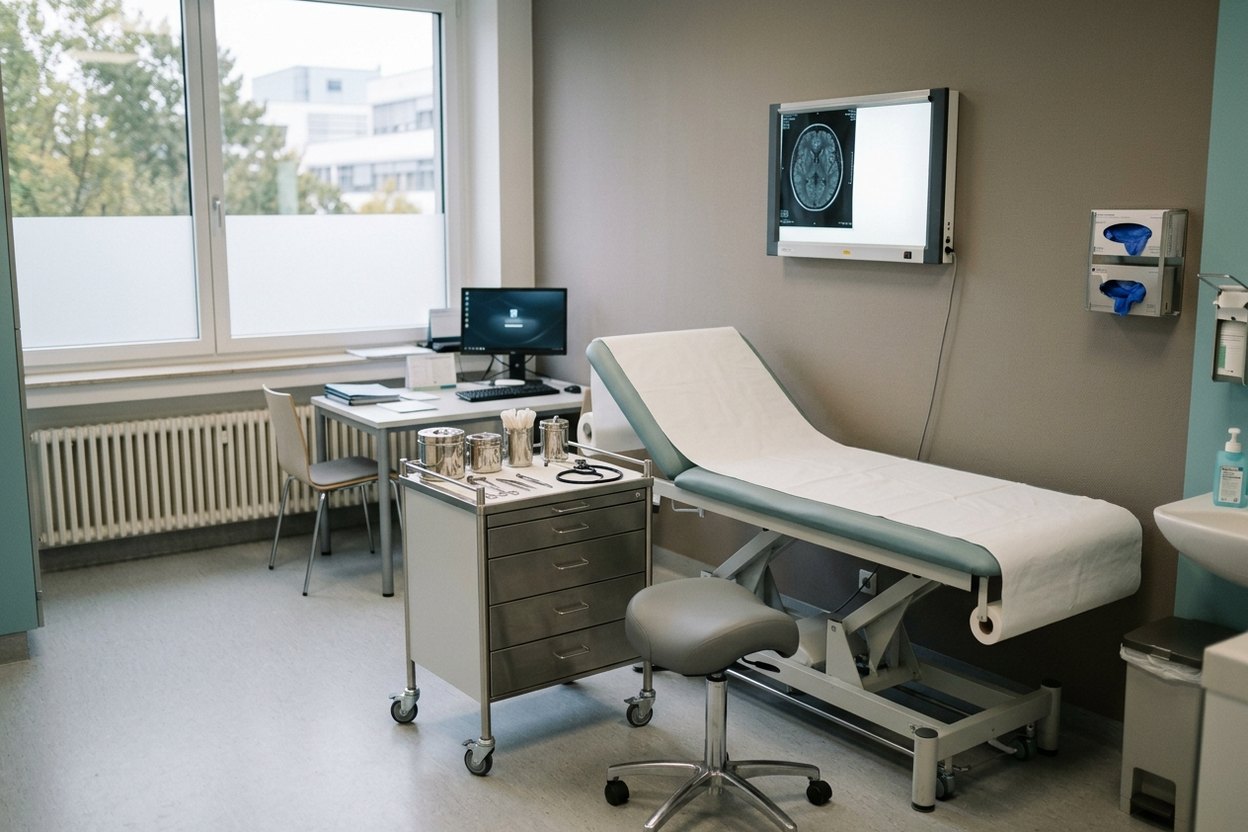
Gallbladder treatment in Germany starts with a simple question: are stones or polyps causing trouble or likely to cause complications? The answer decides the next step: watching, tablets or surgery. The gallbladder is a small pouch under the liver that stores bile and releases it after meals to help digest fat.
The sections below cover diseases, tests, surgery and how to arrange the trip. Pancreatitis caused by a duct stone is explained on the pancreas treatment page.
Gallstones, Cholecystitis and Gallbladder Polyps
Gallstones are often silent: most people with them have no symptoms, and stones turn up by chance on ultrasound. An attack (biliary colic) starts when a stone blocks the gallbladder outlet: severe pain under the right ribs, often after a heavy meal or at night, which may spread to the back and right shoulder, last several hours and bring nausea.
A stone that stays stuck inflames the gallbladder wall: this is acute cholecystitis, with constant pain and fever. Untreated, pus can collect and the wall can rupture; a stone in the main bile duct causes jaundice, yellowing of the skin and eyes. Such signs need urgent care at the nearest hospital, not a trip abroad. Chronic cholecystitis means inflammation and attacks recurring over years.
Polyps are growths on the inner gallbladder wall, also usually found by chance. Most are harmless cholesterol deposits; true adenomas, which can turn into cancer, are rarer. A polyp of 10 mm or more, or one growing between scans, is a reason to remove the gallbladder; small stable polyps are checked with repeat ultrasound.
Tests for the Gallbladder and Bile Ducts
The main test is abdominal ultrasound: without radiation it shows stones, polyps, wall thickness and bile duct width, and a widened duct suggests a stone has left the gallbladder. Blood tests check liver values, bilirubin and inflammation. Other digestive conditions are covered under gastroenterology in Germany.
If a stone seems stuck in the main bile duct, further imaging follows. MRCP is an MRI scan of the bile and pancreatic ducts, with no radiation and no dye injected into them. Endoscopic ultrasound scans from the inside: under sedation, a thin tube with an ultrasound probe is passed through the mouth into the duodenum, next to the duct.
ERCP (endoscopic retrograde cholangiopancreatography) is both test and treatment: under sedation, an endoscope is passed through the mouth to the duct opening in the intestine, where the doctor makes a small cut and removes the stone or places a stent, a tube that keeps bile flowing. As complications, mainly pancreatitis, are possible, the German clinical guideline on gallstone disease, now under revision, reserves ERCP for proven or very likely duct stones.
Gallbladder Removal: Laparoscopy and SILS
Surgery is advised once stones have caused attacks, after acute cholecystitis and for polyps of 10 mm or more. Silent stones are usually watched, with exceptions such as a calcified «porcelain» gallbladder or very large stones. The whole gallbladder is removed, as that is where stones form. Life without it is possible: the liver still makes bile, which flows straight into the intestine.
The standard in Germany is minimally invasive laparoscopic (keyhole) cholecystectomy under general anaesthetic, through three or four small incisions. Single-incision SILS works through one cut in the navel, leaving a barely visible scar; it suits experienced centres and is no less painful afterwards. If severe inflammation hides the ducts and vessels, the surgeon switches to open surgery, which is rarely needed.
Patients usually stay in hospital for one to three days and are up and walking early. A special diet is usually unnecessary: many people tolerate their normal food, though some have more frequent, softer stools. Surgery usually ends the colic, but pain with another cause may remain, so discuss this with the surgeon beforehand.
Treatment Without Surgery
Tablets dissolve stones only in selected cases: ursodeoxycholic acid works on small cholesterol stones without calcium, and only if the gallbladder still contracts and its duct is open. The course takes several months and stones often return, so surgery is discussed first. The German guideline advises against shock-wave lithotripsy of gallbladder stones and dissolving them through a puncture.
If severe heart or lung disease rules out surgery for a while, the patient is monitored and the inflammation treated; if it persists, the gallbladder is drained with a thin tube through the skin or during endoscopic ultrasound. Surgery is reconsidered later; gastroenterologist and surgeon decide together.
Frequently asked questions
Can I travel for surgery straight after an attack?
Not while the attack lasts: fever, prolonged severe pain or jaundice need urgent local care, and acute cholecystitis is operated on early where treatment began. Planned surgery in Germany is discussed once the acute phase is over; bring the discharge letter and recent ultrasound and blood results, and agree the travel date with your doctor.
Will I need to repeat tests in Germany?
Partly, yes: before surgery doctors usually repeat the ultrasound of the gallbladder and bile ducts and blood tests, including clotting. Your reports still matter: they show whether MRCP or endoscopic ultrasound is needed and make the cost estimate more accurate, so bring letters, scans and imaging discs.
When can I go home after the operation?
The surgeon sets the date after a follow-up check. For the first two weeks after the operation you should take it easy, and for about four weeks avoid heavy lifting and strenuous sports. Book flights and accommodation with flexible dates in case you need to stay longer.
How AlenMed Arranges Gallbladder Treatment in Germany
Send ultrasound, CT or MRI reports, blood tests and discharge letters from earlier attacks; AlenMed translates them into German and forwards them to a gastroenterologist or visceral surgeon. At Helios Klinikum München West, for example, gastroenterology is headed by Prof. Brigitte Mayinger, a specialist in endoscopy, including of the bile ducts, and general and visceral surgery and the centre for minimally invasive surgery by Dr Erich Bielesch. At ISAR Klinikum in Munich, Prof. Thomas Ochsenkühn heads gastroenterology. Partner hospitals with such departments exist across Germany.
Before you travel, the hospital draws up a cost estimate (Kostenvoranschlag). As a guide, standard gastroenterological diagnostics range from 700 € to 2,200 €, and abdominal ultrasound assessments cost approximately 130–150 €; surgery is priced in the estimate. AlenMed arranges medical interpreters for consultations and on the ward and helps with the visa; the company office is in Munich.
This material is for reference only and is not an offer. Prices are indicative; the treatment plan is decided by a doctor at an in-person consultation.
News on this topic
Preventing Stomach Cancer Before It Starts: Breakthrough at Charité
Researchers at Charité have discovered how Helicobacter pylori reprograms stomach tissue, creating new possibilities for early molecular cancer prevention.
Approved Drug Shows Potential in Preventing Severe Pancreatitis
Researchers at Universitätsmedizin Greifswald showed that Anakinra can reduce tissue damage and scarring in acute and chronic pancreatitis.