 EN
EN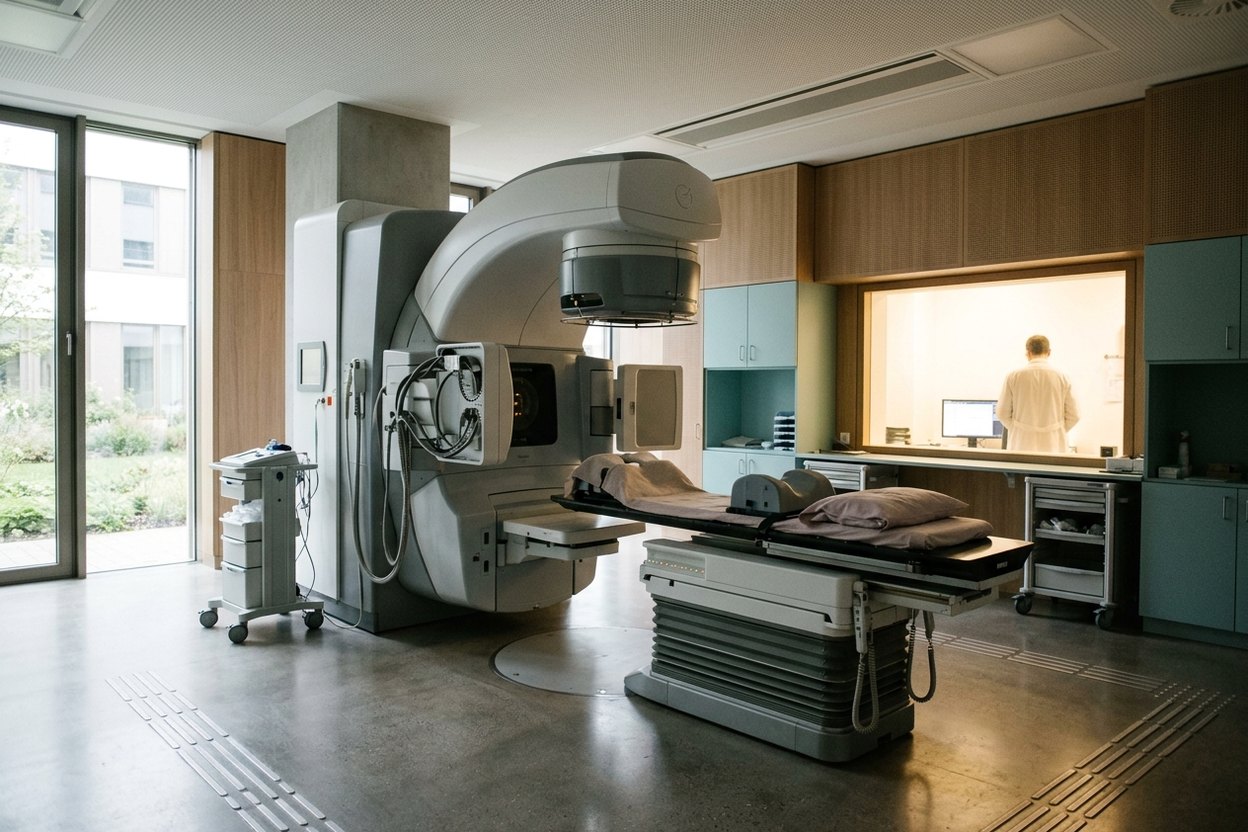
The cost of cancer treatment in Germany is set out in an estimate for one patient, not in a price list, so anyone looking for figures mostly finds a promise to “calculate individually”. The reason is not secrecy: the sum depends on the tumour, its stage and what has to be done. Before histology and imaging, any figure would be invented.
This page explains which costs follow an official tariff and which do not, what a written estimate looks like and how the deposit works.
Why there is no price list for cancer treatment
There is no price list because what moves the cost of cancer treatment in Germany is the treatment plan, drawn up by a tumour board (Tumorkonferenz): an oncologist, a radiation oncologist, a pathologist, the relevant surgeon and a radiologist decide together on surgery, radiotherapy and drugs — and with them, on the bill. Their minutes underpin both the medical plan and the estimate. Prof. Fuat Oduncu, an oncologist and haematologist who heads a haematology and oncology department, takes part in such reviews. The overall course of cancer treatment in Germany is described separately.
The bill moves most with the extent of extra diagnostics (re-reading histology blocks, molecular testing, repeat imaging), the type of intervention, the length of stay and any need for intensive care. An incomplete file at the start can mean new tactics later — and new costs.
Drugs are the least predictable line, as the price follows the medicine: monoclonal antibodies and checkpoint inhibitors — drugs that bind to a precise target on the cell or release the “brakes” a tumour puts on the immune system — cost thousands of euros per vial, over a course of months. So German oncologists start from the tumour’s molecular profile: a targeted drug is given when testing has found its target, not on the off-chance. The Münchner Onkologie practice in Munich, for example, runs multi-gene tumour tests itself and gives chemotherapy and targeted therapy in its own day clinic.
| Cost item | What it depends on | Guide figure |
|---|---|---|
| Diagnostics and consultations | Extent of the work-up | GOÄ rates, see next section |
| Histology review and molecular profiling | Number of blocks and tests | Clinic’s estimate |
| Surgery and inpatient stay | DRG group: diagnosis, extent of surgery, complications, length of stay | Clinic’s estimate |
| Chemotherapy | Drug, regimen, number of cycles, outpatient or inpatient | Clinic’s estimate |
| Radiotherapy | Technique and number of sessions | Clinic’s estimate |
| Targeted therapy and immunotherapy | Drug and length of the course | Thousands of euros per vial |
| Accommodation, interpreter, support | Length of the trip, number of companions | Provider’s invoice |
Diagnostics: the one part of the bill with a fixed tariff
Of all the prices for cancer treatment in Germany, only those for examinations can be named in advance: doctors bill them under the official GOÄ fee schedule (Gebührenordnung für Ärzte), with a number and rate for each service. As a guide: CT about 500 euros, with contrast medium about 550 euros; MRI about 800 euros, with contrast 900–1000 euros, MRI of the whole spine about 950 euros; ultrasound 130–150 euros; a full specialist consultation on the images and results from 130 euros.
Often added: a second reading of the histology blocks sent from home, a PET-CT (a scan showing where tumour tissue is active in the body) and laboratory tests. Slides are re-read even when the diagnosis was made at home: the whole plan rests on the pathologist’s report, and the same blocks serve for the molecular tests needed to choose a targeted drug.
The same procedure can be billed differently by different doctors, because the GOÄ sets a base rate that the doctor multiplies by a factor for difficulty and time: for CT and MRI normally no higher than 1.8, with a ceiling of 2.5; for consultations and most other services normally up to 2.3, with a ceiling of 3.5. Going above the usual level needs a written justification on the invoice, which must list each service’s number, amount and factor. The rules are in the official text of the GOÄ.
Individual diagnoses: where to find figures for your tumour
What stomach cancer treatment costs depends on the treatment needed; figures for each option are on the page on stomach cancer treatment cost. A small early tumour confined to the stomach lining can sometimes be removed through an endoscope, without incisions but in hospital under light anaesthesia. A larger tumour needs a major operation removing part or all of the stomach with lymph nodes, often with chemotherapy before and after. Three very different bills.
Lung cancer is harder still to predict: early-stage tumours are usually operated on, radiotherapy may replace surgery when an operation is not possible, and in advanced disease treatment relies mainly on drugs, which then dominate the bill. See lung cancer treatment cost for the options.
What does the inpatient bill cover? A German hospital charges for the case as a whole: the DRG amount covers the operation and surgical team, anaesthesia, intensive care if needed, medicines, accommodation and meals; nursing care is charged per day on the ward, and very expensive drugs may be billed separately. Optional services, the so-called Wahlleistungen, such as a single room with extra comfort or treatment by the head of department, are agreed in writing in advance and paid on top. An interpreter is extra, as is a companion’s accommodation unless medically necessary. Details: hospital stay cost.
The estimate, the deposit and the recalculation after discharge
The Kostenvoranschlag is the clinic’s official estimate of the cost of cancer treatment in Germany for one patient, drawn up only after the medical file has been read. It lists the stages and comes on the clinic’s own letterhead, not an agency’s — but it is an estimate, not the final invoice, which follows only after discharge.
Inpatient care is billed under the DRG system (Diagnosis Related Groups): the price is tied to the diagnosis, the patient’s age, comorbidities and the procedures performed. A complication or an extra procedure can therefore move the case into another group and change the sum. By law, a hospital must send a self-paying patient the diagnoses and procedures behind the bill with the invoice.
A foreign patient transfers a deposit to the clinic’s official bank account to cover planned care and possible emergency procedures: cancer treatment plans are often refined along the way, and the exact extent of the disease may show only after surgery, as the Krebsinformationsdienst of the German Cancer Research Center explains. After discharge the clinic recalculates against the services actually delivered, and whatever is left of the deposit is returned to the patient’s account in full. At LMU University Hospital in Munich, for example, the advance payment includes a risk surcharge (Risikozuschlag), and anything unused is refunded after detailed billing.
Frequently asked questions
How much does cancer treatment in Germany cost?
There is no single price: the sum depends on the tumour, its stage and the plan, and only the clinic’s estimate gives an exact figure. Only examinations have known prices under the GOÄ tariff, for example CT about 500 euros and MRI about 800 euros. Surgery, chemotherapy, radiotherapy and drug therapy are costed after the tumour board’s decision.
Can I pay for treatment after discharge?
No. A foreign patient pays in advance: the deposit set by the estimate goes to the clinic’s official account before treatment starts. After discharge the clinic issues the final invoice for the services actually delivered, and if less was spent, the rest is refunded in full.
Can the final bill be higher than the estimate?
Yes. The estimate is an assessment; the final amount is calculated after discharge from what was actually done. A complication, an extra operation or a longer stay can move the case into another DRG group or add lines to the invoice. That is why the deposit includes a margin and the final invoice is worth checking against the attached list of diagnoses and procedures.
How AlenMed arranges treatment in Germany
AlenMed handles the organisation: it collects and translates discharge letters, histology reports and images, sends them to the relevant centre and obtains the clinic’s official estimate on its letterhead. After discharge its staff check the final invoice for double charges and arithmetic errors; they also prepare the visa papers, meet the patient and provide an interpreter at appointments and on the ward. The company’s office is in Munich; its partner clinics are across Germany. How to choose a hospital for a given diagnosis is explained under cancer hospitals in Germany.
This page is for reference only; it is not a public offer or a medical consultation. The final cost and treatment plan are set by the German clinic’s medical board on the basis of an individual estimate (Kostenvoranschlag) after the full medical file has been reviewed.