 EN
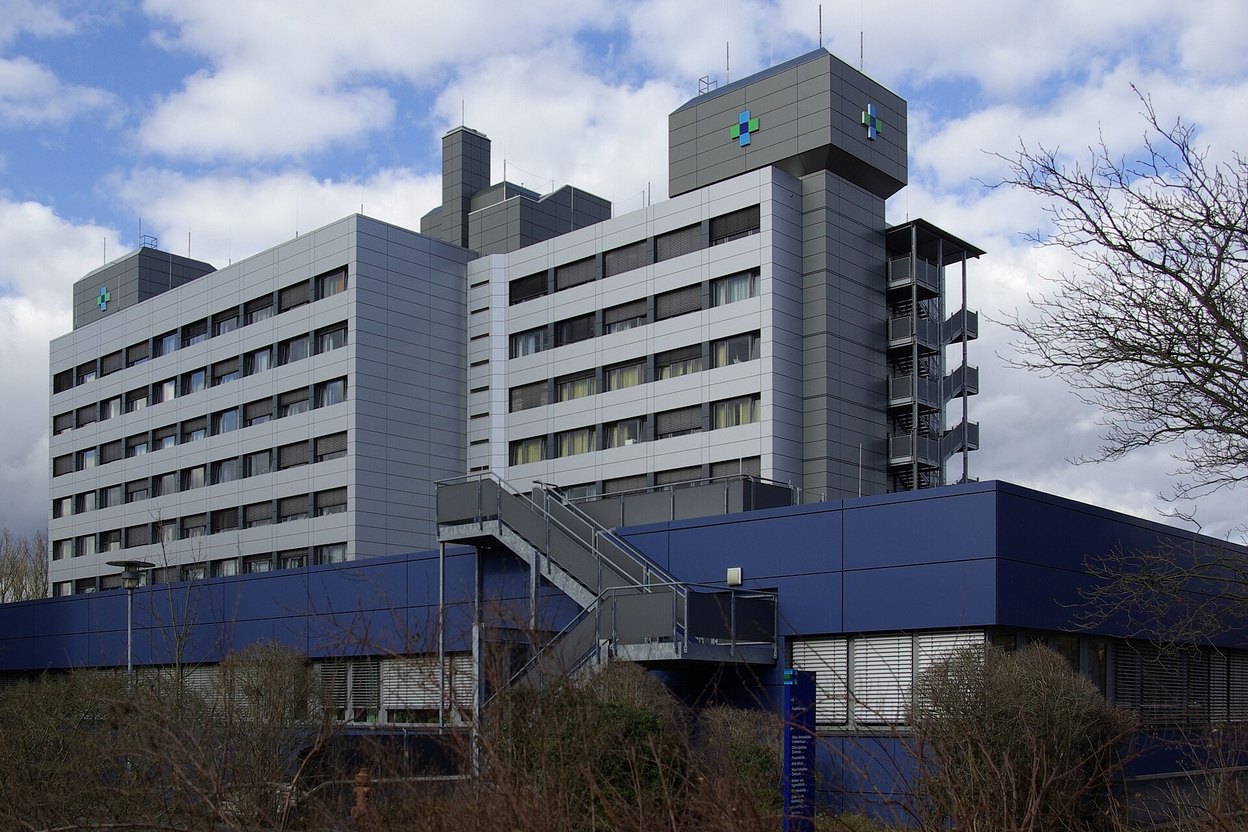
A patient looking for a hospital in Bavaria usually arrives from one of two directions: either someone has named a clinic in Munich, or he has seen that most of Germany’s well-known medical addresses are in the south. Both are half true.
This page is about the region rather than one house: which kinds of hospital Bavaria actually has, what that means for a patient from abroad and how the trip is planned. For the whole country, see the general directory of hospitals in Germany.
What Bavaria means in medical terms
In medical terms, Bavaria is a network of centres rather than one city. It is the largest German federal state by area, and its university medical centres are spread between Munich, Erlangen, Würzburg, Regensburg and Augsburg.
In practice, a department of the same rank may be three hours from Munich, and a patient who insists on the state capital often waits longer for a date than one who agrees to travel a hundred kilometres.
The standard does not change with the region. A specialist’s training route and the protected title of Facharzt follow one model across Germany: every state medical chamber bases its training rules on the model regulations of the German Medical Association. The documentation of medical reports and the right to a second opinion are the same nationwide. The federal state changes the logistics, not the standard.
University medical centres and large city hospitals
A university hospital and a large city hospital do different jobs. The first is the place for a rare diagnosis, a tumour board with several specialties at one table, a complex operation and access to clinical studies. AlenMed’s partners in Bavaria include the university hospitals in Erlangen, Würzburg, Regensburg and Augsburg; the first two have their own pages, University Hospital Erlangen and University Hospital Würzburg.
A large municipal hospital does better with a planned operation that has a clear indication: the path to a date is shorter, and the ward is often calmer. One such address is the Klinikum Nürnberg.
Munich is a separate case: it has the greatest number of clinics in the region and its own page on this site, hospitals in Munich, so here it matters only as the point where most patients arrive.
Specialised clinics outside the cities
A significant part of Bavaria’s specialised and rehabilitation medicine sits in small towns and spa towns rather than in the cities. That is a Bavarian particularity: houses that do one thing and have done it for decades.
Examples from AlenMed’s partner list are the Schön Klinik in Vogtareuth, the Schön Klinik Bad Aibling Harthausen and the Schön Klinik Roseneck in Prien am Chiemsee, where child and adolescent psychiatry and psychotherapy is led by chief physicians Dr Silke Naab and Dr Simone Pfeuffer; the Medical Park St. Hubertus in Bad Wiessee; the Artemed clinics in Tutzing; and the Rhön-Klinikum campus in Bad Neustadt in the north of the state. One of them can be explored in detail: Schön Klinik Vogtareuth.
Before agreeing to a small town, know that the quiet is real, and so is the isolation. Transport, accommodation for a relative and the language of the daily ward round are worth asking about in writing before the booking.
Getting there and staying
Most patients fly into Munich airport and stay from a few days to several weeks. The airport is the usual entry point for the whole region, trains link the Bavarian cities well, and a clinic in a spa town normally means a transfer by car for the last stretch. The AlenMed office is in Munich, which shortens the route for documents and for questions on site.
An assessment takes days, a planned operation takes the hospital stay plus the days the surgeon requires before the flight, and rehabilitation is counted in weeks. Accommodation for a relative is booked for the same dates.
Choosing a region or choosing a department
Choose the department. The honest order of decisions is the department and the named doctor first, the federal state second: a hospital in Bavaria is not a better hospital because it is Bavarian, and a patient who reverses that order pays for the view rather than for the treatment.
The region does matter when a relative will stay for weeks, when rehabilitation follows the operation in the same area, and when follow-up appointments make a second trip necessary. Even then, the type of hospital matters more than its postcode, and readers who want to compare types are better served by the general directory.
Frequently asked questions
Which is the best hospital in Bavaria?
There is no single best hospital in Bavaria: the diagnosis decides. For a rare disease or a complex operation, a university hospital is usually the stronger choice. A planned operation with a clear indication can often be scheduled sooner in a large city hospital, while a narrow speciality or rehabilitation belongs to specialised houses in small towns. Compare departments and doctors, not addresses.
Can you have rehabilitation in Bavaria after an operation?
Yes, and often in the same area as the operation, since much of Bavaria’s rehabilitation medicine is based in spa towns. One of AlenMed’s partners is the Medical Park St. Hubertus in Bad Wiessee, a rehabilitation clinic that takes patients after joint and heart operations. Rehabilitation is counted in weeks, so its dates and accommodation for a relative are best planned before the operation.
What language do Bavarian hospitals use with patients?
The working language of Bavarian hospitals is German; how fluently doctors and nurses speak English depends on the house and the department. In a small town this matters even more, so the language of the daily ward round is worth checking in writing before the booking. Where there is no shared language, an interpreter arranged by AlenMed joins the consultations and the discharge.
How AlenMed works with hospitals in Bavaria
AlenMed sends the patient’s reports to the department that fits the diagnosis rather than to the nearest famous name. We collect several answers and tell the patient which hospital offers what and on which dates; the written estimate, the invitation for the visa and the interpreter follow.
Around the treatment we arrange the transfer from Munich airport, accommodation near the clinic, appointments in a second department if they are needed, and the translated final report for the doctor at home.
This material is for information only and is not an offer. The choice of hospital and treatment is made together with a doctor at a personal consultation.