 EN
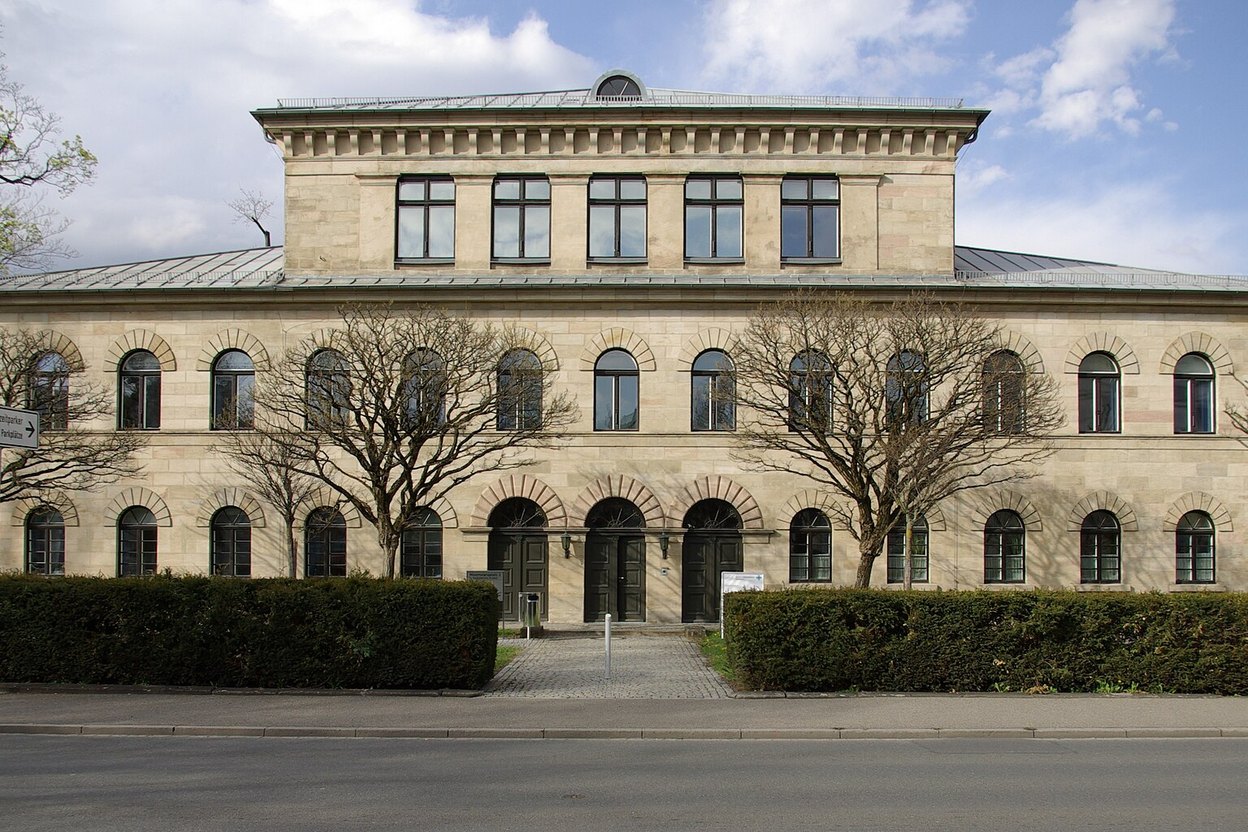
University Hospital Erlangen in Germany is a maximum-care hospital (Maximalversorgungsstufe) and the teaching hospital of the Faculty of Medicine at Friedrich-Alexander-Universität Erlangen-Nürnberg (FAU), with 1,462 beds. It is one of three hospitals in Erlangen, alongside Waldkrankenhaus St. Marien and Klinikum am Europakanal, and with its outpatient clinics it also serves as the city hospital.
This page covers its history, departments, doctors, travel and stay, and how AlenMed arranges treatment.
History: the first ether anaesthesia and Germany’s first IVF baby
The hospital was founded in 1815 and has twice made German medical history. In January 1847 the surgeon Johann Ferdinand Heyfelder gave the first ether anaesthetic in Germany at its surgical clinic. Before anaesthesia, patients felt every cut and surgeons had to hurry; with the patient asleep they could work carefully, so anaesthesia became a foundation of modern surgery.
In 1982 Germany’s first IVF baby was born at its women’s clinic. In IVF (in vitro fertilisation), an egg is fertilised in the laboratory and the embryo is placed in the womb; according to the WHO fact sheet on infertility, treatment often involves IVF, and our page on IVF in Germany explains more. Ten years later came the “Erlanger Baby”: a pregnant woman was declared brain-dead after a car accident, and doctors had to decide whether to keep her body functioning for the baby’s sake, a question that split the country.
Departments at the Erlangen hospital in Germany
University Hospital Erlangen has 25 clinics and several independent departments covering practically every field of medicine. Five medical clinics share internal medicine: stomach, bowel, lungs and hormones; heart and blood vessels; rheumatic and immune diseases; kidneys and high blood pressure; and blood diseases and tumours treated with chemotherapy and other drugs, covered on our page on cancer treatment in Germany.
- Gastroenterology, pulmonology and endocrinology (Medizinische Klinik 1)
- Cardiology and angiology (Medizinische Klinik 2)
- Rheumatology and immunology (Medizinische Klinik 3)
- Nephrology and hypertension (Medizinische Klinik 4)
- Haematology and medical oncology (Medizinische Klinik 5)
- Surgery (Chirurgische Klinik)
- Cardiac surgery (Herzchirurgische Klinik)
- Neurosurgery (Neurochirurgische Klinik)
- ENT with head and neck surgery (Hals-Nasen-Ohren-Klinik)
- Oral and maxillofacial surgery (Mund-, Kiefer- und Gesichtschirurgische Klinik)
- Plastic and hand surgery (Plastisch- und Handchirurgische Klinik)
- Trauma surgery and orthopaedics (Unfallchirurgische und Orthopädische Klinik)
- Urology and paediatric urology (Urologische und Kinderurologische Klinik)
- Vascular surgery (Gefäßchirurgische Abteilung)
- Paediatric surgery (Kinderchirurgische Abteilung)
- Anaesthesiology (Anästhesiologische Klinik)
- Women’s clinic – gynaecology and obstetrics (Frauenklinik)
- Children’s and adolescents’ clinic (Kinder- und Jugendklinik)
- Ophthalmology (Augenklinik)
- Dermatology (Hautklinik)
- Neurology (Neurologische Klinik)
- Psychiatry and psychotherapy (Psychiatrische und Psychotherapeutische Klinik)
- Nuclear medicine (Nuklearmedizinische Klinik)
- Radiotherapy (Strahlenklinik)
- Conservative dentistry and periodontology (Zahnklinik 1)
- Prosthodontics (Zahnklinik 2)
- Orthodontics (Zahnklinik 3)
Surgery is spread across the surgical clinic, cardiac surgery, neurosurgery, the ENT clinic with head and neck surgery, and oral and maxillofacial surgery. The women’s clinic covers gynaecology and obstetrics, and children are treated at the children’s and adolescents’ clinic and in paediatric surgery.
Cancer care is coordinated by the Comprehensive Cancer Center Erlangen-EMN, a top-level cancer centre (Onkologisches Spitzenzentrum) run by the hospital, the Faculty of Medicine and other hospitals in the region. As a university hospital, Erlangen also runs clinical studies: patients can ask whether one is open for their diagnosis, but eligibility depends on the study’s criteria, not on their wishes.
Doctors at University Hospital Erlangen
The Medical Director of University Hospital Erlangen is Prof. Heinrich Iro, an ENT specialist; his deputy is Prof. Michael Uder, a radiologist who heads the Institute of Radiology. Prof. Ulrich Rother leads vascular surgery and Prof. Manuel Besendörfer paediatric surgery. Patients reach the right specialist by sending a request with their reports and scans; the hospital decides on admission.
Getting there and staying at the hospital
Erlangen, a Bavarian city next to Nuremberg, is easy to reach. The railway station (long-distance trains and S-Bahn) is about a kilometre from the buildings, with city buses and the free CityLine running to the hospital. Nuremberg Airport is about 15 km from Erlangen city centre: take a taxi, or the U2 underground to Nuremberg Central Station and then the train, which takes about 20 minutes. The hospital car park (Parkhaus) is usually full on weekday mornings. Your building’s exact address comes with the invitation. Neighbouring Nuremberg has its own large municipal hospital, described on our Nuremberg Hospital page.
Most buildings stand by the Schlossgarten, a palace park. Rooms have a shower and WC, telephone, TV and internet, and WLAN costs extra. There are three meals a day with a choice at lunch; tell the ward staff early about any prescribed diet or food customs. Relatives can visit, and there are cafeterias. A single room is offered where possible, by agreement with the department. A parent staying with a child up to the age of six is accommodated free; AlenMed finds accommodation nearby for other companions.
Frequently asked questions
How much does treatment at University Hospital Erlangen cost?
Only the hospital’s cost estimate gives a figure. A specialist first reviews your documents and suggests treatment; the hospital then issues a provisional estimate (Kostenvoranschlag), paid in advance. The final bill reflects the services actually provided: any overpayment is refunded, and complications may require an additional payment.
Is there a long wait at University Hospital Erlangen?
Usually not: the hospital’s international patient office says lengthy waiting times are not the rule and tries to offer a date that suits you, so state your preferred dates. The appointment is confirmed once the estimated amount has been paid. A specialist reviews your documents first, so send them complete.
In which language does University Hospital Erlangen issue documents?
In German or English. The cost estimate is prepared in either language, and at the end of treatment the doctor in charge writes a detailed medical report on the treatment and further care. AlenMed translates documents into your language, and a medical interpreter joins you at consultations and ward rounds.
How AlenMed arranges treatment at University Hospital Erlangen
You send your reports, MRI or CT scans, lab results and biopsy findings; we translate them into German and send them to the right clinic. The hospital replies with a preliminary treatment plan and a cost estimate (Kostenvoranschlag). Each step is described on our page on arranging treatment in Germany.
You pay the hospital directly, and once the deposit arrives it issues a visa invitation. A medical interpreter accompanies you at consultations and ward rounds, and we arrange airport pickup and accommodation. AlenMed’s office is in Munich; our partner clinics are across Germany.
This material is for reference only and is not an offer. Your treatment plan is decided by a doctor at an in-person consultation.