 EN
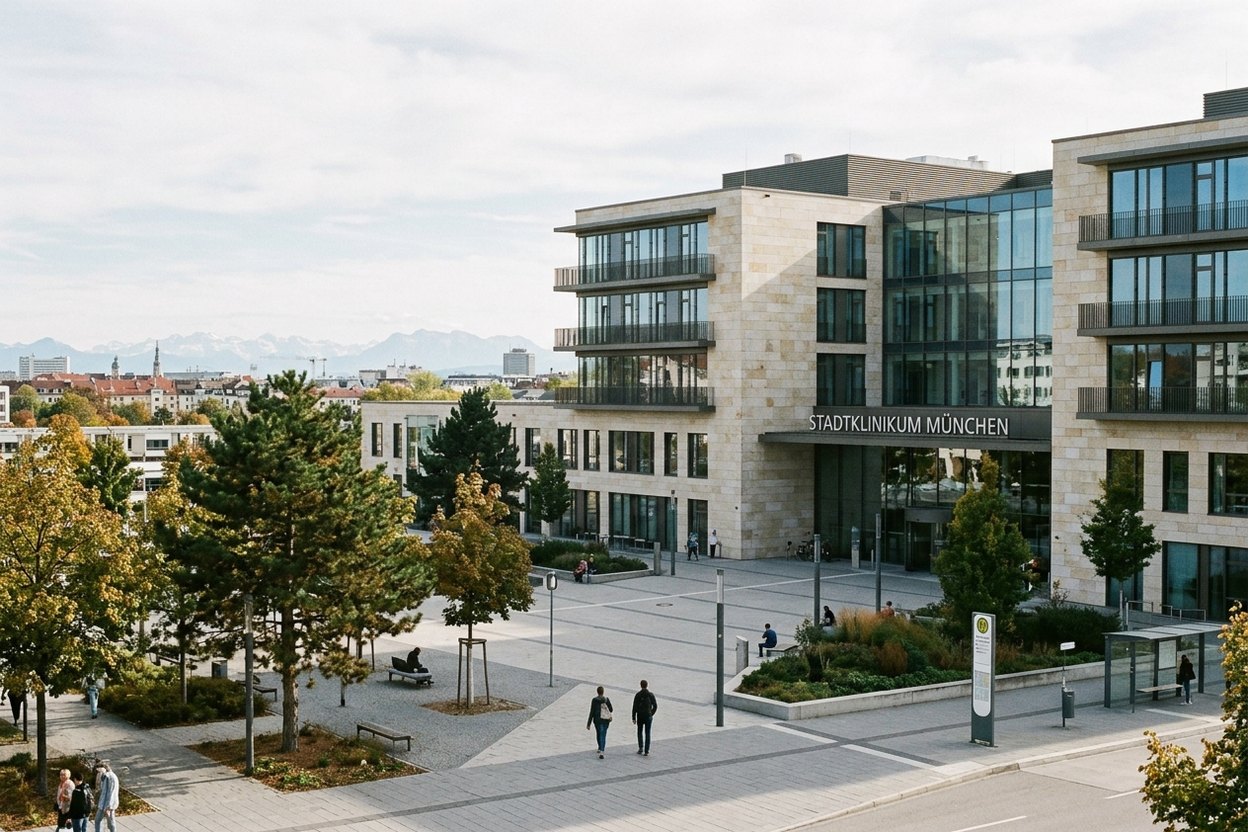
A Munich hospital can mean a university complex, a municipal or non-profit hospital, a private clinic for planned treatment or a centre devoted to one field. They differ so much that the search only becomes useful once there is a diagnosis to match.
This page maps those types and the criteria that separate them; below the text comes the list of hospitals in Munich, Germany that work with AlenMed, with short descriptions. AlenMed’s head office is in the city, so practical matters are handled locally.
Types of hospital in Munich
By ownership and caseload, hospitals in Munich fall into university, municipal, non-profit and private ones. The two university institutions, LMU University Hospital Munich and Klinikum rechts der Isar, take complex and rare cases and have intensive care and every neighbouring speciality in-house. LMU works on two campuses, Grosshadern and the city centre, and runs an organ and bone marrow transplant programme; Rechts der Isar in Haidhausen is a maximum-care hospital and now forms TUM Klinikum together with the German Heart Centre.
The municipal München Klinik group includes the hospitals in Bogenhausen, Schwabing and Harlaching, among others, and Bogenhausen is a maximum-care hospital too. Klinikum Dritter Orden and Krankenhaus Barmherzige Brüder are religious-order hospitals with a shared owner, and Rotkreuzklinikum München belongs to the Bavarian Red Cross sisterhood. All of them have broad profiles and large patient numbers; Dritter Orden is particularly strong in paediatrics.
Fourth come clinics for planned treatment: the private ISAR Klinikum in the city centre and the small non-profit Klinik Josephinum. They offer more comfort, such as roof-terrace suites at ISAR Klinikum or one specialist guiding the whole course of care at Josephinum, but fewer specialities. A maximum-care hospital, in München Klinik’s words, means «all medical specialities, around the clock» and takes even the most severe case. Planned surgery with a predictable risk can go where it is convenient; complex patients are safer where every specialist they need is under one roof.
Single-speciality centres
A Munich medical center built around one field devotes its doctors and equipment to that field alone. The German Heart Centre Munich, with cardiology, cardiac surgery and paediatric cardiology under one roof, is one example; others are the Herzog Carl Theodor eye hospital, the Dr von Hauner children’s hospital of LMU, the Kinderwunsch Centrum for fertility, Schön Klinik Harlaching for orthopaedics and the Urologische Klinik München-Planegg. The last, just outside the city, treats urology only, and its uro-oncology centre is certified by the German Cancer Society for prostate, bladder, kidney and testicular cancer. If other conditions come on top, ask how the centre involves other specialists.
Visitors often overlook the outpatient tier. Münchner Onkologie, an oncology practice with a day unit, gives chemotherapy without admission, and the radiotherapy centre in Pasing treats patients who arrive with a diagnosis and plan already made. This is easier and usually cheaper than a hospital stay: there are no ward nights on the bill, and the patient stays in a hotel or flat. How to choose a cancer centre in Munich is covered separately.
Is there a best hospital in Munich?
No hospital is best at everything: the best hospital in Munich, Germany for one diagnosis is not the best for another. A hospital known for heart surgery may be ordinary at spinal care, and Germany has no official ranking of a city’s hospitals across all conditions.
What actually gets compared is, first, how often the hospital performs your specific procedure: for some complex planned operations Germany sets minimum volumes, and a hospital that does not reach them is, as a rule, not allowed to carry out those operations. Second, specialist-centre certificates, such as a German Cancer Society cancer centre or the certified chest pain unit at Helios Klinikum München West. Third, the quality reports German hospitals must publish every year, showing departments, the number of doctors and nurses and results in specific areas of care. Finally, whether there is an international patients office and how soon you can get an appointment.
Reading the list and what to settle before travelling
The cards below show AlenMed’s partner hospitals in Munich: each has two sentences on its profile and buttons to its page and to a request form with its name already filled in. Look for three things: the profile, which conditions the house treats; the size, the number of beds where given; and academic status. A university hospital belongs to a university; an academic teaching hospital trains its students, as Klinikum Dritter Orden does for LMU.
The large hospitals run their own services for international patients: the International Patient Office at LMU Klinikum and the international patient service of München Klinik. They usually take the request and medical documents, prepare the cost estimate, collect the advance payment before admission and issue the final invoice. Ask them which language the correspondence is in, who interprets at appointments, whether they help with accommodation and airport transfers, and what document the hospital issues for the visa.
Settle three more things in advance: whether the hospital accepts international patients directly, which documents the cost estimate (Kostenvoranschlag) needs, and whether rehabilitation will follow and where. For the estimate, München Klinik asks for recent medical reports in English or German and a short description of what the patient expects. Upper Bavaria has rehabilitation clinics such as Medical Park St. Hubertus in Bad Wiessee (orthopaedics and cardiology), Schön Klinik Bad Aibling Harthausen (neurology, including early rehabilitation, and orthopaedics) and m&i Fachklinik Bad Heilbrunn (early neurological rehabilitation). Other partner hospitals in Germany are listed in one overview. The hospital sets the price in its estimate; costs and the route to care are covered under treatment in Munich.
Frequently asked questions
Do I need German health insurance to be treated at a Munich hospital?
No. A patient without German insurance pays privately: the hospital prepares a cost estimate, the advance payment is made before admission, and the final amount appears on the closing invoice. LMU Klinikum, for instance, says it does not bill foreign health insurers directly. If you have international cover, ask your insurer beforehand whether and how it reimburses the costs.
Will I need an interpreter at a Munich hospital?
Yes, unless you speak German or English. München Klinik offers interpreters for Arabic, English and Russian during an inpatient stay. LMU Klinikum does not provide interpreters and recommends an accredited interpreting service; its doctors speak English fluently. Settle this before you travel, not at the first appointment.
Where are children treated in Munich?
In several hospitals, depending on the condition. The Dr von Hauner children’s hospital is part of LMU Klinikum. Klinikum Dritter Orden is strong in paediatrics, including newborn care. München Klinik Schwabing runs children’s clinics for paediatrics, paediatric surgery, orthopaedics and psychosomatic medicine, and the German Heart Centre has paediatric cardiology. The right one is chosen from the child’s documents before the trip.
How AlenMed arranges treatment
AlenMed handles the arrangements from the first documents to the journey home: remote review of reports and scans, matching the hospital to the diagnosis, the request and cost estimate, and the visa invitation. In Germany the patient is met at the airport, housed near the hospital and given an interpreter for appointments, all arranged from the head office in Munich.
After the trip the patient takes home the discharge report with the diagnosis, what was done and a follow-up plan, plus test results and the final invoice. With these the doctor at home can continue care.
This material is for information only and is not an offer. The treatment plan and its cost are set by the hospital after reviewing the documents; the course of treatment is decided by the doctor at an in-person consultation.
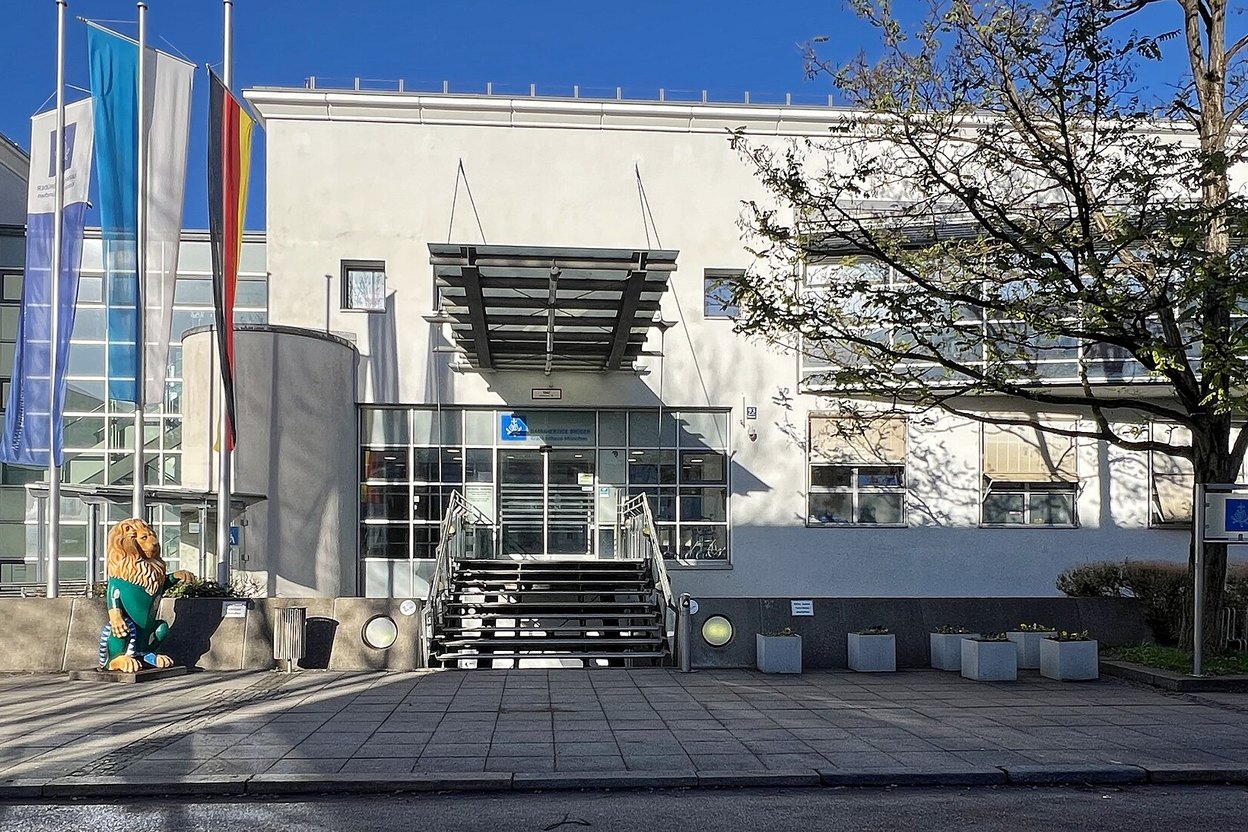
Barmherzige Brüder Hospital Munich
Founded by the Brothers Hospitallers in 1916 in Munich's Nymphenburg district and today an academic teaching hospital of the Technical University of Munich. Its main fields are general and visceral surgery, orthopaedics and trauma, cardiology and geriatrics.
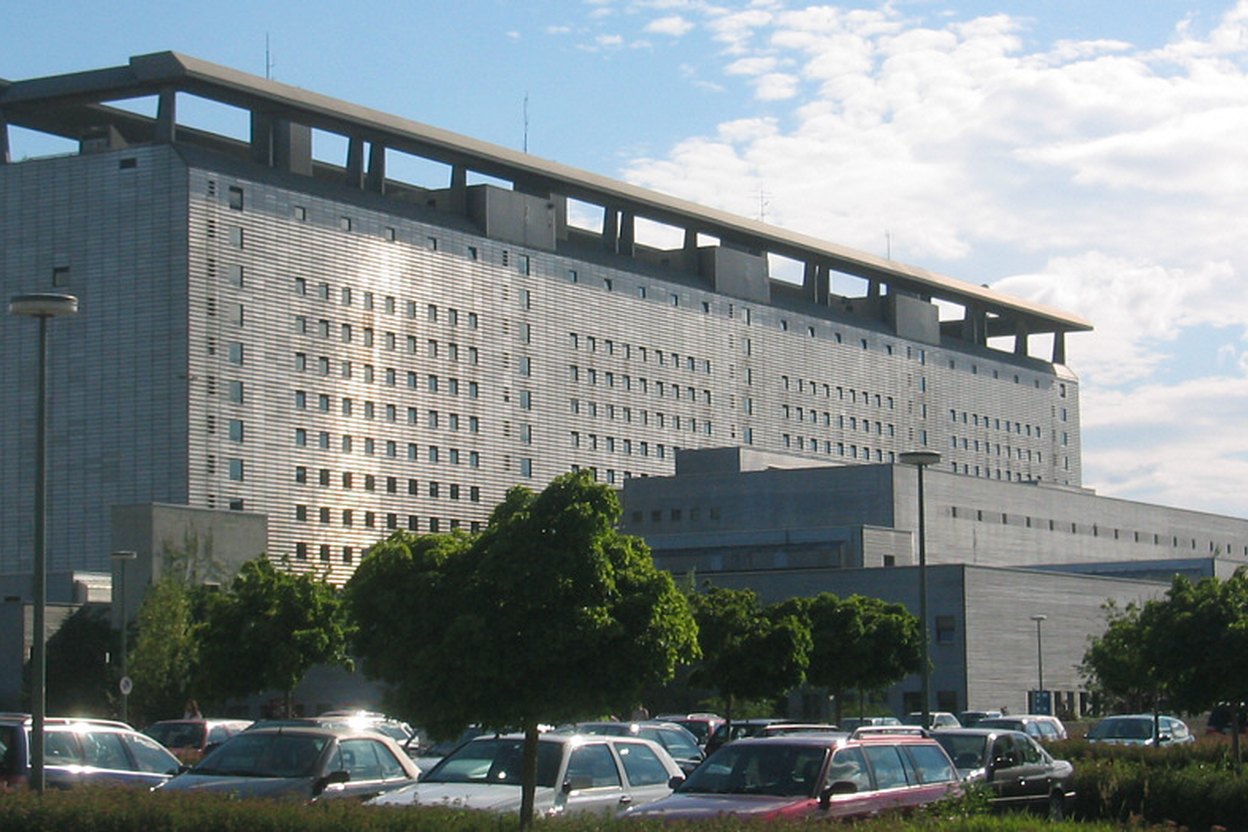
Comprehensive Cancer Center Munich LMU
A cancer centre within the LMU University Hospital in Munich, where every case is reviewed by an interdisciplinary tumour board. Molecular tumour analysis, surgery, drug therapy and radiotherapy are planned together in one academic structure.

Dr. von Hauner Children’s Hospital in Munich (LMU)
A university children's hospital in Munich, founded in 1846 and part of LMU Klinikum. Paediatrics and paediatric surgery work under one roof, with strengths in child oncology and haematology, bone-marrow transplantation and genetics.

German Heart Centre Munich: Departments, Doctors and Treatment
A heart-only centre in Munich that since 1972 has brought cardiology, cardiac surgery and paediatric cardiology together under one roof. Its work covers valve operations including catheter repair, congenital defects and heart transplantation.

Helios Hospital Munich West in Pasing
A general hospital of about 412 beds in Munich's Pasing district, part of the Helios group and a teaching hospital of LMU Munich. Its strengths include cardiology with a certified chest pain unit, orthopaedics and trauma, and a certified stroke unit.
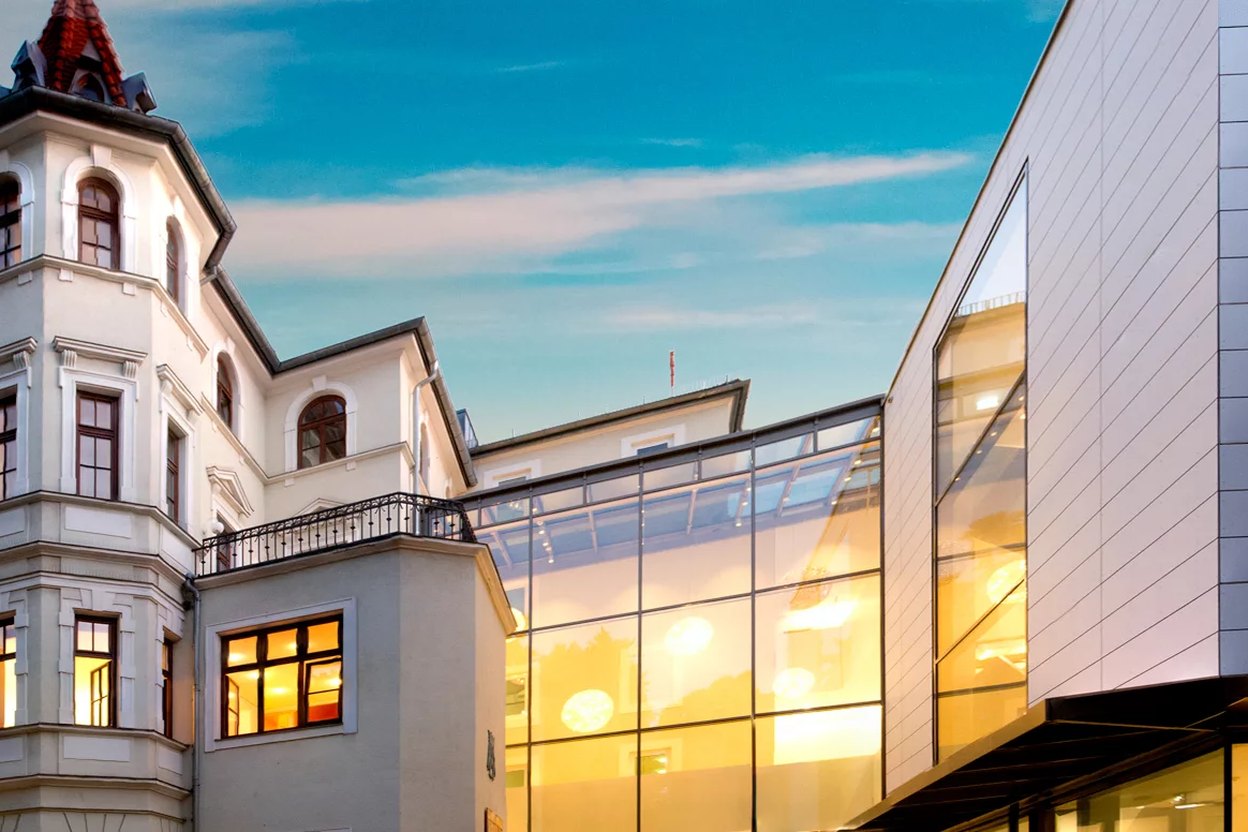
Herzog Carl Theodor Eye Clinic
A specialised eye hospital with 56 beds in the Maxvorstadt district of Munich, founded in 1895 by Duke Carl Theodor in Bavaria, himself a practising eye surgeon. Cataract surgery, retinal disease and refractive procedures are its main work.

ISAR Clinic Munich (ISAR Klinikum)
A private multidisciplinary hospital in central Munich with about 240 beds, opened in 2008 in the converted building of the city's former main post office. It covers general and orthopaedic surgery, plastic surgery, cardiology, urology and internal medicine.

Josephinum Clinic Munich
A private elective hospital in central Munich with about ninety inpatient beds, far smaller than the city's university centres. General and orthopaedic surgery, internal medicine with gastroenterology, ENT and radiology all work under one roof.

Kinderwunsch Centrum Munich
A fertility centre in Munich with more than thirty-five years of IVF experience, associated with the Krüsmann family. It looks for the cause of infertility and offers insemination, IVF and ICSI and cryopreservation, and runs its own embryology laboratory.

Klinikum Dritter Orden, Munich
A 574-bed general hospital in the Nymphenburg district of Munich, an academic teaching hospital of LMU since 1979. Paediatrics is its strongest side, with neonatology, newborn intensive care and children's surgery alongside a busy maternity unit.

LMU University Hospital Munich (LMU Klinikum)
The university hospital of Ludwig-Maximilians-Universität in Munich, working on two campuses, Großhadern and the city centre, with around two thousand beds. It takes on complex and rare conditions and runs a transplant programme for organs and bone marrow.

Münchner Onkologie — oncology practice
Not a hospital but a specialist oncology practice with a day unit in central Munich, where chemotherapy, antibody and targeted therapy are given as outpatient care. It is led by an ESMO-certified oncologist who follows the patient throughout.
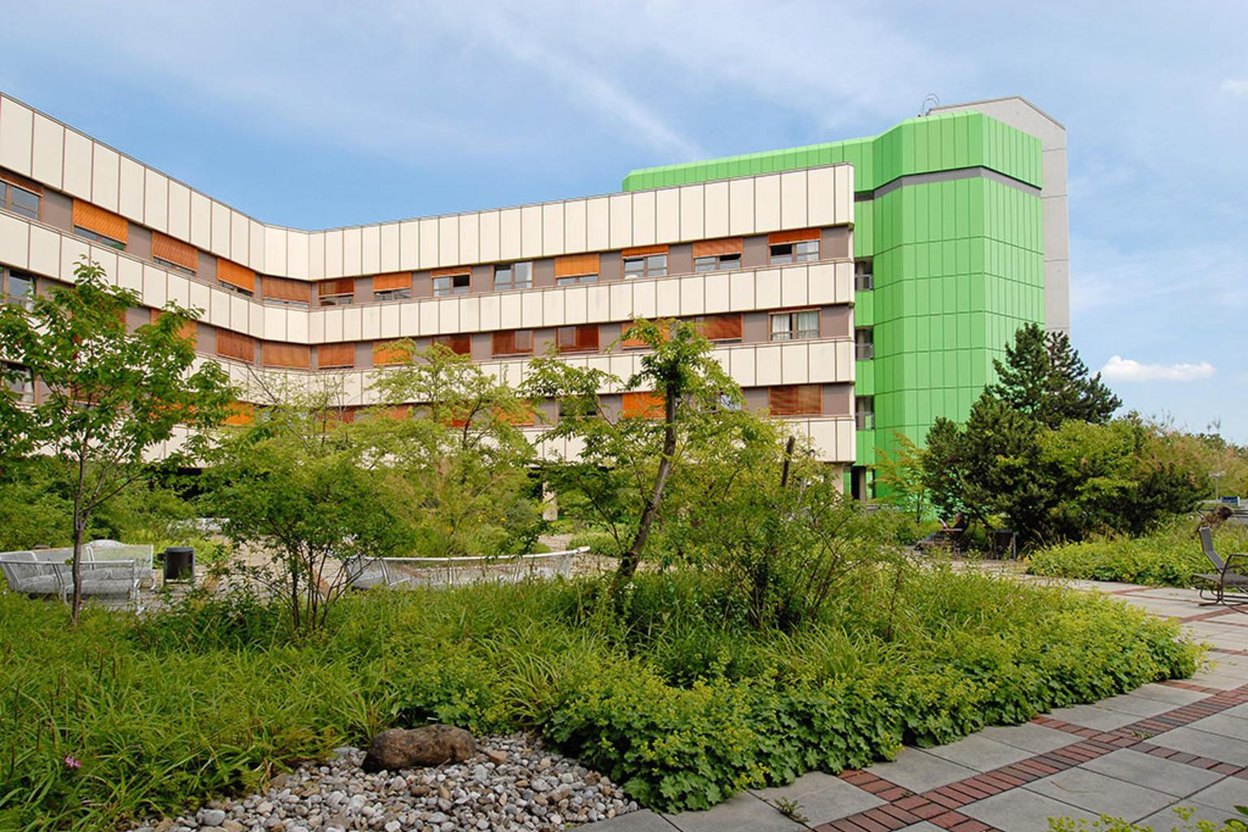
Munich Hospital Bogenhausen
A tertiary-care academic hospital in the east of Munich, part of the municipal München Klinik network. It has units for neurosurgery, spinal surgery, major trauma, urology, plastic reconstruction and a certified centre for haematological cancers.
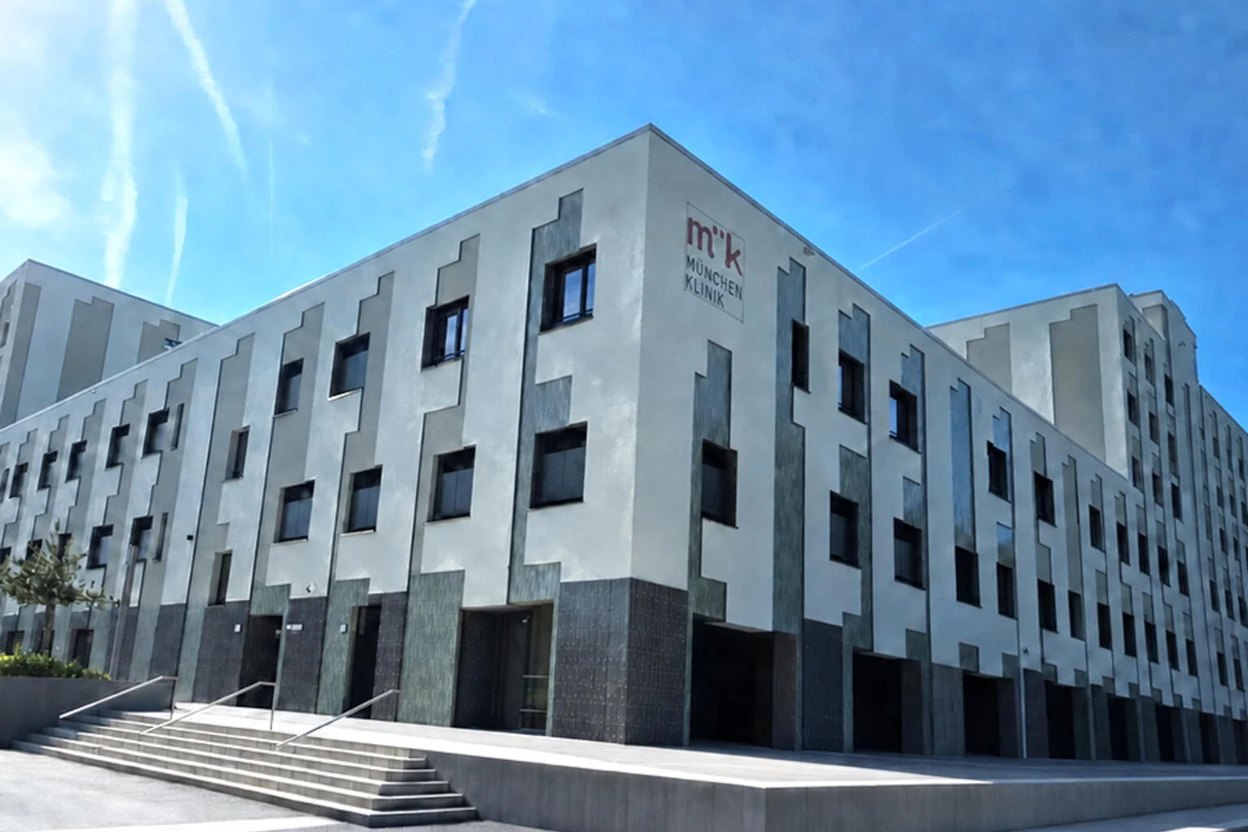
Munich Hospital Harlaching
A municipal academic hospital in the green south of Munich, part of the München Klinik group, treating around 79,000 patients a year. Its departments include cardiology, dermatology and allergology, paediatrics, visceral surgery and early rehabilitation.
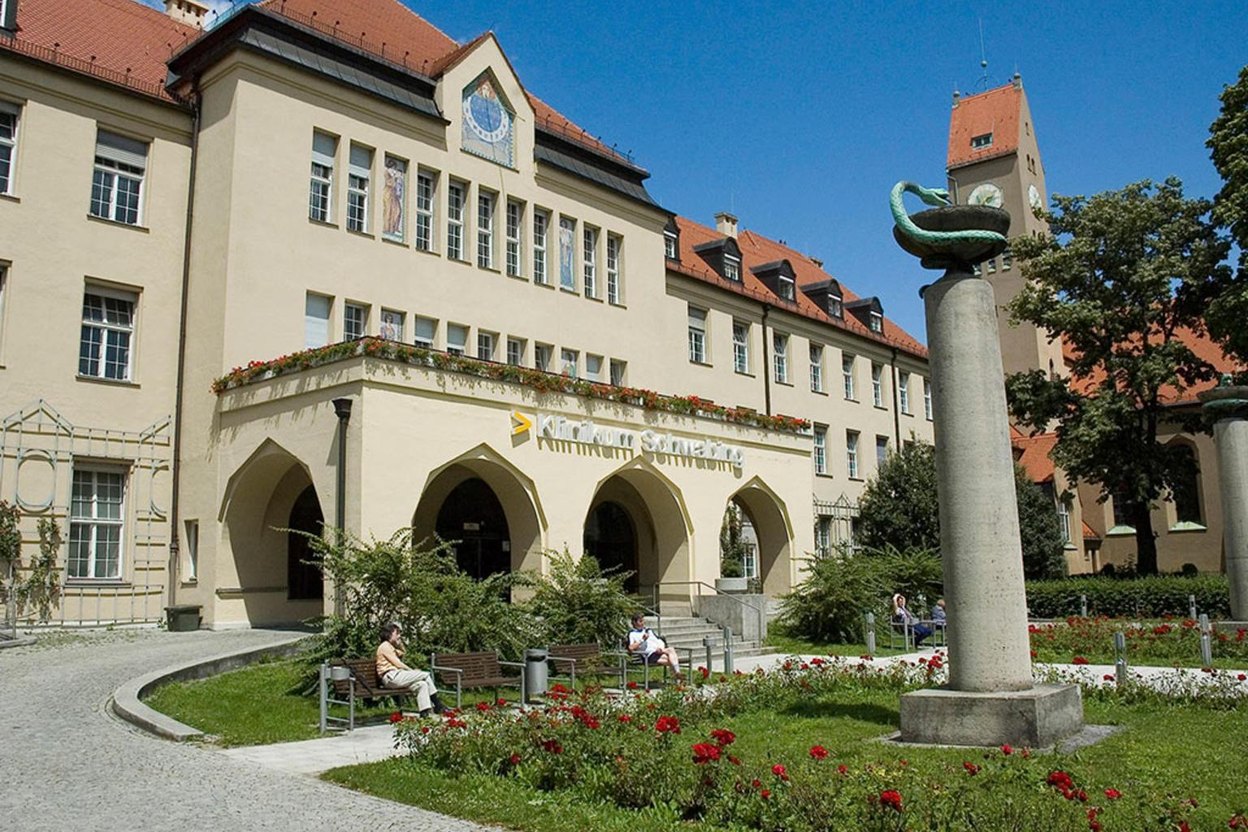
Munich Hospital Schwabing
A municipal maximum-care hospital in Munich, working since 1909 as part of the München Klinik group. Paediatrics and infectious diseases stand out, alongside internal medicine with cardiology, endocrinology and neurosurgery.

Radiotherapy Centre, Munich-Pasing
An outpatient radiotherapy practice in Munich-Pasing, where patients arrive with a diagnosis and a plan already made to receive the radiation part of their treatment. It works with IMRT, image-guided and stereotactic techniques on Varian accelerators.

Rechts der Isar Hospital Munich: TUM University Hospital
The university hospital of the Technical University of Munich in Haidhausen, with a history going back to 1834 and the status of a maximum-care hospital. It is strong in oncology, cardiovascular and general surgery, gastroenterology and neurosurgery.
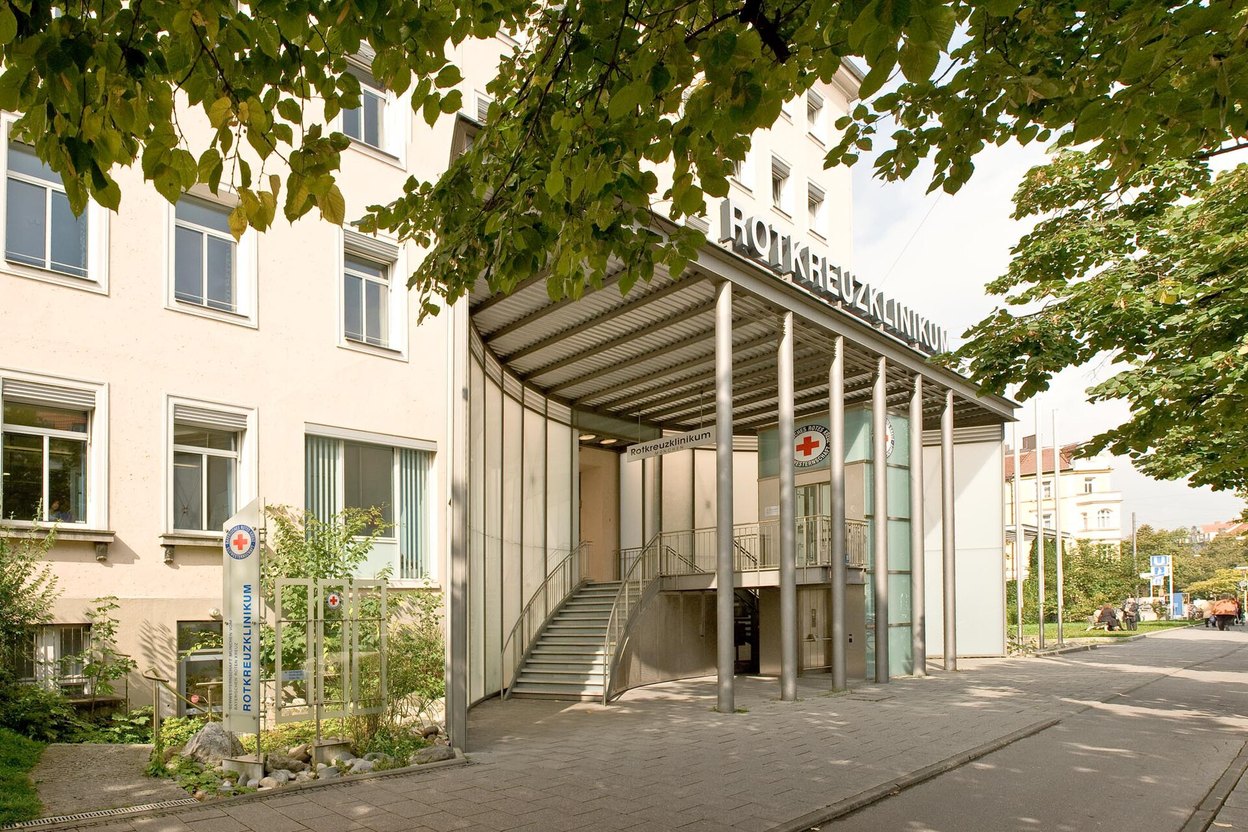
Red Cross Clinic Munich
A Munich hospital run by the Bavarian Red Cross Sisterhood, working on two city sites since 1892. Its main fields are orthopaedics and joint replacement, vascular surgery, a hernia centre and haemato-oncology.

Schön Klinik München Harlaching Hospital
A specialist orthopaedic hospital in southern Munich, on a site used since 1913 and part of the Schön Klinik group since 1997. It focuses on spine surgery, sports orthopaedics, joint replacement and hand surgery, and is a FIFA Medical Centre of Excellence.

Urology Clinic Munich-Planegg
A single-speciality hospital near Munich devoted entirely to urology, from prostate and bladder tumours to benign enlargement, stones and incontinence. Its uro-oncology unit is a certified prostate cancer centre, and most operations use the da Vinci robot.

Villa Bella Clinic, Munich
A small private plastic and aesthetic surgery clinic in central Munich, near Odeonsplatz. Only qualified plastic surgeons operate here; it was founded and is led by Dr Ludger Meyer, formerly head of plastic surgery at a university hospital.