 EN
EN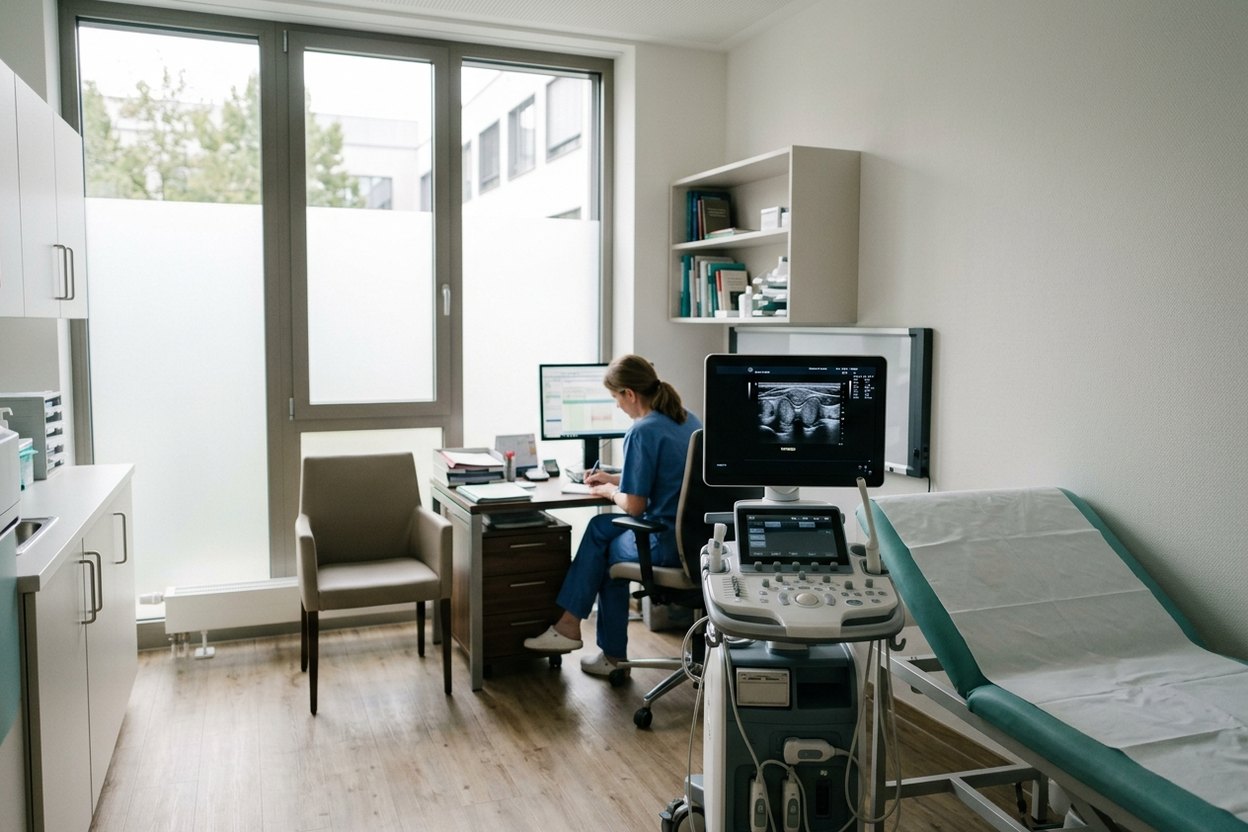
Diabetes is most often found not through alarming symptoms but in passing — in a routine blood test or at a check-up for something else. And then the questions come: is it definitely diabetes, which type is it, and how far has it already affected the body. A calm answer comes not from a single sugar reading but from a properly assembled assessment. That is what people come to Germany for — not to “treat the sugar” but to understand exactly what is happening and to leave with a clear plan.
Why one sugar reading is not enough
A raised glucose in one test is not yet a diagnosis. It rises with stress, with infection, after a large meal. So an endocrinologist looks at the whole picture: how the sugar behaves fasting and after a load, what the average level over recent months shows, whether there are already signs of the disease affecting the vessels, the kidneys and the eyes. That is exactly the German approach — not to rush to a conclusion but to confirm it by several independent methods.
Practically it is convenient: the main investigations usually fit into a single visit. The patient has the tests, an ultrasound and an examination, and one doctor gathers the results and explains them — rather than several separate reports with nobody afterwards to tie them together.
What exactly is checked
The basis is blood tests. Fasting glucose is measured, and glycated haemoglobin (HbA1c) — a value that reflects the average sugar level over the past two or three months and does not depend on what you ate that morning. Where there is doubt, a glucose tolerance test is done: how the body copes with a dose of glucose is measured after a set time.
To establish the type of diabetes the doctor may order further tests — for example C-peptide (which shows how much insulin the pancreas is producing) and specific antibodies. This matters: the whole subsequent approach depends on the type. Alongside this, cholesterol and other measures of fat metabolism, urine analysis and kidney function are assessed.
A separate part is the search for early complications before they show themselves. The retina is examined, an abdominal ultrasound is done and, where needed, the vessels of the heart and legs are investigated. The point is to catch any changes at the stage where they are easiest to work with.
Two types — and why the difference is fundamental
Type 1 diabetes usually develops at a young age: the pancreas stops producing insulin and it has to be given from outside. Type 2 is commoner and arises because the body responds less well to its own insulin; here diet, weight, movement and well-chosen medication come first. From the outside a high sugar looks the same — but the approaches differ, which is why establishing the type accurately comes first.
A diagnosis is not a sentence but a foothold
Diabetes is one of those conditions that are well managed today if their scale is understood in time. The value of the assessment lies not in frightening you with a figure but in giving a clear starting point: which type it is, whether there are complications and what actually influences the course of the disease in your case. That is where a calm, workable plan begins — instead of going round in circles with contradictory reports.
This material is for information only and does not replace a consultation with a doctor. Which investigations are done, their extent and the interpretation of the results are determined individually after an examination at the clinic in person.