 EN
EN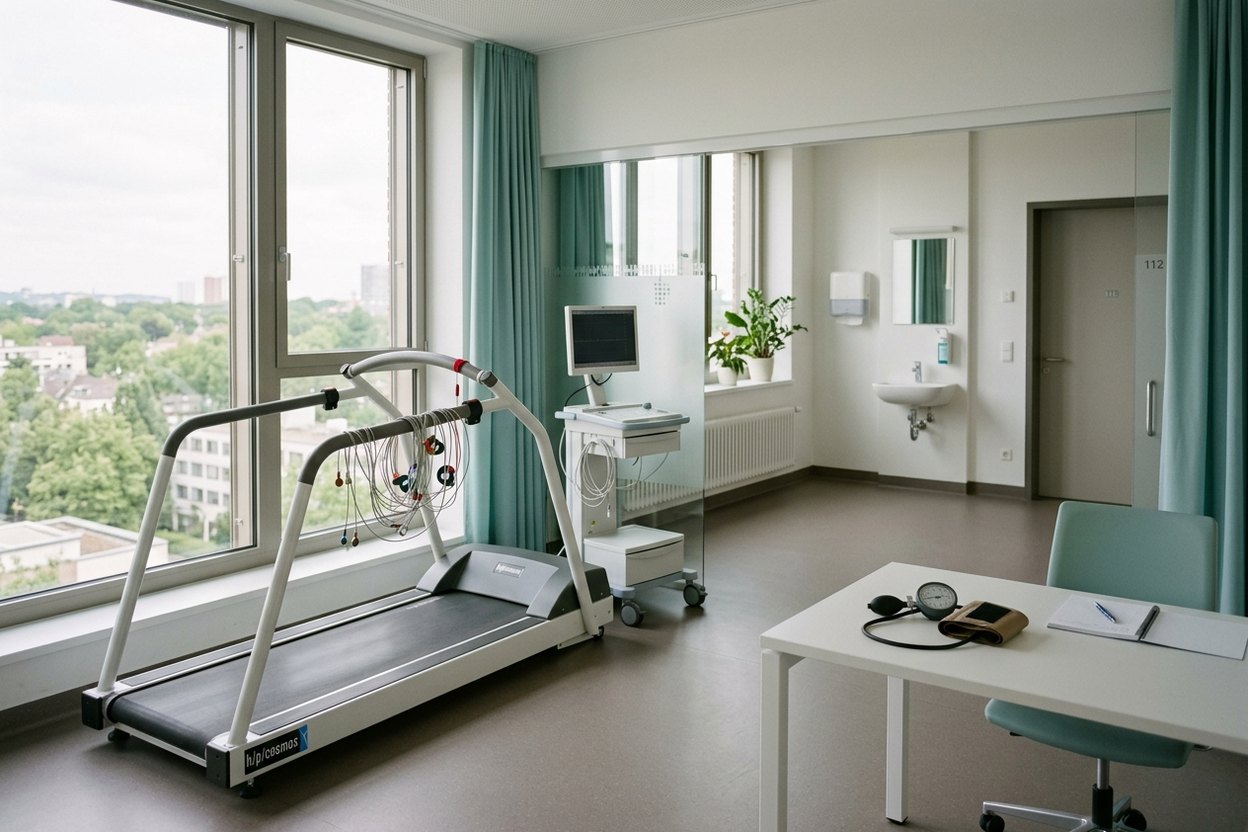
Sometimes you want more than a couple of blood tests — you want to go through your health thoroughly, from top to bottom. The reasons vary: age, small complaints that have accumulated, a worrying family history, or simply the wish to get a full and honest picture of your health in a single visit. A full examination in Germany is designed for exactly that: to gather as much objective data as possible and bring it together into a report you can understand.
How it differs from an ordinary check-up
A basic check-up answers the question “is everything broadly in order”. A full examination goes deeper and wider: to the standard part are added an extended laboratory panel, a detailed assessment of the heart and vessels, the digestive organs and hormone levels, and where needed, detailed imaging. It is the choice for those who want maximum thoroughness rather than basic screening alone.
“Full” does not, however, mean “everything indiscriminately”. A good doctor still starts from age, sex, way of life and symptoms — the set of investigations in this format is simply considerably larger. The point is not to go through as many procedures as possible but to leave no important blank spots.
What it usually includes
As a rule the programme includes detailed blood and urine tests, an ECG at rest and under exertion, ultrasound of the heart, the thyroid and the abdominal organs, assessment of the blood vessels (duplex scanning), and lung function testing. Metabolism and cardiovascular risk factors are assessed separately.
Extended programmes may also use magnetic resonance imaging — a method without a radiation dose that gives a detailed picture of organs and tissues. Whether such detailed imaging is needed, and whether contrast is required with it, is decided by the doctor on the basis of indications rather than “by default”: without good reason, unnecessary imaging and contrast are not ordered.
How it is organised
The examination is usually arranged so that everything is done in a short time — one or two days, without exhausting waits between investigations. Different specialists work in concert and the results flow to one doctor.
It ends with the main thing: the closing consultation. You are told what the investigations showed, what is normal, what is worth watching and what steps make sense. It is that conversation which distinguishes a considered examination from simply “going through the machines”: a set of figures becomes concrete, workable advice.
For whom it is particularly justified
This format is most often chosen by older people, by those with risk factors or an inherited predisposition, and by those who have not had a serious examination for a long time and want to clear away the uncertainty. How often to repeat a full examination is an individual question; a sensible interval is worth discussing with the doctor after the first visit. The value lies not in a one-off event but in the clarity you leave with: you know how things stand and what to do next.
This material is for information only and does not replace a consultation with a doctor. The content and extent of the examination programme are determined individually after a consultation at the clinic in person.