 EN
EN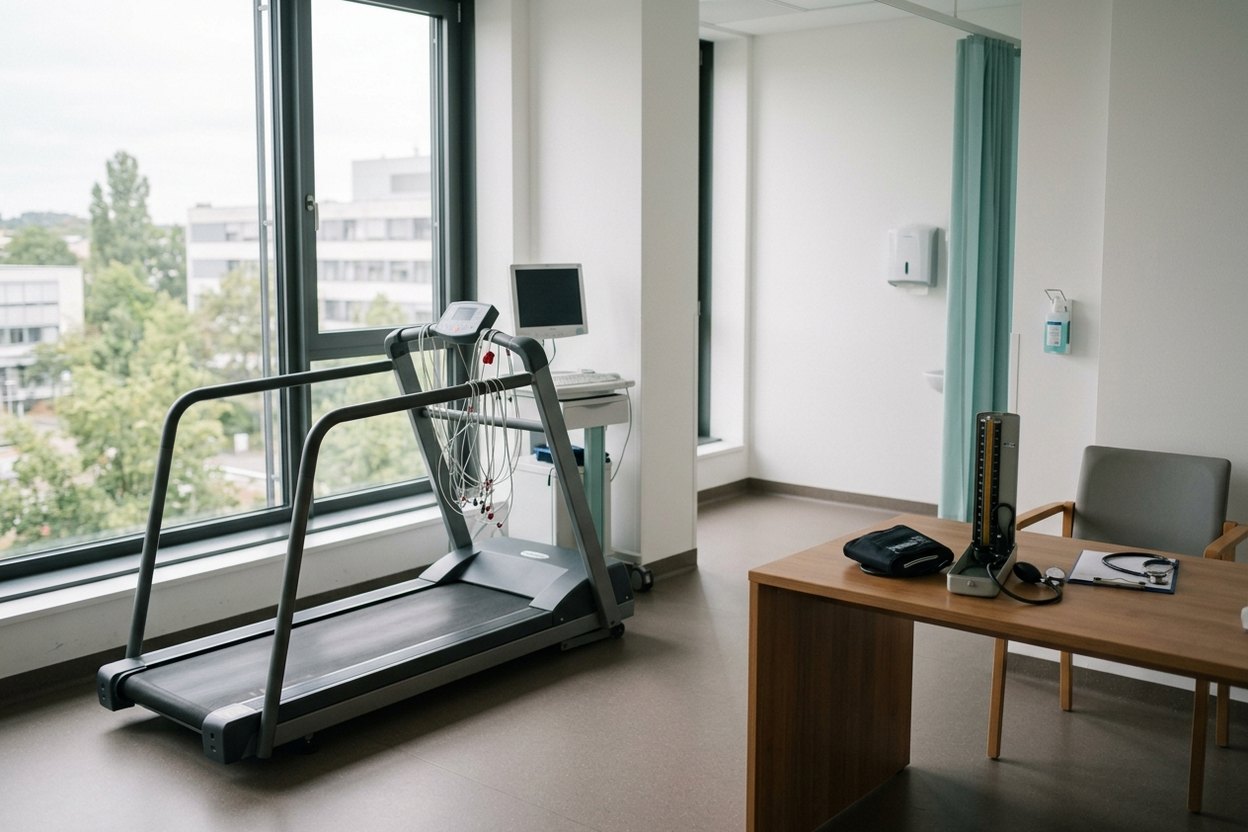
A check-up in Germany is a planned examination for someone without complaints, designed to catch changes in blood pressure, blood vessels and metabolism before they cause symptoms. It usually takes one or two days and ends with a talk with the doctor.
Most people who book one are in their forties or fifties, have heart disease, diabetes or cancer in the family, or have not been examined for years. This page explains what the programmes include, what they cost and how the days run; other tests are covered under medical diagnostics in Germany.
Why Have a Medical Check-Up in Germany If Nothing Hurts
A medical check-up in Germany is meant as a starting point, taken while nothing is wrong. The body compensates for a long time, so raised blood pressure, vessel changes or metabolic shifts can stay silent for years: no symptoms does not mean no problem. The WHO lists raised blood pressure, blood glucose and blood lipids as metabolic risk factors that can lead to cardiovascular disease, and calls detection and screening key parts of the response to noncommunicable diseases.
The other side is over-testing: excessive tests bring incidental findings, follow-up checks and needless worry. A German doctor therefore orders what your age, sex and history justify, and every test should answer a question of its own.
Full Body Check-Up in Germany: How It Differs from a Basic One
A full body check-up goes further than a basic one: an extended laboratory panel, an ECG at rest and under exertion, ultrasound of the heart (echocardiography), thyroid and abdomen, a duplex scan — ultrasound that shows both the artery wall and the blood flow — and a lung function test. From these the doctor assesses metabolism and cardiovascular risk, that is, the likelihood of a heart attack or stroke.
Still, “full” does not mean “everything”: MRI and examinations with contrast agent are added only for a medical reason (see MRI scan in Germany). The wider scope suits older people, those with risk factors such as smoking, excess weight or high blood pressure, and those with heart disease or diabetes in the family. The closing consultation then turns the figures into advice.
What the Examination Includes
The examination includes a talk with a doctor and a physical examination, laboratory tests and checks of the heart, vessels and organs, with more added by sex, age and need. An internist starts by asking about your health, habits and family history, reviews earlier results and assembles the programme.
The programme is built from these modules:
- laboratory: full blood and urine tests, including cholesterol and blood sugar;
- heart and vessels: ECG at rest and under exertion, echocardiography, carotid duplex scan;
- abdomen and thyroid: ultrasound;
- lungs: spirometry, a breathing test;
- by sex and age: a gynaecological or urological examination;
- where indicated: gastroscopy and colonoscopy under sedation, MRI, skin and retina checks.
Check-ups for women and for men differ in this module. Women have a gynaecological examination with a smear, breast ultrasound and, by age, mammography. Men have a urological examination, prostate ultrasound and a PSA blood test, agreed after a talk with the doctor about its benefits and limits: this prostate protein can rise without cancer, and the test also flags slow-growing tumours that might never need treatment. Colonoscopy and a skin check are discussed by age.
People with statutory health insurance in Germany are entitled to a health check for adults (Gesundheits-Check-up): questions about health and family illnesses, a physical examination, blood pressure, blood and urine tests that depend on age, and a closing consultation. According to gesund.bund.de, the portal of the Federal Ministry of Health, it can be had once between the ages of 18 and 34 and every three years from 35. The insurance fund pays for the insured; an international patient books the programme privately and agrees its scope with the doctor. Whether healthcare in Germany is free is covered under the German healthcare system. Cancer screening runs separately: the Krebsinformationsdienst of the German Cancer Research Center lists a mammogram every two years for women aged 50 to 75, and for both sexes colonoscopy from 50 and a skin check every two years from 35.
Check-Up Prices: What the Programmes Cost
What a programme costs depends on its modules, and doctors bill item by item under the German medical fee schedule GOÄ, where every service has its own number, so the invoice shows exactly what you pay for.
| Programme | Duration | Indicative price |
|---|---|---|
| General medical assessment | 1–2 days | around €1,650 |
| Cardiological assessment | 1–2 days | around €2,000 |
| Gastroenterological assessment | 2 days | around €700–2,200 |
| Gynaecological check-up | 1 day | around €1,500 |
| Urological assessment | 1–2 days | around €1,650 |
| Consultation with a doctor on the results | — | from €130 |
Your personal figure comes in the hospital’s cost estimate (Kostenvoranschlag) before you travel; flights, accommodation and the interpreter are not included in it. How the total cost of a medical examination in Germany builds up is explained on a separate page.
How the Two Days Run
The main tests fit into one or two days: fasting blood tests in the morning, since blood sugar is measured on an empty stomach, then functional tests and ultrasound. A colonoscopy needs preparation the day before: a laxative in the afternoon or evening, then only clear fluids. After sedation you should not drive for 24 hours, so go back to the hotel with a companion.
The closing talk with the doctor covers what is normal, what to watch and what to do next, and you receive a written report. How often to repeat the check-up is decided on the results: there is no single interval for everyone.
Frequently asked questions
What does a check-up in Germany include?
A check-up in Germany includes a talk and examination by an internist, full blood and urine tests, an ECG at rest and under exertion, ultrasound of the abdomen, thyroid and vessels. By sex and age a gynaecological or urological examination is added, and where indicated endoscopy, MRI, skin and retina checks. It ends with a closing talk and a written report.
How much does a full body check-up in Germany cost?
A full body check-up in Germany costs as much as its modules: in the current indicative figures, single programmes range from €700 to €2,200. A general medical assessment of one or two days is around €1,650, a cardiological one around €2,000 and a one-day gynaecological check-up around €1,500. A combined programme is priced in the hospital’s estimate before travel.
How does a check-up for women differ from one for men?
It differs in the module chosen by sex and age. Women add a gynaecological examination with a smear, breast ultrasound and, by age, mammography; men add a urological examination, prostate ultrasound and, after a talk with the doctor, a PSA test. Blood tests and the checks of the heart, vessels and abdomen are the same for both.
How AlenMed Organises a Check-Up in Germany
AlenMed prepares the check-up in Germany before you travel: it collects a health questionnaire and earlier results, has them translated, chooses a hospital with the right departments and agrees the programme and the estimate with it. How arranging treatment in Germany works is described separately.
On site an interpreter accompanies you to every test and to the closing talk, and the report is translated. If further treatment is needed, AlenMed passes the documents to the right specialist. The company’s office is in Munich, with partner hospitals across Germany; for an examination near the office, see check-up in Munich.
This is reference material, not an offer: the figures are indicative, the exact cost is set by the hospital’s estimate and the programme by the doctor at a face-to-face consultation.