EN
EN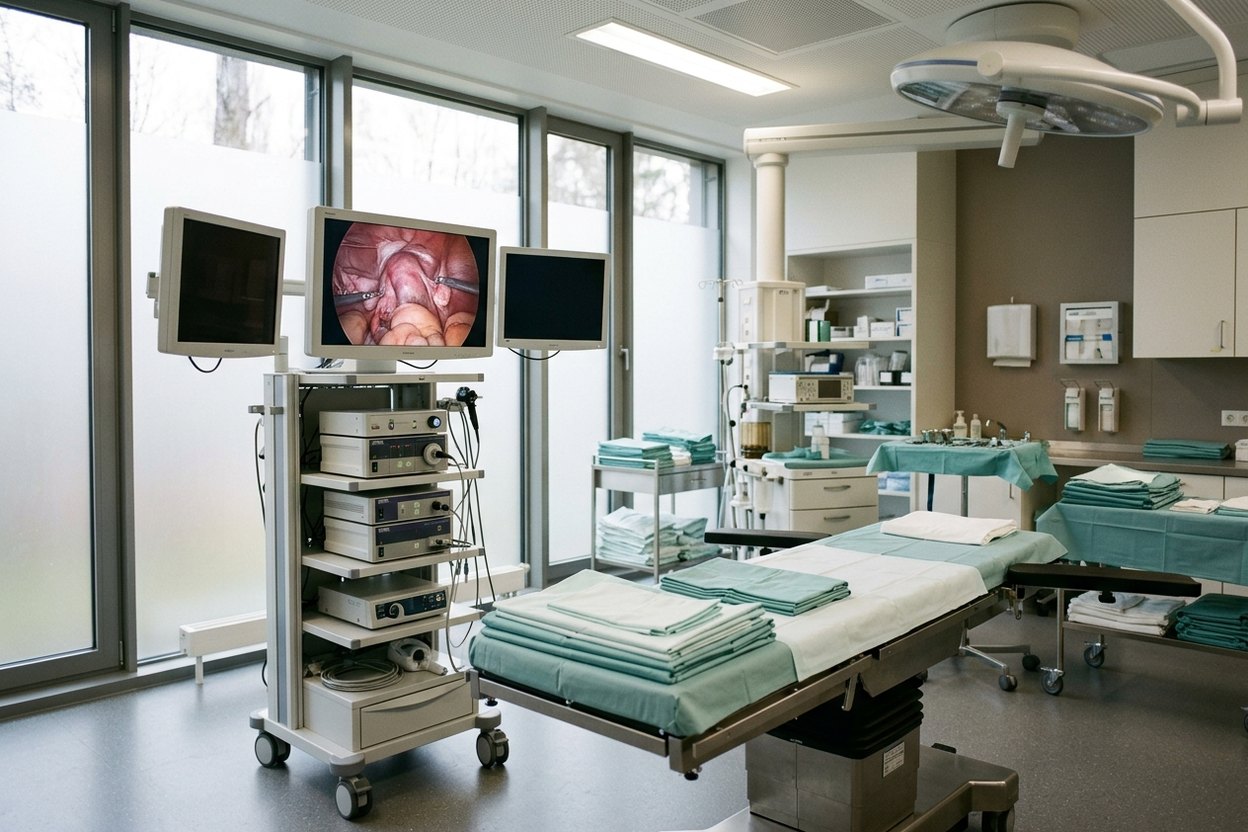
In Germany ovarian cancer is treated above all with surgery, usually followed by drug therapy. The disease rarely announces itself early: the first signals — heaviness in the abdomen, bloating, feeling full quickly — are easily put down to anything at all. So by the time the diagnosis is made, a woman often already has an operation or a course of chemotherapy behind her at home, and the main question is a different one: has everything been taken into account, and what happens next.
Below: how ovarian cancer treatment in Germany works, from diagnosis to surgery and drug therapy, and when a second opinion should come first.
How people arrive and what can look similar
Ovarian tumours behave differently: some turn out to be benign cysts, others malignant, and they cannot be told apart by eye. Often a woman arrives with a diagnosis already made but with doubts about the stage, the extent of the tumour or the approach; in other cases a mass found by chance on ultrasound raises the question whether it is dangerous at all. Either way, the first step in Germany is not treatment but confirming the picture precisely.
A benign cyst is another story: see ovarian cyst treatment. Bloating, pressure, filling up quickly and a growing abdomen deserve attention, and women whose relatives had ovarian or breast cancer and carriers of BRCA mutations are at higher risk (more under ovarian cancer diagnostics). The four stages: confined to the ovaries, spread within the pelvis, to the peritoneum beyond it or to lymph nodes, and to distant organs.
How the diagnosis is confirmed
The assessment is built around straightforward methods: transvaginal ultrasound, CT or MRI of the abdomen and pelvis, a blood test for tumour markers (above all CA-125) and, where needed, positron emission tomography (PET), which helps see whether the disease has gone beyond the ovary. Only examination of the tissue itself — histology — gives a definitive answer about the nature of the tumour; in ovarian cancer the material is most often obtained during surgery.
The tumour’s molecular profile is also studied, above all mutations in the BRCA1 and BRCA2 genes: their presence changes the choice of maintenance therapy and says something about the risks for close female relatives. In advanced disease a broader measure is assessed as well: homologous recombination deficiency (HRD), a fault in how cells repair damaged DNA, which also shapes maintenance treatment.
A tumour confined to one ovary in a young woman who wants children is discussed separately: preserving fertility must be raised before surgery, not after. The German guideline allows keeping the uterus and the other ovary at stage I, but only with complete surgical staging, and the risk of relapse is then higher.
Surgery
Treatment usually begins with surgery to remove all visible tumour: with none left, the drugs only have scattered cells to fight, and complete removal is linked to clearly longer survival. The standard operation removes both ovaries and fallopian tubes, the uterus and the omentum, a fatty apron of peritoneum, with washings and biopsies. The surgeon inspects the whole abdomen up to the diaphragm, as scans show small deposits unreliably, and this settles the final stage.
There are two routes: surgery first and chemotherapy afterwards, or a few cycles of chemotherapy to shrink the tumour, then surgery. The German guideline makes the first the standard, as trials showed no advantage in starting with chemotherapy; the gynaecological oncologist and the tumour board decide from the scans and the woman’s condition. If surgery at home was incomplete and chemotherapy has begun, the second operation should not wait for the last cycle.
When choosing a hospital, look for a certified gynaecological cancer centre and a surgeon who does these operations regularly: gynaecological oncologists achieve complete removal more often than other surgeons. One of them is Prof. Sven Mahner, gynaecological oncologist, who heads women’s medicine and obstetrics at the LMU University Hospital in Munich; the operation is covered under surgery for ovarian cancer.
Drug therapy
Chemotherapy for ovarian cancer in Germany usually follows the operation and, as a rule, combines platinum drugs with taxanes, acting on cells that may have remained unseen; in advanced disease, maintenance drugs follow to hold the disease back for longer.
The standard regimen is increasingly supplemented with targeted agents: drugs that cut off the tumour’s blood supply, and PARP inhibitors as maintenance therapy, especially with BRCA mutations or HRD. Hormone therapy is considered for some slow-growing tumour types and some relapses, though in relapse chemotherapy works better. What to use and when is decided not by one doctor but by a tumour board: gynaecological oncologist, medical oncologist, radiologist and pathologist look at the case together and follow approved protocols, not personal preference.
Advanced disease and relapse change the goal and plan, but treatment remains possible. A late relapse usually responds to platinum again, and some women are offered another operation, which prolonged survival in a large trial when all tumour was removed; after an early relapse, symptom control and quality of life come first. Stage 4, with distant deposits, has its own page: stage 4 ovarian cancer. Patients often ask about HIPEC, rinsing the abdomen with heated chemotherapy during surgery. The current German S3 guideline on ovarian cancer finds the data unconvincing: it is not standard and should not be used outside clinical trials; the tumour board can discuss whether one is suitable.
Follow-up, and where ovarian cancer is treated
Follow-up, with consultations, gynaecological examinations and vaginal ultrasound, is offered for life, as the disease can return years later. CA-125 is tracked mainly during treatment, including maintenance, to see how the tumour responds. Without complaints after treatment, the German guideline advises against routine marker tests, since treating a rising CA-125 early did not prolong life in a trial but worsened its quality; a rising figure alone is a reason to see the doctor, not to change treatment. Bloating, a growing abdomen, pain, changed bowel habits or breathlessness warrant an earlier visit.
Among cancer treatment centers in Germany, those certified by the German Cancer Society stand out: a yearly audit checks the requirements, including minimum numbers of operations per surgeon, and new cases go to a tumour board meeting at least weekly, with scans and pathology slides on screen. If treatment has begun at home and doubts remain, start with a second opinion: a German specialist studies your images, slides and letters and says plainly whether they agree with the diagnosis, stage and plan. Sometimes a review of the histology at a reference laboratory changes the diagnosis, and with it the whole approach.
Frequently asked questions
Can ovarian cancer be cured completely?
Yes, it can; the chances depend above all on the stage and on whether all visible tumour was removed. Cure is more frequent at an early stage, but even in advanced disease the aim can be cure or long-term control. Only the scans, histology and operation report can show the outlook.
Should I have a BRCA test if no one in my family has had cancer?
Yes. The German guideline recommends offering genetic testing to every woman with ovarian cancer, as neither age nor family history rules out an inherited mutation. The result guides maintenance treatment; if a mutation is found, sisters and daughters can be tested after genetic counselling.
Can treatment started at home be continued in Germany?
Yes. German doctors first review the operation report, histology, scans and the chemotherapy given so far. If the tumour was not removed completely, a second operation may be offered between cycles; if everything meets the standard, treatment continues according to the agreed plan, in Germany or at home.
How AlenMed arranges treatment
AlenMed starts with a remote review: records are translated and sent to a hospital with a gynaecological cancer centre, whose doctors say what is needed. The hospital sends a cost estimate, and we arrange the visa invitation, dates and an interpreter.
Back home, the patient keeps the hospital’s follow-up plan and stays in touch with its doctors through AlenMed. Costs are explained under cost of ovarian cancer treatment.
This material is for information only and does not replace a consultation with a doctor. Whether treatment is possible, what it will involve and what it will achieve can be determined only after an examination at the clinic in person. It is not an offer.
News on this topic
Charité treats first beta-thalassemia patient with CRISPR
At Berlin Charité, a 19-year-old beta-thalassemia patient became the first in Germany to receive the newly approved CRISPR gene therapy Exagamglogene Autotemcel.
Real-World Breast Cancer Study Confirms High Five-Year Survival Rates in Germany
A landmark study of over 43,000 German patients reveals a five-year invasive disease-free survival rate of 82.9 percent in early hormone receptor-positive breast cancer.
FDA Approves Jülich Diagnostic Radiotracer FET for Brain Tumor Imaging
The FDA approves the diagnostic radiotracer FET (Pixclara®) for evaluating brain gliomas, highlighting decades of neuro-oncology research at Forschungszentrum Jülich.