 EN
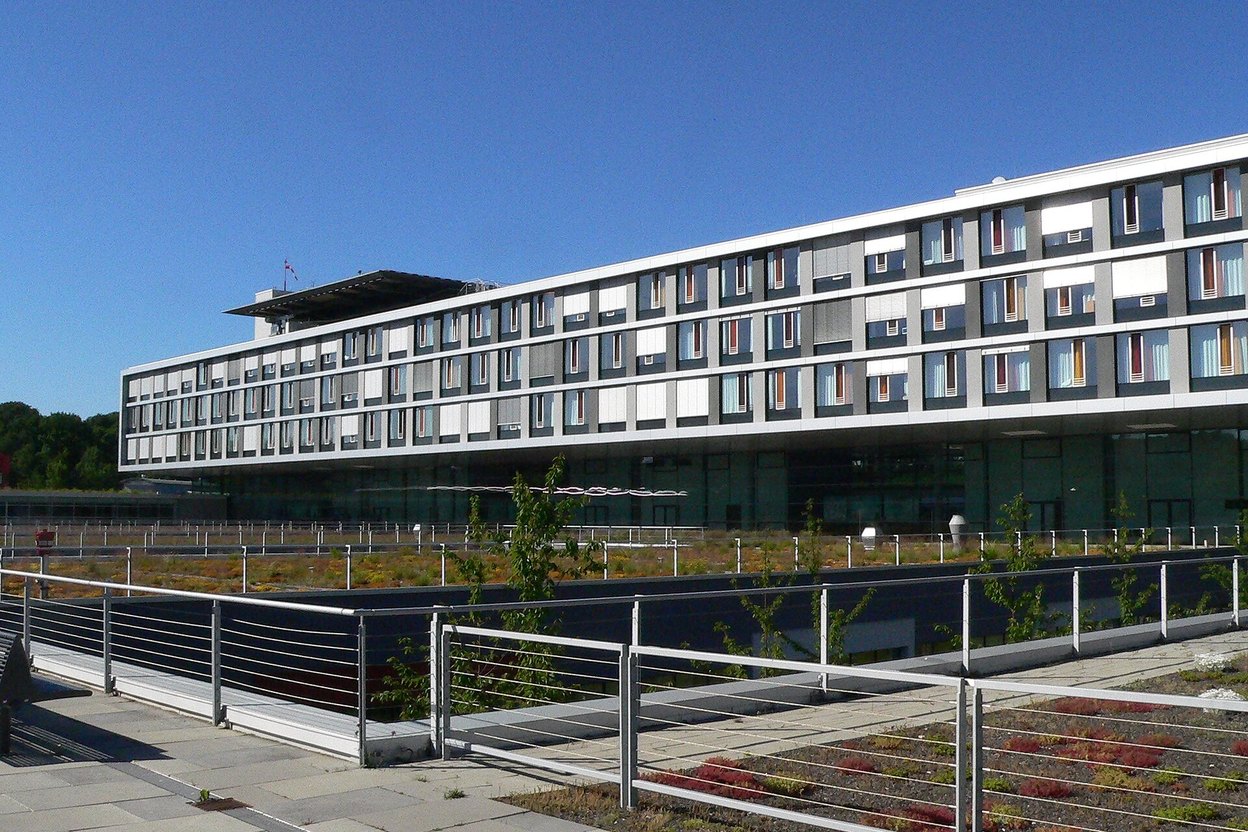
Ulm holds one of the four university hospitals of Baden-Württemberg, a top-level hospital responsible for the difficult cases of an entire region, although the city is rarely the first that comes to mind for treatment in Germany. Put plainly, among hospitals in Ulm, Germany, you choose a particular department, not the city.
Below: how the university hospital is organised, which fields it covers and who runs them, how Ulm differs from nearby Tübingen and Stuttgart, how to get there and what an international patient must decide. Still choosing a city? Start with hospitals in Germany.
Ulm and its hospital
Ulm lies on the Danube, on the border between Baden-Württemberg and Bavaria. Ulm University Hospital (Universitätsklinikum Ulm, UKU), the youngest of the state’s four university hospitals, was founded in 1982 and has 1,515 beds. «Youngest» refers to the founding year, not the standard: the hospital grew out of municipal hospitals taken over by the state, and its main buildings came later, built for modern medicine, with internal medicine completed in 1988 and surgery opened in 2012.
For the East Württemberg, Danube–Iller and Lake Constance–Upper Swabia regions it is the top-level hospital (Maximalversorger), so serious cases arrive from a wide area and the departments see them routinely, not once a year; more on such hospitals under university hospitals in Germany. The hospital is split across several sites, one of them called Campus Nord.
The departments the hospital runs
Among the departments the hospital lists are gynaecology and obstetrics, ear, nose and throat medicine, internal medicine I and III, paediatric and adolescent medicine, child and adolescent psychiatry, neurology, nuclear medicine, radiotherapy and radiation oncology, plus three departments of psychiatry and psychotherapy, based in Ulm, Weissenau and Günzburg.
«Internal medicine» in a German hospital means the non-surgical fields split by organ system: in Ulm, number I covers the digestive organs, kidneys, hormones and metabolism, and number III covers blood diseases, tumours, rheumatology and infections. Nuclear medicine means diagnosis and treatment with radioactive substances, thyroid disease among them, and radiation oncology means irradiating tumours.
Children have a field of their own: the department of paediatric and adolescent medicine plus a separate paediatric surgery section headed by Dr Martin Sidler. Child and adolescent psychiatry is also a department of its own here, which is not the case in every German hospital.
Anaesthesia, intensive care and pain
Anaesthesia, intensive care after surgery and pain treatment belong to the department of anaesthesiology and intensive care medicine, headed by Professor Bettina Jungwirth. The interdisciplinary surgical intensive care unit is run by Professor Eberhard Barth, the cardiac anaesthesia section by Professor Helmut Reinelt and the emergency medicine section by Professor Claus-Martin Muth. These names matter: before an operation the anaesthetist assesses the risk of anaesthesia and surgery, and that assessment largely decides whether someone with heart or lung failure can have major surgery at all.
The pain therapy section is headed by Dr Hannes Hofbauer. In a German hospital pain control is a task in its own right, not something to be endured: in Ulm an acute pain service looks after patients in the first days after surgery, and the method of pain relief is agreed with the patient in the talk with the anaesthetist before the operation.
Ulm or a neighbouring city
Choose Ulm if the department you need is here; if not, the honest advice is to go where it is instead of looking for it in Ulm. Within three hours or less lie Stuttgart, with its large municipal hospital (see Klinikum Stuttgart), and Tübingen, with another university hospital of the same state (see hospitals in Tübingen).
A hospital is chosen for a disease not by city and not by bed count, but by the department that handles this diagnosis constantly. In unclear cases a second opinion from a German doctor on the documents, before travelling, helps settle the question.
Travel, language and where to stay
Ulm has no large airport of its own, so patients usually fly into Munich or Stuttgart and continue by train: the city sits on the main Stuttgart–Munich railway line.
As for language, staff at the university hospital speak English, but documents and consent forms are drawn up in German. The hospital’s services include twin rooms, optional private-service rooms at extra cost (Wahlleistung) and a television at the bedside.
Frequently asked questions
Are children treated in Ulm?
Yes. The university hospital has a department of paediatric and adolescent medicine, a paediatric surgery section and a separate department of child and adolescent psychiatry. Whether a particular child is accepted is decided by the relevant department after reviewing the medical reports and imaging, which the hospital asks to receive in German or English.
Do staff at the hospital in Ulm speak English?
Yes, the hospital has staff who speak English as well as other languages, but documents and consent forms are drawn up in German. If a patient’s language skills are not sufficient, the hospital advises bringing an interpreter and, for a planned stay, organising one if necessary; it does not pay interpreters’ fees. AlenMed provides a medical interpreter.
How do you arrange treatment at the hospital in Ulm?
First the medical reports and imaging go to the hospital, and the relevant department decides whether it can take the patient. Before a planned admission an international patient receives an advance invoice and transfers the full amount before treatment starts; if treatment turns out more complex, the hospital may issue a further invoice.
Can someone accompany the patient?
Yes. The hospital lists accommodating a companion among the optional services for international patients, together with a single or twin room and treatment by the head of department. These services cost extra, so mention a companion in your first enquiry, and the hospital will know in advance how many people are coming.
How AlenMed organises treatment
After you get in touch, your documents and imaging are translated and sent to the department that fits the case. The hospital’s answer says whether the patient is accepted, what still has to be examined on site, how long the stay would be and how payment works.
AlenMed works with 86 partner hospitals in 38 cities and 345 doctors, and the company office is in Munich. A coordinator handles the invitation for the visa, the appointment and the interpreter.
This material is for information only and is not an offer. Treatment is decided by the doctor who examines the patient in person.
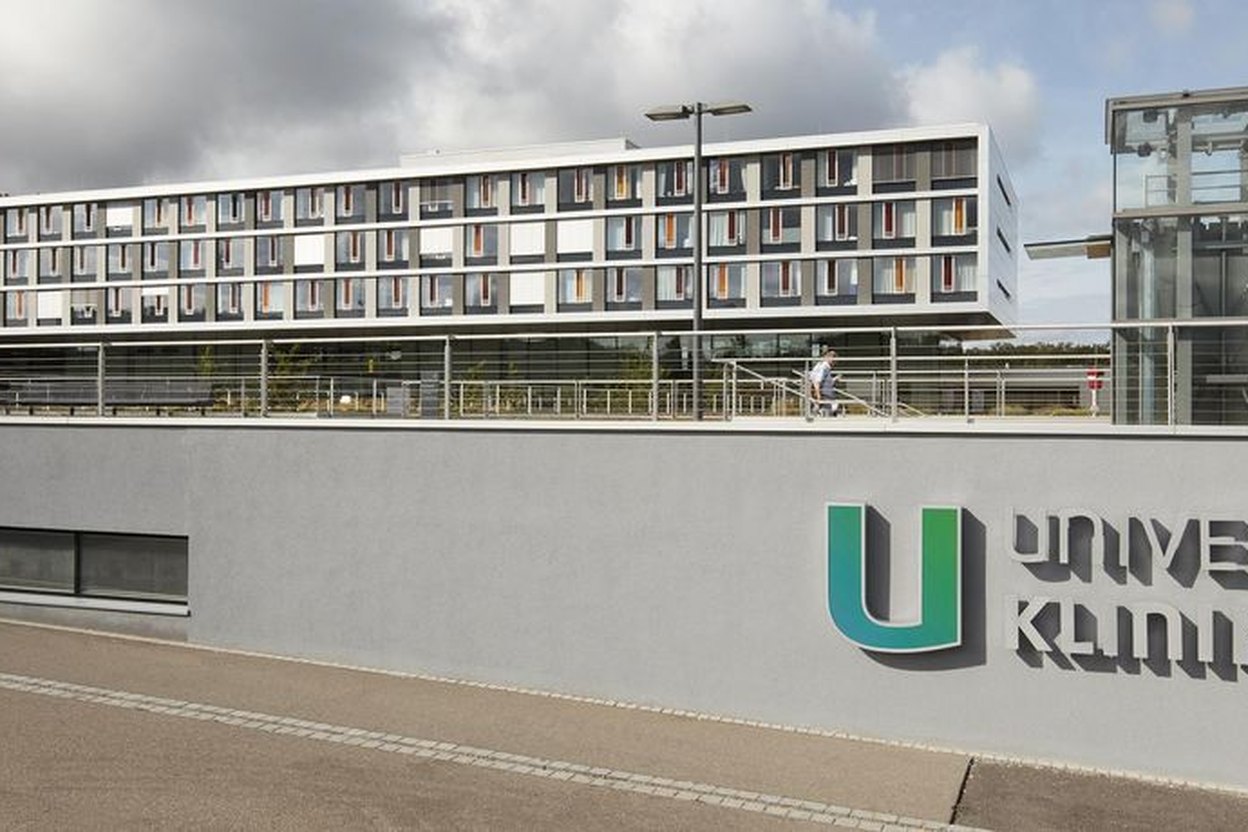
Ulm University Hospital
The youngest of the four university medical centres in Baden-Württemberg, a teaching hospital with 1,200 beds serving the Ostwürttemberg, Donau-Iller and Lake Constance regions. Departments include internal medicine, neurology and radiotherapy.