EN
EN
Diagnostics in Germany is an assessment at a German hospital planned around your question: patients from abroad pay for it themselves, on an estimate agreed before the trip, and the main tests usually take one or two days. People come for different reasons — some to check their health calmly while nothing troubles them, others holding a report they are not sure of. The request is the same: not to “find an illness at any cost” but to get a clear and reliable picture. German diagnostics is set up for exactly that: first establish what is happening, then draw conclusions.
This page covers how an assessment works, which methods are used, the main areas of diagnostics, indicative prices and how to arrange the trip; each area has its own page, listed at the end.
How Diagnostics Works in German Hospitals
Diagnostics in German hospitals is built around the question that needs answering, not around a long list of procedures. The doctor first works out what is already known, what brought the patient and what the risks are, and only then orders tests. So two people with similar complaints may get quite different programmes: one needs only blood tests and an ultrasound, the other an MRI straight away.
Tests are done at university hospitals and specialist centres, as an outpatient over one or two days or with a short admission if there are many tests or they need preparation. For a patient from abroad it is simple: without German insurance you pay yourself, and no referral from a family doctor is needed — appointments are made through the hospital. How health funds and referrals work for residents is explained in our article on the German healthcare system.
The outcome is a conversation with the doctor and a written report. The doctor goes through the results with you: what is within normal limits, what needs watching and what needs acting on — the very conversation that is often missing at home. The report, the Arztbrief, goes home with you and is translated, so that your own doctor can continue care.
Methods: From Blood Tests and Ultrasound to MRI, PET-CT and Endoscopy
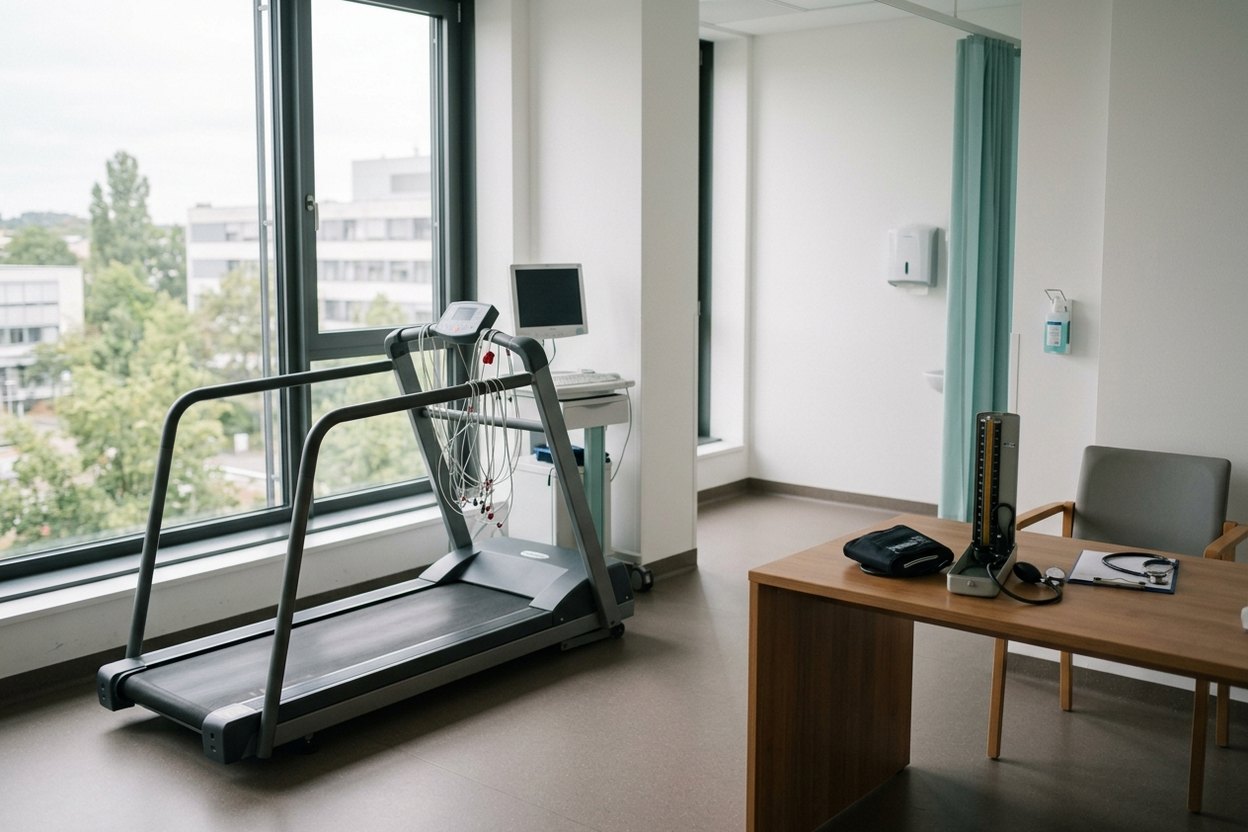
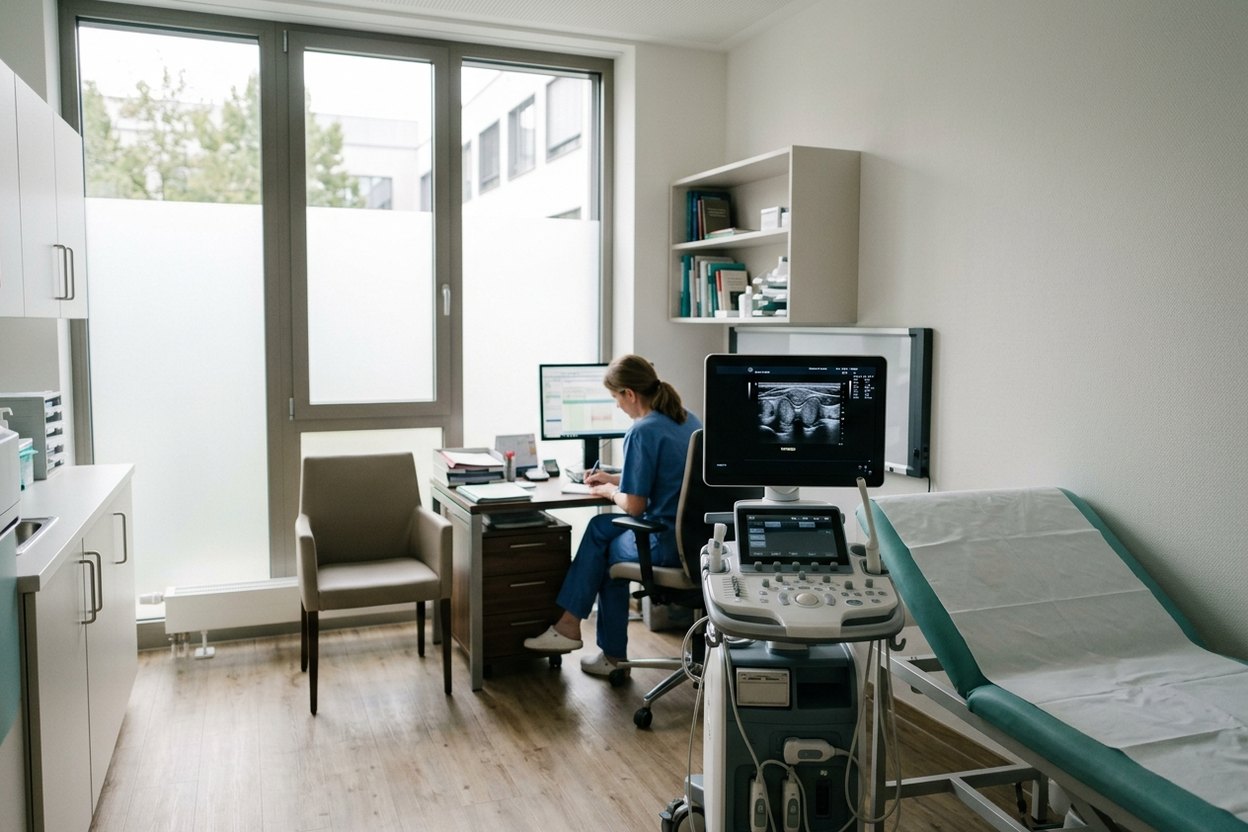
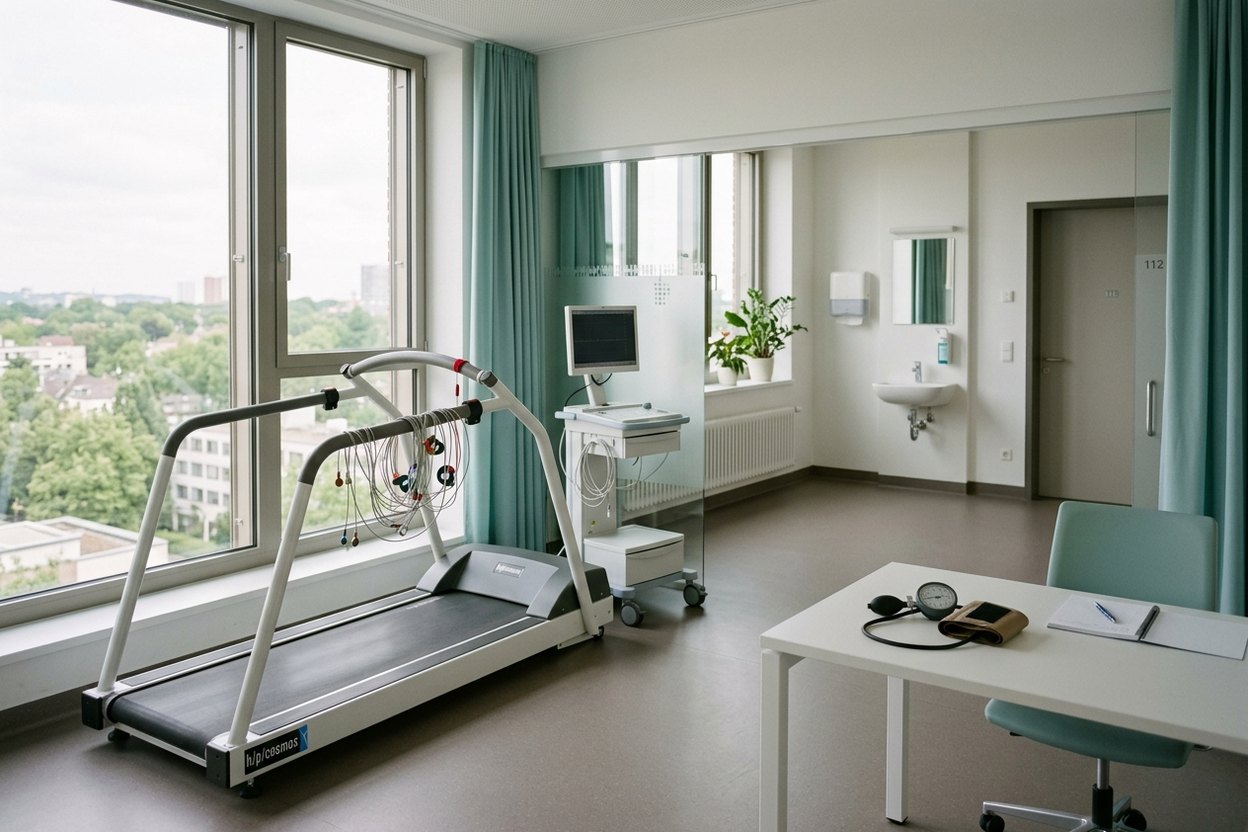
Methods run from simple to complex: blood tests, ultrasound and an ECG come first, and CT, MRI, PET-CT or endoscopy are added when the question cannot be answered without them. Blood and urine tests show how the liver, kidneys, thyroid and metabolism are working. Radiation-free ultrasound is used for the abdominal organs, thyroid, vessels and heart, while an ECG at rest and under exercise shows how the heart copes with effort.
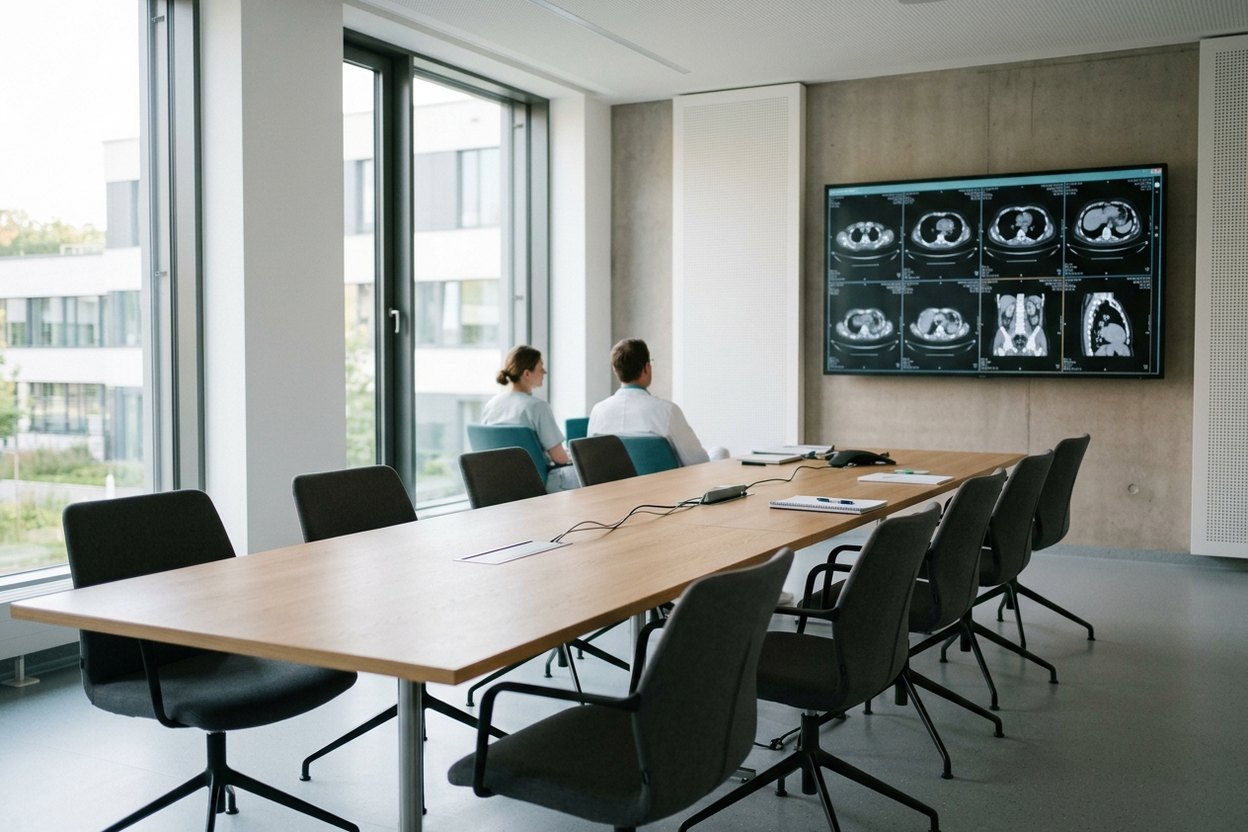
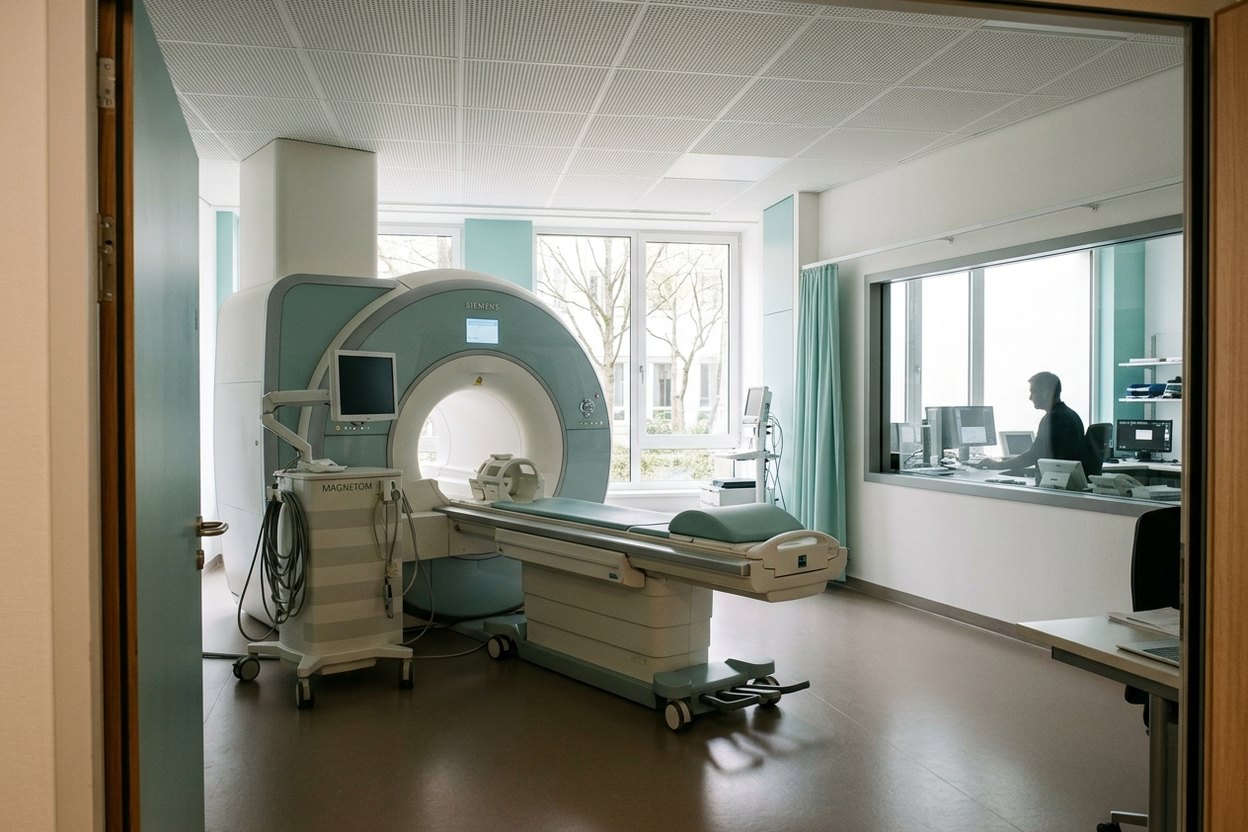
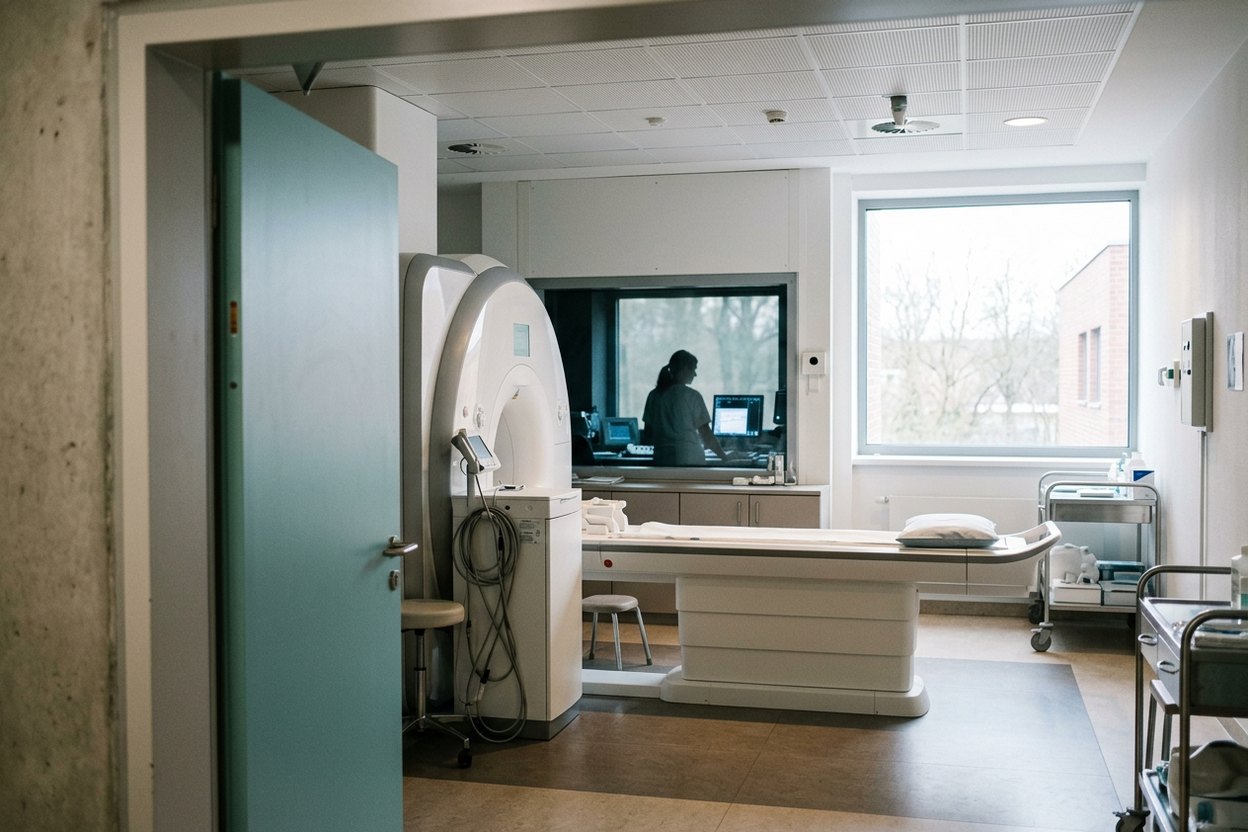
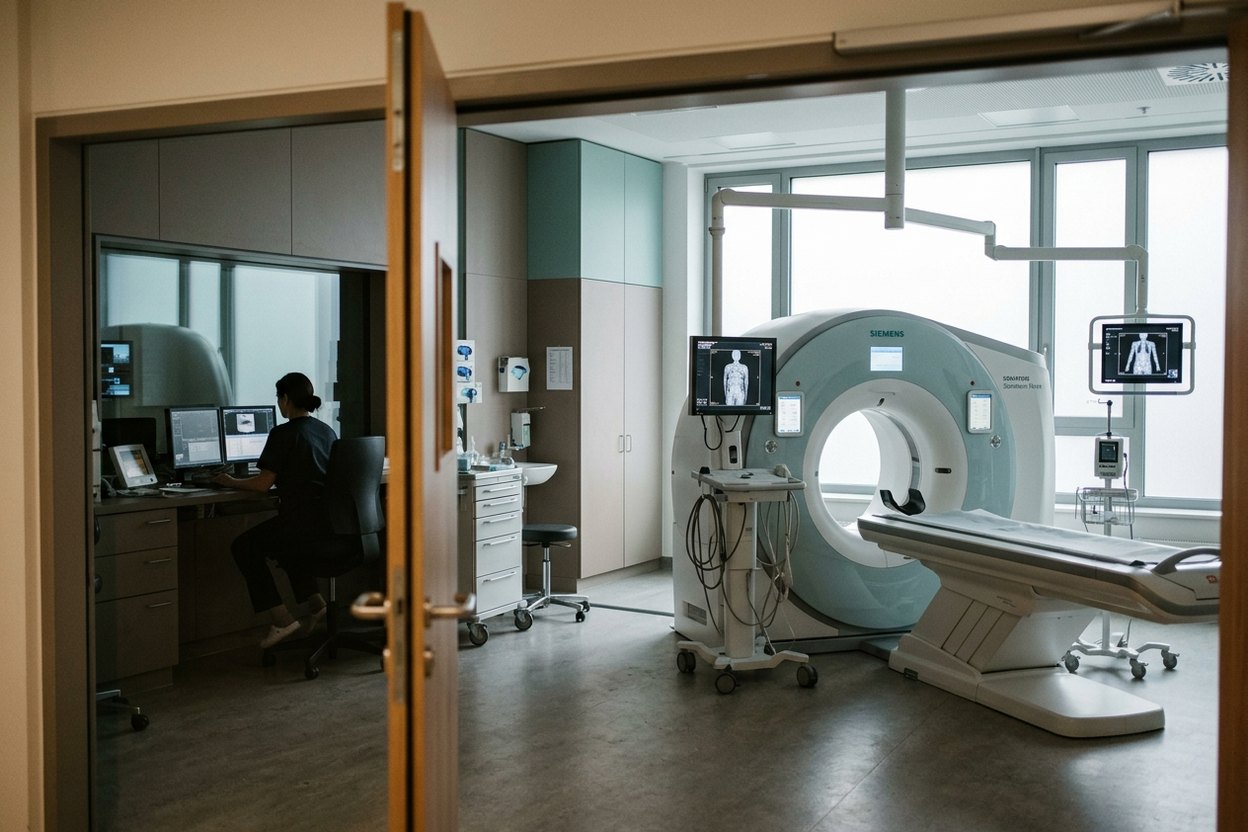
CT takes fast cross-sectional X-ray images that show the lungs, bones and abdomen well. MRI works without radiation, using a magnetic field, and shows soft tissues such as the brain, spine and joints in fine detail. PET-CT adds a map of tissue activity, showing not only where a lesion is but how active it is; it is used in oncology when indicated. The doctor chooses the method. In Berlin, Prof. Thomas Albrecht heads the Institute of Radiology, Paediatric Radiology and Interventional Therapy at Vivantes Klinikum Neukölln; his work covers ultrasound, CT and MRI, including imaging of the heart. Prof. Christian Habermann heads the Institute of Diagnostic and Interventional Radiology at Marienkrankenhaus Hamburg: CT, MRI, mammography, ultrasound and interventional radiology — image-guided treatment through a needle puncture.
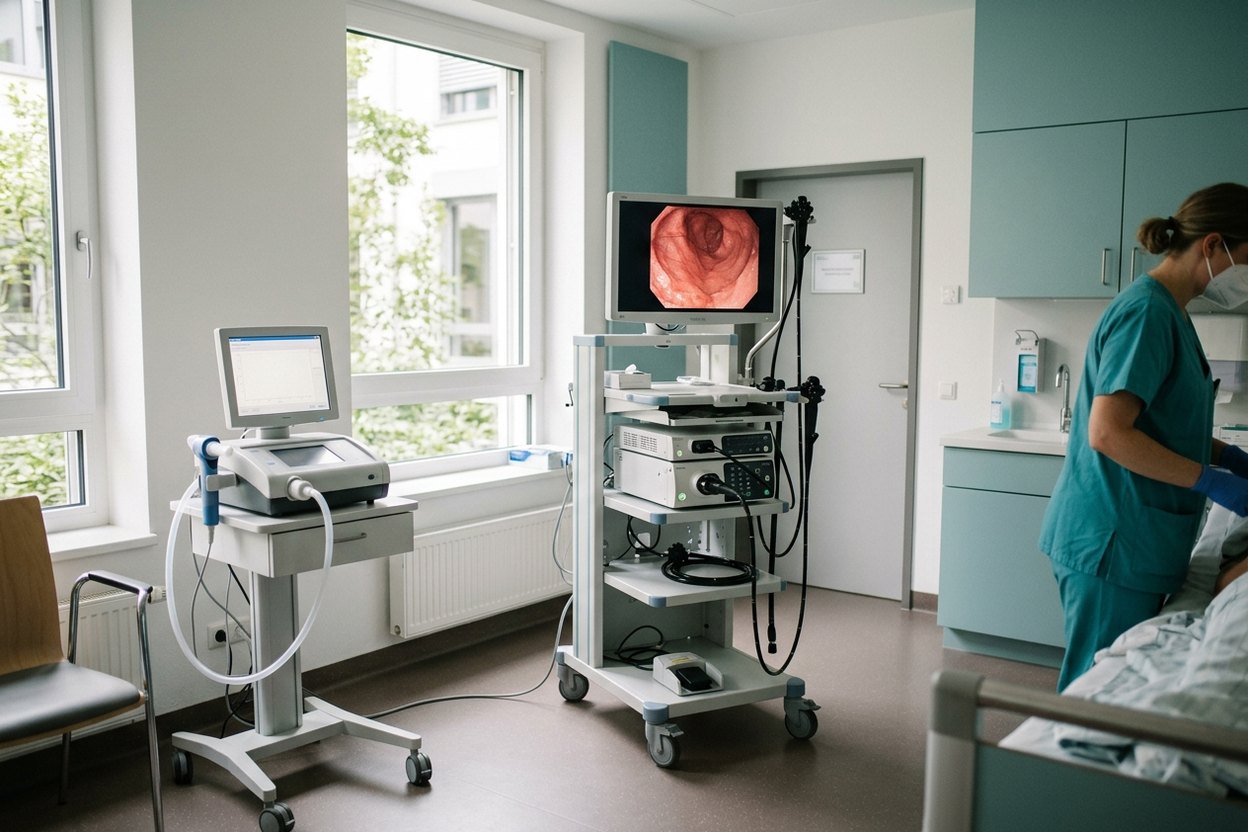
Endoscopy and biopsy are used when the doctor must see the lining of an organ or take tissue; during a colonoscopy a sample can be taken or a small polyp removed at once. Modern equipment matters, but so does how carefully a specialist describes and interprets the result. And a finding is not yet a diagnosis: the doctor explains what it is, how serious it is and what comes next, and a good hospital calmly follows it through to clarity instead of turning it into a verdict.
Areas of Diagnostics: Cancer, Heart, Digestion, Hormones
The areas follow the organs and diseases — cancer, heart and vessels, digestion, hormones and metabolism, skin — each with its own set of tests. When a tumour is suspected, tests follow a planned sequence — imaging, then a biopsy — and a tumour board of several specialists reviews the results and decides on treatment. Early detection in people without symptoms is a separate task: as the WHO fact sheet on cancer explains, cancer identified early is more likely to respond to treatment, and screening aims to find signs of it before symptoms develop. How cancer diagnosis in Germany works is described on a separate page.
The heart and vessels are checked with an ECG at rest and under exercise and with echocardiography, an ultrasound of the heart. The digestive organs are examined with abdominal ultrasound, gastroscopy and colonoscopy, under sedation if the patient wishes.
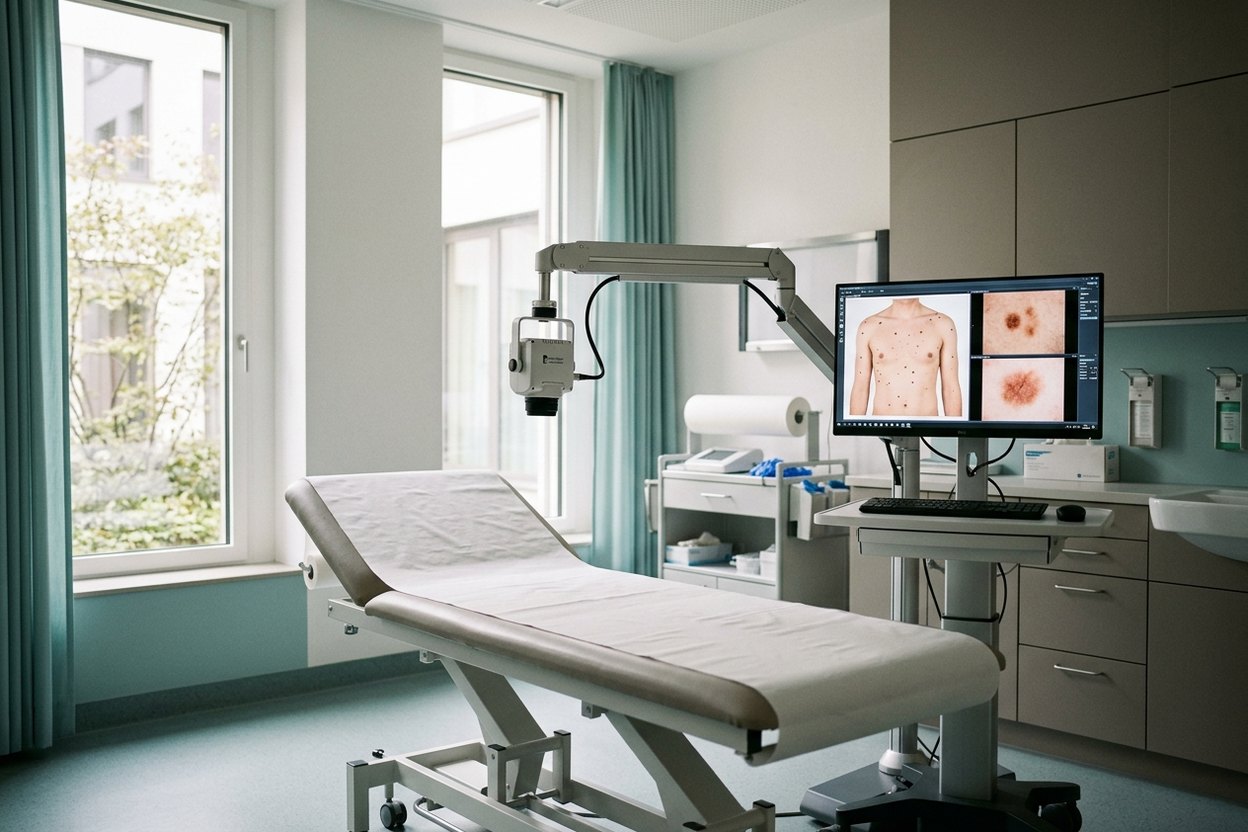
Hormones and metabolism mainly mean the thyroid, assessed with hormone tests and ultrasound, and diabetes, where the doctor also checks the vessels, kidneys and eyes. The skin is examined with a dermatoscope, a lit magnifier that helps tell a harmless mole from a suspicious one.
Check-up and Second Opinion
A check-up is a planned examination when there are no complaints; a second opinion is a review of a diagnosis already made at home. A check-up confirms that all is well and picks up early changes while they are still easy to correct. Its extent is matched to age, sex, family history and way of life, from a basic one-day programme to an extended one; the programmes are described on the page about the check-up in Germany.
With age and where there is a family risk, a regular check-up becomes a sensible habit rather than an anxious event: most often it ends with “everything is fine”. If something does need attention, the doctor says how urgent it is and suggests a clear next step.
A second opinion helps when a diagnosis has been made and treatment proposed, but doubts remain. A German specialist reviews the images, test results and reports and says plainly whether they agree with the diagnosis and the plan. They may confirm it, which removes uncertainty, or refine it and suggest an approach not considered at home. The decision stays with the patient, but it is made on a fuller picture. How to obtain a second opinion in Germany is explained on a separate page.
Diagnostics Prices in Germany and How the Bill Is Built
How much diagnostics costs in Germany depends on the scope: there is no single amount, and the bill is made up of the specific tests and consultations. Outpatient doctors’ services are charged under the official fee schedule, the GOÄ (Gebührenordnung für Ärzte), in which each item has its own number and fee, so the bill shows exactly what you are paying for.
The amounts below are a guide, neither a price list nor an offer: the hospital states the exact price in its estimate after reviewing your medical records.
| Item | What it depends on | Indicative amount |
|---|---|---|
| CT (head, chest, abdomen, skeleton) | area examined, whether contrast is needed | around €500, with contrast around €550 |
| MRI (a region of the skeleton, head, chest) | area examined, whether contrast is needed | around €800, with contrast €900–1,000 |
| Ultrasound | which organs are examined | around €130–150 |
| Consultation with a doctor on the results | complexity of the case | from €130 |
| General medical assessment (1–2 days) | programme content | around €1,650 |
| Gastroenterological assessment (2 days) | programme content | around €700–2,200 |
| Gynaecological check-up (1 day) | programme content | around €1,500 |
| Urological assessment (1–2 days) | programme content | around €1,650 |
| Cardiological assessment (1–2 days) | programme content | around €2,000 |
Recent images of good quality are usually not repeated, so bring them on a disc. Before the trip the hospital draws up an estimate, the Kostenvoranschlag, in the patient’s name. A detailed breakdown of medical examination prices in Germany is given on a separate page.
Frequently asked questions
What does medical diagnostics include?
Medical diagnostics includes four groups of methods: laboratory tests of blood, urine and tissue; imaging such as ultrasound, X-ray, CT, MRI and PET-CT; endoscopy with biopsy; and, where indicated, genetic testing. Functional tests such as an ECG under exercise are added to these. The doctor decides which of them a particular person needs: the assessment is matched to the question rather than covering everything.
How many days does an assessment in Germany take?
The main tests usually fit into one or two days. A basic programme takes a day; general, urological and cardiological assessments take one to two days, and a gastroenterological one two days. It takes longer if a test needs preparation, as before a colonoscopy, or if the results call for further tests, so plan the trip with a little time in reserve.
How do you choose a hospital for diagnostics in Germany?
Choose by the question to be answered, not by reputation alone. A routine check-up needs a hospital with a well-organised assessment programme. A suspected tumour or rare disease calls for a university hospital or specialist centre where radiologists, pathologists and oncologists work together in a tumour board. It also helps if all the tests can be done in one place within a short trip.
What happens if something is found during the assessment?
The doctor explains what the finding is, how serious it is and what the next step should be: a finding is not yet a diagnosis. Sometimes watching it is enough, sometimes a further test is needed, and a confirmed disease leads to a treatment plan. If extra procedures change the scope and the cost, the hospital agrees the new items with you separately.
How AlenMed Arranges Diagnostics in Germany
AlenMed organises the assessment from the first documents to the final conversation with the doctor. You send discharge letters, reports and images on disc and describe your concern or question. We translate the records, choose a hospital and a doctor of the right specialty and agree the programme with them. Read more about arranging treatment in Germany with our help.
Before the trip you receive the hospital’s estimate and pay the hospital directly: many German hospitals ask patients from abroad for prepayment and issue the final invoice for the care actually given. Our services are paid for separately. We schedule the tests in sequence to fit a short trip and help with an interpreter, the visa and accommodation. Our office is in Munich, and the hospitals are all over Germany.
This material is for information only and is not an offer; the amounts are indicative. The scope of the assessment and the interpretation of the results are decided by the doctor at an in-person appointment.