 EN
EN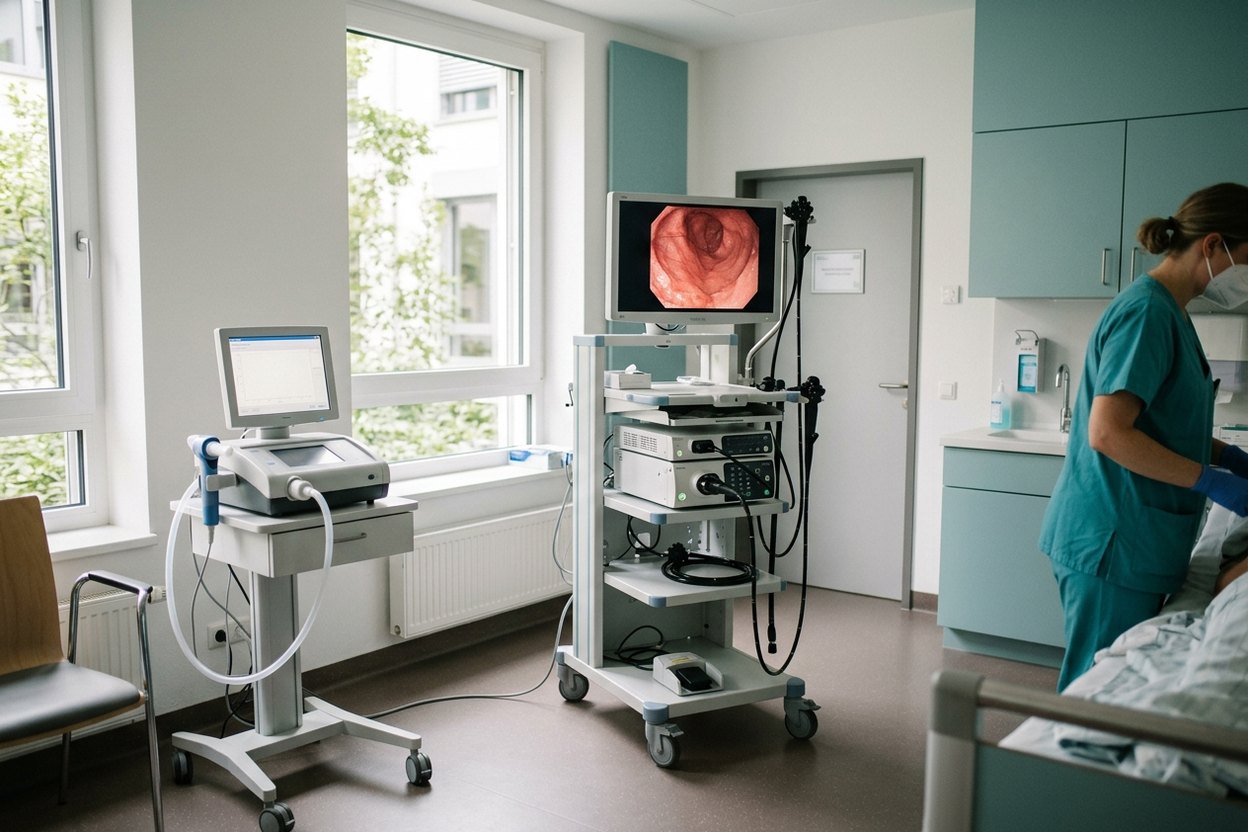
Gastroenterology in Germany is the specialty that examines and treats the digestive organs, and a visit usually means a consultation, lab tests, an ultrasound and, if needed, gastroscopy or colonoscopy. Digestive complaints are deceptively alike: heaviness, heartburn, pain, bowel changes and unexplained weight loss occur with simple gastritis as well as with serious disease.
A German hospital suits a visiting patient because the consultation, tests and endoscopy usually happen in one place within a short time. The aim is not to “take something for the stomach” but to find the cause. If treatment is needed, our page on gastroenterology treatment in Germany explains the next step.
The Gastroenterologist: When to See One and What Is Checked
See a gastroenterologist when the complaints concern digestion: in Germany this is an internal medicine specialist responsible for the oesophagus, stomach, small and large bowel, liver, gallbladder and pancreas. These organs work as one system, so they are assessed together; “stomach” pain often comes from the gallbladder or pancreas.
Reasons not to delay are persistent or recurring symptoms: long-standing heartburn, abdominal pain, bowel changes, traces of blood, unexplained weight loss. There is also prevention: in Germany screening colonoscopy for bowel cancer is recommended for men and women from the age of fifty, and those at higher risk, for example because close relatives had bowel cancer, discuss with their doctor whether to start earlier. The doctor sets the interval by age, findings and family history.
How Digestive System Diagnosis Works: Consultation, Tests, Ultrasound
It starts with a detailed conversation and examination. The doctor asks when the complaints began, how they relate to meals, which medicines you take and what runs in the family, examines the abdomen and then decides which tests are needed.
Blood tests show anaemia, inflammation or liver and pancreas problems. A stool test finds hidden blood, and calprotectin, a stool marker of bowel inflammation, helps to separate inflammation from functional disorders. Painless breath tests detect Helicobacter pylori, a stomach bacterium, and lactose intolerance, a poor tolerance of milk sugar. All are ordered only when needed, not from a checklist.
Next comes an abdominal ultrasound, a painless, radiation-free first look at the liver, gallbladder and pancreas. Many hospitals bundle the consultation, tests and main investigations into a single “gastro check-up”, usually completed within a few hours, with one doctor explaining the results. But the programme is not dogma: what is not needed is left out. If you want more than the digestive tract checked, consider a check-up in Germany.
Gastroscopy and Colonoscopy with Biopsy
Gastroscopy shows the oesophagus, stomach and duodenum, the start of the small bowel; colonoscopy shows the large bowel. A thin flexible endoscope with a camera sends images to a screen, and light sedation lets you sleep through much of it, though it can be declined. Details are on our page on endoscopy in Germany.
Both need preparation. You eat nothing for several hours before gastroscopy; before colonoscopy the bowel is emptied completely with a prescribed solution the evening before and/or that morning, or parts of the lining stay hidden. Tell the doctor about blood thinners in advance: sometimes they are paused, but only the doctor decides. After sedation you must not drive or operate machinery, so leave with a companion or by taxi.
Endoscopy also allows action: the doctor can painlessly take tissue samples (a biopsy) and remove polyps before they become a problem. Under the microscope, histology shows whether a change is inflammation, Helicobacter pylori infection, a benign growth or something needing closer attention. The Krebsinformationsdienst of the German Cancer Research Center explains why colonoscopy is the most reliable method for the early detection of bowel cancer.
Additional Methods When a More Precise Answer Is Needed
If endoscopy and ultrasound are not enough, the doctor may order tests for the parts a standard endoscope cannot reach. In capsule endoscopy for the small bowel, you swallow a capsule whose camera photographs the lining on its way through. Endoscopic ultrasound puts an ultrasound probe on the tip of the endoscope and shows the pancreas and bile ducts in detail from inside. Both are used for specific questions, not for everyone.
CT and MRI of the abdomen are done when the doctor orders them, for instance to clarify an ultrasound finding. Bring recent good-quality scans from home on a disc with their reports: they are not repeated without reason but compared with the new results.
Frequently asked questions
Can the whole examination be done in one trip?
Usually, yes: the consultation, tests, ultrasound and endoscopy take place in one hospital within a short time. The doctor decides from your documents in advance which investigations are needed, so the programme is set before you arrive. Histology takes longest; if you have gone home by then, the result is sent to you.
Can I avoid gastroscopy and colonoscopy?
Sometimes. If the consultation, blood and breath tests and ultrasound explain the complaints, endoscopy may not be needed. With traces of blood, unexplained weight loss or difficulty swallowing, nothing replaces a direct look with a biopsy. For bowel cancer screening, a stool test for hidden blood is an alternative, but if it finds blood, colonoscopy follows.
Do I need to fast before the examination?
Usually, yes; the hospital sends exact instructions in advance. You eat nothing for several hours before gastroscopy, are often asked to skip breakfast before an abdominal ultrasound, and some blood tests are taken fasting. Colonoscopy needs bowel cleansing as the doctor instructs. Do not stop regular medicines, especially blood thinners, on your own; discuss them with the doctor.
How AlenMed Arranges a Gastroenterology Examination
AlenMed arranges gastroenterology in Germany starting from your documents: medical reports, lab results, earlier endoscopy and histology reports, and ultrasound, CT or MRI images. We translate them into German, choose the right department and pass them to the hospital doctor, who decides which tests are needed, so the programme and cost estimate are known before you travel. Costs are explained under prices for diagnostics in Germany.
Examples among our partner hospitals are the Department of Internal Medicine II at Klinikum rechts der Isar in Munich, headed by Professor Roland Schmid, and the Israelitisches Krankenhaus in Hamburg, where endoscopy is led by Dr Ulrich Rosien. You receive a written report with descriptions of the investigations, and the histology result once it is ready. The company office in Munich works with hospitals across Germany.
This material is for reference only and is not an offer; the tests and their interpretation are decided by the doctor at an in-person appointment.