EN
EN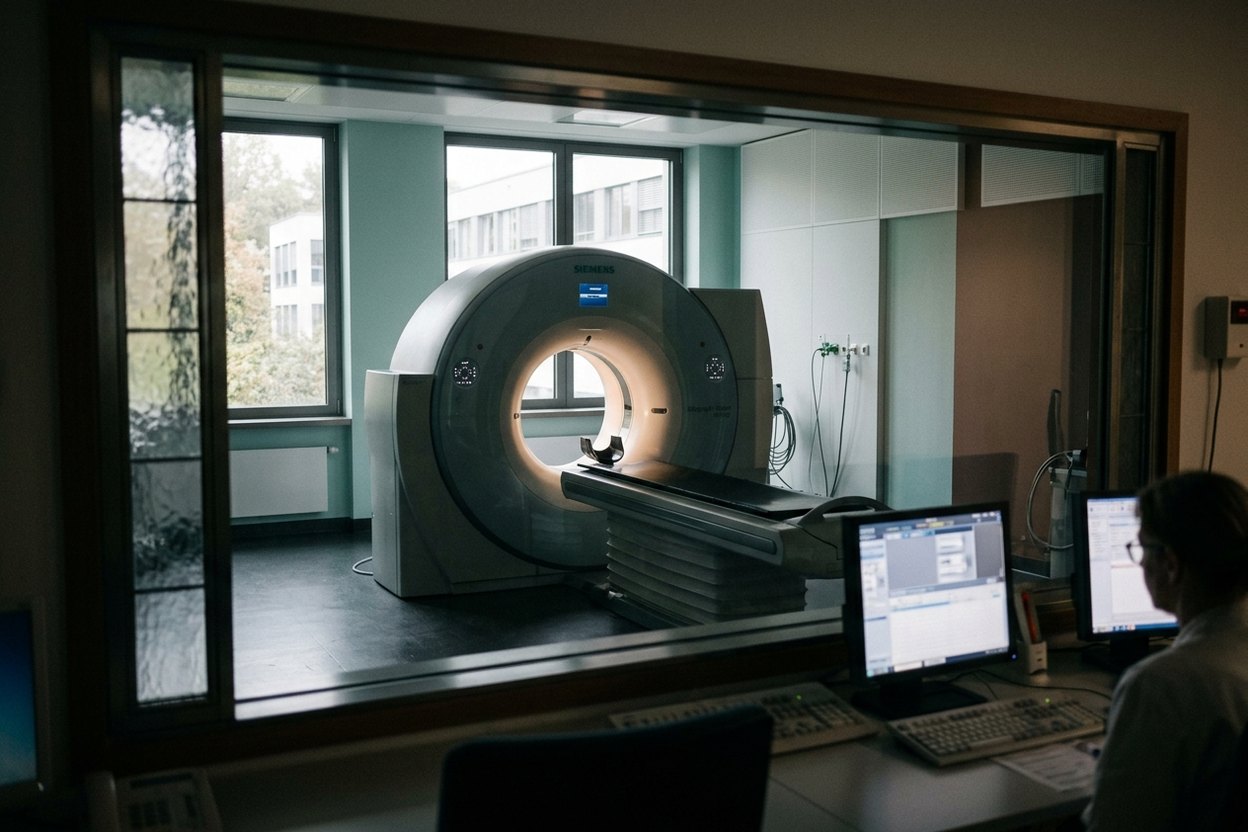
It often starts with a swollen lymph node in the neck, armpit or groin that does not go down, or with a chance finding on a CT scan. The biopsy report then says “lymphoma”, but not which type it is, how far it has spread or whether treatment is needed right now.
Lymphoma treatment in Germany starts with the exact subtype and stage, which decide whether doctors watch and wait or start therapy at once. This page covers the types of lymphoma, diagnosis, options from surveillance to transplant, lymphomas outside the lymph nodes, side effects and what to discuss beforehand, and arranging the trip.
Types of lymphoma and why the subtype matters most
Lymphomas fall into two large groups, Hodgkin lymphoma and non-Hodgkin lymphomas, and the subtype shapes both the course of the disease and its treatment. All of them grow from lymphocytes, the immune cells found in the lymph nodes, spleen and other organs. In Hodgkin lymphoma the cancer cells are few: scattered large cells among many ordinary immune cells. The non-Hodgkin group contains dozens of subtypes, so lymphoma is not one disease but dozens, and the first question is always which one.
The subtype shows how fast the disease moves. Slow-growing (indolent) lymphomas such as follicular lymphoma may need no treatment for years, while aggressive ones such as diffuse large B-cell lymphoma grow quickly and need prompt treatment. Unlike leukaemia, where the cancer cells are mainly in the blood and bone marrow, lymphoma sits in the lymph nodes and other tissues; leukaemia is covered on our page about blood cancer treatment.
How the diagnosis is confirmed before treatment
The subtype is confirmed from lymph node tissue and the extent from scans, and only then is treatment chosen. A surgeon usually removes the whole enlarged node, because a fine needle cannot collect enough tissue to show its structure. The pathologist then uses immunohistochemistry, staining that shows the proteins on the cell surface and so reveals which lymphocytes the tumour grew from, and adds genetic tests where needed.
The main staging tool is PET-CT, a scan that shows tissue activity as well as shape and so finds affected nodes throughout the body; in some lymphomas the bone marrow is examined too. Stages I to IV reflect how many lymph node groups are affected, whether they lie on one or both sides of the diaphragm, the muscle between chest and abdomen, and whether organs outside the lymphatic system are involved. The letter B is added for fever without infection, drenching night sweats or marked weight loss (B symptoms), and A when these are absent. Stage and symptoms set the intensity and length of treatment. The US National Cancer Institute explains the stages in its patient guide to non-Hodgkin lymphoma treatment.
If the diagnosis was made at home, the biopsy slides and paraffin blocks can be reviewed by a German haematopathologist. This sometimes changes the subtype, and with it the treatment plan, so it is a sensible first step when doubts remain; see our page about a second opinion in Germany.
Treatment options: from watch and wait to transplant
The approach ranges from active surveillance to stem cell transplant and CAR-T therapy, depending on subtype and stage. A slow-growing lymphoma that causes no symptoms is often managed by watch and wait: regular check-ups, blood tests and scans, with treatment starting when it is genuinely needed, for example when B symptoms appear or nodes grow quickly. Starting earlier would not prolong life and would only add side effects.
When treatment is needed, many lymphomas receive chemoimmunotherapy: chemotherapy combined with antibodies that find a marker on the tumour cells and help the immune system destroy them. Some lymphomas also need radiotherapy to the affected area. Costs are explained on the page about the cost of lymphoma chemotherapy. Hodgkin lymphoma is treated with cycles of chemotherapy, at some stages together with radiotherapy; the number of cycles depends on stage and risk factors, and PET-CT during treatment helps decide whether radiotherapy is needed, so treatment is no heavier than necessary. Regimens follow the protocols of German study groups.
In relapse or at high risk, high-dose chemotherapy is followed by a transplant of the patient’s own (autologous) or donor (allogeneic) stem cells; see our page on stem cell transplant. In CAR-T cell therapy, the patient’s own T lymphocytes are collected, reprogrammed in a laboratory to recognise the tumour and infused back. Other immune-based options include bispecific antibodies, which grip a tumour cell with one end and an immune cell with the other, bringing them together; antibodies that carry a drug straight to the tumour cell; and, in Hodgkin lymphoma, checkpoint inhibitors that release the brakes on the immune system. They are used mostly in relapse, chosen by subtype and previous treatment; a tumour board decides according to protocols.
When lymphoma starts outside the lymph nodes
Lymphoma can begin in an organ instead of a lymph node, for instance in the stomach, the skin or the brain; this is called extranodal lymphoma. A haematologist manages it together with the relevant specialist, and the plan is built in the same way, from subtype and stage.
Cutaneous lymphoma arises in the skin rather than the lymph nodes and can look like eczema for years, so a skin biopsy and an experienced dermatopathologist are essential. Its subtypes and treatment are covered on a separate page about cutaneous lymphoma treatment.
Side effects and what to discuss before treatment
Side effects of lymphoma treatment are expected, and preventing them is part of the protocol itself. Chemoimmunotherapy can cause tiredness, nausea and hair loss, and falling blood counts raise the risk of infection, so anti-sickness medicines, infection prevention and, where needed, drugs that raise the white cell count come with each cycle. After CAR-T therapy, cytokine release syndrome can occur, a violent immune response that causes fever and a drop in blood pressure, as can temporary neurological problems. The therapy is therefore given only in centres with intensive care, and after the infusion the patient stays near the hospital for a period set by the centre, which the travel plan must allow for.
Before the first cycle, young patients should discuss fertility: some regimens can reduce it, so sperm, eggs or ovarian tissue can be frozen beforehand. After treatment, scheduled follow-up watches for late effects: on the heart and lungs, on the thyroid after radiotherapy to the neck, and a raised risk of a second cancer. The patient takes the German follow-up plan home for their own doctor.
Frequently asked questions
How is lymphoma treated today?
Lymphoma is treated according to its subtype and stage. Slow-growing forms without symptoms are often watched at first, while aggressive ones get chemoimmunotherapy, chemotherapy combined with antibodies, straight away. Hodgkin lymphoma is treated with chemotherapy cycles, sometimes plus radiotherapy. After relapse or at high risk, options include high-dose therapy with a stem cell transplant, CAR-T therapy and other immune-based treatments.
How long does lymphoma treatment take?
The active phase usually takes several months, depending on subtype and stage. For diffuse large B-cell lymphoma the standard is six cycles of chemoimmunotherapy given three weeks apart. Hodgkin lymphoma needs from two cycles in early stages to six in advanced ones, sometimes followed by radiotherapy. In follicular lymphoma, two years of maintenance therapy with antibodies often follow. The haematologist sets the exact plan.
Does lymphoma always need treatment straight away?
No: slow-growing lymphomas without symptoms are often watched rather than treated at once. Check-ups, blood tests and scans follow, and therapy starts when B symptoms appear, blood counts fall or nodes grow quickly. Aggressive lymphomas and Hodgkin lymphoma, by contrast, are treated soon after subtype and stage are confirmed. The haematologist decides, taking general condition into account.
How AlenMed arranges lymphoma treatment in Germany
AlenMed takes care of the documents, the contact with haematologists and the trip. We need the histology report, the biopsy slides and paraffin blocks, PET-CT or CT discs and records of previous treatment. We translate them and send them to haematologists at partner hospitals, who review the material and propose a plan; the hospital then issues a cost estimate (Kostenvoranschlag).
They include Prof. Marcus Hentrich, chief physician of haematology and oncology at the Red Cross Clinic Munich and head of its centre for haematological neoplasms, who focuses on malignant lymphoma, multiple myeloma and acute leukaemia. At Helios Hospital Erfurt, Prof. Sebastian Scholl heads the department of haematology, stem cell transplantation and oncology; his fields include autologous and allogeneic transplantation and CAR-T therapy. Prof. Florian Bassermann directs the clinic for haematology and oncology at TUM Klinikum rechts der Isar in Munich, and his clinical focus includes CAR-T therapy and stem cell transplantation. AlenMed’s office is in Munich, partner hospitals are across Germany, and we arrange the visa invitation and an interpreter.
This material is for reference only and is not an offer. The treatment plan is decided by the haematologist at an in-person consultation.
News on this topic
Charité treats first beta-thalassemia patient with CRISPR
At Berlin Charité, a 19-year-old beta-thalassemia patient became the first in Germany to receive the newly approved CRISPR gene therapy Exagamglogene Autotemcel.
Real-World Breast Cancer Study Confirms High Five-Year Survival Rates in Germany
A landmark study of over 43,000 German patients reveals a five-year invasive disease-free survival rate of 82.9 percent in early hormone receptor-positive breast cancer.
FDA Approves Jülich Diagnostic Radiotracer FET for Brain Tumor Imaging
The FDA approves the diagnostic radiotracer FET (Pixclara®) for evaluating brain gliomas, highlighting decades of neuro-oncology research at Forschungszentrum Jülich.