EN
With most illnesses there is time to think, compare hospitals and collect opinions. With acute lymphoblastic leukaemia there is not: the diagnosis is made within days, treatment starts almost at once, and the family must decide at the worst possible moment.
This page covers what can be done before therapy starts, the phases of acute lymphoblastic leukaemia treatment in Germany, why it takes years, what happens if the disease returns and what can realistically be arranged for a patient from abroad. Leukaemia in general: see leukaemia treatment in Germany.
What acute lymphoblastic leukaemia is
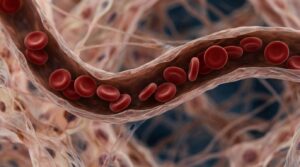
Acute lymphoblastic leukaemia (ALL) is a blood cancer in which immature lymphoid cells, the precursors of lymphocytes, stop maturing, quickly fill the bone marrow and crowd out normal blood production. Hence weakness, bruises, bleeding gums, fever without an obvious infection and enlarged lymph nodes.
“Acute” describes pace, not severity: untreated, the disease moves in weeks. Yet ALL is one of the blood cancers where a long remission is achievable for some patients.
ALL is not one diagnosis: there are B-cell and T-cell forms, with Ph-positive ALL (a BCR::ABL1 rearrangement) singled out separately, and the form decides which drugs the regimen includes at all. Details in German: Krebsinformationsdienst of the German Cancer Research Center.
Which tests are needed before treatment starts
A blood count is not enough: the basis is a bone marrow aspiration with immunophenotyping (flow cytometry shows which cell line the cells come from), cytogenetics and molecular tests. Without them, neither the form nor the regimen can be determined.
Nervous system involvement is checked separately: a lumbar puncture to examine the cerebrospinal fluid is done at the start, because the extent of prophylaxis depends on it. Also included: a CT or PET-CT, ultrasound, an echocardiogram before heart-damaging drugs and a dental check.
For a travelling patient, biopsy slides and blocks, image discs and discharge letters brought from home are reviewed, not discarded. But the bone marrow puncture is almost always repeated: the material must be fresh and processed in the same laboratory that later measures minimal residual disease.
The phases of treatment
ALL therapy is not given in courses “until it works” but as a protocol with phases planned in advance: induction to clear the visible disease, consolidation with intensification, then long maintenance with tablets. German hospitals follow national study group protocols, so the regimen cannot be “shortened to fit the trip”.
Two things families learn late and painfully. First, nervous system prophylaxis: drugs injected into the spinal canal, sometimes radiation to the head, even when the cerebrospinal fluid is clear. Second, the overall duration: maintenance is measured in years, not months, so where it happens must be discussed with the doctor in the first week, not at the end.
The response is measured by minimal residual disease (MRD): a sensitive test finds single tumour cells where an ordinary microscope sees clean bone marrow, and the result changes tactics directly, up to the transplant decision. The drugs and their tolerability: see chemotherapy for leukaemia.
What is done if the disease does not respond or returns
The options depend on the form of ALL. In Ph-positive ALL, tyrosine kinase inhibitors are added to chemotherapy: tablets aimed at the protein made by the rearranged gene. Here the genetic test done before treatment turns directly into different treatment.
For B-cell ALL, German centres have immunotherapy against the CD19 and CD22 markers: bispecific antibodies, which link T-cells to leukaemia cells, and antibody-drug conjugates, which carry a toxin into them. If the disease returns after these, CAR-T is discussed: the patient’s T-lymphocytes are collected, taught in the laboratory to recognise tumour cells and given back. See CAR-T therapy in Germany.
For some high-risk patients, an allogeneic (donor) bone marrow transplant remains the main option. A tumour board decides, based not only on the diagnosis but on the donor, age and general condition. See bone marrow transplant in Germany.
Children and adults: why the route differs
The route differs because departments and protocols differ. ALL is more common in children, who are treated in paediatric haemato-oncology departments to paediatric protocols, with paediatric intensive care, a hospital school and a psychologist in the same building. See paediatric oncology in Germany.
Adults have their own haematology and oncology departments; the protocol decides, not the age in the passport: some young adults are treated on paediatrically inspired regimens. AlenMed’s partners include the Rotkreuzklinikum in Munich, where Prof. Marcus Hentrich heads haematology and oncology and the Centre for Haematological Neoplasms (his main subjects: malignant lymphomas, multiple myeloma, acute leukaemias); the Klinikum rechts der Isar in Munich, with its Department of Internal Medicine III (haematology and oncology) under Prof. Florian Bassermann; and, for children, the Dr. von Hauner Children’s Hospital of the Munich university hospital, where Prof. Christoph Klein leads haematology and oncology.
Frequently asked questions
How quickly must ALL treatment start?
Almost at once: days, not weeks, pass between the first blood test and therapy. Send the blood results, bone marrow report, immunophenotype and cytogenetics to a haematology department straight away; the doctor will say what must be repeated and whether therapy can start in Germany.
How long does ALL treatment take?
Years, not months. Induction and consolidation with intensification are followed by tablet maintenance, which itself lasts years. Whether it takes place at home or in Germany is best agreed with the doctor in the first week, with a written plan of blood tests.
Is the bone marrow puncture repeated in Germany?
Almost always. Slides, blocks, image discs and letters brought from home are reviewed, not discarded, but the marrow must be fresh and processed in the same laboratory that will later measure minimal residual disease, which guides the response assessment and any change of tactics.
How AlenMed arranges treatment for acute lymphoblastic leukaemia
AlenMed starts with the documents: blood results, the bone marrow report, immunophenotype, cytogenetics and discharge letters go to a haematology department. The doctor says what must be repeated, whether therapy can start in Germany and which part of the protocol continues at home. Then: a written estimate, an urgent visa invitation, a place for a companion and an interpreter at appointments and the tumour board; how the sum is calculated: see cost of leukaemia treatment.
Plan ahead for a supply of usual medication, a long stay and isolation while the white cell count is low, a written maintenance plan with blood test dates and a translated discharge letter for the doctor at home.
This material is for information and is not an offer; a doctor decides the treatment regimen in person.
News on this topic
Charité treats first beta-thalassemia patient with CRISPR
At Berlin Charité, a 19-year-old beta-thalassemia patient became the first in Germany to receive the newly approved CRISPR gene therapy Exagamglogene Autotemcel.
Real-World Breast Cancer Study Confirms High Five-Year Survival Rates in Germany
A landmark study of over 43,000 German patients reveals a five-year invasive disease-free survival rate of 82.9 percent in early hormone receptor-positive breast cancer.
FDA Approves Jülich Diagnostic Radiotracer FET for Brain Tumor Imaging
The FDA approves the diagnostic radiotracer FET (Pixclara®) for evaluating brain gliomas, highlighting decades of neuro-oncology research at Forschungszentrum Jülich.