EN
Myeloma is almost never looked for directly. A person comes in with back pain, a fracture after a minor knock, exhaustion or poor kidney results, and the diagnosis emerges along the way. That is why the first question is usually not “where is it treated?” but “is the diagnosis even right?”
This page explains how multiple myeloma treatment in Germany works: what German hospitals do to confirm the disease, what the stages of treatment are and how the trip is organised. General principles are on the page about cancer treatment in Germany.
What myeloma is, and why the diagnosis gets rechecked
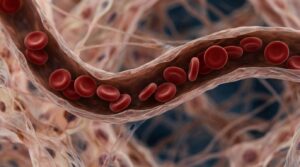
Multiple myeloma is a tumour of plasma cells: immune cells that live in the bone marrow and normally make antibodies, the proteins that fight infection. In this disease one clone, the offspring of a single altered cell, multiplies and floods the blood with one and the same useless protein: the monoclonal protein, or paraprotein. Hence the picture: bone pain, fractures, anaemia, strain on the kidneys and a tendency to infections.
The diagnosis is almost always re-examined because a monoclonal protein occurs in a symptomless monoclonal gammopathy, in smouldering myeloma and in myeloma that needs treating. The difference lies in the tests and images, not in how the patient feels: how many tumour cells the marrow holds and whether the kidneys, blood or bones are affected. Management differs too: the first two are usually watched with regular tests, the third is treated.
To tell them apart, blood and urine are tested for the protein, a bone marrow aspirate is taken for cytogenetics (a study of the tumour cells’ chromosomes), and the whole skeleton is imaged, under German guidelines with low-dose whole-body CT. Slides and discs brought from home are usually re-read in Germany: this is routine before treatment is chosen, not distrust. A clear description of the disease, in German, comes from the Krebsinformationsdienst of the German Cancer Research Centre.
What the treatment consists of
Treatment comes in several stages, and first-line therapy is induction: a drug combination chosen by age and general fitness, kidney function and cytogenetics. It brings together drug classes such as proteasome inhibitors, immunomodulatory drugs, antibodies against myeloma cells and the steroid dexamethasone. Doses and schedules are set by the haematologist.
For some patients, high-dose therapy with a transplant of their own stem cells is discussed after induction. First, the patient’s blood-forming stem cells are collected and frozen. After a course of high-dose chemotherapy they are returned so that blood production can recover. This step does not suit everyone, and a haematologist decides, weighing other illnesses as well as age. The page on bone marrow transplant in Germany describes the procedure itself.
Maintenance therapy usually follows the main phase. If the disease returns, other regimens are chosen with the drugs already received in mind. Bone support (bone-strengthening medicines and, if needed, radiotherapy or surgery), pain control and kidney protection are handled separately. At relapse, cell therapies are also discussed in Germany, such as CAR-T therapy made from the patient’s own lymphocytes; see the page on haematological oncology in Germany.
Who looks after a patient like this
Myeloma is not managed by one doctor but by a haematologist-oncologist together with the laboratory, a radiologist, an orthopaedic surgeon and a nephrologist, and the plan is agreed at a tumour board. In Munich, for example, such teams are led by Prof. Florian Bassermann, director of the Department of Internal Medicine III at Klinikum rechts der Isar, and Prof. Marcus Hentrich, head of haematology and oncology at the Rotkreuzklinikum.
A second opinion sometimes changes not just the drug but the diagnosis itself: once the tests and images are reviewed, a myeloma thought to need treatment may turn out to be smouldering, or the other way round. The page on cancer hospitals in Germany shows where such patients are seen.
How the trip works and how long it takes
The trip starts with paperwork, and its length depends on which stage of treatment lies ahead. The chain: a translated discharge summary, recent laboratory results, imaging discs, the hospital’s written reply, the invitation letter and the medical visa for Germany.
The first visit usually begins with a work-up lasting several days. Part of the treatment is given as an outpatient, the patient staying nearby and coming in for each session, whereas high-dose therapy requires admission to an isolated room. The hospital states how long each stage takes.
A foreign patient is almost always a self-payer. The hospital issues a written cost estimate before treatment starts, and the doctor’s invoice and the hospital’s invoice arrive separately. The total depends on the stages ahead, and without an examination any figure would be unverified.
Frequently asked questions
If a monoclonal protein is found, does it need treating straight away?
Not necessarily. It also occurs in monoclonal gammopathy, which causes no symptoms and needs only regular check-ups, not treatment. Smouldering myeloma is usually watched too, with treatment discussed if tests show a high risk of progression to active disease. Therapy starts when tests or images show damage to the kidneys, blood or bones, or markers that predict it.
Is myeloma treated with chemotherapy?
Partly. Most first-line combinations in German guidelines contain no classic chemotherapy drugs: they rely on proteasome inhibitors, immunomodulatory drugs, antibodies and dexamethasone. The chemotherapy drug melphalan is the basis of high-dose therapy, after which the patient’s stem cells are returned; chemotherapy also appears in some other regimens. The haematologist chooses the combination.
How do doctors tell whether myeloma treatment is working?
From tests, not just from how the patient feels. The main guide is the level of monoclonal protein and free light chains (parts of antibodies) in the blood and urine: if it falls, the disease is responding. To judge the depth of response, the bone marrow test and imaging are sometimes repeated. Results are compared with the first values, so keep all reports together and translated.
How AlenMed arranges the treatment
AlenMed starts with the documents: the discharge summary and images go to a haematology department that fits the particular picture. The company works with 86 partner hospitals in 38 German cities and 345 doctors, and its office is in Munich.
Ask in advance who will be in charge, what the estimate covers, what happens if the regimen has to change, and which documents the patient takes home.
This material is for information only and is not an offer. The treatment plan is decided by a doctor at an in-person consultation.
News on this topic
Charité treats first beta-thalassemia patient with CRISPR
At Berlin Charité, a 19-year-old beta-thalassemia patient became the first in Germany to receive the newly approved CRISPR gene therapy Exagamglogene Autotemcel.
Real-World Breast Cancer Study Confirms High Five-Year Survival Rates in Germany
A landmark study of over 43,000 German patients reveals a five-year invasive disease-free survival rate of 82.9 percent in early hormone receptor-positive breast cancer.
FDA Approves Jülich Diagnostic Radiotracer FET for Brain Tumor Imaging
The FDA approves the diagnostic radiotracer FET (Pixclara®) for evaluating brain gliomas, highlighting decades of neuro-oncology research at Forschungszentrum Jülich.