 EN
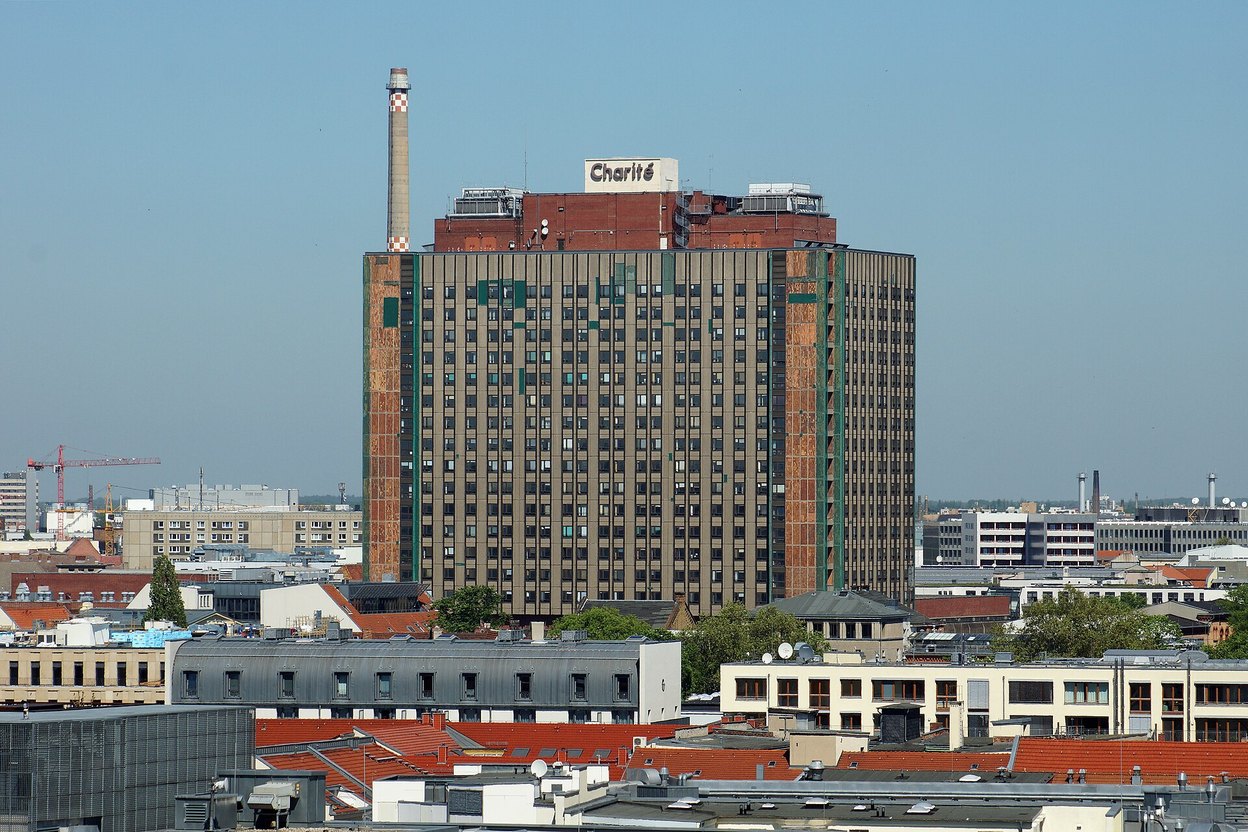
Charité Hospital in Berlin, Germany, is the university hospital Charité – Universitätsmedizin Berlin, spread over several campuses across the city. When patients abroad speak of Charité, Germany, this public university hospital is what they mean.
This page is for patients advised to go to the Charité hospital in Germany: how it is organised, its departments and doctors, where heart patients go and how admission from abroad works.
Charité as a university in Germany: history, faculty and campuses
Charité began in 1710 as a plague house outside the gates of Berlin. In 1727 it became a military hospital that trained doctors, and King Frederick William I named it Charité – French for “charity” or “mercy”, which is why the name is often spelt like the English word. The University of Berlin with its medical faculty followed in 1810, and the name Charité – Universitätsmedizin Berlin dates from the 2003 merger with the Benjamin Franklin university hospital. Today it is the joint medical faculty of Freie Universität Berlin and Humboldt-Universität zu Berlin and, like other university hospitals in Germany, combines treatment, teaching and research.
Charité’s figures for 2025 show four campuses, 17 CharitéCentren, more than 100 departments and institutes, 3,293 beds and 25,256 staff, with 147,997 inpatient and day cases and 853,377 outpatient cases. It is one of the largest university hospitals in Europe; our overview of the largest hospitals in Germany shows how it compares. The campuses – Charité Mitte, Virchow-Klinikum, Benjamin Franklin and Berlin Buch – lie in different parts of the city, so your department may be across town; the invitation gives the exact address.
Heart and vascular medicine has its own centre: since 1 January 2023, Charité’s cardiology and heart surgery and the former German Heart Centre Berlin have formed the German Heart Centre at Charité (DHZC). It has 470 beds, and the records of heart patients are sent there.
Departments and doctors at Charité
- Gynaecology with Breast Centre (Klinik für Gynäkologie mit Brustzentrum)
- Surgery (Klinik für Chirurgie)
- Orthodontics: correcting the bite and the position of the teeth (Abteilung für Kieferorthopädie und Orthodontie)
- Gum disease, oral medicine and oral surgery (Abteilung für Parodontologie, Oralmedizin und Oralchirurgie)
- Prosthetic dentistry, dentistry for older people and jaw function (Abteilung für Zahnärztliche Prothetik, Alterszahnmedizin und Funktionslehre)
- Restorative, preventive and children’s dentistry (Abteilung für Zahnerhaltung, Präventiv- und Kinderzahnmedizin)
Prof. Dr. Jens-Uwe Blohmer heads the Department of Gynaecology with Breast Centre on the Charité Mitte campus. It treats breast disease, above all breast cancer – ultrasound, breast-conserving surgery, reconstruction after removal and drug treatment – and operates on other gynaecological conditions and tumours. Prof. Blohmer speaks English and Russian.
Prof. Dr. Ulrike Blume-Peytavi is deputy director of the Department of Dermatology, Venereology and Allergology, which treats skin diseases and allergies. Prof. Dr. Winfried Brenner heads the Department of Nuclear Medicine, a field that uses small doses of radioactive substances for tests and treatment.
In dentistry, Prof. Dr. Florian Beuer directs prosthetic dentistry, focusing on digital dental technology, all-ceramic crowns and inlays and implant-supported dentures, and Prof. Dr. Kathrin Becker heads orthodontics. Prof. Dr. Dr. Klaus M. Beier directs the Institute of Sexology and Sexual Medicine, whose outpatient clinic helps people troubled by sexual health problems. The Department of Surgery operates on abdominal and chest organs, including for tumours, at Charité Mitte and Virchow-Klinikum.
Charité is also a major research centre, with 5,882 researchers and doctors and 344 professors in 2025; the Berlin Institute of Health (BIH), founded in 2013, is now part of it and helps bring research findings into patient care. The Institute of Integrative Neuroanatomy, for instance, studies nerve cells and brain networks and treats no patients. A department may offer a place in a clinical trial, but the trial doctors decide by its inclusion and exclusion criteria, not at the patient’s request. Charité’s register of clinical studies lists current and planned trials, filterable by age and clinic, with the clinic to contact.
How patients from abroad are admitted to Charité
Admission from abroad starts with the medical records: reports, test results, and MRI or CT images. Translated into German, they go to the relevant department, which reviews the case and decides on admission. International patients are handled by Charité’s subsidiary Charité Healthcare Services: its Charité International Healthcare office on the Charité Mitte campus takes treatment enquiries by email and phone, and its staff include native speakers of Arabic, English, Polish, Russian and Ukrainian.
If the department agrees, the hospital draws up a preliminary cost estimate (Kostenvoranschlag). The patient pays this sum directly to the hospital, and once it has arrived, Charité issues the confirmation needed for the visa.
Staying at Charité Hospital in Berlin, Germany
Relatives are best accommodated near the patient’s campus, and Charité suggests guest houses and hotels near each one. Virchow-Klinikum has Charité’s own guest house for relatives, while Charité Mitte has none on site and the hospital points to nearby hotels. Public transport links the campuses with BER airport and the main station; campus pages show maps with the stops. Relatives may visit; visiting hours are set by each ward. If a patient needs an English-speaking doctor outside the hospital, the AlenMed coordinator will help.
Frequently asked questions
Do I need to speak German to be treated at Charité?
No. Charité’s international service has native speakers of English, Arabic, Russian and other languages. Before treatment, however, the doctor must explain in detail what will be done and why, and patient and doctor sign a record of this talk. A medical interpreter at such talks is therefore wise, and AlenMed arranges one in advance.
How much does treatment at Charité cost?
There is no single price. The hospital states the sum in a preliminary cost estimate (Kostenvoranschlag) after the department has reviewed the records; it depends on the diagnosis, tests, type of treatment and length of stay. The estimate is paid in advance, directly to Charité, and only then is the visa confirmation issued.
Is Charité a public or a private hospital?
Charité is not a private hospital. Legally it is a corporation under public law (Körperschaft des öffentlichen Rechts) and the joint medical faculty of Freie Universität Berlin and Humboldt-Universität zu Berlin. That does not make treatment free for international patients: they pay for it themselves, according to the hospital’s estimate.
How AlenMed organises treatment at Charité
AlenMed prepares and sends the request to Charité: we translate the records into German, choose the department that treats your condition and obtain the doctors’ answer and the cost estimate. The hospital always decides on admission itself. Our page on arranging treatment in Germany describes each stage.
During treatment we arrange an interpreter for consultations, airport pick-up and accommodation near the right campus. If another Berlin hospital suits the case better, such as Helios Hospital Berlin-Buch (a Helios hospital, not a Charité campus), we say so; more options are in our overview of hospitals in Berlin. AlenMed’s office is in Munich, with partner hospitals across Germany.
This material is for reference only and is not an offer. The treatment plan is decided by the doctor at a face-to-face consultation.