 EN
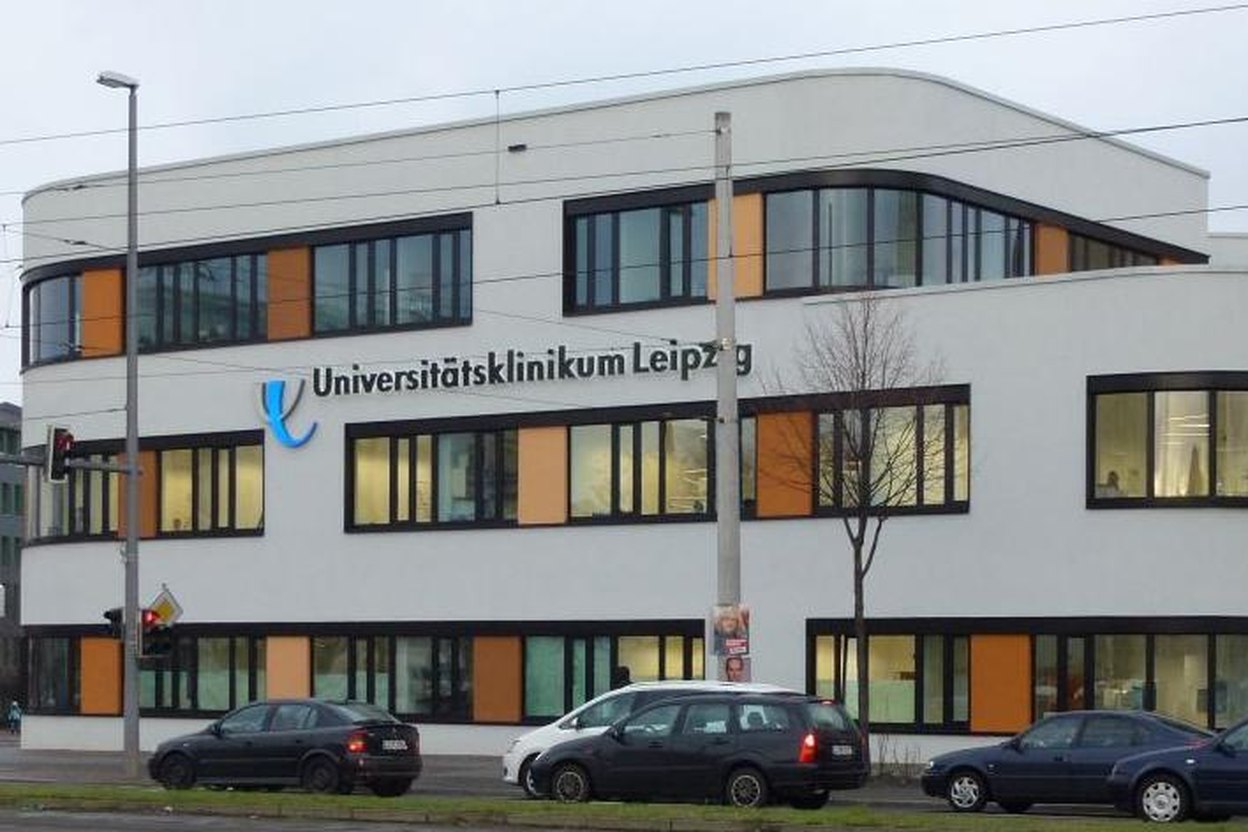
University Hospital Leipzig, Germany, is one of the oldest university hospitals in the country. It has 1,451 beds, 61 clinics and departments, 10 institutes and more than 8,000 staff, including the Faculty of Medicine.
For a patient from abroad, this means that surgeons, oncologists, neurologists and laboratories work side by side in one medical quarter, and complex cases are discussed jointly. Other such hospitals are covered in our overview of university hospitals in Germany.
History: Six Centuries of Medicine in Leipzig
University medicine in Leipzig dates back to 1415, when the university, founded in 1409, gained a Faculty of Medicine. The first anatomical theatre followed in 1704, and in 1799 an Institute for Clinical Instruction at St. Jakob’s Hospital began teaching students at the bedside. In 1811, Johann Christian August Heinroth took up the world’s first chair of «psychic therapy», the start of psychiatry as a university subject.
In 1871, a new city hospital of St. Jakob, proposed by the surgeon Carl Thiersch and the internist Carl Wunderlich, opened on today’s Liebigstraße and became the nucleus of the medical quarter, where the «Red House» was completed in 1889. In the second half of the 19th century, the anatomist Wilhelm His, the physiologist Carl Ludwig and the brain researcher Paul Flechsig worked at the faculty. In 1891, Otto Heubner founded the children’s clinic, then Germany’s largest.
Clinics and Institutes of University Hospital Leipzig
University Hospital Leipzig covers almost every field of medicine except heart surgery and paediatric cardiology. Below are some of its units, with the German names used on its website:
- Department of Operative Medicine (Department für Operative Medizin)
- Department of Haematology, Cell Therapy, Haemostaseology and Infectious Diseases (Klinik und Poliklinik für Hämatologie, Zelltherapie, Hämostaseologie und Infektiologie)
- Centre for Mental Health (Zentrum für Psychische Gesundheit)
- Institute of Human Genetics (Institut für Humangenetik)
- Institute of Clinical Immunology (Institut für Klinische Immunologie)
- Institute of Laboratory Medicine, Clinical Chemistry and Molecular Diagnostics (Institut für Laboratoriumsmedizin, Klinische Chemie und Molekulare Diagnostik)
- Institute of Medical Microbiology and Virology (Institut für Medizinische Mikrobiologie und Virologie)
- Institute of Pathology (Institut für Pathologie)
Blood diseases are treated at the Department of Haematology and Cell Therapy, which performs stem cell transplants and CAR-T therapy (see blood cancer treatment). Cell therapy uses the patient’s own or donor cells; in CAR-T, the patient’s immune cells are reprogrammed in a laboratory to recognise the tumour. Laboratory tests are done in-house, and the Institute of Pathology makes the final diagnosis from tissue. Cancer specialists from different clinics work together in the University Cancer Center Leipzig (UCCL), which discusses every case at a weekly tumour board and has been certified as an oncology centre under German Cancer Society criteria since 2015. Certification is explained by the Krebsinformationsdienst of the German Cancer Research Center (in German).
Heart operations in Leipzig, including those on children, are performed by a separate hospital, Helios Heart Center Leipzig. University Hospital Leipzig itself runs cardiology, the diagnosis and non-surgical treatment of heart disease.
Clinic Directors
Below are seven clinic directors, all of them professors. Prof. Ulrich Laufs leads the Department of Cardiology, and Prof. Florian Lordick the Department of Oncology, Gastroenterology, Hepatology and Pulmonology. Prof. Daniel Seehofer is managing director of the Department of Visceral, Transplant, Thoracic and Vascular Surgery, which covers abdominal, chest and vascular surgery and organ transplants. He heads hepatobiliary surgery, meaning operations on the liver and bile ducts, and abdominal organ transplantation.
Prof. Christoph-Eckhard Heyde is managing director of the Department of Orthopaedics, Trauma and Plastic Surgery and heads spine surgery and the paediatric spine centre. Prof. Erdem Güresir directs the Department of Neurosurgery; his areas include brain and skull base tumours, vascular brain disease, spinal and paediatric neurosurgery. Prof. Jens-Uwe Stolzenburg, director of the Department of Urology, holds Fellowships of the Royal Colleges in Edinburgh, England and Glasgow (FRCS). Prof. Bahriye Aktas directs the Department of Gynaecology.
Rooms, Meals and Getting to the Hospital
Most clinics have two-bed rooms with an en-suite shower and toilet, TV and telephone; a single or two-bed room requested on admission is a paid optional service (Wahlleistung). Lunch offers four menus, at least one vegetarian, adapted to a prescribed diet where needed. The grounds have a restaurant, a cafeteria, several bistros, a park and a patient library. There are no general visiting hours: each ward sets its rules, but visitors leave by 8 pm.
Leipzig is in Saxony; the nearest airport is Leipzig/Halle. Trams and the S-Bahn serve the main campus on Liebigstraße in the city centre. Clinics occupy several buildings, so the exact address and directions come with the invitation. Transfers and housing for relatives can be arranged through our airport pick-up and accommodation service.
Frequently asked questions
Does University Hospital Leipzig accept patients from abroad?
Yes. The hospital’s specialists treat patients from around the world, for example with prostate cancer or cancers of the female reproductive organs. Formalities and payment are agreed with the relevant clinic in advance, so a trip starts with documents: the doctors must see the reports and scans before setting an admission date.
Does University Hospital Leipzig treat children?
Yes. It has departments of paediatrics and adolescent medicine, paediatric surgery and paediatric oncology, a children’s emergency department, a paediatric spine centre and paediatric neurosurgery. Paediatric cardiology is not offered here: children with heart conditions are examined and operated on at Helios Heart Center Leipzig, a separate hospital.
How much does treatment at University Hospital Leipzig cost?
There is no fixed price: the hospital sets the amount in a cost estimate (Kostenvoranschlag) after its doctors have reviewed the records. The total depends on the diagnosis, the tests and surgery needed, the length of stay and optional services such as a single room, whose price list is handed out on admission. Payment goes directly to the hospital.
How AlenMed Arranges Treatment at University Hospital Leipzig
Treatment starts with documents: discharge letters, lab results, CT and MRI scans and reports. AlenMed translates them into German and sends them to the director of the relevant clinic for a preliminary assessment of whether treatment here is possible and which tests are needed.
The hospital then draws up a cost estimate (Kostenvoranschlag), and payment goes directly to its account. After prepayment, it issues the invitation needed for the visa. An AlenMed interpreter accompanies the patient at consultations and ward rounds; the company’s office is in Munich.
This material is for reference only and is not an offer. The treatment plan is decided by a doctor at a face-to-face consultation.