 EN
EN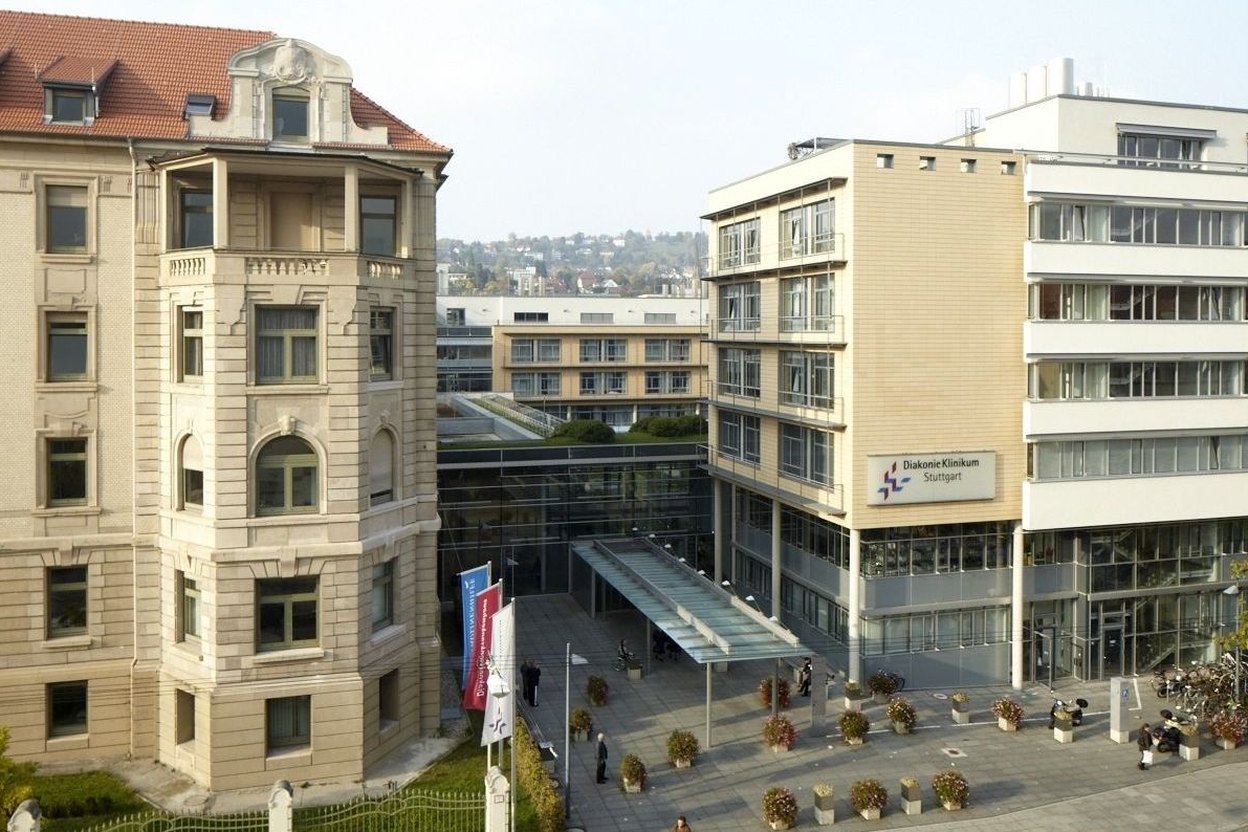
Diakonie Hospital Stuttgart (Diakonie-Klinikum Stuttgart) is a prominent medical institution situated in the attractive Stuttgart-West district, offering comprehensive inpatient and outpatient care. As an academic teaching hospital of the Eberhard Karls University of Tübingen, the facility treats over twenty-one thousand inpatients and approximately ninety thousand outpatients every single year. The hospital features a certified regional trauma center equipped with a modern shock room and an interdisciplinary emergency department for acute cases. Patients seeking care at hospitals in Germany appreciate the structured clinical environment, combining specialized surgical departments with high standards of nursing care. International patients regularly turn to this center for elective procedures, complex surgeries, and thorough diagnostic evaluations.
History and Foundation
The medical foundation of the current hospital dates back to the middle of the nineteenth century when the Paulinenhilfe orthopedic clinic was established in 1845. In 1854, Charlotte Reihlen and Prelate Sixt Carl von Kapff initiated the opening of Paulinenhospital on Forststraße to serve the local population. Another milestone occurred on January 16, 1906, when King Wilhelm II of Württemberg and his wife Charlotte inaugurated the Wilhelmhospital surgical facility. The historical legacy of these early medical buildings lives on today in the preserved names of the Wilhelmhospital and Charlottenbau wings. In 1960, Paulinenhospital and Wilhelmhospital officially merged to form Diakonissenkrankenhaus Stuttgart, consolidating healthcare resources in the city.
The modern era began on January 1, 2003, when Diakonissenkrankenhaus Stuttgart merged with the Paulinenhilfe Orthopedic Clinic to create Diakonie-Klinikum Stuttgart. Following this organizational merger, a major new hospital facility was constructed on Rosenbergstraße, representing one of the largest healthcare construction projects in Baden-Württemberg at the time. The first construction phase opened in 2004, followed by the completion of the second phase in 2007. Since 2005, the operating company has operated under the official title Diakonie-Klinikum Stuttgart Diakonissenkrankenhaus und Paulinenhilfe gGmbH. Today, this modern complex blends long-standing traditions of community care with effective medical technologies to serve domestic and international patients.
Departments and Medical Specialties
- Department of Anesthesiology and Intensive Care (Klinik für Anästhesie und Intensivmedizin)
- Center for Bariatric and Metabolic Surgery (Zentrum für Adipositas- und metabolische Chirurgie)
- Department of Surgery (Klinik für Chirurgie)
- Department of Plastic and Aesthetic Surgery (Abteilung für Plastische und Ästhetische Chirurgie)
- Department of General and Visceral Surgery (Klinik für Allgemein- und Viszeralchirurgie)
The hospital offers specialized treatment across a wide spectrum of surgical and therapeutic disciplines. The Department of General and Visceral Surgery focuses on surgical interventions involving abdominal organs, including procedures for stomach, intestinal, and liver pathologies. Patients who require specialized gastroenterology treatment in Germany benefit from minimally invasive laparoscopic techniques that minimize tissue trauma and promote faster postoperative recovery. In addition, the specialized Center for Bariatric and Metabolic Surgery provides tailored surgical strategies for patients managing severe obesity and related metabolic disorders, ensuring comprehensive pre-surgical evaluation and long-term follow-up care.
The Department of Plastic and Aesthetic Surgery performs both reconstructive interventions following trauma or oncological procedures and elective aesthetic corrections. Individuals considering plastic surgery in Germany value the refined surgical techniques and safety protocols applied by experienced medical teams. Supporting all surgical units, the Department of Anesthesiology and Intensive Care delivers precise perioperative pain management, continuous monitoring of vital functions, and intensive care support. Furthermore, the hospital’s status as a certified regional trauma center guarantees round-the-clock readiness for managing severe physical injuries, complex bone fractures, and acute multi-trauma emergencies.
Leading Physicians
The quality of clinical care at the hospital relies on the expertise of its medical leadership and experienced healthcare staff. Departmental operations are directed by senior physicians, including Chief Physician Dr. Barbara Kraft and Chief Physician Prof. Dr. Hannes Neeff. In the German healthcare model, department chairs actively participate in multidisciplinary consultations, perform complex operations, and oversee strict adherence to international clinical guidelines. Browsing the profiles of doctors in Germany helps international patients understand the academic rigor and clinical accountability expected from medical directors. The direct involvement of chief physicians provides international patients with additional confidence regarding diagnostic precision and treatment safety.
Location and Transportation
The hospital complex is located in Stuttgart-West, one of the most comfortable, green, and quiet residential areas of the city. This location provides convenient surroundings for patients and accompanying family members, with nearby pharmacies, hotels, parks, and urban infrastructure. Stuttgart is a major economic and transportation hub in the state of Baden-Württemberg, making travel straightforward via public transit or private vehicle. The city features an extensive public transportation network, including underground subway lines, trams, and buses connecting all municipal districts. Arranging professional airport transfer and accommodation in Germany ensures a smooth journey from arrival to hospital check-in without unnecessary travel stress.
International visitors benefit significantly from the proximity of Stuttgart Airport (Flughafen Stuttgart) and the central railway station (Stuttgart Hauptbahnhof). From the airport, patients can reach the medical center in approximately thirty minutes by taxi or via direct S-Bahn suburban trains. The exact street address and detailed navigation directions are provided to patients in their official medical invitation letter used for visa applications. Additionally, the hospital features its own underground parking garage, accommodating visitors who arrive by private vehicle or rental car. Diakonie Hospital Stuttgart has structured its physical environment so that patient logistics, parking, and building access remain orderly and accessible.
Patient Accommodation and Facilities
Inpatient care conditions are designed to foster recovery in a comfortable and stress-free environment. Patient rooms are equipped with modern functional beds, private bathrooms, nurse call systems, televisions, and wireless internet access (WLAN). Depending on individual preferences and insurance coverage options, single or double accommodation rooms can be selected for additional privacy and convenience. Arranging proper lodging and medical planning through structured services allows patients to recover quietly while receiving ongoing medical attention. Food service within the hospital offers balanced daily meal options, catering to specific dietary restrictions, medical guidelines, and personal dietary choices requested by the attending doctor.
The facility maintains flexible visiting hours, allowing family members to visit patients regularly and provide emotional support during recovery. A well-maintained green park is located on the hospital grounds, offering a peaceful outdoor space where recovering patients can enjoy gentle walks in the fresh air. Guests and patients can also utilize the comfortable cafeteria and quiet library corner located within the hospital complex. The calm atmosphere throughout the hospital minimizes unnecessary noise and operational disruption, creating ideal conditions for physical recuperation. Attention to daily comfort and patient convenience ensures that stay in the hospital remains as stress-free as possible.
Arranging Medical Treatment
The process of organizing treatment for international patients begins with submitting medical records, diagnostic reports, and recent imaging scans. German specialists review these documents to evaluate the diagnosis and formulate a preliminary treatment plan. Following clinical review, the hospital issues a formal cost estimate (Kostenvoranschlag) detailing expected procedures. Reviewing information about the cost of treatment and payment in Germany helps patients understand that prices are governed by the official DRG system, ensuring financial transparency. All payments for medical services are transferred by the patient directly to the hospital’s official account without third-party markups.
Once the financial deposit is processed, the hospital issues an official medical invitation required for obtaining an urgent medical visa at the German embassy. Professional assistance with arranging medical treatment in Germany includes document translation, appointment scheduling, and full coordination of admission dates. To bridge any communication gap during clinical consultations, patients receive dedicated support from a professional medical interpreter in Germany through AlenMed. Our experienced coordinator accompanies the patient to all diagnostic appointments, translates discussions with attending doctors, and assists with everyday logistical needs throughout the hospital stay.
Submit Your Documents for Review
If you or your relatives require expert evaluation or specialized treatment in Germany, you can submit medical reports, lab results, and imaging scans for an initial review. AlenMed organizes prompt document reviews with experienced specialists at leading hospitals across Stuttgart and Bavaria. You will receive a clear response outlining recommended steps and a preliminary cost estimate. To start the process, simply submit an online request through our website and attach your current medical files. Our team will guide you through visa processing, scheduling, and accommodation, ensuring reliable support at every stage of your medical journey.
The information on this page is provided for general educational and informational purposes only and does not constitute a public offer or medical advice. The final diagnostic and treatment plan, as well as exact costs, are determined exclusively by the attending hospital physician based on an official cost estimate (Kostenvoranschlag) after direct clinical consultation and evaluation of medical records.