 EN
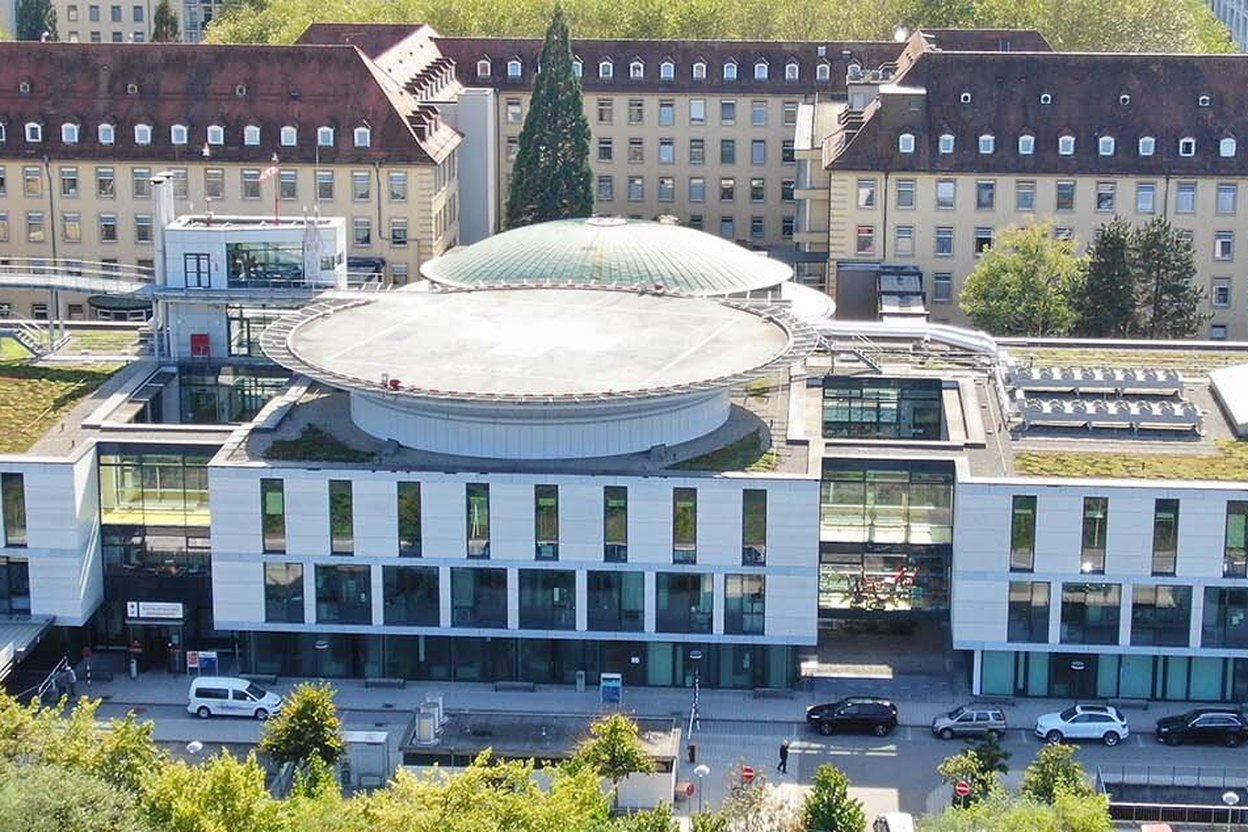
University Hospital Freiburg, Germany, is the hospital of the University of Freiburg (Albert-Ludwigs-Universität) in Freiburg im Breisgau: an independent public-law institution with 2,210 beds on four sites.
The University of Freiburg Medical Center, as it is known in English (officially Medical Center – University of Freiburg), has about 2,000 doctors and more than 15,000 staff, making it one of the largest university medical centers in Germany. This page covers its history, departments, doctors, the stay and the route for patients from abroad; for comparison, see our overview of university hospitals in Germany.
History: from a poor house to a university hospital
The hospital grew out of a poor house: in 1751 the medical faculty of the university, founded in 1457, took charge of caring for the sick in the poor house in the Gerberau. A general hospital opened in the Collegium Sapientiae in 1780, followed by the clinical hospital on Albertstraße in 1829 and, in the late nineteenth and early twentieth centuries, an institute quarter with specialist clinics. In 1887 a psychiatric clinic opened in the suburb of Herdern, and in 1922 the garrison hospital there became the dermatology clinic.
In 1926–1931 new medical and surgical clinics were built on Hugstetter Straße, and for many years nursing care was provided by the Vincentian Sisters. The sculpture cycle «The Ages of Life», six sandstone figures from 1938–1939, still stands in the archway at the entrance. A heavy air raid in November 1944 destroyed almost all the institutes and clinics; the surgical, medical and women’s clinics were rebuilt in 1948–1953.
KTQ (Kooperation für Transparenz und Qualität im Gesundheitswesen) is a German scheme in which external assessors certify hospitals: Freiburg was first certified in 2005, recertified in 2008 and 2011, and in April 2014 became the first German university hospital certified for the fourth time. In the Stern magazine hospital list 2025/26 it ranked second among German hospitals, and in the next edition it was again in the top four. Like other German hospitals, it publishes a yearly quality report (Qualitätsbericht) listing its departments, staff numbers and services.
Departments and key specialties
Key specialties include blood diseases and cancer, rheumatology and immunology, intensive care and cardiology. The Department of Haematology, Oncology and Stem Cell Transplantation (Klinik für Innere Medizin I) and its tumour immunology division treat leukaemia, lymphoma and myeloma in one place, from diagnosis to chemotherapy, antibody therapy, immunotherapy and CAR-T cell therapy, in which the patient’s own immune cells are reprogrammed to attack the cancer. The department also performs stem cell transplants with the patient’s own or donor cells, including for high-risk leukaemia.
Some departments and institutes, with their German names:
- General and Visceral Surgery (Klinik für Allgemein- und Viszeralchirurgie)
- Ophthalmology (Klinik für Augenheilkunde)
- Anaesthesiology and Intensive Care Medicine (Klinik für Anästhesiologie und Intensivmedizin)
- Transfusion Medicine and Gene Therapy (Institut für Transfusionsmedizin und Gentherapie)
- Medical Microbiology and Hygiene (Institut für Medizinische Mikrobiologie und Hygiene)
- Virology (Institut für Virologie)
- Clinical Chemistry and Laboratory Medicine (Institut für Klinische Chemie und Laboratoriumsmedizin)
- Human Genetics (Institut für Humangenetik)
- Neuropathology (Institut für Neuropathologie)
- Musicians’ Medicine (Institut für Musikermedizin)
Rheumatology and Clinical Immunology (Klinik für Rheumatologie und Klinische Immunologie) treats inflammatory joint, connective-tissue and vascular diseases and immune disorders. Critically ill patients with internal diseases go to the interdisciplinary medical intensive care unit (IMIT). For rare or unclear diagnoses, the institutes of human genetics, virology and neuropathology help.
Heart and vascular patients are treated at the University Heart Center Freiburg – Bad Krozingen (Universitäts-Herzzentrum, UHZ). Its cardiology department (Klinik für Kardiologie und Angiologie) and heart surgery department (Klinik für Herz-, Thorax-, Gefäßchirurgie und Aortenmedizin) see patients both in Freiburg and in Bad Krozingen, where Prof. Torsten Loop leads anaesthesiology. A heart patient may therefore be invited to Bad Krozingen rather than Freiburg; the invitation gives the address. Neurology and neurosurgery have their own departments.
Doctors at the University of Freiburg Medical Center
Departments and institutes here are headed by professors of the medical faculty, many with their own research groups. Prof. Justus Duyster is medical director of the Department of Haematology, Oncology and Stem Cell Transplantation; Prof. Robert Zeiser, its deputy medical director, heads the Division of Tumour Immunology and Immunoregulation.
Prof. Reinhard E. Voll is medical director of the Department of Rheumatology and Clinical Immunology. Prof. Tobias Wengenmayer heads the interdisciplinary medical intensive care unit, with Prof. Dawid Staudacher as his deputy. Prof. Torsten Loop is deputy medical director of the Department of Anaesthesiology and Intensive Care Medicine.
The heads of institutes and departments also include Prof. Philipp Henneke, Prof. Georg Häcker, Prof. Annette Thierauf-Emberger, Prof. Toni Cathomen, Prof. Hartmut Hengel and Prof. Jürgen Beck.
Location and your stay
The hospital is in Freiburg im Breisgau in south-west Germany, near the borders with France and Switzerland. Its four sites are the central hospital on Hugstetter Straße, the clinics in Herdern, the institute quarter and the heart center campus in Bad Krozingen. Convenient airports are Basel, Strasbourg and Frankfurt am Main; the invitation names the site and building.
For an extra charge, patients can choose a Wahlleistung single or double room with a TV or infotainment terminal, a safe, a fridge and a separate menu. Relatives can visit during the ward’s visiting hours. The free patient library brings books to the wards of the central hospital every week, and there is a park for walks. If your doctor agrees, AlenMed can help with leisure during treatment.
Frequently asked questions
How much does treatment at University Hospital Freiburg cost?
The price is set by the hospital’s cost estimate (Kostenvoranschlag), prepared free of charge after it reviews your documents. Patients from abroad pay a deposit covering the full estimate before tests or treatment begin. Actual costs may be higher or lower: a detailed final invoice follows after treatment, and any surplus is refunded or credited towards a future visit.
Do I need an interpreter at the hospital in Freiburg?
Yes: under the hospital’s rules, an interpreter must be present during treatment and diagnostic procedures. Interpreters are freelancers paid by the hour; the hospital provides a list, but patients book and pay them directly. They do not arrange appointments or discuss costs; the patient manager does. For patients travelling with AlenMed, the company arranges the interpreter.
Are heart patients treated in Freiburg or in Bad Krozingen?
In both: the University Heart Center has two sites, and its cardiology and heart surgery departments see patients in Freiburg and in Bad Krozingen, a small town south of Freiburg. Which site you go to depends on the department, and the invitation gives the address. Relatives travelling with you should book accommodation near that site.
How AlenMed arranges treatment in Freiburg
To review a case, the hospital needs recent medical reports, test results and CT or MRI scans. It has its own service for international patients, International Medical Services, which prepares cost estimates and visa invitations, coordinates appointments and helps with transfers and accommodation; patients can also write to it directly. AlenMed translates your documents into German, sends the request straight to the department that treats your condition, offers a comparison if another partner hospital suits your case better, and provides an interpreter at consultations.
Based on the treatment plan, the hospital draws up a cost estimate (Kostenvoranschlag). The patient pays the deposit directly into the hospital’s account; once it has arrived in full, the hospital sends an official invitation letter for the visa. More details are on the page about arranging treatment in Germany. AlenMed’s office is in Munich, and its partner hospitals are across Germany.
This material is for reference only and is not an offer. The treatment plan is decided by a doctor at an in-person consultation.