 EN
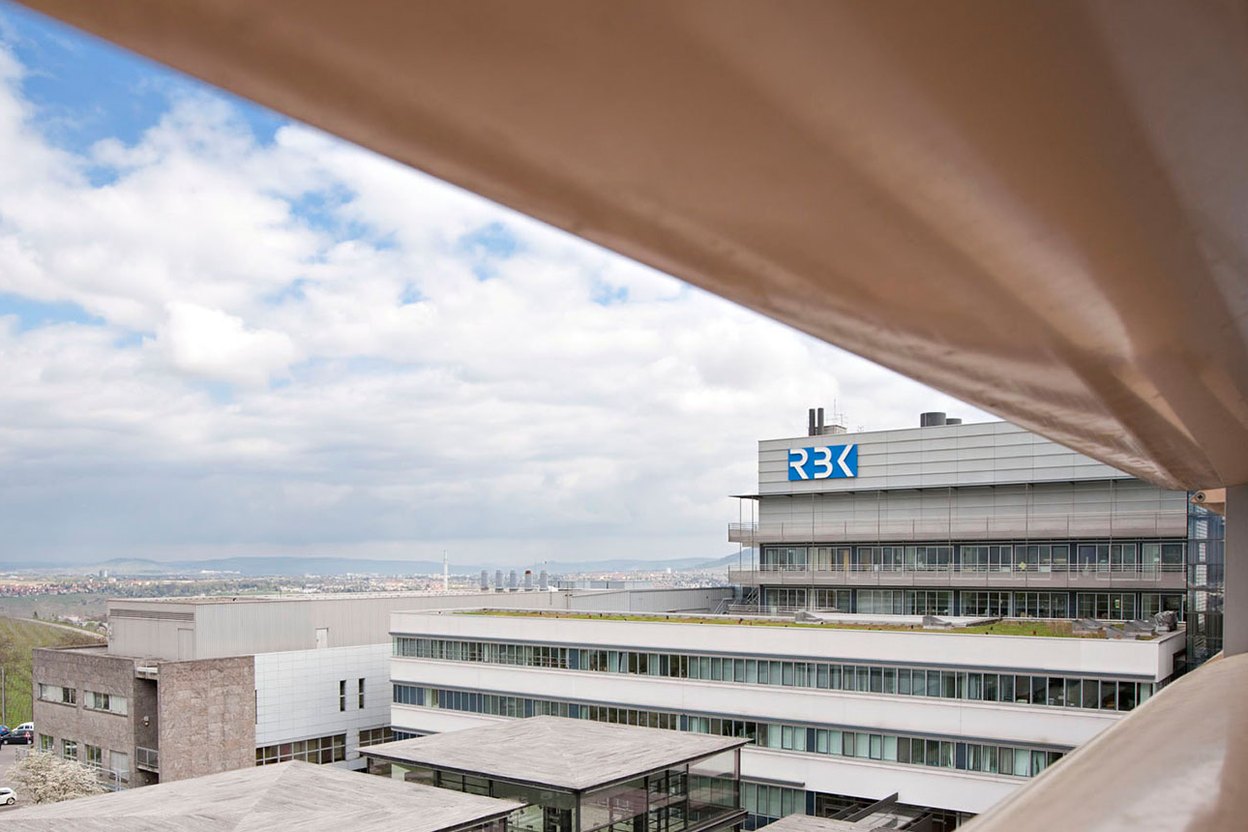
Robert Bosch Hospital in Stuttgart, Germany (Robert-Bosch-Krankenhaus) is a foundation hospital in the Bad Cannstatt district: it goes back to Robert Bosch’s private initiative of 1915 and has been an academic teaching hospital of the University of Tübingen since 1978. As a foundation hospital (Stiftungskrankenhaus), it is owned neither by the city nor by a private chain but by the non-profit Robert Bosch Stiftung.
This page covers its history, centres, doctors, stay and admission from abroad; for other large hospitals in Stuttgart, see the municipal Klinikum Stuttgart.
From a Homeopathic Hospital to a Modern Foundation Hospital
In 1915 Robert Bosch set out to build a homeopathic hospital for Stuttgart, and in 1916 he provided three million marks for it. In 1921 a temporary hospital with 70 beds opened in Marienstraße as a stopgap. In 1936, for Bosch’s 75th birthday and his company’s 50th anniversary, plans for a foundation hospital were taken up, and on 28 April 1940 the hospital bearing his name was formally opened in Hahnemannstraße at the Pragsattel, with more than 300 beds.
In time the building became too small, and on 28 March 1973 the new hospital opened on the Burgholzhof. In 1978 it became an academic teaching hospital of the University of Tübingen, and in 1984 a cardiac surgery department opened: in October that year the first heart operation in Stuttgart was performed here.
Heart, Aorta and Oesophagus: The Specialist Centres
At the Heart Disease Centre (Zentrum für Herzerkrankungen), cardiologists and cardiac surgeons decide on each patient’s treatment together, as a heart team (Herzteam). They place stents, repair or replace heart valves by catheter, without opening the chest, and perform bypass and open-heart surgery. Read more on cardiology in Germany.
The aorta is the body’s main artery, carrying oxygen-rich blood from the heart to every organ. Its main danger is an aneurysm – a bulging of the artery wall that often causes no symptoms but is life-threatening if it ruptures. The Aortic Disease Centre (Zentrum für Erkrankungen der Hauptschlagader) treats aneurysms anywhere along the aorta and aortic dissection, by open surgery, by catheter or both.
The Oesophageal Disease Centre (Zentrum für Speiseröhrenerkrankungen) focuses on oesophageal cancer and also treats reflux disease, inflammation of the oesophagus and hiatus hernia. Surgeons work with oncologists and gastroenterologists; operations are done by the department of general and visceral (abdominal) surgery, whose chief physician is Prof. Marc-H. Dahlke. Oesophageal cancer is relatively rare but has one of the poorest outlooks of any cancer and needs specialised care; read more about oesophageal cancer treatment.
Joint Replacement, Older Patients and Ventilator Weaning
At the joint replacement centre (Endoprothetikzentrum, officially Zentrum für Gelenkersatzoperationen an Knie, Hüfte und Schulter), orthopaedic surgeons fit artificial hips, knees and shoulders and replace worn implants. Most patients are older, so other departments treat heart or kidney disease and diabetes alongside. The centre is certified under the EndoCert system of the German Society for Orthopaedics and Orthopaedic Surgery (DGOOC) and reports to the German Arthroplasty Registry (EPRD); a separate page explains hip replacement.
The Geriatric Trauma Centre (Zentrum für Alterstraumatologie) treats fractures in older people, most often after a fall at home: trauma surgeons operate while geriatricians – internists specialising in old age – treat osteoporosis and other conditions. It is certified by the German Trauma Society (DGU). The geriatrics department, which includes the Geriatric Rehabilitation Clinic (Klinik für Geriatrische Rehabilitation), is headed by chief physician Prof. Markus Ketteler, who also leads internal medicine and geriatric medicine; its medical director and head of geriatric research is Prof. Kilian Rapp.
The Ventilator Weaning Centre (Zentrum für Beatmungsentwöhnung) takes patients who, after a severe illness or operation, have long depended on a ventilator and cannot yet breathe on their own. Breathing muscles are retrained step by step, and those who cannot yet be weaned are prepared, with their families, for home ventilation. The centre is a certified member of WeanNet, the weaning network of the German Respiratory Society (DGP). Dr. Ulrich E. Ziegler heads the separate plastic and aesthetic surgery department, which focuses on body contouring after major weight loss.
Staying at the Hospital: Rooms, Meals and Visits
For an extra charge (Wahlleistung), patients can have a single or two-bed room, an extra-comfort apartment or treatment by the chief physician. The weekly menu (Speiseplan) offers a daily choice of three set menus; allergies and dietary needs should be mentioned in advance. The Café Pavillon with its garden terrace has a kiosk; there is a chapel open to all faiths, a Muslim prayer room and free Wi-Fi, and a hairdresser visits regularly. Visiting hours are 9 am to 8 pm daily, with separate rules in intensive care, and the multi-storey car park is open around the clock.
Frequently asked questions
How is Robert Bosch Hospital different from a university hospital?
It is not a university hospital but an academic teaching hospital of the University of Tübingen, where medical students train. It is also one of the few non-university hospitals in Germany with its own research mandate. For patients, what matters is whether the right centre accepts their case.
How much does treatment at Robert Bosch Hospital cost?
Only the hospital’s cost estimate (Kostenvoranschlag), prepared after its doctors have reviewed the reports and scans, gives an exact figure. The price depends on the diagnosis, the tests and surgery needed, the length of stay and optional extras such as a single room or treatment by the chief physician. Patients from abroad pay the hospital directly.
How do I get to Robert Bosch Hospital?
The hospital is in north Stuttgart, above the Pragsattel junction, at Auerbachstraße 110. From the main station, Stadtbahn light-rail trains run to the Pragsattel stop, where you can take a bus to the Robert Bosch Krankenhaus stop or follow a signposted footpath through the vineyards. Parking is limited, so the hospital recommends public transport.
How AlenMed Arranges Treatment at Robert Bosch Hospital in Germany
AlenMed translates your reports and scans into German and sends the request to the right centre at Robert Bosch Hospital. Its doctors decide on admission; if they accept the case, the hospital issues a cost estimate (Kostenvoranschlag) and you pay the hospital directly. Our page on arranging treatment in Germany describes the whole process.
We help with the visa invitation, provide an interpreter and find accommodation for relatives, and if rehabilitation is needed after surgery, we help choose a clinic. The AlenMed office is in Munich; our partner hospitals are across Germany.
This material is for reference only and is not an offer. The treatment plan is decided by a doctor at an in-person consultation.