 EN
EN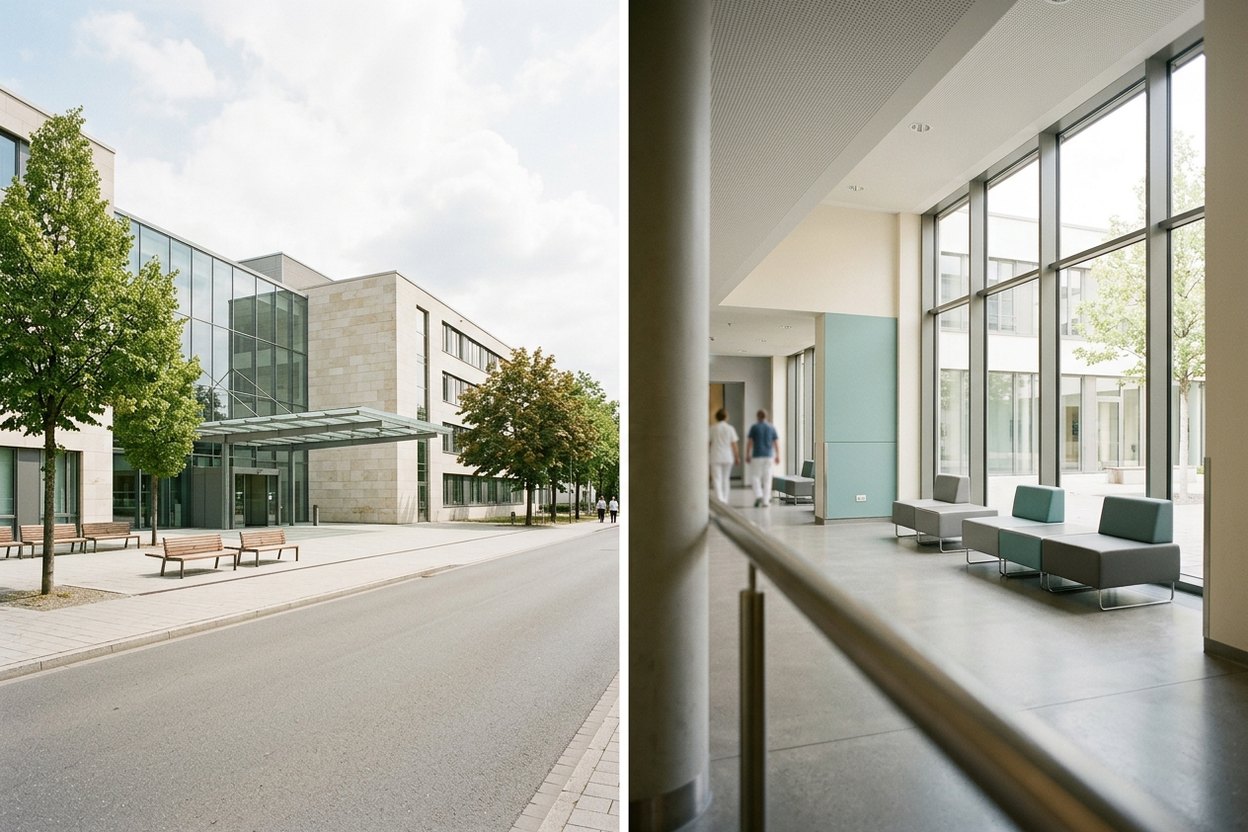
The DRK Hospital Berlin (DRK Kliniken Berlin) operates as a non-profit association of medical centres in the German capital, owned exclusively by the Red Cross Sisters’ Association (DRK-Schwesternschaft Berlin e.V.). The medical network encompasses broad capacities in internal medicine, general and visceral surgery, geriatrics, and specialized pulmonology across several key sites in the city. The main hospital campus located in the Westend district serves as an academic teaching hospital for the Charité university medical centre, connecting daily clinical care with academic research standards. International patients seeking medical assistance at hospitals in Germany find structured diagnostic pathways and surgical care delivered under strict quality standards. Through organized coordination, overseas patients can access specialized diagnostics and targeted therapies tailored to their clinical needs.
History and Foundation
The origins of the historical hospital grounds date back to the 1890s, when the municipal assembly of the then-independent city of Charlottenburg recognized that existing municipal healthcare facilities could no longer serve the growing population. In 1895, city leaders approved the construction of an expansive hospital complex on a former horse market located just outside the urban borders. Designed by renowned architects Heino Schmieden and Julius Boethke in the Neo-Renaissance style, construction began in 1901 and continued through 1904. The architects adopted a modern pavilion concept, grouping eight dedicated patient pavilions around a central green corridor to ensure optimal ventilation and segregation of infectious conditions.
The facility officially opened its doors on June 20, 1904, and welcomed its first in-patients on July 13 of the same year. Over the following decades, the complex expanded its clinical departments and modernized its infrastructure to keep pace with rapid developments in medical science. Today, the medical network combines historic architectural architecture with contemporary clinical equipment, operating within the framework of university-level research. Understanding the history of municipal healthcare institutions in Berlin offers valuable insight into how modern clinical standards evolved, as described in broader articles on medical treatment in Germany.
Medical Departments and Specialisations
- Clinic for Anaesthesiology, Pain Therapy, Intensive and Emergency Medicine Köpenick (Klinik für Anästhesie, Schmerztherapie, Intensiv- und Notfallmedizin Köpenick)
- Clinic for Anaesthesiology, Pain Therapy, Intensive and Emergency Medicine Mitte (Klinik für Anästhesie, Schmerztherapie, Intensiv- und Notfallmedizin Mitte)
- Clinic for Anaesthesiology, Pain Therapy, Intensive and Emergency Medicine Westend (Klinik für Anästhesie, Schmerztherapie, Intensiv- und Notfallmedizin Westend)
- Clinic for Thoracic Surgery (Klinik für Thoraxchirurgie)
- Clinic for General, Visceral and Minimally Invasive Surgery (Klinik für Allgemein-, Viszeral- und Minimalinvasive Chirurgie)
- Clinic for Internal Medicine — Focus Pneumology and Sleep Medicine (Klinik für Innere Medizin — Schwerpunkt Pneumologie und Schlafmedizin)
The internal medicine departments provide comprehensive management for complex disorders affecting abdominal organs, metabolic systems, and the respiratory tract. Patients suffering from chronic respiratory conditions, severe asthma, obstructive pulmonary diseases, or sleep apnea receive detailed diagnostic evaluations in specialized laboratories, similar to protocols applied in check-up in Germany programs. In the surgical departments, the primary emphasis rests on minimally invasive techniques for abdominal pathologies, which significantly reduce surgical trauma, minimize post-operative discomfort, and shorten recovery times.
The thoracic surgery division focuses on operative interventions for benign and malignant diseases of the lungs, chest wall, and mediastinum. Close interdisciplinary cooperation between thoracic surgeons and pulmonologists ensures coherent diagnostic and therapeutic pathways, particularly for patients undergoing targeted lung cancer treatment in Germany. Simultaneously, dedicated departments of anaesthesiology, intensive care, and emergency medicine oversee critical patient care around the clock. Specialist pain management teams assist patients throughout the early recovery phase, providing effective analgesia tailored to individual requirements.
Leading Doctors and Specialists
Clinical leadership across the specialized divisions is maintained by experienced chief physicians and academic faculty members who oversee patient care and clinical research. Key department leaders include Dr. med. Sascha Rolf, Prof. Dr. med. Bernd Schmidt, Dr. Anke Kleine-Tebbe, and Dr. Barbara Ingold-Heppner. The medical leadership team also features Dr. med. habil. Malte Weinrich, Dr. med. Mareike Graff, and Prof. Dr. med. Claudia Höhne. These specialists manage interdisciplinary medical teams, coordinate diagnostic procedures, and implement standardized evidence-based treatment guidelines across all hospital locations.
Location and Accessibility
The medical network consists of hospital sites distributed across key districts of Berlin, including Westend, Mitte, and Köpenick. The Westend campus, situated within the Charlottenburg-Wilmersdorf borough, offers patients a quiet environment surrounded by historic park grounds. Berlin possesses a highly developed public transportation infrastructure, including underground subway lines, suburban S-Bahn trains, and municipal bus services. This extensive transit network allows patients and accompanying family members to reach the hospital grounds convenient from central city quarters and major transit hubs. Direct train connections and airport express lines connect Berlin Brandenburg Airport directly to central stations.
Overseas patients receive the exact street address, precise arrival instructions, and facility navigation maps directly in their official admission documentation prior to travel. This advance preparation enables families to plan their route smoothly, arrange private transfer services, and arrive at the admissions desk without unnecessary stress. For those who prefer organized logistics upon arrival, securing dedicated services such as airport transfer and accommodation in Germany ensures seamless transport directly from the arrival terminal to the clinic or hotel. Nearby parking facilities also accommodate visitors traveling by automobile.
Patient Accommodation, Meals, and Amenities
Inpatient care facilities are designed to foster a restful and supportive environment necessary for recovery following surgical procedures or intensive treatments. Standard nutritional services include three daily hot meals with customizable options tailored to dietary requirements, clinical recommendations, or religious obligations. A cafeteria located on campus provides visitors and ambulatory patients with fresh pastries, light snacks, and hot beverages throughout the day. Standard patient rooms are equipped with modern sanitary amenities, adjustable beds, and necessary technical connections to ensure daily physical comfort during hospital stays.
Patients selecting optional elective comfort services (Wahlleistung) can reserve single or double private accommodation equipped with additional amenities. These premium rooms feature private en-suite bathrooms, comfortable seating areas, refrigerator facilities, television entertainment, and high-speed wireless internet access (WLAN). Flexible visiting hours permit family members to support their loved ones without interfering with daily clinical rounds or therapeutic schedules. Furthermore, the surrounding landscaped hospital grounds offer peaceful walking paths for gentle mobility during post-operative rehabilitation, which aligns with principles used in rehabilitation in Germany.
How to Arrange Treatment in Germany
Organizing a medical journey to a hospital in Germany requires systematic preparation of clinical documentation and administrative steps. Initially, the patient submits recent medical summaries, laboratory results, and diagnostic imaging scans for preliminary evaluation by German department heads. Following review, the hospital issues an official preliminary cost estimate (Kostenvoranschlag) detailing expected diagnostic and therapeutic expenses. All medical fees are paid directly to the official bank account of the hospital network without intermediate surcharges, guaranteeing full financial clarity throughout the treatment process.
Upon receipt of the required deposit, the hospital issues an official medical invitation required for obtaining a medical visa for Germany. The AlenMed team assists throughout this organizational procedure by coordinating all communication with clinical staff and managing logistics. A professional medical interpreter accompanies the patient during all doctor consultations, translates clinical reports, and ensures clear mutual understanding between the patient and medical staff. Our team also coordinates local transfers and provides personal support throughout the stay in Berlin.
Submit Documents for Evaluation
If you require specialized diagnostic evaluations, conservative therapy, or elective surgical intervention in Berlin, you can submit your medical records for professional review. Our specialists will transmit your diagnostic files and medical history to the appropriate clinical department at DRK Hospital Berlin to obtain a preliminary evaluation and cost estimate. You can submit your documents and request assistance through the dedicated treatment enquiry form.
Information on this page is for informational purposes only and does not constitute a public offer or medical advice. The final treatment plan and total costs are determined by the hospital in an official cost estimate (Kostenvoranschlag) after reviewing medical documents.