 EN
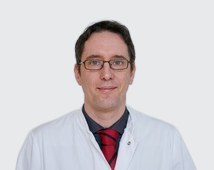
Dr Stephan Rauscher is chief physician of the Central Emergency Department (Zentrale Notaufnahme) at Diakonie-Klinikum Stuttgart. All emergency patients come here around the clock, whether brought by ambulance, sent by a doctor or arriving on their own. The department helps with sudden illness and injury and decides whether a patient needs to be admitted.
What Dr Rauscher treats
Dr Rauscher heads the department through which every emergency case enters the hospital. He is an anaesthetist with additional qualifications in intensive care and emergency medicine. His department:
- takes immediate life-saving measures and relieves pain;
- examines and gives first treatment for acute illness and injuries;
- sets priorities by urgency: a trained nurse sees each patient first and assigns one of five urgency levels;
- keeps patients whose diagnosis is still unclear for up to 24 hours on its own ward with six monitored beds;
- decides who is admitted and who is treated as an outpatient.
For planned care, see our pages on trauma surgery and internal medicine.
Training and experience
Dr Rauscher is a specialist in anaesthesiology (Facharzt für Anästhesie). He holds three additional qualifications: intensive care medicine; emergency medicine, the qualification for ambulance emergency physicians; and clinical acute and emergency medicine (Klinische Akut- und Notfallmedizin), the qualification for hospital emergency departments.
The department and hospital
Staffed by doctors and nurses around the clock, the emergency department works closely with every department of the hospital and with the Charlottenklinik eye hospital. Through doctors’ practices on the hospital site, specialists in fields without an inpatient department, such as ENT, neurology, dermatology and maxillofacial surgery, can also help. Gynaecological emergencies are not treated here.
Besides the permanent team, doctors training in surgery, internal medicine and orthopaedics work in the department, and its doctors regularly serve in Stuttgart’s emergency physician service. The department is fully authorised to train doctors in clinical acute and emergency medicine and runs joint resuscitation training every year. Diakonie-Klinikum Stuttgart is a Protestant teaching hospital of the University of Tübingen in central Stuttgart.
Frequently asked questions
What conditions does Dr Rauscher treat?
Dr Rauscher’s department treats any illness or injury that has come on suddenly and needs immediate care. It saves lives, relieves pain, examines and gives first treatment, then decides whether the patient is admitted or treated as an outpatient. Patients are seen by urgency, not order of arrival.
How can I see Dr Rauscher from abroad?
You cannot book an appointment with Dr Rauscher: the emergency department treats only emergency patients and gives no appointments. Planned treatment at Diakonie-Klinikum goes through the relevant specialist department. AlenMed translates your documents into German and forwards your request to that department; the hospital confirms a date and decides which doctor sees you.
How much does treatment with Dr Rauscher cost?
Planned treatment at Diakonie-Klinikum is charged according to a written estimate (Kostenvoranschlag) prepared before you travel. The amount depends on the examinations and treatment the specialist department plans; the emergency department does not take planned patients. Payment goes directly to the hospital.
How to see Dr Rauscher through AlenMed
AlenMed translates your reports into German, forwards your request to the relevant department of Diakonie-Klinikum, agrees a date and, if needed, arranges a medical interpreter and personal support. To start, send a request through our form.
This information is for reference only and is not an offer. A doctor decides whether and how to treat after an in-person examination.